 Города и дороги
Description
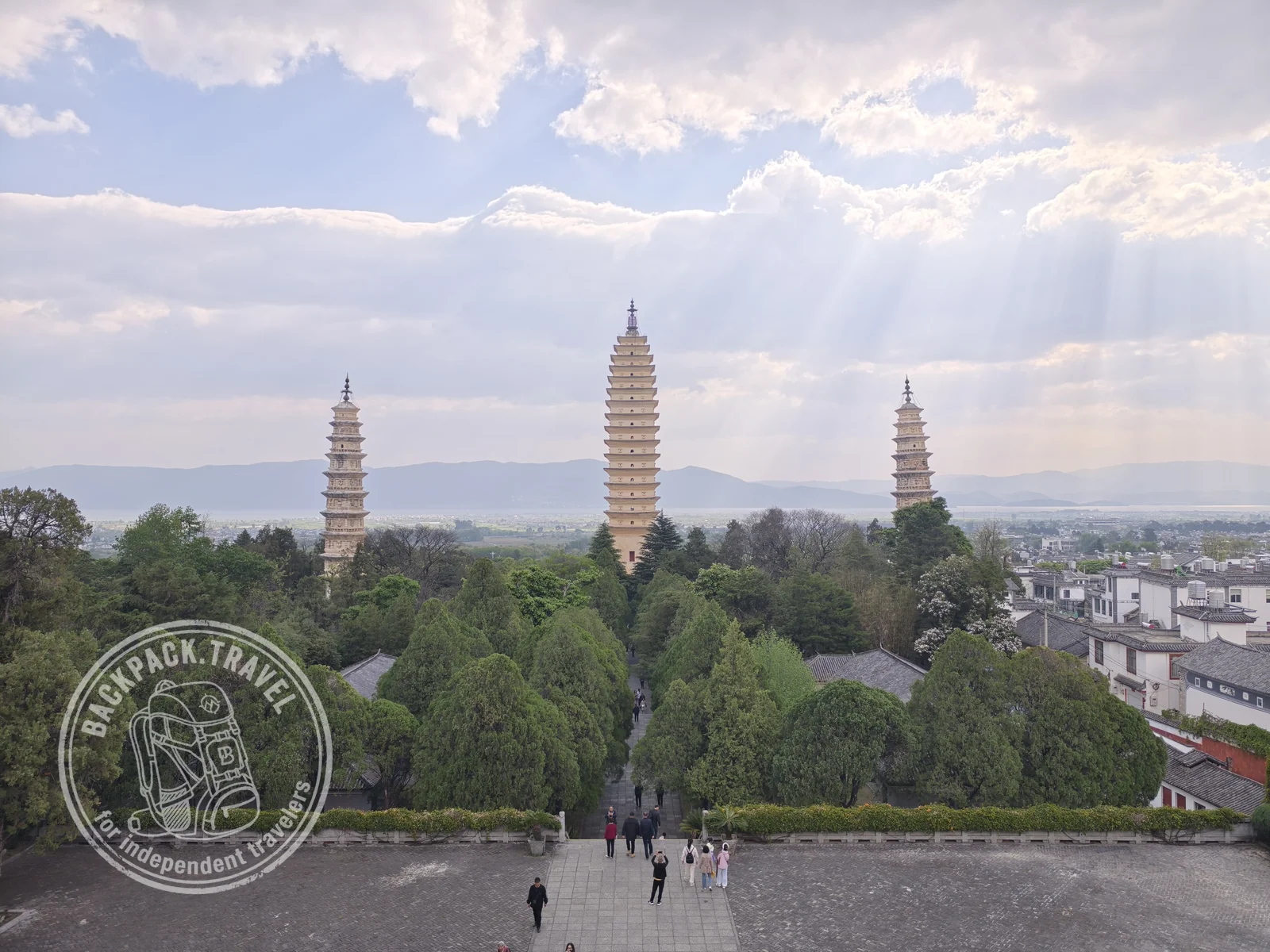
A Bai town between Erhai Lake and the Cangshan mountains. A walled old town, the three pagodas of the 10th-century Chongsheng Temple and the calm rhythm people come here for.
Wiki
Dali lies in a narrow strip between Erhai Lake and the Cangshan range, at an altitude of around 2,000 metres. This is the historic centre of the Bai people and the capital of two medieval states, Nanzhao and Dali, the latter crushed by the Mongols in the 13th century. Today people come here for the walled old town, the pagodas and the slow pace.
Don't get the two confused
Administratively, "the city of Dali" is Xiaguan, the modern district centre on the southern shore of Erhai. The railway station and the bus stations are there, but there is nothing to see. Everything touristic is in Dali Old Town (Dali Gucheng), about 15 km to the north, half an hour by bus or taxi. When arranging accommodation, check that it really is in the old town.
What to see
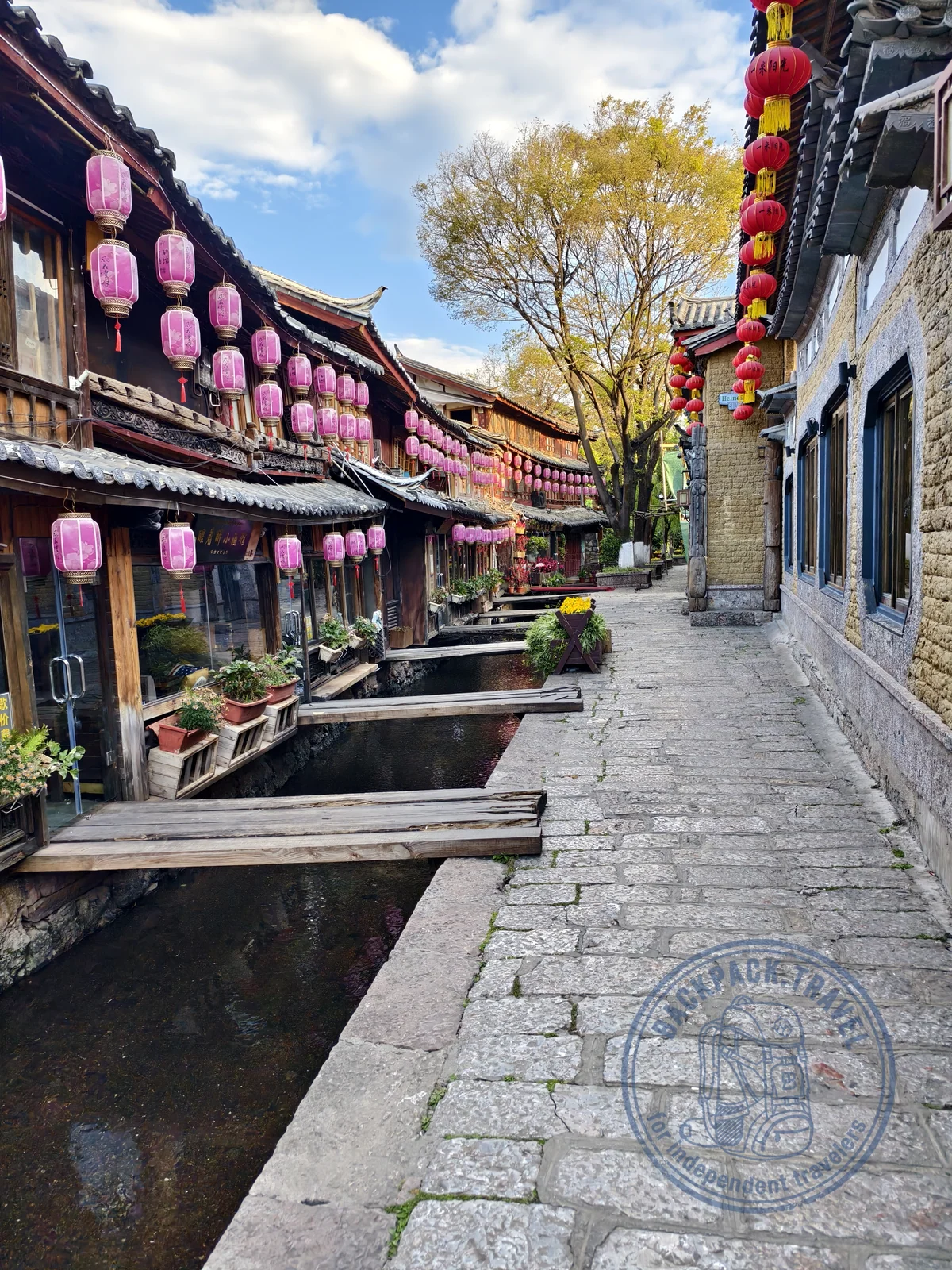
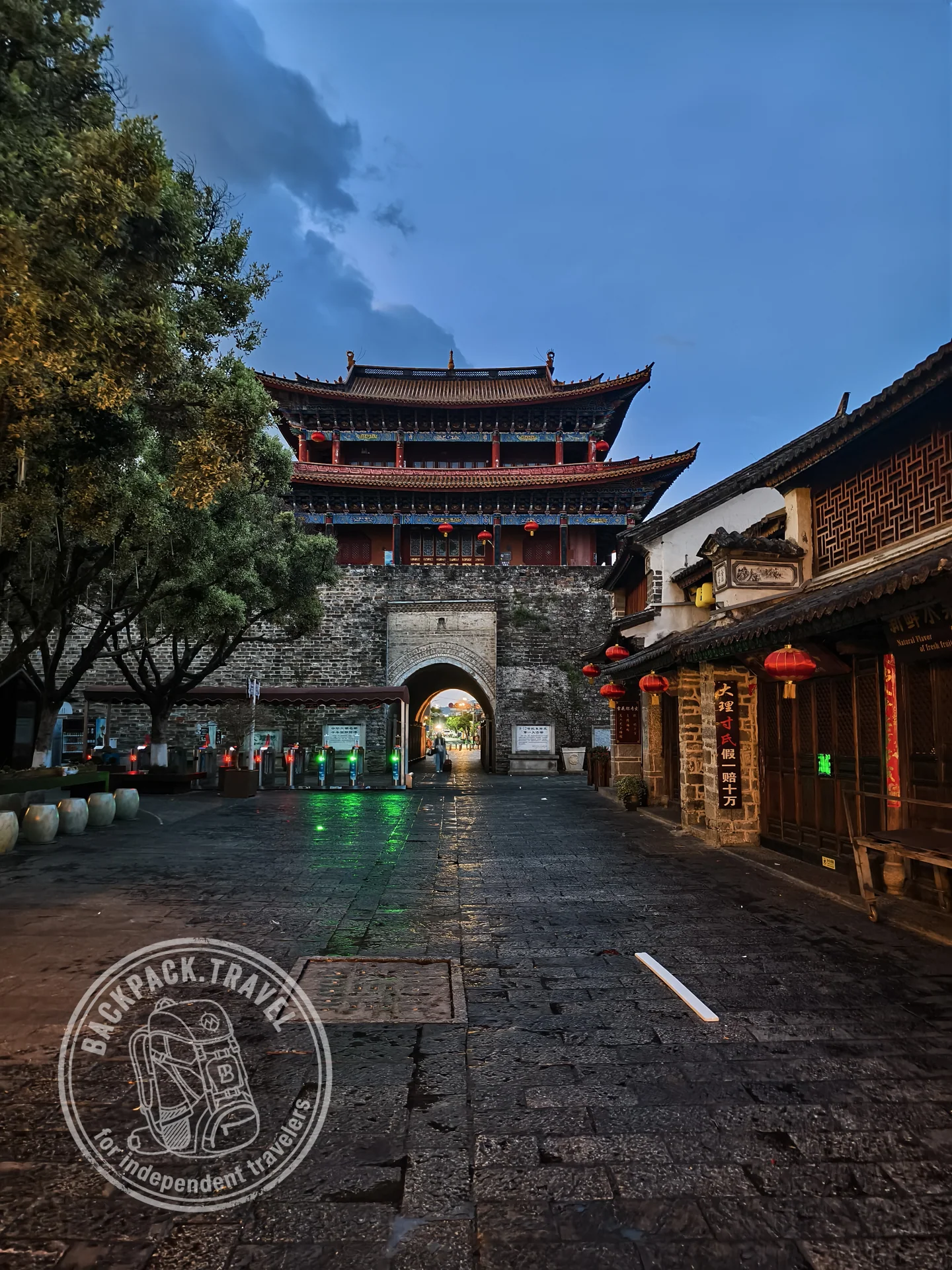
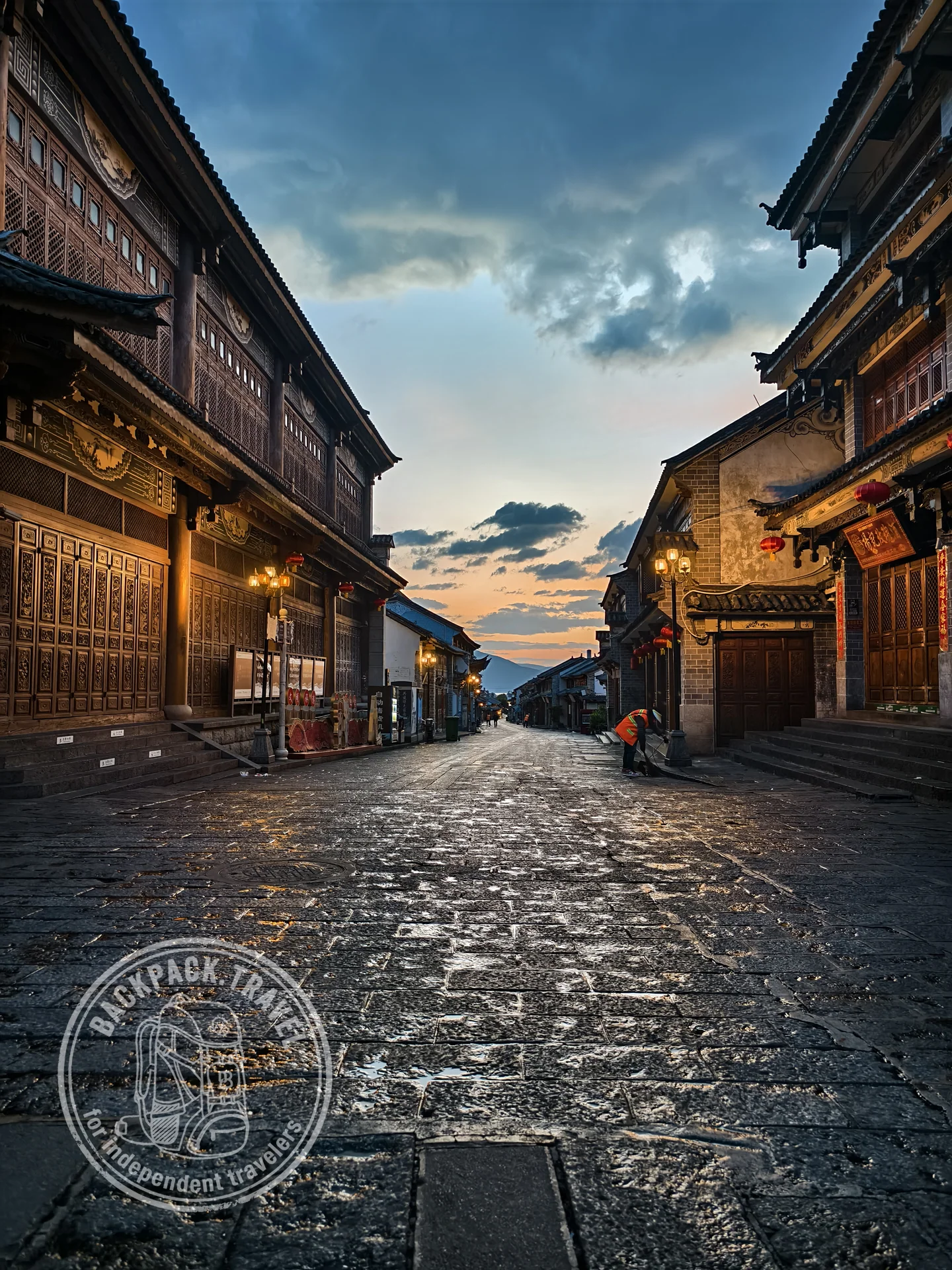
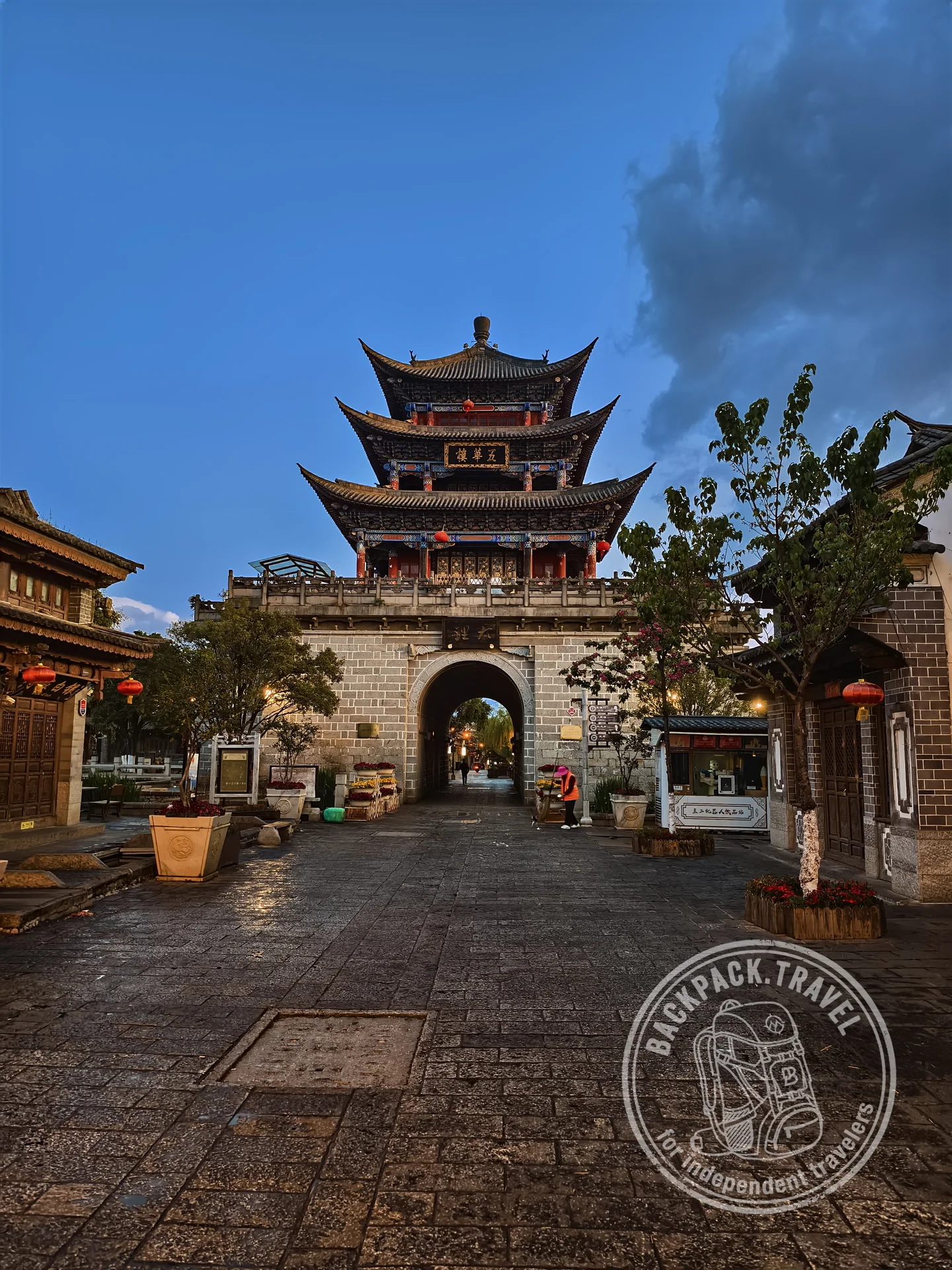
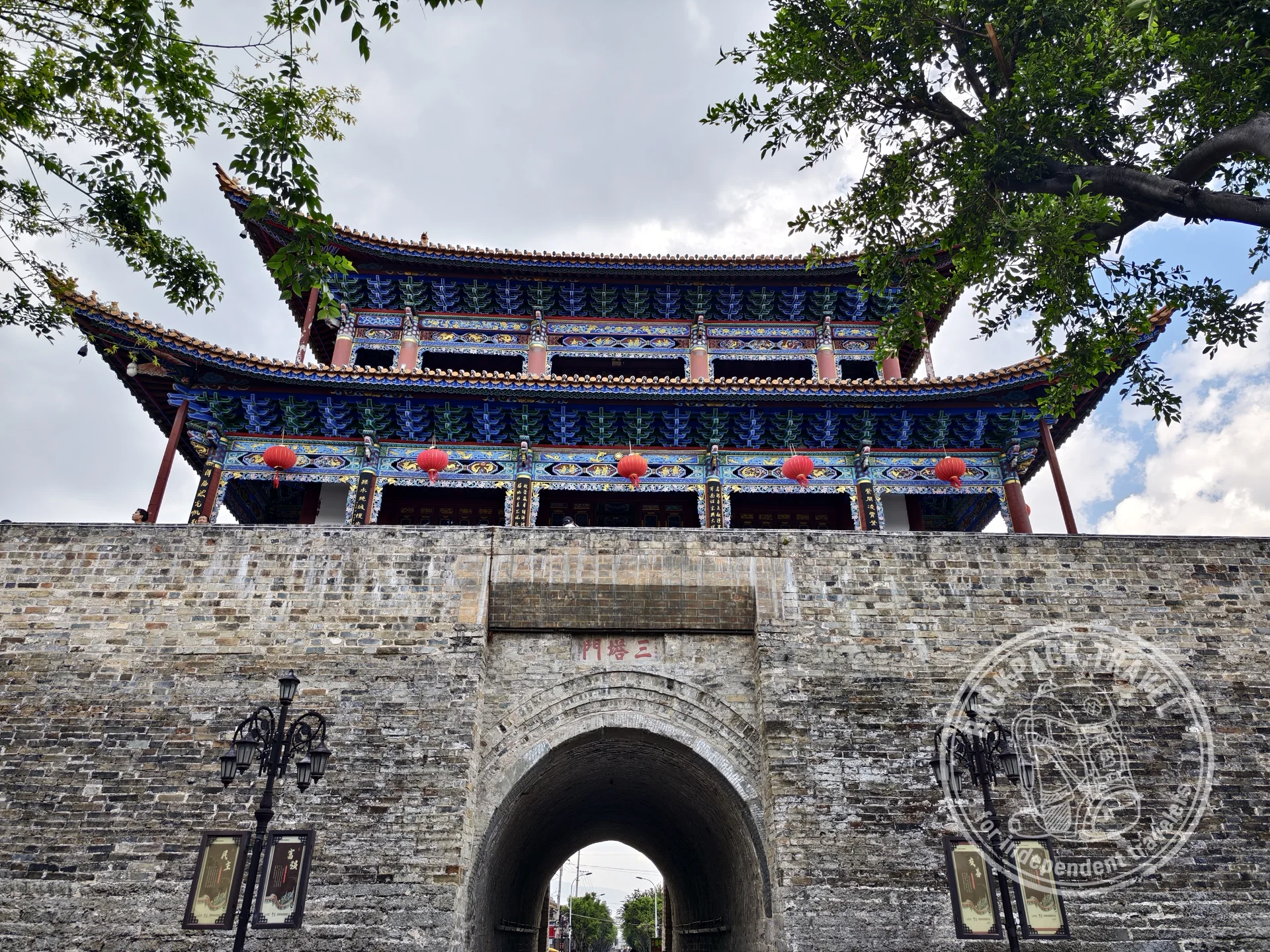
- Dali Old Town is a rectangle within city walls, with a grid of streets, gates facing the cardinal points and streams running along the roadways. The walls and towers have mostly been recreated, but the layout is Ming and can be read on the ground. The main axes are Fuxing and Renmin streets; the further you go from them, the quieter it becomes.
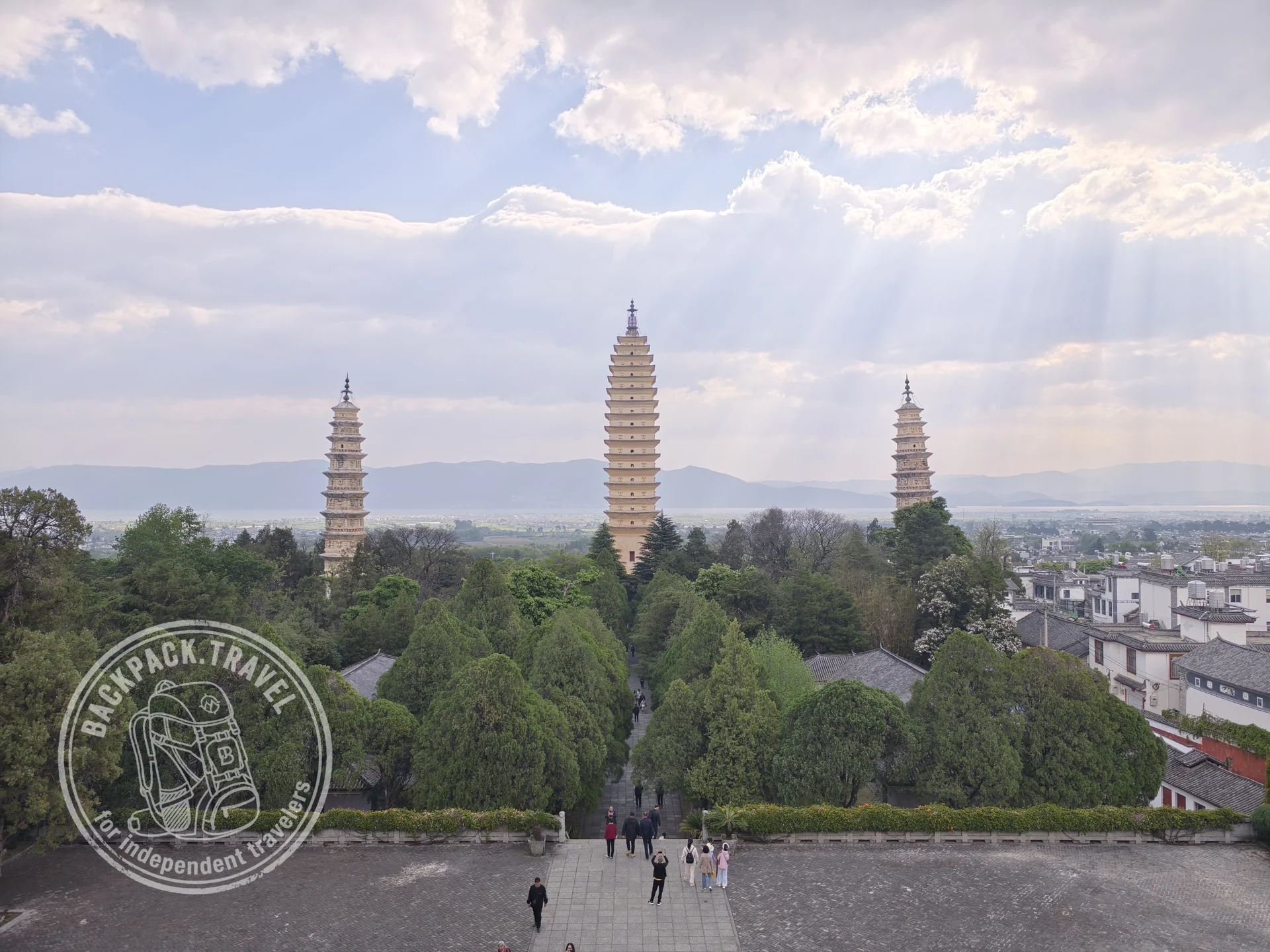
- The Three Pagodas of Chongsheng Temple are Dali's calling card and the most valuable thing here. The central one, Qianxun, stands about 69 metres high with sixteen tiers and was built under the Nanzhao state in the 9th century, a rare surviving monument of Tang times. The two side pagodas are lower (about 42 metres each, ten tiers) and belong to the 10th century, the period of the Dali state. The classic view is from the ponds behind the pagodas, where all three are reflected together.
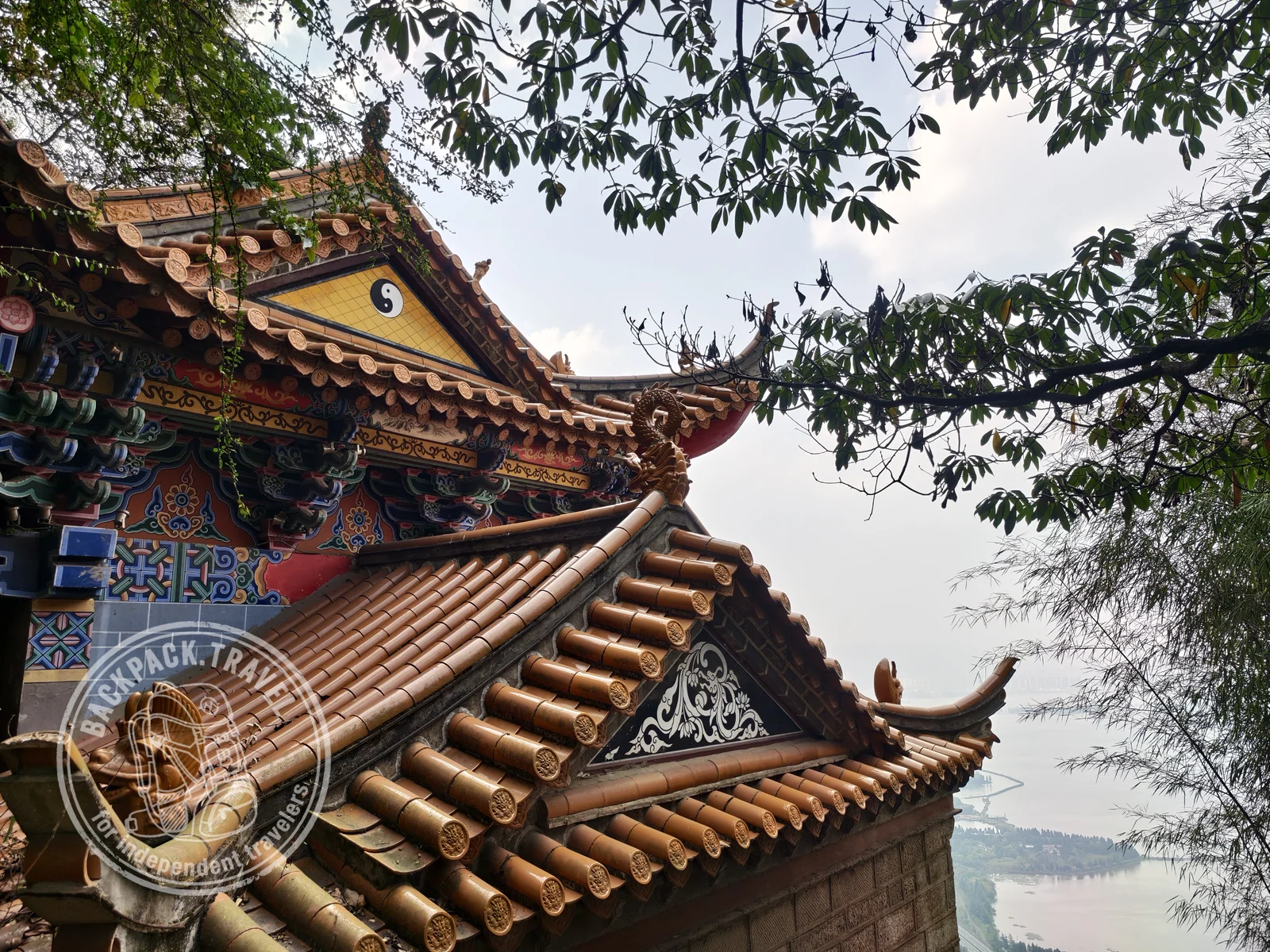
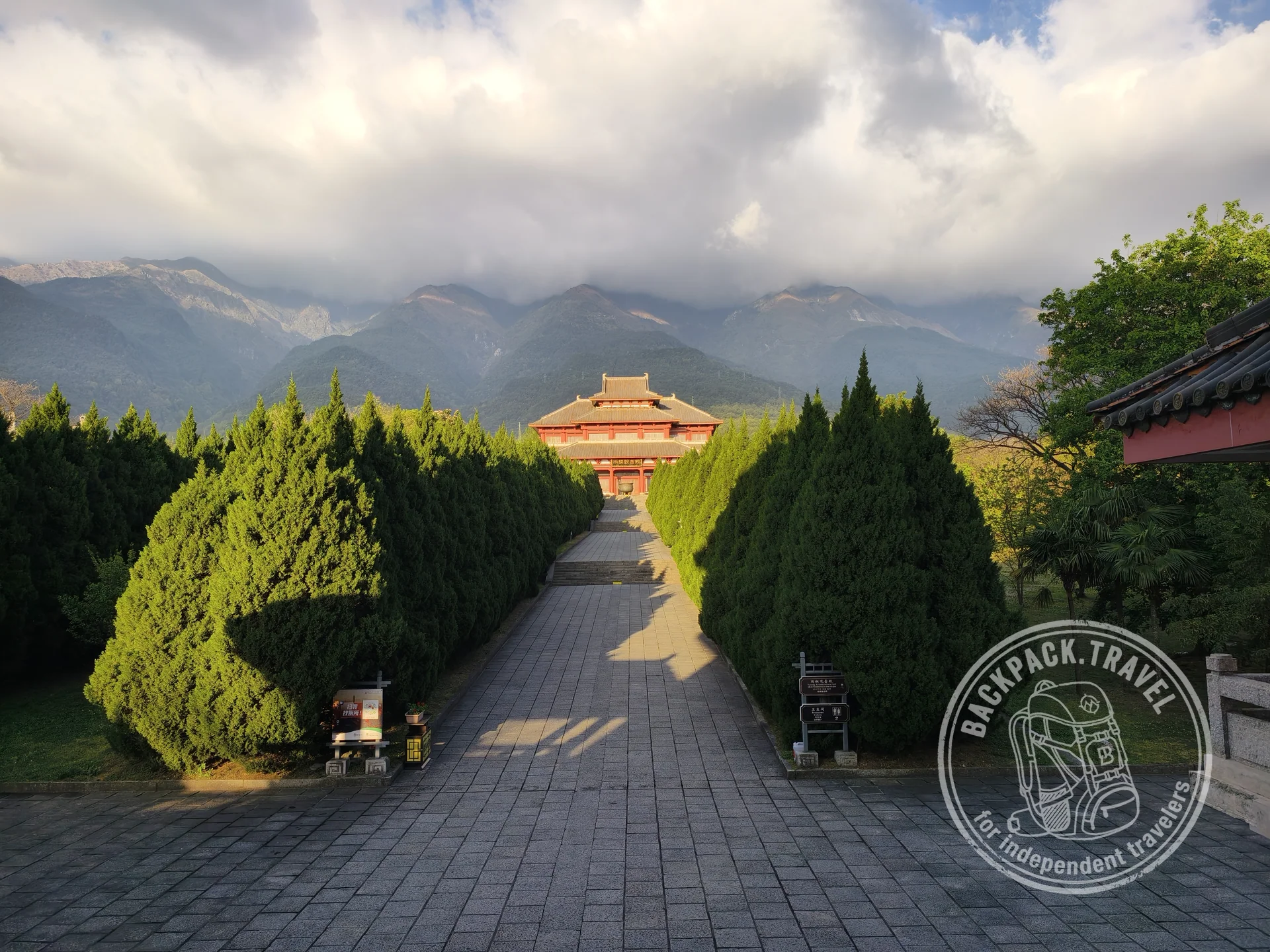
- Chongsheng Temple is the temple complex behind the pagodas, rising in terraces towards the mountain. It was rebuilt in the 2000s: the historic monastery was destroyed and only the pagodas were left of it. The views over the lake from the top are the best in the area.
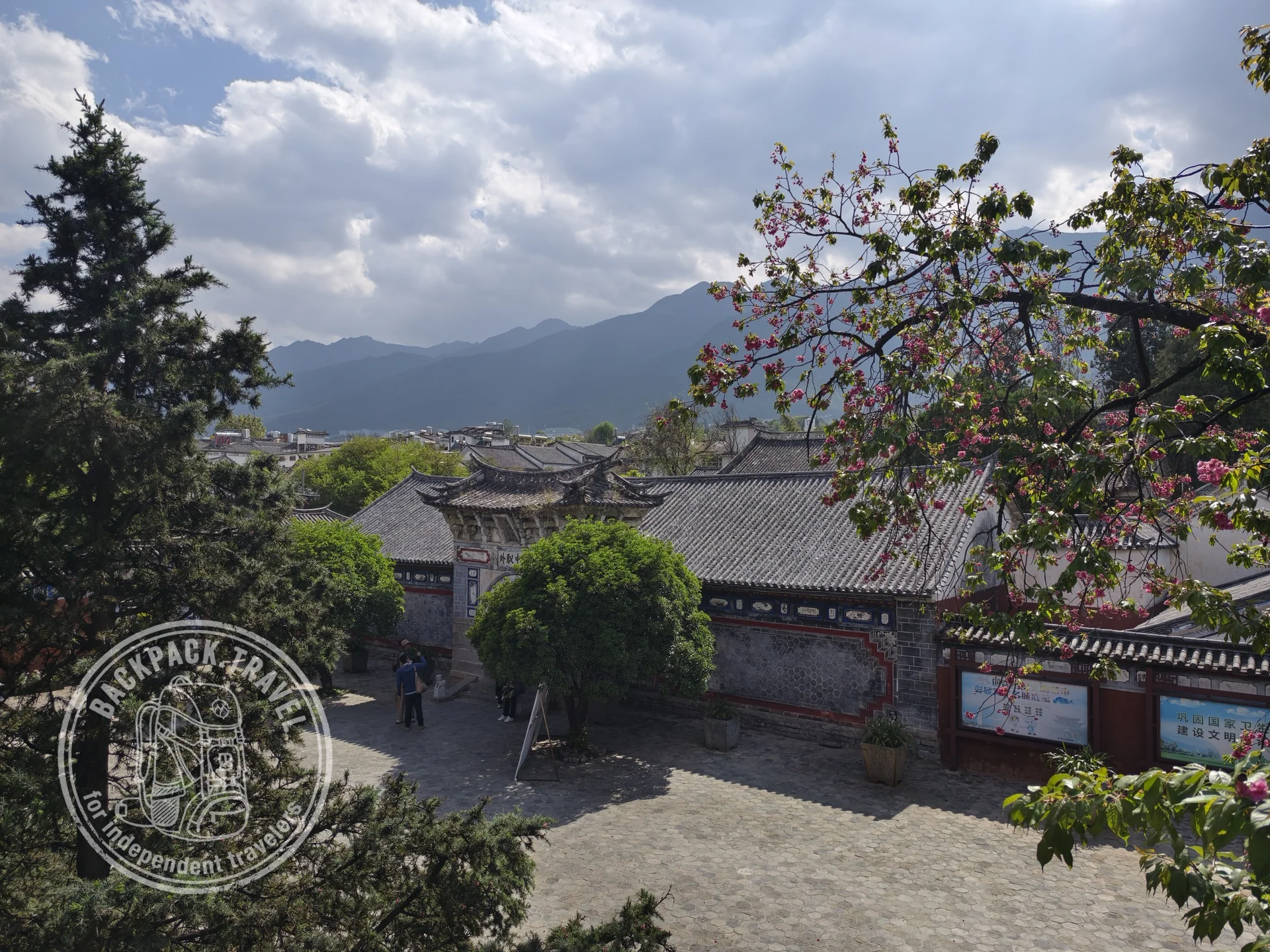
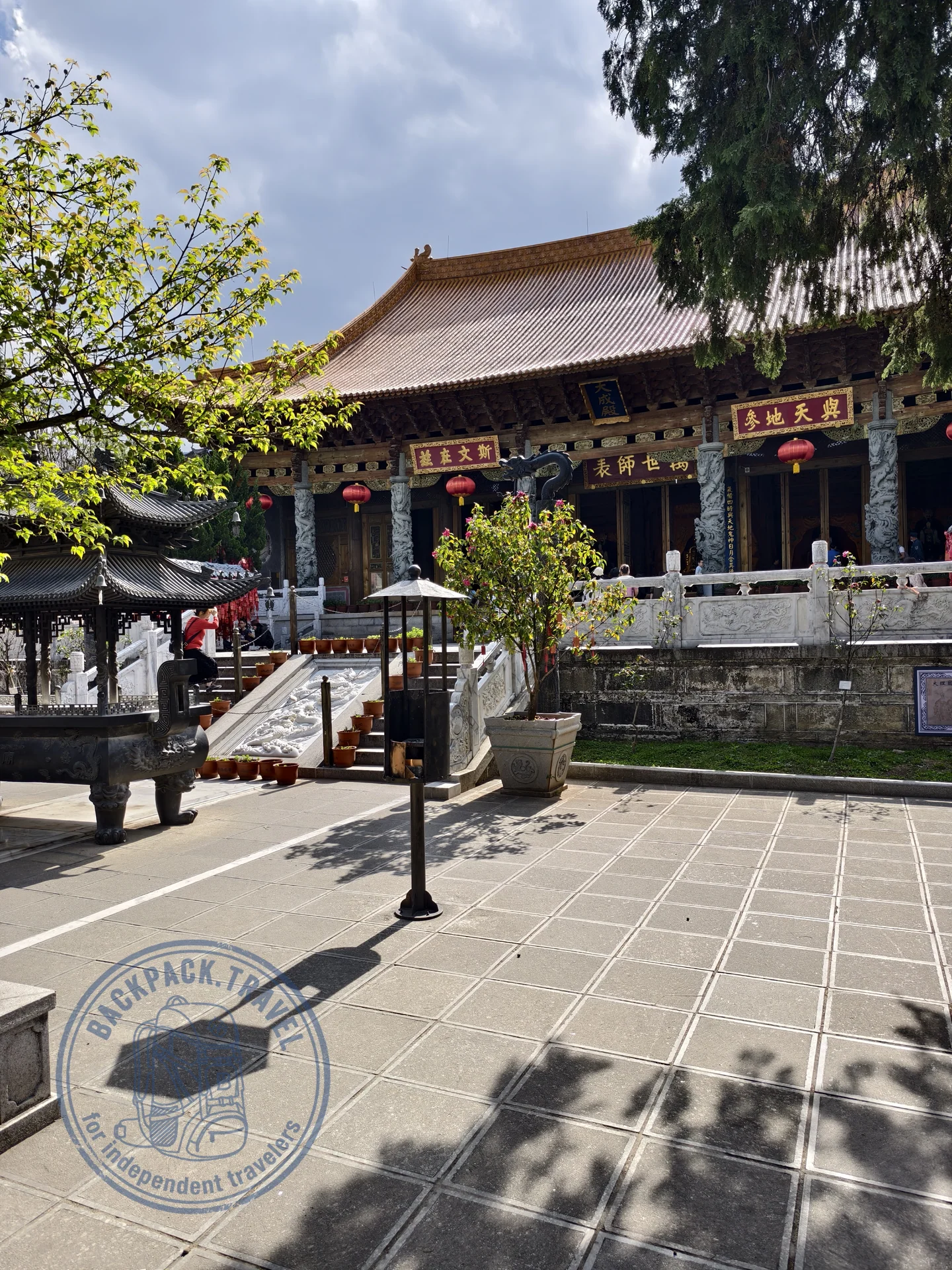
- The Confucius Temple in Dali is a small urban wenmiao that tour groups hardly ever reach; it is a quiet courtyard away from the main streets.
- Xizhou is a Bai town 20 km to the north, worth it for the architecture: mansions with whitewashed walls, carved detail and the characteristic reflecting screen in the courtyard.
Erhai and Cangshan
An ecological corridor has been laid out around the lake, a cycle path some 129 km long linking the shoreline villages. The full circuit takes two days, but more often people hire a bicycle or an electric scooter for the day and ride the western shore as far as Xizhou or on to Shuanglang. Rental is available in the old town and at the jetties, and boats cross the lake. Swimming is not allowed: after the Erhai clean-up programme of the late 2010s, access to the water was restricted along many stretches and some of the lakeside hotels were demolished.
The range above the town has nineteen peaks, the highest of them over 4,000 metres. Cable cars run up it (Zhonghe, Gantong, Ximatan), and from the upper stations level paths lead along the slope with views over the lake. Cloud closes everything in within half an hour, so go up in the morning.
How much time to allow
In a single day you can manage the Three Pagodas and the old town, but only just and without stopping. Two days already feel unhurried: they add either the circuit around Erhai by bicycle or the ascent of Cangshan. Three or four days are worth allowing for the sake of Xizhou, Shuanglang and the paths above the town. Dali is precisely the case where an extra day is not wasted: people come here to rest rather than to tick off sights.
What to combine it with
Dali and Lijiang are on the same railway branch: about two hours apart, so it is logical to take both cities in one trip. From Kunming the high-speed train reaches Dali in 2 to 2.5 hours, and the line continues on to Lijiang and Shangri-La. The standard Yunnan route is Kunming, Dali, Lijiang, and Shangri-La if time allows.
When to go
March to May and September to November are the months to come. Summer is the rainy season, with short but regular downpours. Winter is dry and sunny, warm by day and around freezing at night; not every old house has heating. The gap between day and night is large all year round.
Who won't enjoy it
Dali Old Town was long ago turned into a shopping street: bars, cafés, souvenirs, crowds on the main axes and prices higher than in the surrounding area. There is almost no authentic Bai life inside the walls — for that you have to go out to Xizhou and the villages. The Three Pagodas are impressive from the outside, but behind them stands a large modern complex, and the ticket has to be bought for the whole thing. If you have already seen Lijiang, the picture will look familiar, since the two towns are similar in format and blur together when visited one after the other. The altitude is easy enough to handle, but the ultraviolet here is strong and the evenings are cold even in summer.