Description
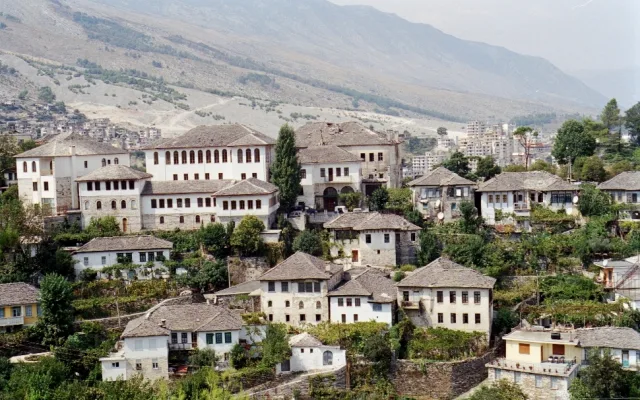
Gjirokastër is a UNESCO-listed city with a rich historical heritage, featuring outstanding examples of Ottoman architecture and a great citadel. It is also the birthplace of the writer Ismail Kadare.
Wiki
Gjirokastër is one of Albania's two UNESCO-protected "stone cities," where hundreds of Ottoman tower-houses with grey slate roofs climb the hillside above a broad valley. It is a compact, atmospheric place that fits neatly into a route between the Albanian Riviera and Greece — two days is enough to see the highlights at a relaxed pace.
Why come here
This is not a city under glass but a living mountain town with remarkable architecture. What genuinely deserves your attention:
- Ottoman tower-houses — stone mansions from the 18th and 19th centuries with thick walls, wooden bay windows and carved ceilings. A couple are open as museums (the Skënduli House, the Ethnographic Museum), and going inside is worthwhile — their character is not visible from the street.
- The Citadel above the city — a large fortress with open ramparts, views over the Drino valley, and an old American reconnaissance aircraft in the courtyard. There is a weapons museum inside. Worth visiting for the views and the sheer scale.
- The Old Bazaar (Pazari) — a cobbled junction lined with shops, cafés and stalls selling stone and textile souvenirs. The heart of the historic quarter.
- Birthplace of Ismail Kadare — Albania's most celebrated writer, who depicted the city in his novel Chronicle in Stone. A house-museum exists, though it will mean most to those who have read him.
To set expectations: the greatest reward Gjirokastër offers is the walk itself — the steep stone streets and the panoramic views of the city — more than any individual attraction.
Getting there
There is no local airport. The main hub is Tirana; from there Gjirokastër is several hours away by bus or shared minivan (furgon). The city sits on the main road linking the north of the country with the Greek border, so transport runs regularly:
- From Tirana — direct buses; the journey takes the better part of a day.
- From the Riviera (Sarandë) — a short hop of a couple of hours; easy to combine with the beaches and Butrint.
- From Greece (Ioannina) — buses cross the border; Gjirokastër is the first major Albanian city on the route.
The bus station is in the lower, modern part of town, while the old historic quarter is up on the hillside. The climb between the two is considerable: take a taxi up or check whether your furgon continues to the bazaar, otherwise you face a long slog uphill with a full pack.
Getting around
The old town is walkable — it is small, but the terrain is demanding: constant gradients and slippery cobblestones. Sturdy shoes with a good grip are essential, especially in wet weather. From the bazaar to the citadel is another uphill stretch on foot. Public transport is not needed within the historic quarter.
Where to stay
Stay in the old town (upper city), close to the bazaar and the citadel. Many guesthouses occupy the historic stone mansions themselves — that is part of the experience. The advantages are clear: everything is within walking distance, the evening atmosphere is special and the views are superb. Accommodation in the lower, modern town is cheaper and flatter, but there is nothing to do there and you will need transport to reach the sights.
How many days and when to visit
Two days is the ideal: one for the old town, the bazaar and the house-museums, the second for the citadel and unhurried wandering. If time is tight, it is realistic to cover the main sights in one full day.
The best seasons are spring and autumn: comfortable temperatures for climbing steep hillsides. Summer is hot and busier; winter is damp and cold in the mountains, though the city looks strikingly austere and crowds are minimal.
Food and money
Albania is one of the most budget-friendly destinations in Europe, and Gjirokastër is no exception — food, accommodation and transport are noticeably cheaper than in EU countries. A few things to note:
- Local cuisine has a Balkan-Turkish character: qofte, baked dishes, cheese, olives, regional sweets and strong raki.
- Cafés and tavernas in the old town are slightly pricier due to tourist traffic, but still inexpensive by European standards.
- Cash matters: ATMs are available in the lower town, but small shops and guesthouses may not accept cards. Withdraw Albanian lekë before you need them.
Practical tips and common mistakes
- Do not haul heavy luggage up the hill on foot — underestimating the climb from the bus station is a frequent mistake. A taxi costs very little.
- Allow extra time for transport: furgons leave when full, not on a fixed schedule.
- Do not stop at the bazaar — go inside at least one house-museum, or you will miss what makes this city genuinely unusual.
- Combine the trip with Sarandë, Butrint, or nearby Përmet and the Blue Eye spring — Gjirokastër alone fills two days, but paired with southern Albania it makes a compelling itinerary.
- Safety is high: the city is calm, and the main hazards are the slippery cobblestones and steep slopes, not crime.