Description
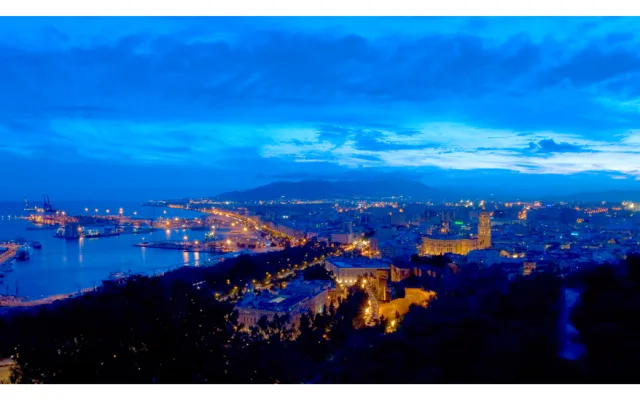
Málaga is a city on the Costa del Sol coast, known as the birthplace of Picasso. Visitors can explore the modern Picasso Museum and the Alcazaba citadel, as well as enjoy a lively nightlife scene.
Wiki
Málaga spent years as a mere stopover on the way to the Costa del Sol beaches — today it holds its own for a couple of days: a compact centre where everything is walkable, dozens of museums, sunshine almost year-round, and prices noticeably lower than in Barcelona or Madrid. Two days is enough to see the city and squeeze in a day trip to the mountains or the coast.
Getting there and getting around
Costa del Sol Airport (AGP) is one of Spain's busiest, with low-cost carriers flying in from across Europe. The centre is just 8–9 km away, and a taxi is rarely necessary:
- Cercanías commuter rail (line C1) — from the terminal to María Zambrano and Centro-Alameda stations, about 12 minutes, running every 20 minutes. The fastest and cheapest option.
- City bus A — to Plaza de la Marina; slower, but convenient with luggage.
- Taxi — a fixed fare into the centre; only worthwhile for groups or late arrivals.
Once in the city, transport is barely needed: the historic centre is crossable on foot in 20–30 minutes end to end. EMT buses are useful mainly for distant beaches or the climb up to Gibralfaro. Bike hire and e-scooters are available, but the narrow old-town lanes make them more trouble than they're worth. Car hire only makes sense for day trips out of the city — Ronda, Mijas, Caminito del Rey.
Where to stay
- Centro Histórico — in and around Calle Marqués de Larios. Everything is on your doorstep, but nights are noisy, especially near the bar quarters.
- Soho — between the waterfront and the centre; more contemporary, street art, somewhat quieter and often cheaper for the same convenience.
- La Malagueta — by the beach of the same name, ideal if you want to step straight onto the sand in the morning; 10–15 minutes' walk to the centre.
- Near María Zambrano station — practical if you're arriving or leaving early by train, but the neighbourhood itself is unremarkable.
Budget travellers are well served by the central hostels; plenty of choice keeps prices reasonable.
How many days and how to plan your route
Two days is enough for the city itself plus one day trip.
- Day 1 — the old town. The Alcazaba and the climb to Gibralfaro are best tackled in the morning before the heat and the crowds build up: there is a path connecting the fortress to the castle, so buy a combined ticket for both. From there, the cathedral, the Atarazanas market (go before 14:00 while stalls are still trading), the Picasso Museum, then an evening in Soho and along the Muelle Uno waterfront.
- Day 2 — out of the city. Either Caminito del Rey (book tickets 2–3 months ahead; get there independently by commuter train to El Chorro), or the hilltop town of Ronda, or the easier Mijas. There isn't time for all three — pick one.
When to go
Málaga is comfortable almost year-round. The sweet spots are April–June and September–October: warm, the sea is swimmable, and the crowds are manageable. July and August are hot and very busy — beaches packed, prices up. Winter is mild (around 17 °C during the day), museums and the city run at full capacity, and it's a solid option for those not coming primarily to swim. Factor in Holy Week (Semana Santa): spectacular processions, but prices spike and everything fills up.
Food and prices
The cooking is Andalusian and Malagueño, with a strong emphasis on seafood. Things to look for:
- Espetos — sardines skewered on a cane and grilled over coals at the chiringuitos (beach bars). Season runs from spring to autumn; eat them by the sea, not in the centre.
- Fritura malagueña — a mixed platter of fried fish and seafood.
- Málaga sweet wine and Muscat — try them at an old bodega such as Antigua Casa de Guardia, where they pour straight from the barrel.
- Tapas — most bars in the centre charge for them, unlike Granada where they arrive free with a drink.
Prices are moderate by Spanish standards. The menú del día (a set lunch of two or three courses with a drink) is the best-value way to eat well on weekdays. Coffee, a caña of beer and a glass of wine are all inexpensive; you start overpaying on the front row by the sea and along the tourist strip of Larios.
Safety and common mistakes
Málaga is a relaxed city with no serious crime to speak of. The main risk is pickpockets in crowded spots — the market, the airport train and public festivals; keep your phone and wallet on you.
Things to avoid:
- Don't confuse Málaga with the resorts next door — Torremolinos and Marbella are where you go for beach idleness; stay here for a city-and-culture trip.
- Don't leave Caminito del Rey tickets until the last minute — they sell out months in advance.
- Don't eat on Larios itself or on the front row of the waterfront: it's more expensive and worse quality than a couple of streets back.
- Don't hire a car if your entire plan is the centre: parking is paid and awkward, and everything is already within walking distance.
- Tackle the Alcazaba and Gibralfaro in the morning — the midday climb in the heat is draining, and the views are hazier later in the day.