Seoul
South KoreaDescription
The capital of K-pop and K-drama — Gyeongbokgung, Myeongdong, Itaewon and barbecue.
Wiki
Seoul is the capital of the Republic of Korea and its largest metropolis, with about half the country's population living in the wider urban area. The city startles with its contrasts: within minutes you can go from the ancient palaces of the Joseon era to skyscrapers, neon signs and the headquarters of the corporations that set the rhythm of global pop culture.
A little history and geography
The city spreads across both banks of the Han River, which divides it into northern and southern halves. Seoul became the capital of a unified Korean state as early as 1394, under Yi Seong-gye, the founder of the Joseon dynasty. The north bank holds the historic centre with its palaces and old quarters, while the south — above all the district of Gangnam — grew up in the second half of the 20th century and became the symbol of business and fashionable Seoul. Ranges of low mountains — Namsan, Bukhansan, Inwangsan — surround the built-up area and serve residents as green space for walking.
Palaces and historic heritage
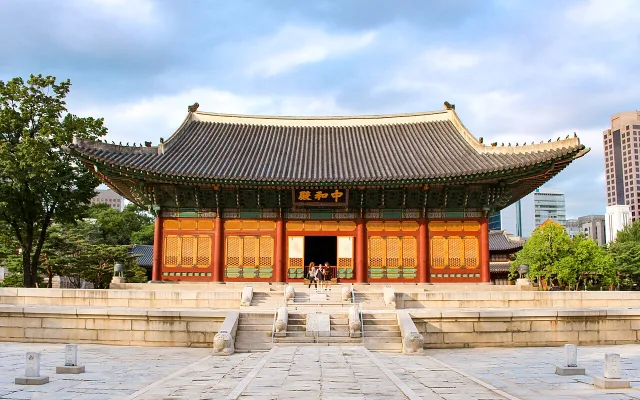
The chief palace is Gyeongbokgung, and beyond it stands Changdeokgung with its UNESCO-listed "Secret Garden" (Huwon), a model of Korean landscape art. Nearby are the palaces of Changgyeonggung and Deoksugung, along with the Jongmyo shrine, where the ancestors of the ruling dynasty were honoured. Between the palace complexes of Gyeongbokgung and Changdeokgung lies Bukchon Hanok Village — here traditional hanok houses with tiled roofs survive. Not far off runs Insadong, a street of crafts and galleries with tea houses and shops selling calligraphy, ceramics and antiques.
Districts and the modern city
- Gangnam — the business and prestige district made famous by the Psy song; boutiques, cosmetic surgery clinics and the youthful Garosugil street.
- Hongdae — the student quarter around Hongik University, a centre of independent music, street art and street performance.
- Itaewon — the most international district, with food from all over the world.
- Dongdaemun — round-the-clock shopping complexes and the futuristic Dongdaemun Design Plaza, designed by Zaha Hadid.
- Seoul Forest and the Han River embankments — places for cycling, picnics and time by the water.
Culture and entertainment
Seoul is the world capital of the K-pop industry and of Korean television drama. Fans find the agencies of the major labels in Gangnam, along with themed cafes and shops selling music merchandise. "High" culture is rich too: the National Museum of Korea, the National Museum of Modern and Contemporary Art (MMCA) and the palace museums. Traditional performances, seasonal festivals and the illuminated Cheonggyecheon stream, turned from a traffic artery into a walkway through the centre of the city, complete the picture.
Food
Korean gastronomy reveals itself fully in Seoul. Beyond the barbecue, the galbi and the samgyeopsal, it is worth trying the stews and soups: bibimbap, kimchi jjigae, sundubu jjigae (a spicy tofu soup), samgyetang (chicken with ginseng) and naengmyeon (cold buckwheat noodles). Street food is a pleasure of its own: besides tteokbokki and pajeon, people here eat hotteok (sweet pancakes), twigim and sundae blood sausage. Gwangjang market is known for its mung bean pancakes and live octopus, while Noryangjin market trades in seafood.
Transport and practicalities
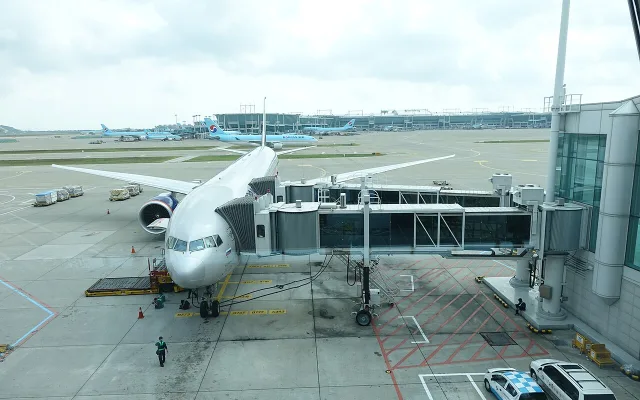
The Seoul metro is one of the longest and most convenient in the world, with maps and announcements in English. The universal T-money card is topped up at machines and convenience stores and works on the metro, buses and taxis. From the main airport, Incheon, the AREX express train and limousine buses run into the centre; a second airport, Gimpo, handles mainly domestic and short-haul flights.
When to go, and advice
The best times are spring with the cherry blossom and the golden autumn with its maples; summer is humid, with the jangma rainy season in June and July, and winter is dry and cold. A tourist SIM card or eSIM is easy to arrange at the airport. In five days you can realistically see the palace centre and Bukchon, climb Namsan, take a trip to the DMZ border area, walk through Hongdae, Itaewon and Gangnam, and still leave time for the markets and Korean barbecue. The city is safe, and English signage and navigation apps make getting around noticeably easier.
Photos