Description
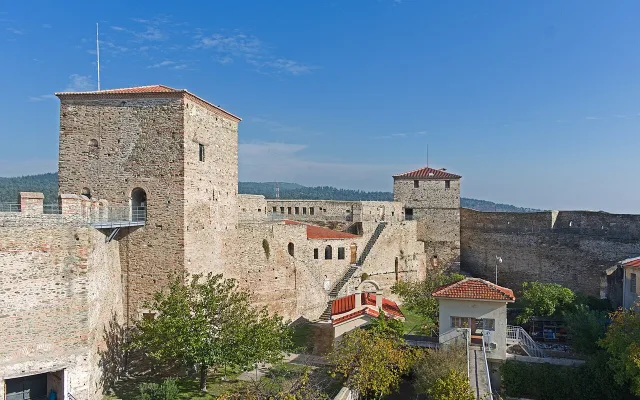
Thessaloniki is the second city of Greece, known for the White Tower and for the ferries towards Mount Athos. It also offers a wide range of street food.
Wiki
Thessaloniki is the second-largest city in Greece and the unofficial capital of its northern region of Macedonia. Founded in 315 BC by King Cassander and named after his wife, the sister of Alexander the Great, the city was for two thousand years a major port and a crossroads of cultures — classical, Byzantine, Ottoman and Jewish. Today it is a lively student and gastronomic centre, less touristy than Athens but saturated with history and with the everyday atmosphere of a Mediterranean city.
History and heritage
Set at the head of the Thermaic Gulf, Thessaloniki served for centuries as one of the most important gateways to the Balkans. In the Roman and early Christian period the Apostle Paul preached here, addressing the local community in the New Testament Epistles to the Thessalonians. In the Byzantine period the city became second only to Constantinople and left an exceptionally rich collection of churches. Five hundred years of Ottoman rule (from 1430) added minarets, baths and markets, while the large Sephardic Jewish community, which resettled here from Spain at the end of the 15th century, made Thessaloniki one of the principal centres of Judaism in the Mediterranean, until the tragedy of the Second World War. The city returned to Greece in 1912.
Main sights
- The White Tower — a rounded 15th-century Ottoman fortification on the seafront, which has become the emblem of Thessaloniki. Inside is a museum of the city's history, and the upper platform gives a view over the gulf.
- The Rotunda — a massive circular structure of the early 4th century, conceived as the mausoleum of the emperor Galerius. It later served as a Christian church and a mosque; fragments of early Christian mosaics survive.
- The Arch of Galerius (Kamara) — a triumphal arch with reliefs, raised around the year 300 to mark victories over the Persians. The neighbouring square with its cafes is a popular meeting place.
- The Upper Town (Ano Poli) — the only quarter to survive the fire of 1917: narrow lanes, wooden Ottoman houses, Byzantine walls and a panorama of the whole city.
- The UNESCO churches — Agios Dimitrios (the basilica of the city's patron saint), Hagia Sophia, Panagia Acheiropoietos and other early Christian and Byzantine monuments on the World Heritage list.
Museums
The Archaeological Museum and the Museum of Byzantine Culture hold finds from across Macedonia, from Hellenistic jewellery to church frescoes. The treasures from the royal tombs at Vergina nearby, connected with Philip II, the father of Alexander the Great, deserve particular attention. The Jewish Museum and the Museum of the Macedonian Struggle also help make sense of this many-layered past.
Food and markets
Thessaloniki is rightly considered the gastronomic capital of the country, shaped by the influence of refugees from Asia Minor and of its Balkan neighbours. Be sure to try bougatsa, a filo pastry with custard, cheese or minced meat, eaten here for breakfast. Taverna menus run to meze, fresh seafood by the port, spicy small plates and local wine. The covered markets of Modiano and Kapani are the heart of edible Thessaloniki: stalls of olives, cheeses, spices and fish, and around them rooms where plates of meze come with tsipouro, the strong grape spirit related to ouzo. Evening life bubbles in the Ladadika district — former warehouses by the harbour turned into blocks of tavernas and bars.
Ferries towards Athos
Thessaloniki is a convenient starting point for a trip towards the monastic republic of Athos (the Holy Mountain). From here travellers reach the town of Ouranoupoli, from which ferries run along the peninsula past the monasteries. Men need a special permit to go ashore — the diamonitirion, issued in limited numbers and arranged in advance. Women are not admitted to the territory of Athos, but the coastal cruises allow the monasteries to be seen from the water. Excursions are also organised from Thessaloniki to Halkidiki with its beaches and to the archaeological sites of the region.
Practicalities
Allow about three days for the city and its surroundings: enough for the historic centre, the museums, the Upper Town and a day trip to Vergina or the sea. Macedonia International Airport connects Thessaloniki with the major European cities, and rail and bus links reach Athens and the Balkan countries. The compact centre is pleasant to cover on foot along the waterfront, and spring and autumn are considered the best times to visit, when the summer heat is absent.