 Города и дороги
Description
An oasis in a basin 150 metres below sea level and one of the hottest places in China. The mud-brick Emin Minaret, the ruins of Jiaohe and Gaochang, vineyards and the underground karez channels.
Wiki
Turpan (also written Turfan) is an oasis in an endorheic basin in eastern Xinjiang. The town itself lies at about 30 metres above sea level, but the floor of the basin near Lake Ayding drops to minus 154 metres, the lowest point in China. Hence the climate: Turpan has recorded 49.1 °C, and not far away, at Sanbao, the national record of 52.2 °C was registered. Even so, for centuries the oasis fed Silk Road caravans with grapes and melons, and it remains the country's main raisin-producing region.
What to see
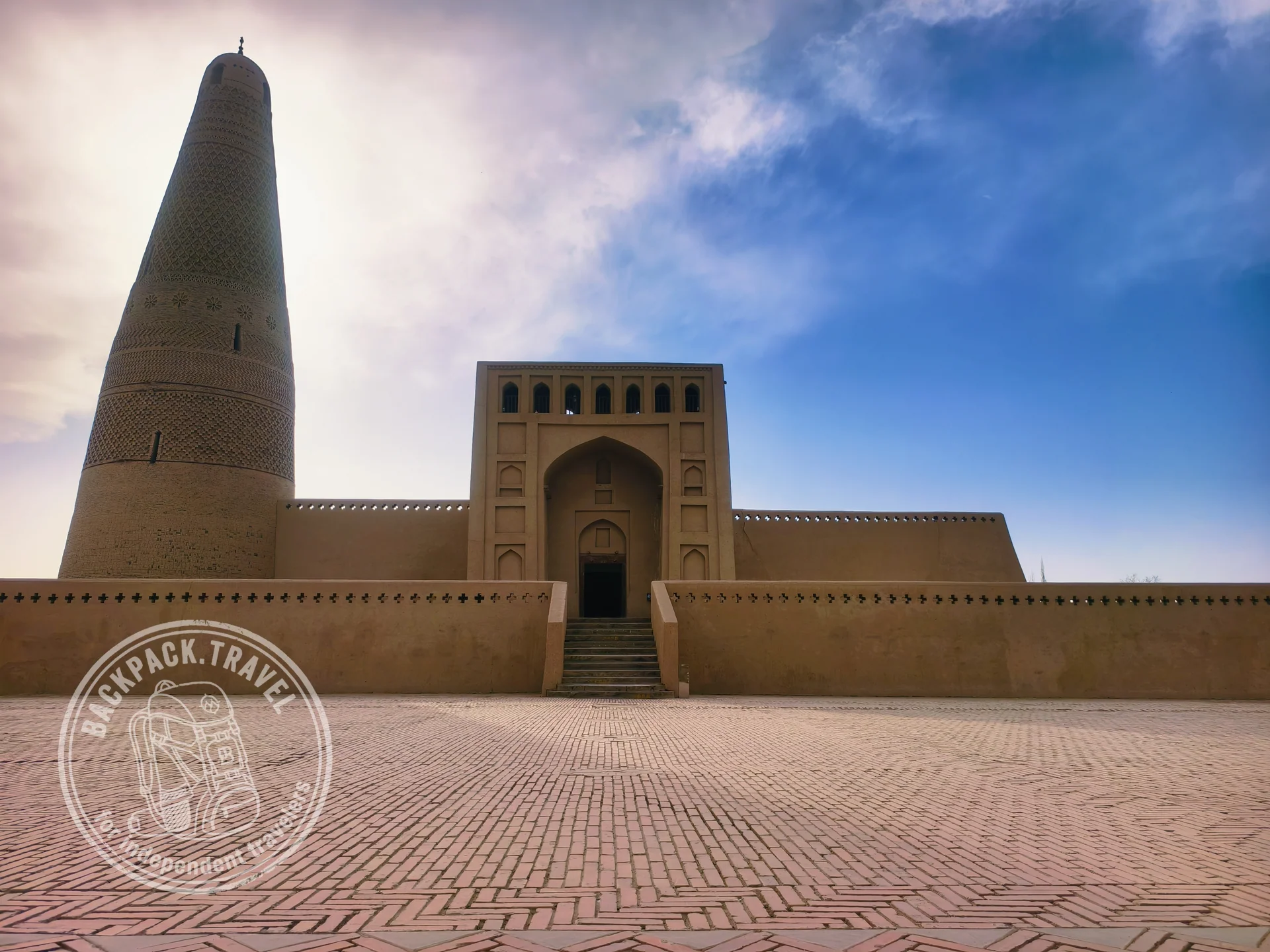
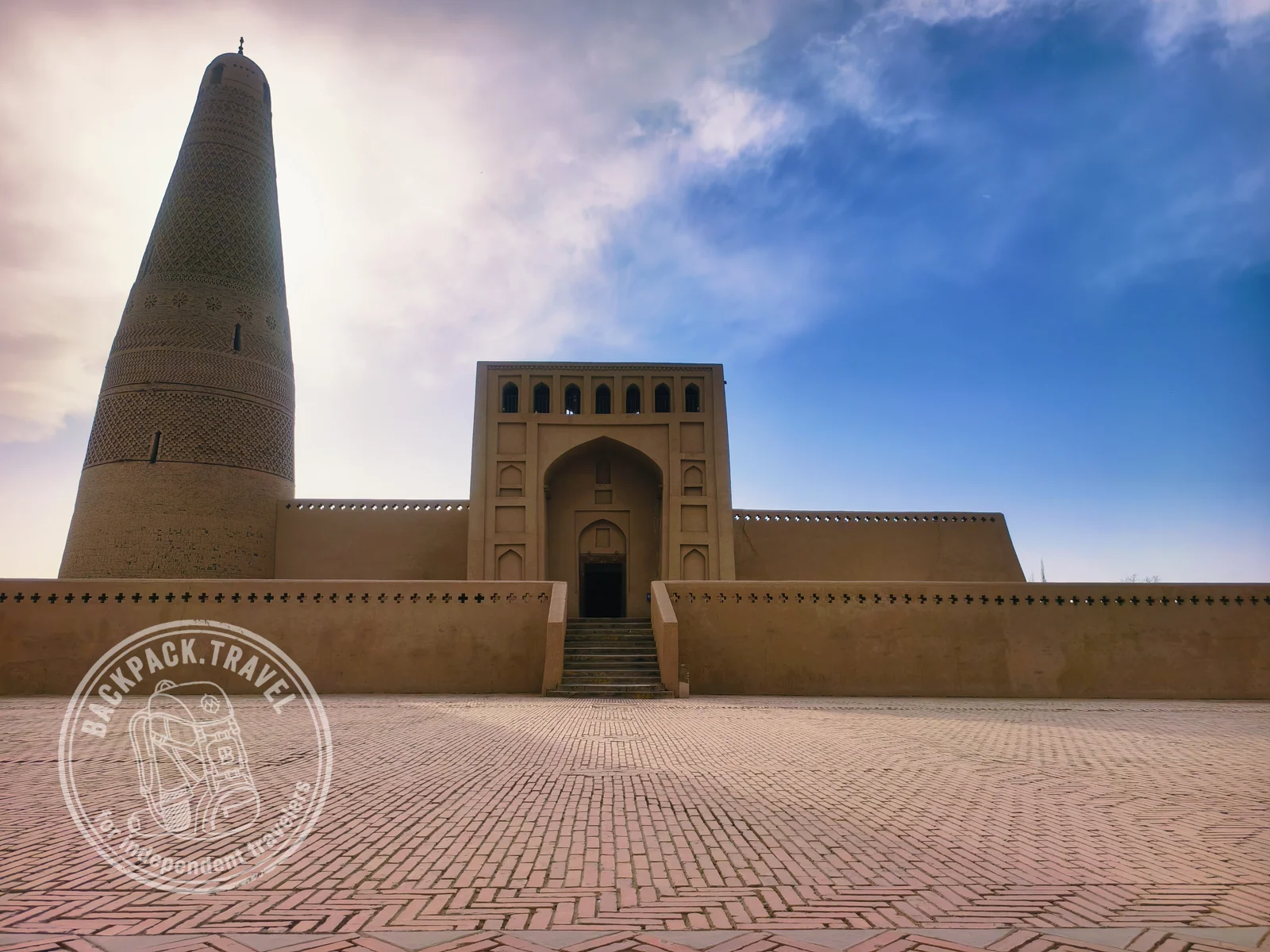
- The Emin Minaret is the city's main symbol. The mosque and its minaret were begun by Turpan's ruler Emin Khoja and completed in 1777-1778 by his son Suleyman. The minaret stands 44 metres high, built of mud brick laid in patterns, and measures about 12 metres across at the base. It sits on the southern edge of town, among the vineyards.
- Jiaohe is the ruined city on a rock outcrop between two riverbeds, roughly 10 km to the west. The streets, temples and dwellings were not built up but cut down into the loess, which is why they have survived unusually well. In 2014 they were added to the UNESCO list as part of the site "Silk Roads: the Routes Network of Chang'an-Tianshan Corridor".
- Gaochang is the ruin of a larger city 30 km to the south-east, also on the UNESCO list since 2014. Distances here are greater and there is almost no shade; visitors are driven around the site in electric carts.
- The Bezeklik Caves and the Astana tombs are Buddhist cave temples with the remains of wall paintings, and the necropolis of ancient Gaochang. Some of the Bezeklik frescoes were carried off by European expeditions in the early 20th century, and the marks left where they were cut out are still visible on site.
- The Flaming Mountains are a red ridge along the road to Gaochang, familiar from the novel Journey to the West. There is a viewing point, but in essence this is a view from the car window.
- The karez are the underground water channels that supplied the oasis from the mountains; a museum has been set up with a section of tunnel.
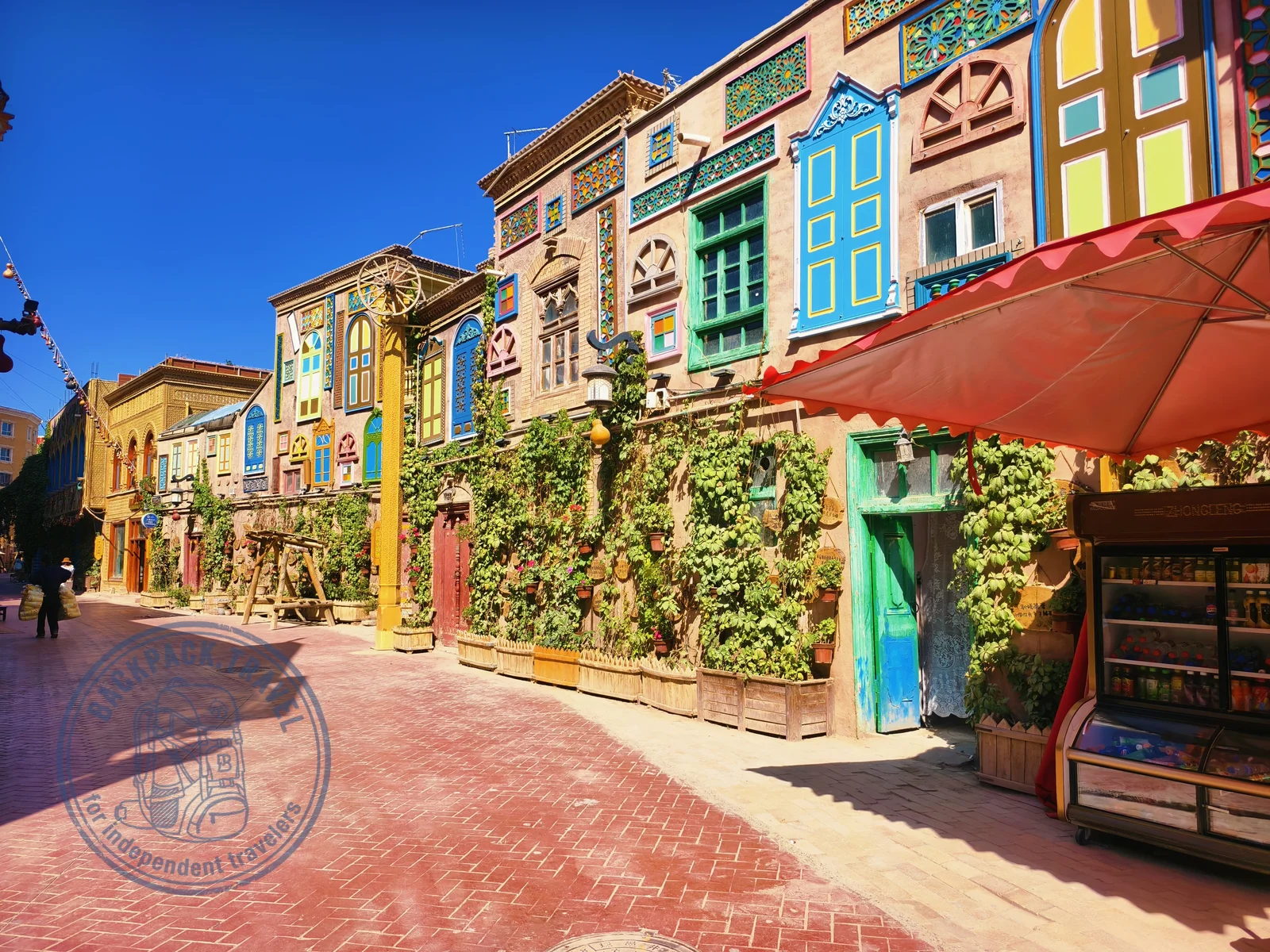
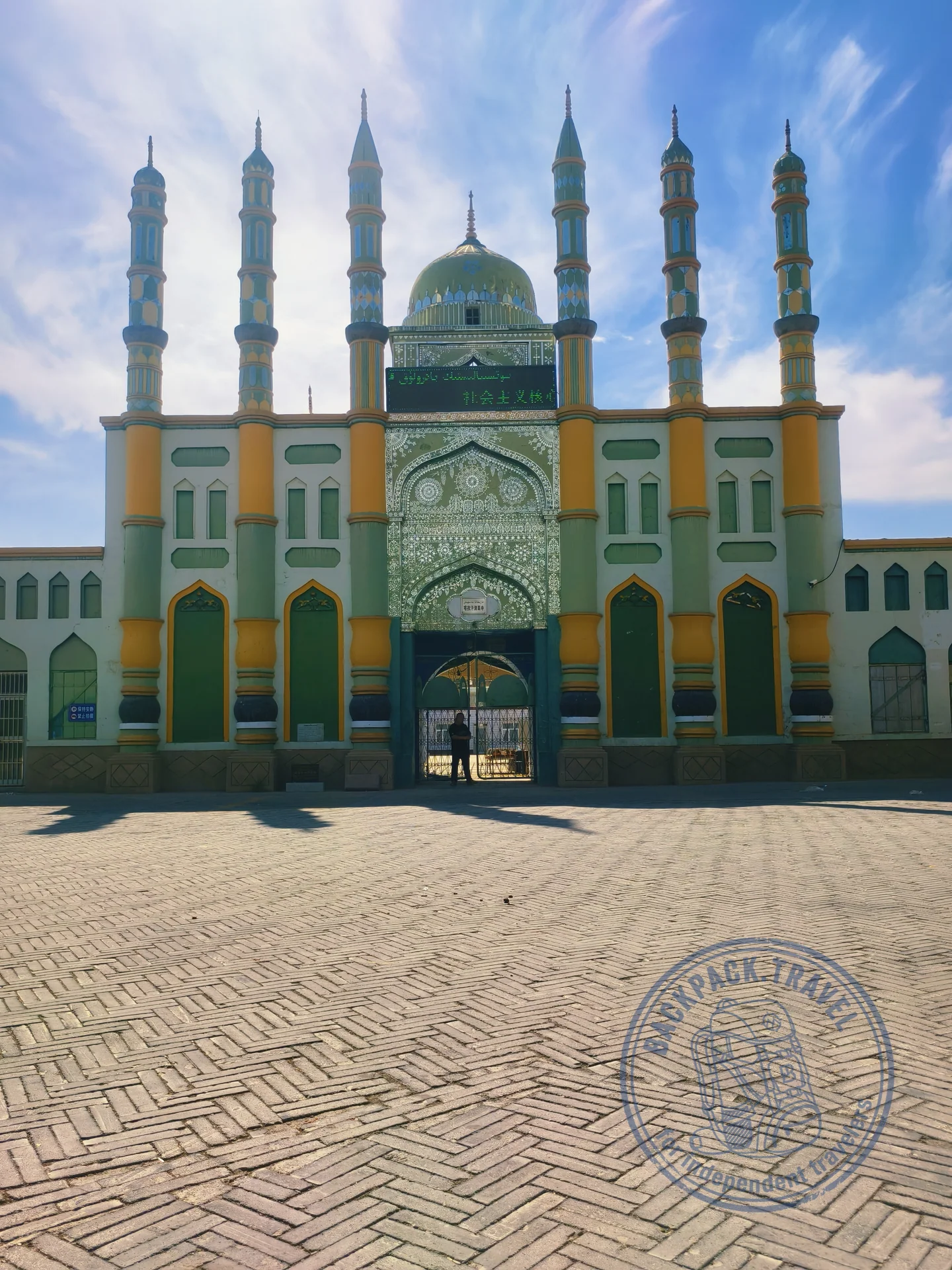
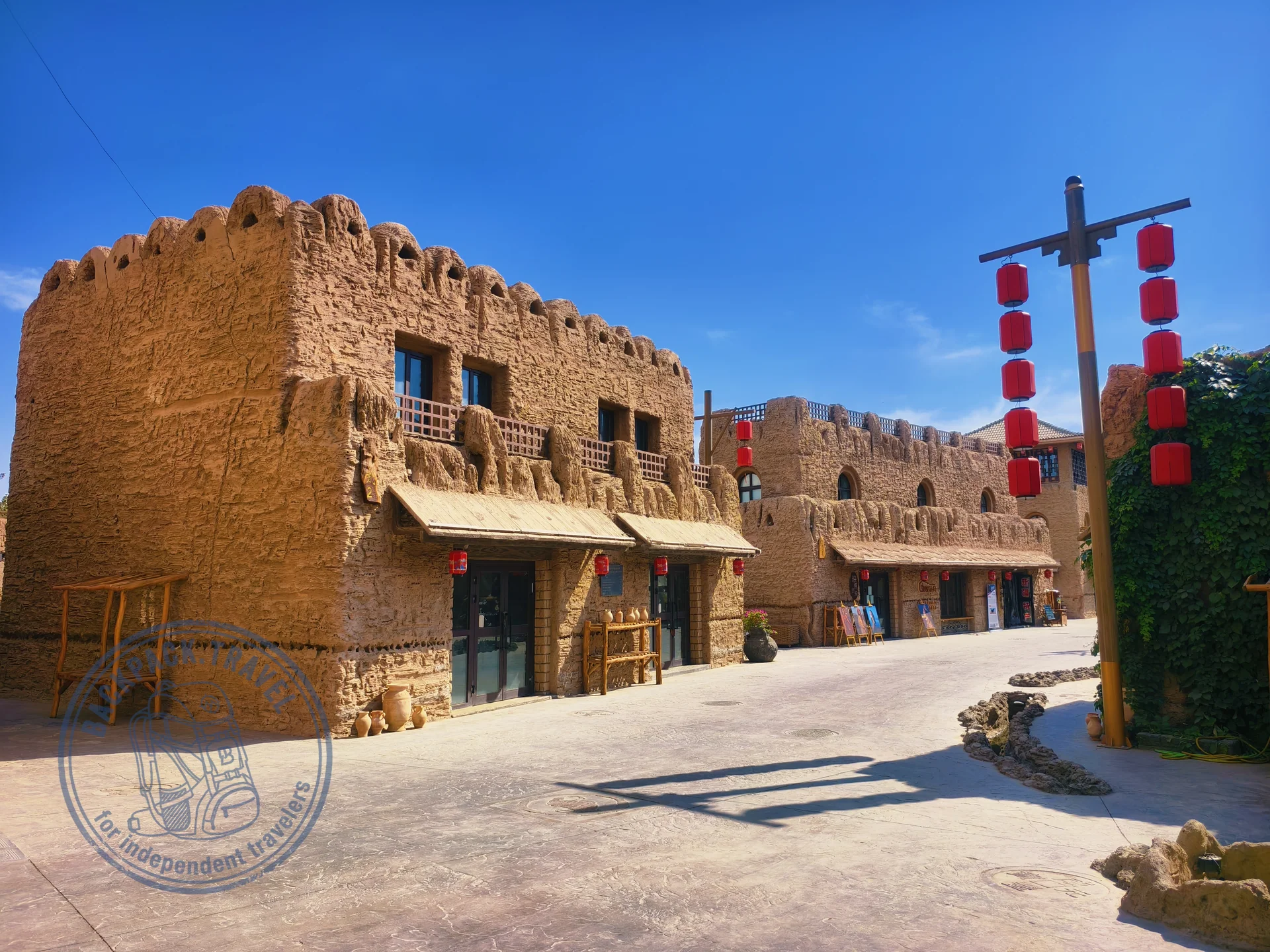
- Turpan Old Town and the Turpan Congregational Mosque are what there is to see in the centre itself.
How much time to allow
If you are travelling between trains, half a day is enough for the Emin Minaret and Jiaohe. A full day is the standard option: it adds the karez and the town centre. Two days allow a separate excursion in the direction of Gaochang with Bezeklik, the Flaming Mountains and the Astana tombs, all of which lie the same way, so combining them into a single day is logical. A third day makes sense for the sake of the grape valley and Lake Ayding.
There is almost no public transport to the ruins, so the day is built around a car with a driver. In summer set out at dawn: by midday the open sites are hard to endure, and there is no shade anywhere on them.
Getting there
Turpan sits on the Lanzhou-Xinjiang high-speed line, opened at the end of 2014, the same one that links Hami, Jiayuguan and Zhangye. But Turpan North station is in the settlement of Daheyan, some 55 km from the city and about an hour by car, so budget for the transfer separately. Urumqi is roughly an hour away by high-speed train and Hami around an hour and a half. The logical chain is Urumqi, then Turpan, then further east to Hami and Gansu.
When to go
- April to May and September to October are the best months. September brings the grapes as well.
- June to August means extreme heat, and touring the ruins turns into an ordeal.
- Winter is cold and bare, and some sites keep shortened hours; check the times locally.
Xinjiang runs on Beijing time, although locals often count by "Xinjiang time", two hours behind, so spell this out when you are arranging a car. Carry your passport with you: document checks are routine in the region.
Who won't enjoy it
Turpan is about ruins and archaeology rather than a living city: the centre is ordinary and unremarkable, and there is not much to do in the evening. Jiaohe and Gaochang are clay ruins with no reconstructions and almost no explanation in languages you are likely to read; if you need intact buildings and a museum-style presentation, the effect will be weak. In summer the heat makes the trip physically unpleasant, and without your own car you will either overpay for transfers or miss half of it. For anyone curious about how a Silk Road city looked before the sand buried it, though, this is one of the most vivid points on the route.