 Города и дороги
Description
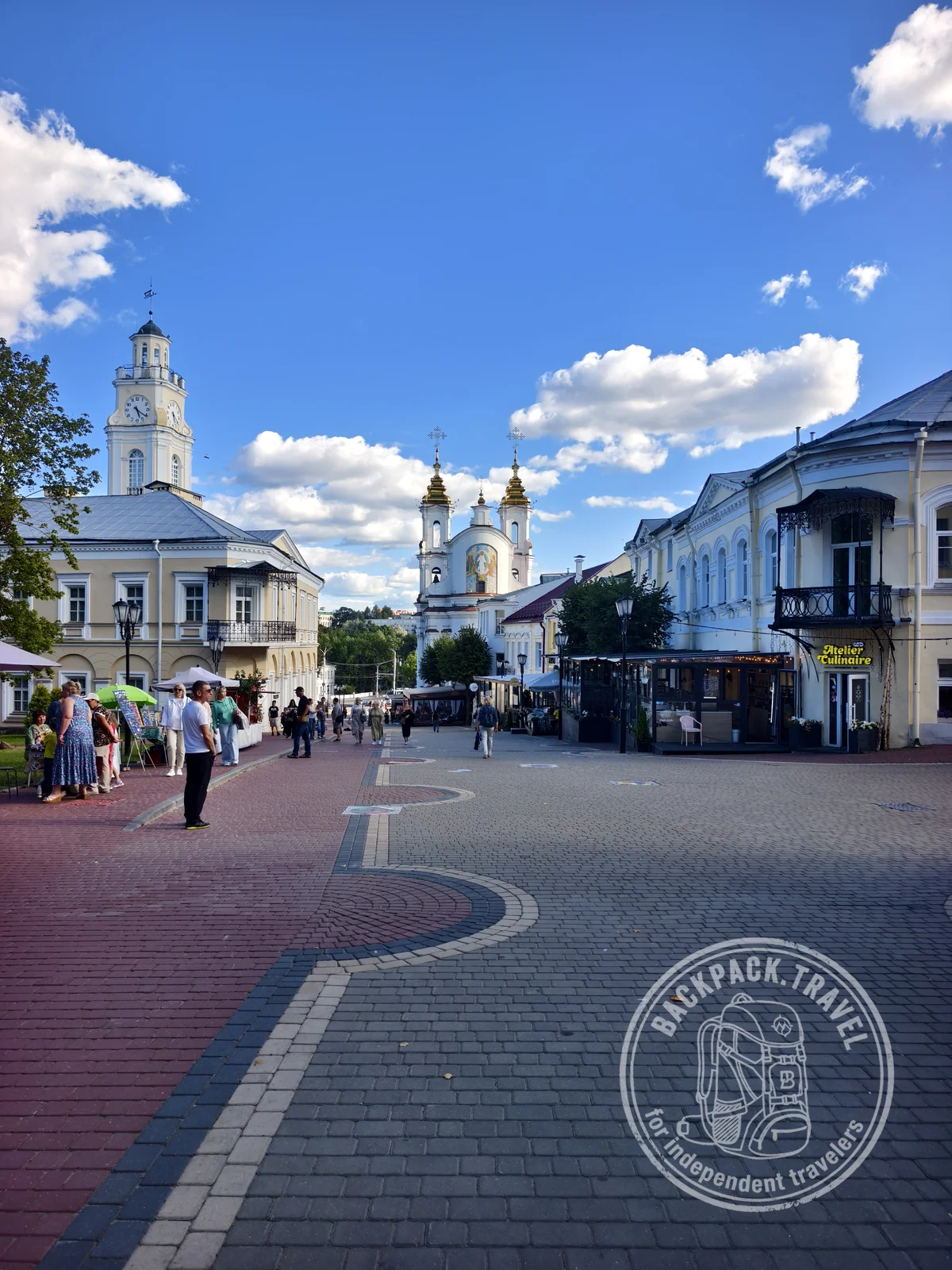
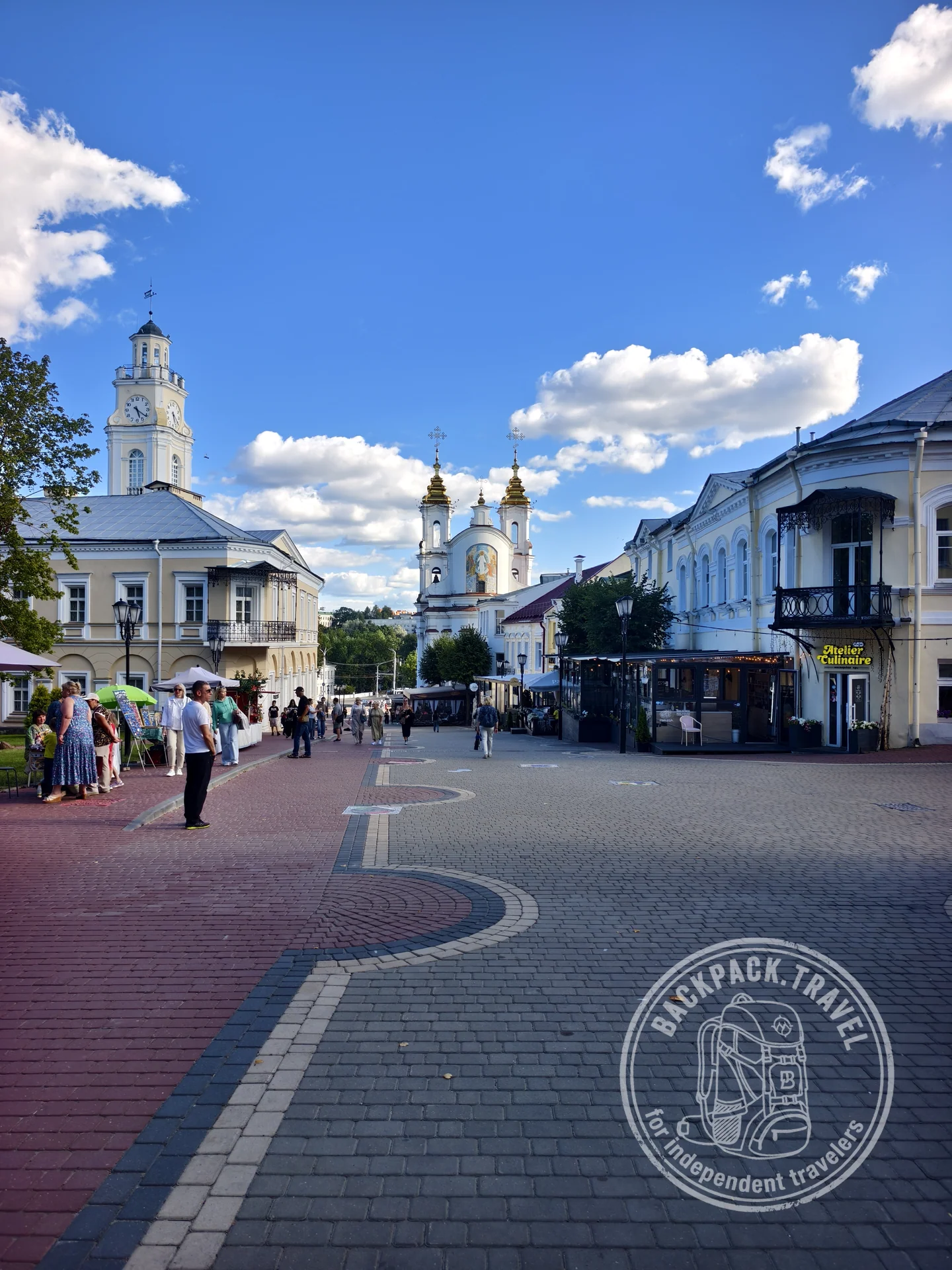
The second cultural center of Belarus: a Baroque town hall on a pedestrian street, the Dormition Cathedral above the Dvina, and the city that Chagall came from.
Wiki
Vitebsk is a regional capital in the northeast of Belarus with about 358 thousand residents, standing on the Western Dvina where the small river Vitba flows into it. The city is old, but the center was almost entirely knocked out during the war, so the historic fabric here is not continuous but scattered: individual restored landmarks among postwar building. People come for the legacy of Chagall and the Vitebsk school of art.
What to see in the center
- The town hall — the starting point for a walk. The city received Magdeburg rights in 1597, the present Baroque building dates from 1775, and since 1924 it has housed the regional history museum. There is a viewing platform on the tower, but it operates seasonally and more often for groups, so check in advance.
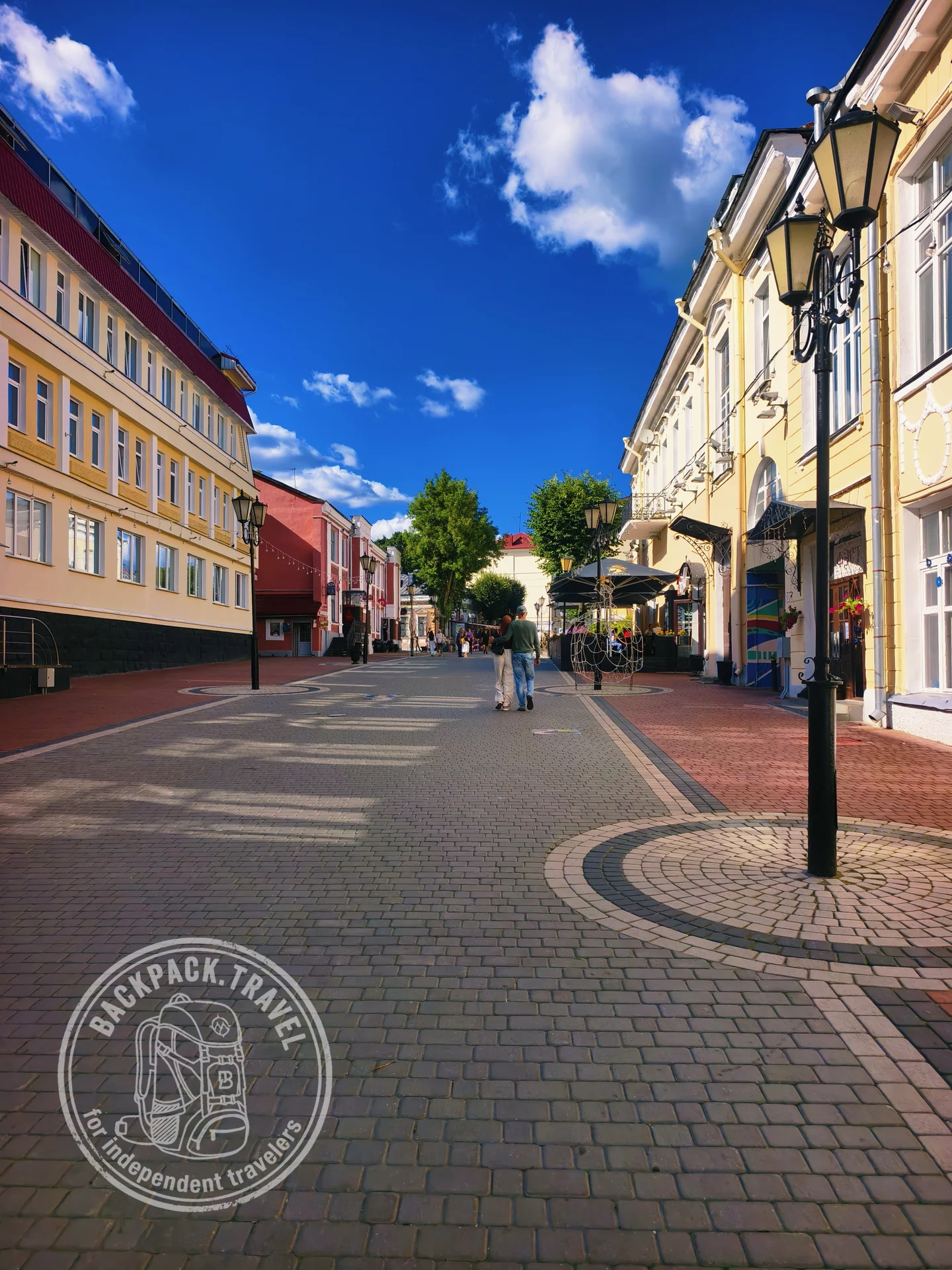
- Suvorov Street — pedestrianized since 2010, about 1,300 meters long, lined with 18th and 19th-century buildings, with nearly every second one under heritage protection. This is the street that gives the feeling of an old town, which the rest of Vitebsk mostly lacks.
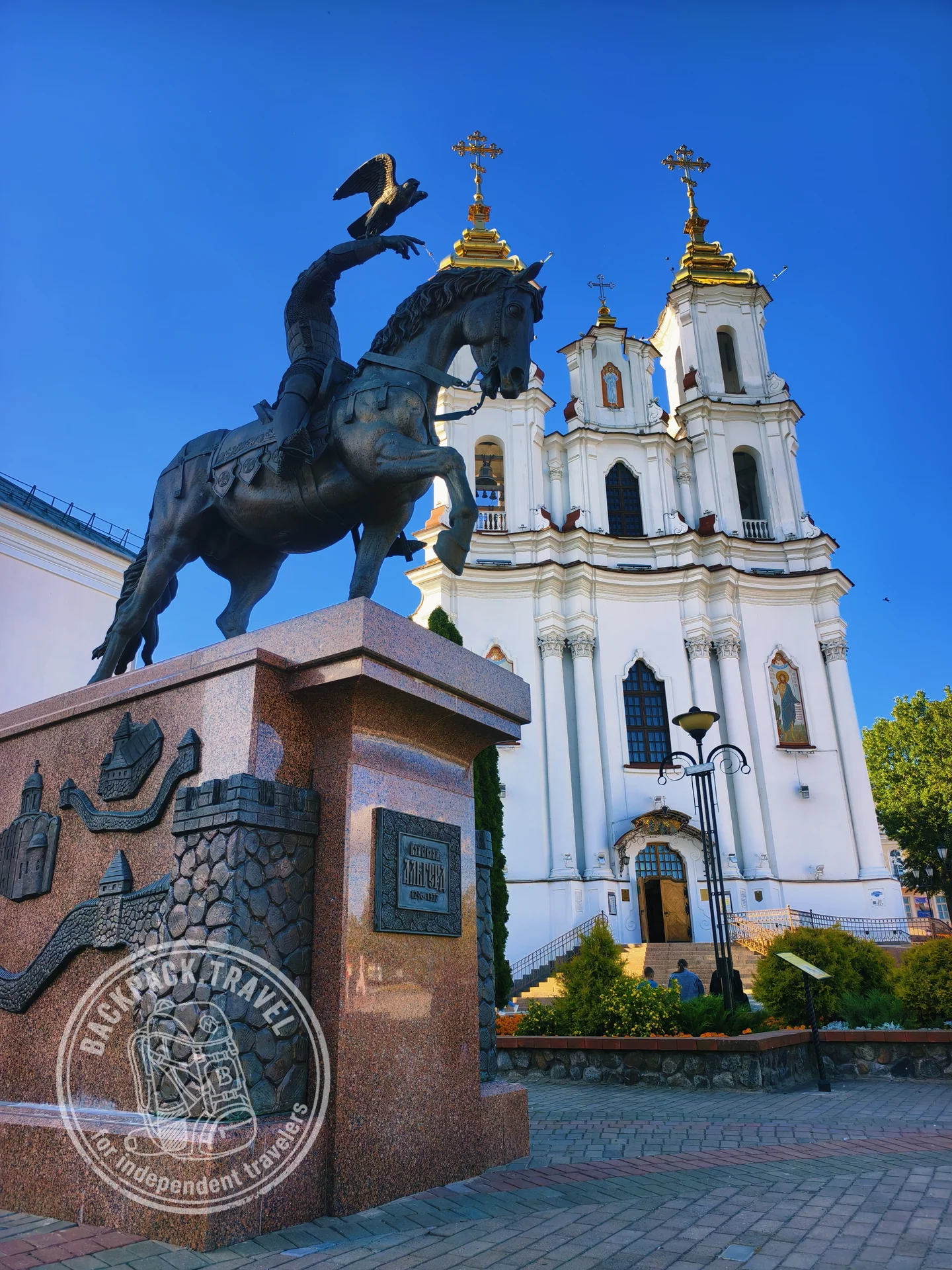
- The monument to Grand Duke Algirdas — an equestrian statue unveiled on 27 June 2014 for the city's 1040th anniversary. It stands on Trade Square opposite the Resurrection Church.
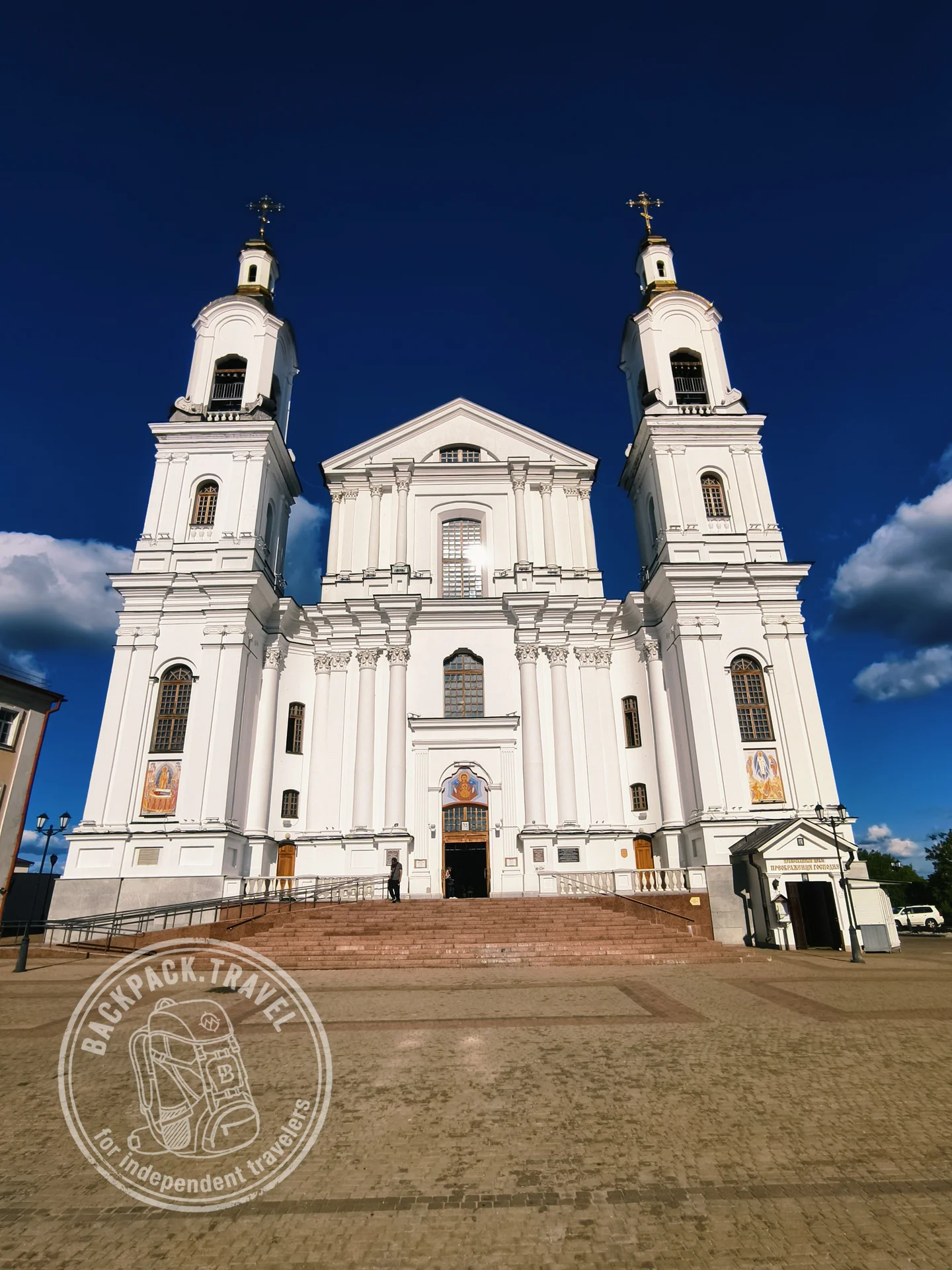
- The Dormition Cathedral on Dormition Hill can be seen from any bridge. The stone church was built in 1743–1777 at a Basilian (Uniate) monastery in the Vilnius Baroque style, passed to the Orthodox church in the 19th century and was blown up in 1936. The present building is a reconstruction consecrated on 30 September 2011. The hill itself is worth no less than the cathedral, since the whole bend of the river is visible from it.
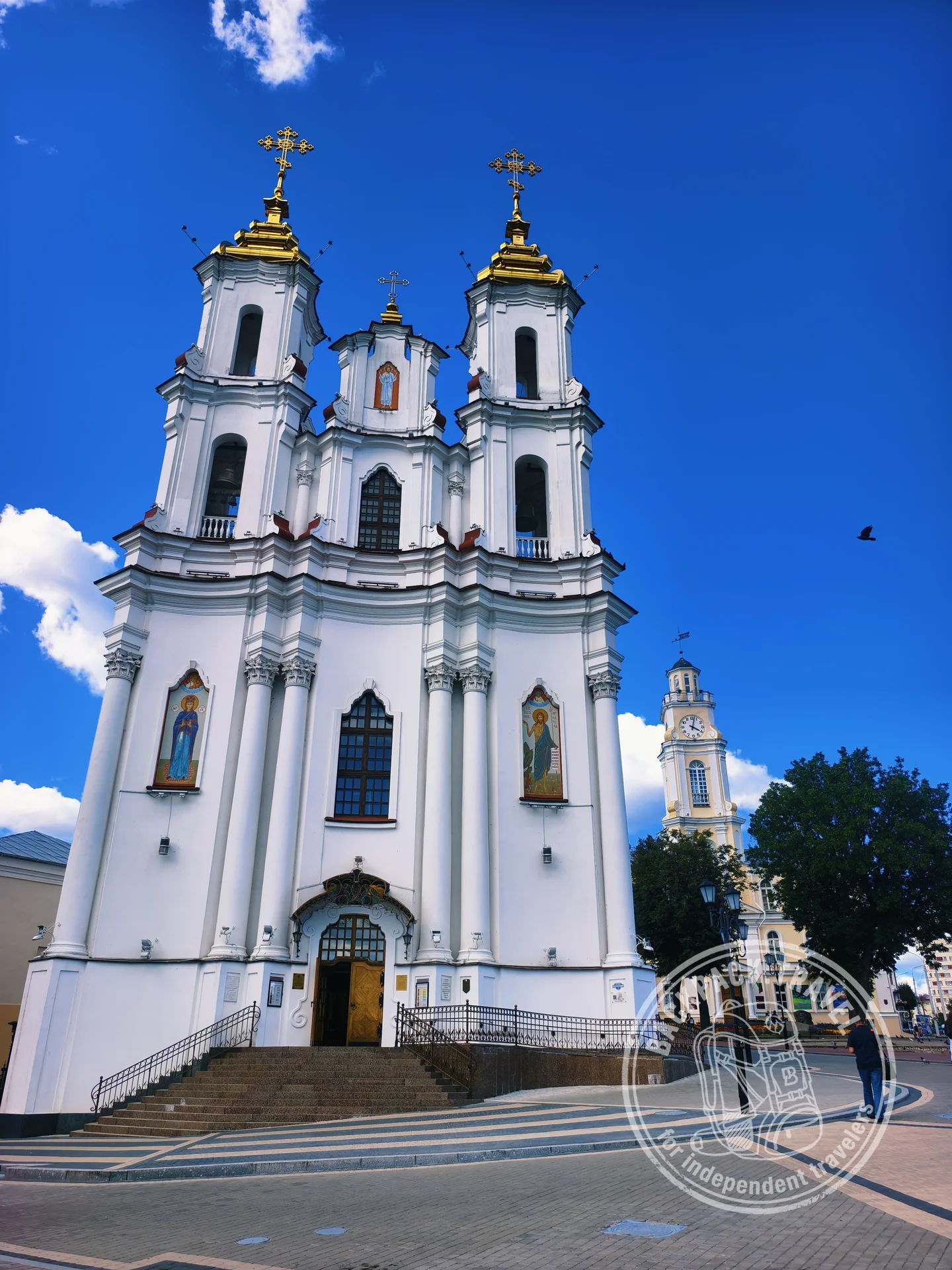
- The Resurrection (Market) Church at the foot of the town hall. The original, in the same Vilnius Baroque, was completed in 1772 and demolished in January 1936, and the copy was consecrated in July 2009. Everything inside is new, and the value lies in the silhouette within the panorama.
- The Annunciation Church on the left bank is a rare genuine survival: a church of the first half of the 12th century, restored in 1993–1998 with fragments of the original masonry preserved and visible to the naked eye.
Chagall and the Vitebsk avant-garde
This is the main reason to come. Chagall was born in Vitebsk in 1887, and the city remained his lifelong subject.
- The Chagall House Museum on Pokrovskaya Street occupies the house built by the artist's father in the early 1900s. The museum opened in 1997, and its display is domestic, about the life of a modest Jewish family rather than a collection of paintings.
- The Marc Chagall Art Centre is where you go for originals: around 300 works, almost all graphic art, including the illustrations to "Dead Souls".
- The Vitebsk People's Art School was a short but loud episode. Chagall set it up in 1918, and the first director was Mstislav Dobuzhinsky. From 1919 to 1922 Kazimir Malevich taught here, and around him formed the UNOVIS group, which pushed the founder out of his own school; El Lissitzky and Vera Ermolaeva worked here too. The mansion that housed the school has held a museum of its history since 2018.
Earlier still, in 1897, the city saw the opening of the drawing school of Yehuda Pen, Chagall's first teacher.
The Slavianski Bazaar
The festival has been held since 1992, usually in July, with the Summer Amphitheatre as its main venue. For a week the city fills with concerts and crowds. For a quiet walk these are the worst days of the year, because accommodation gets expensive and is taken well in advance. For atmosphere, on the contrary, they are the only ones.
How much time to allow
Half a day is enough for the town hall, Suvorov Street, Dormition Hill and the Resurrection Church, all of which are within walking distance of one another. A full day adds both Chagall addresses and the Annunciation Church. Two days are worth allowing if you want to go through the museums without rushing and walk along the embankment, and beyond that there is nothing more to do in Vitebsk, unless you use it as a base for a trip to Polotsk about a hundred kilometers away, which works as a day out.
Vitebsk is a railway junction with lines to Minsk, Polotsk, Smolensk and St Petersburg. Minsk is about 280 kilometers away, roughly three and a half hours by train and about four and a half by bus. The bus station stands next to the railway station, and from there the center is a short walk across the bridge.
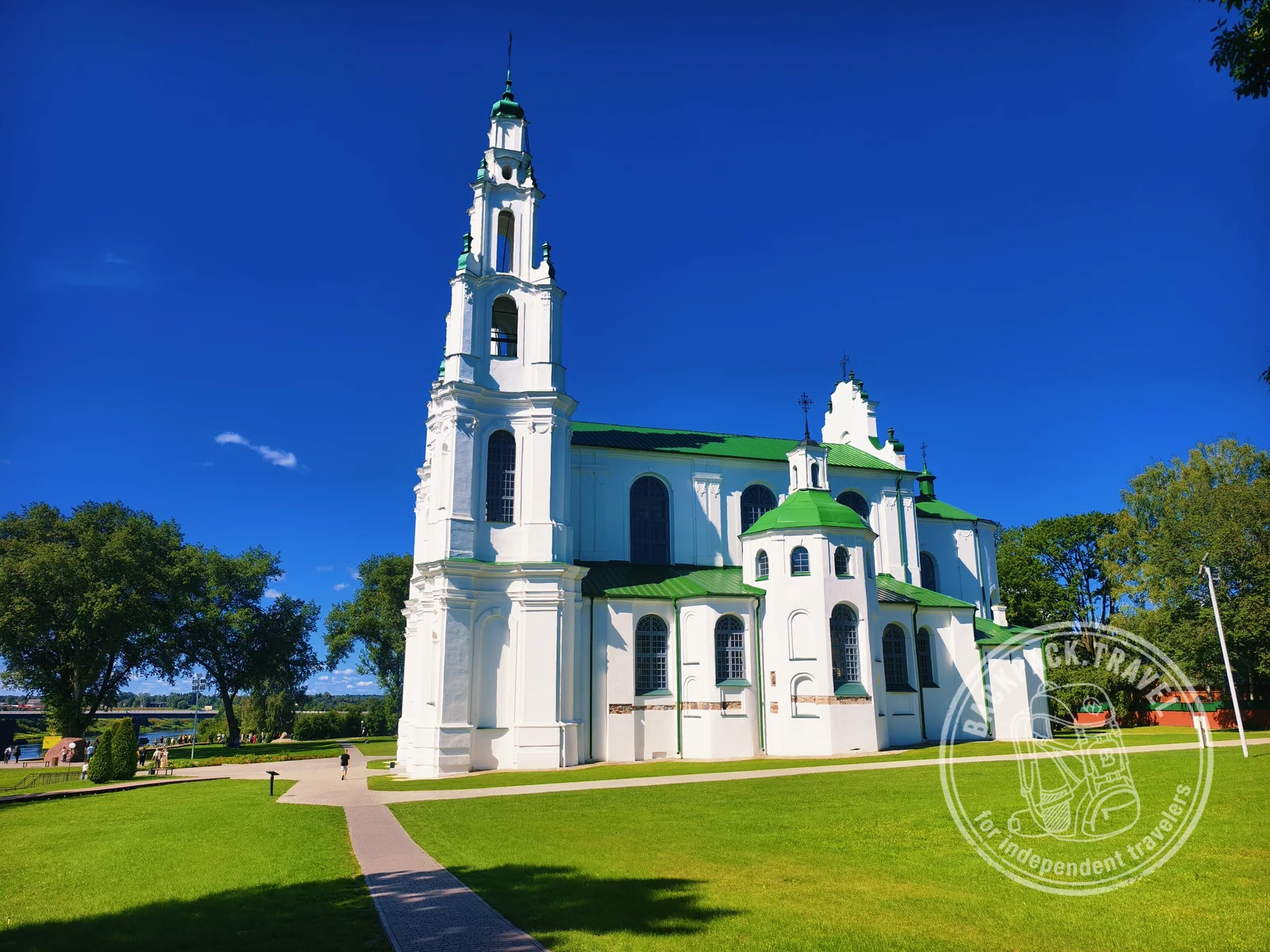
Who won't enjoy it: if you are expecting a coherent old town, Vitebsk will disappoint, because little here is original, the two main churches in the center were built anew in our own time and up close you can see it; anyone who cares about architectural authenticity would do better to go straight to Polotsk or Grodno. Nor should you count on a large collection of Chagall's paintings, since his major pieces are in museums in other countries and what you get here is graphic work and context. Vitebsk is about something else, about a single artistic flash a century ago and the panoramas over the Dvina.