Austria
ATThe country of Mozart, Viennese waltzes and Alpine peaks. From the imperial palaces of Vienna to the storybook lakes of the Salzkammergut, from the ski slopes of Tyrol to the Christmas markets of Salzburg — Austria is elegance, music and natural beauty combined.
Where to go #
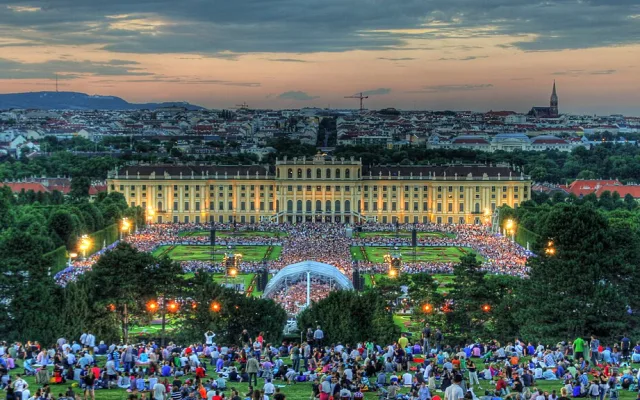
Vienna
Vienna is the imperial capital, known for the Schonbrunn and Hofburg palaces, for its musical culture and for Wiener schnitzel.
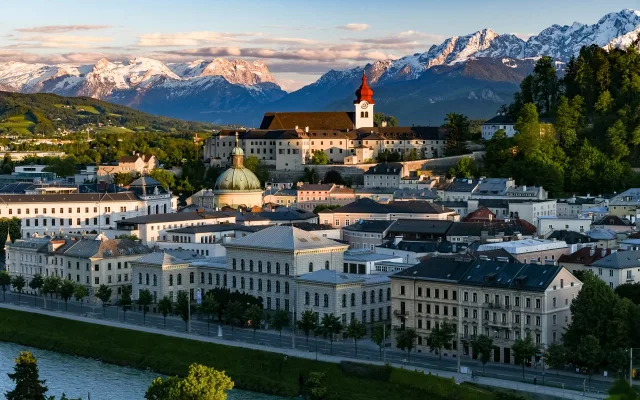
Salzburg
Salzburg is a compact baroque city, birthplace of Mozart, known for its historic architecture, the hilltop Hohensalzburg Fortress, and sweeping Alpine scenery.
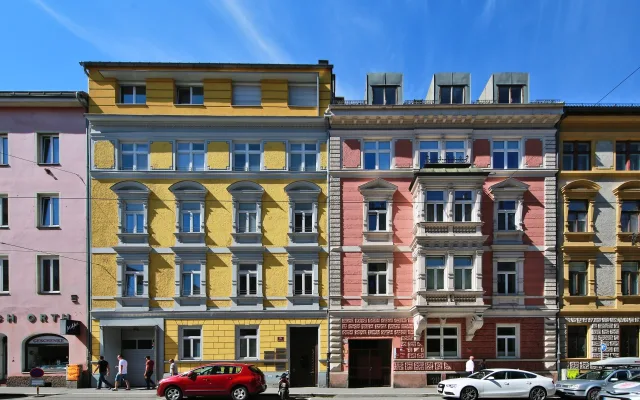
Innsbruck
Innsbruck is a city in Tyrol, surrounded by the Alps. Home to the Golden Roof and Olympic ski jumps, it offers direct access to mountain resorts within minutes of the historic centre.
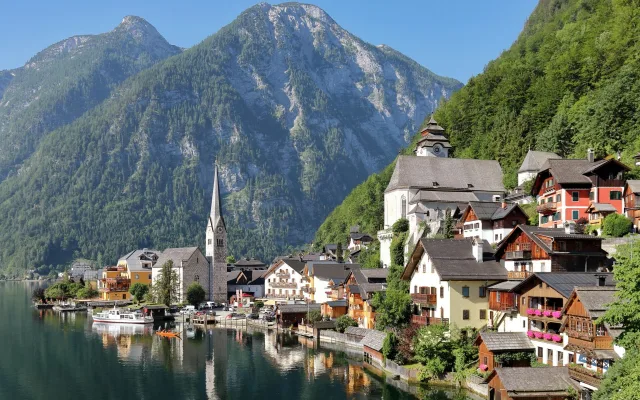
Hallstatt
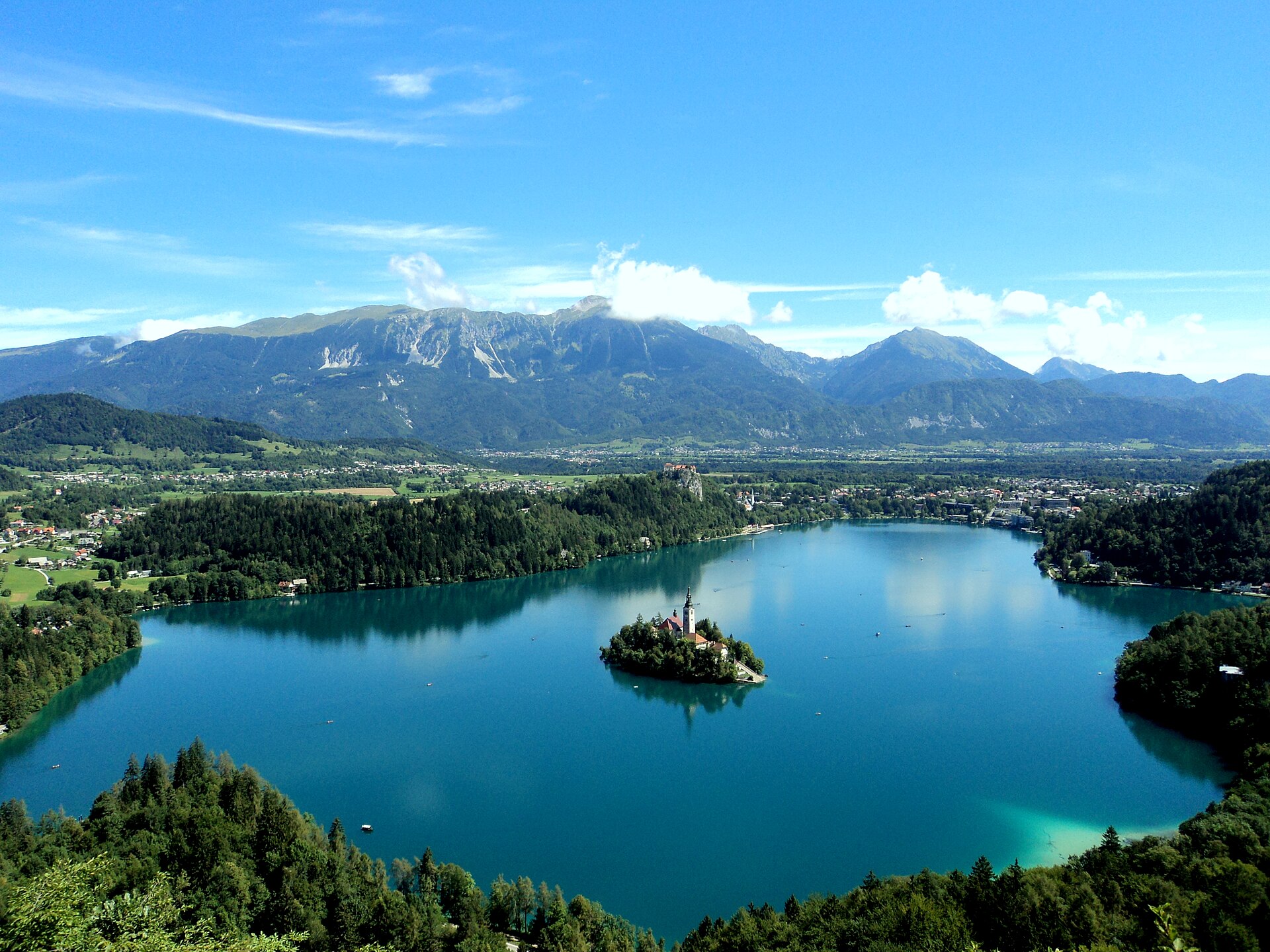
Hallstatt is a picturesque village on the shore of an Alpine lake, a UNESCO World Heritage Site and one of the most photographed places in Europe.
What to see #
Where to go: St Stephen's Cathedral in the middle of Vienna is the reference point for everything else.
Climb the tower for the panorama or go down into the catacombs beneath the square, where the Habsburgs ended up.
What to see: Schönbrunn Palace takes a full day if you want the state rooms and the enormous park with its maze.
This was the summer residence, and the imperial atmosphere survives here better than anywhere, right down to the strudel show in the court bakery.
Worth a trip: Hohensalzburg Fortress dominates the city and is the largest fully preserved castle in Europe.
The funicular gets you up in two minutes, for postcard views over the Salzach and the baroque domes.
Can you do it in a day: The Grossglockner High Alpine Road is 48 kilometres of pure delight and tight switchbacks.
It is a toll road, open only in summer, and it runs right to the glacier and the country's highest peak.
Vienna State Opera: A world benchmark that you can get into for a few euros.
People start queuing for standing tickets about ninety minutes before curtain at the Operngasse entrance.
Belvedere: Unmissable for Klimt's The Kiss and for the cascading baroque gardens.
The complex is split in two, and the Upper Belvedere holds the more impressive collection of Austrian modernism.
Prices #
Currency: The euro, and nothing else. Austria is expensive, though still cheaper than Switzerland next door, and a budget traveller should plan on 40 euros a day for food and small costs.
Cash: Austria loves cash as much as Germany does. Small cafes, bakeries and mountain huts frequently have no terminal at all, so always carry notes.
Cards: Visa and Mastercard work in supermarkets, department stores and city hotels, while Amex is accepted far less widely. A Wise or Revolut card is useful mainly for avoiding your home bank's conversion fee.
ATMs: Bank machines are everywhere and generally do not add their own charge, though standalone Euronet machines do. Withdraw at a proper bank branch where you can.
Tipping: About ten percent in restaurants. You do not leave coins on the table, you tell the waiter the total you want to pay when settling up.
| Item | Price (USD) |
|---|---|
| Lunch in a Beisl | 15 |
| Schnitzel | 18 |
| Coffee and cake | 11 |
| Glass of beer | 6 |
| Metro ticket | 2.8 |
| 24-hour travel pass | 9.5 |
| Train, Vienna to Salzburg | 45 |
| Day ski pass | 75 |
| Night in a guesthouse | 80 |
| Dinner for two | 75 |
| Schönbrunn entry | 28 |
| Melange in a cafe | 6 |
| Water, 0.5 l | 2.5 |
| Apple strudel | 8 |
| 72-hour travel pass | 19 |
| CAT airport train | 16 |
Getting around #
Getting in: Vienna is a major hub with direct flights from across Europe and from New York, Chicago, Toronto and the Gulf, and budget carriers serve Vienna and Salzburg from London, Berlin and Milan. Fast trains also arrive from Munich, Zurich, Prague and Budapest, which is often the more civilised way to come.
Trains: The ÖBB network reaches everywhere. Sparschiene fares booked a couple of months out cost a fraction of the walk-up price at the counter.
Westbahn: Private trains on the Vienna to Salzburg run. Tickets are often cheaper than the state operator's and the carriages are newer, and you can buy on board without a penalty.
FlixBus: The cheapest way to Graz or Salzburg. Buses are frequent with Wi-Fi and sockets, though slower than the express train once traffic is involved.
In the cities: Vienna runs one integrated system of metro, tram and bus under Wiener Linien. Inspectors are infrequent but the fines are large, so always validate at the blue machines.
Car hire: The roads are immaculate, but motorways require a vignette on the windscreen. Check the hire car has one, or you are looking at a 120-euro fine.
Taxis: Uber and Bolt operate and undercut the traditional firms noticeably. From Vienna airport, the S7 suburban train reaches the centre in 25 minutes for a fraction of the express fare.
Where to stay #
Guesthouses: Traditional family-run pensions are the best way to sleep in the mountains. They are warm, spotless and usually include a substantial breakfast, and the owners know the trails.
Hostels: Wombats and Meininger run good properties in Vienna and Salzburg. A safe, central choice for anyone who wants comfort and company without paying for style.
Where to stay in Vienna: Districts four to nine are the sweet spot. They are quieter and cheaper than the First District, yet the imperial sights are a walk or a ten-minute tram ride away.
Booking: Everything is listed on the usual international platforms, and Austrian hotels answer email promptly if you would rather book direct. In the Alps, direct booking often gets you a better half-board rate.
Mountain chalets: In ski season the good places go six months ahead. Half board is the Alpine standard, with breakfast and a serious dinner included, which saves money where restaurants are scarce.
House rules: In private guesthouses and apartments you take your shoes off at the door. Air conditioning in old Vienna buildings is very rare, which is worth knowing before booking a July trip.
What to eat #
Wiener Schnitzel: A vast piece of veal in golden breadcrumbs, and the culinary baseline. At Figlmüller the portions hang off the plate, but book a table a fortnight ahead.
Tafelspitz: The emperor's favourite, boiled beef of remarkable tenderness. It comes with apple horseradish and fried potato and turns lunch into a long, pleasant ceremony.
Cake: Sachertorte is the chocolate legend, with apricot jam under the glaze. If the queue at the Hotel Sacher is absurd, go to Demel, whose version many people prefer anyway.
Coffee houses: These are a recognised cultural tradition, not just cafes. Order a melange and sit for three hours with a book, because nobody will move you on.
Sundays: Almost every food shop in the country is closed. Buy what you need on Saturday, or you are limited to station shops and restaurants.
Drinks: Try a Grüner Veltliner white or draught Stiegl beer. At the heurigen taverns on the edge of Vienna, wine comes straight from the barrel in courtyards with live music.
Safety #
Overall: Austria is exceptionally calm and walking at night is unremarkable even in outer suburbs. Serious crime is rare and the police are polite and effective.
Pickpockets: The one real problem, concentrated in busy parts of Vienna and around the stations. Watch your bag at St Stephen's and on crowded trams, and never use a back pocket.
Mountains: The Alps do not forgive poor kit or casual planning. Weather changes within the hour, so take warm layers and check the Bergfex forecast before setting out.
Rescue costs: A helicopter evacuation starts around 5,000 euros. If you plan to hike or ski, confirm your insurance actually covers mountain rescue and repatriation.
Quiet hours: Silence is observed after ten at night and neighbours are sensitive about it. On Sundays even mowing a lawn or using a drill is prohibited.
Water: Tap water is superb across the whole country, Vienna included, piped in from the mountains. It is often better than the bottled water sold for two euros a litre.
Etiquette and culture #
Music: Classical music is genuinely everywhere, from street squares to the opera house. Austrians are proud of Mozart and Strauss and treat music as part of national identity rather than heritage decor.
Greetings: You will hear "Grüß Gott" far more often than the textbook hello. It works in an expensive shop and on a mountain path alike.
Punctuality: Being five minutes late reads as disrespect. Trains and buses run to the timetable and people expect the same of each other.
Sunday: A sacred day for rest and family, with everything closed, pharmacies and shopping centres included. Austrians spend it outdoors and visitors have to plan around it.
Dress: Trainers and shorts do not belong at the opera or in a serious restaurant. Even where there is no stated code, looking tidy opens doors.
Tipping etiquette: Leaving coins on the table is considered poor form. Hand the money to the waiter and state the total you want to pay, including the tip.
Connectivity #
SIM cards: Prepaid SIMs from A1, Magenta or Drei are sold in any supermarket. Ten to fifteen euros buys a data bundle that comfortably covers a fortnight.
Wi-Fi: Plenty of free hotspots in the big cities, especially central Vienna. Hotel and guesthouse connections are fast and the password comes with check-in.
Apps: Get ÖBB Scotty for trains, which reflects live delays and engineering works. WienMobil is the better tool for building complex journeys around Vienna.
Language: Almost everyone in tourism speaks good English, as do younger Austrians generally, and menus in the cities are usually bilingual. A couple of German phrases still warms people up noticeably.
Roaming: An Austrian SIM works across the EU at no extra cost. Day trips into Germany or Hungary will not change your tariff.
Maps: Google Maps handles city routing and live tram times well. For Alpine walking, use the dedicated Bergfex maps, which are far more accurate off-road.
Phrasebook #
| English | German | Pronunciation |
|---|---|---|
| Hello (Austrian) | Grüß Gott | Groos GOTT |
| Hi / bye (informal) | Servus | ZER-vus |
| Thank you | Danke | DAN-keh |
| Please | Bitte | BIT-teh |
| Yes / No | Ja / Nein | Yah / Nine |
| How much is it? | Was kostet das? | Vas KOS-tet das |
| The bill, please | Die Rechnung, bitte | Dee REKH-nung, BIT-teh |
| Beer | Bier | Beer |
| Coffee with milk | Melange | Meh-LAHNZH |
| Water | Wasser | VAS-ser |
| Where is the station? | Wo ist der Bahnhof? | Vo ist dair BAHN-hof |
| Sorry / excuse me | Entschuldigung | Ent-SHUL-di-gung |
| Help! | Hilfe! | HIL-feh |
| I don't understand | Ich verstehe nicht | Ikh fer-SHTAY-eh nikht |
| Tasty | Lecker | LEK-er |
| Bye (Viennese slang) | Baba | BA-ba |
| Mate / oh come on (slang) | Oida | OY-da |
| Goodbye (formal) | Auf Wiedersehen | Owf VEE-der-zay-en |
| Good | Gut | Goot |
| Left / right | Links / Rechts | Links / Rekhts |
| Snack, light meal | Jause | YOW-zeh |
| Bread roll | Semmel | ZEM-mel |
Good to know #
Trains: oebb.at is the main tool for tickets and journey planning, and the app replaces the ticket queue entirely. Cheap Sparschiene fares appear about six months ahead.
Weather: Bergfex is indispensable if you are going into the mountains. It gives forecasts by altitude and shows piste and trail conditions live through webcams.
Vienna transport: Buy 24, 48 or 72-hour passes on wienerlinien.at before you arrive. That saves time on landing and lets you go straight onto the airport train.
Alpine Club: alpenverein.at is worth knowing for serious hikers. Membership brings discounts on mountain hut beds and includes insurance covering expensive helicopter rescue.
Museums: Many Vienna museums are free on the first Sunday of the month and most close on Mondays. Book Schönbrunn and Belvedere slots online in summer to skip the queue.
Consular help: Most countries have an embassy in Vienna, given the UN presence in the city. Note the emergency number before you travel, especially if you are heading to the mountains.