
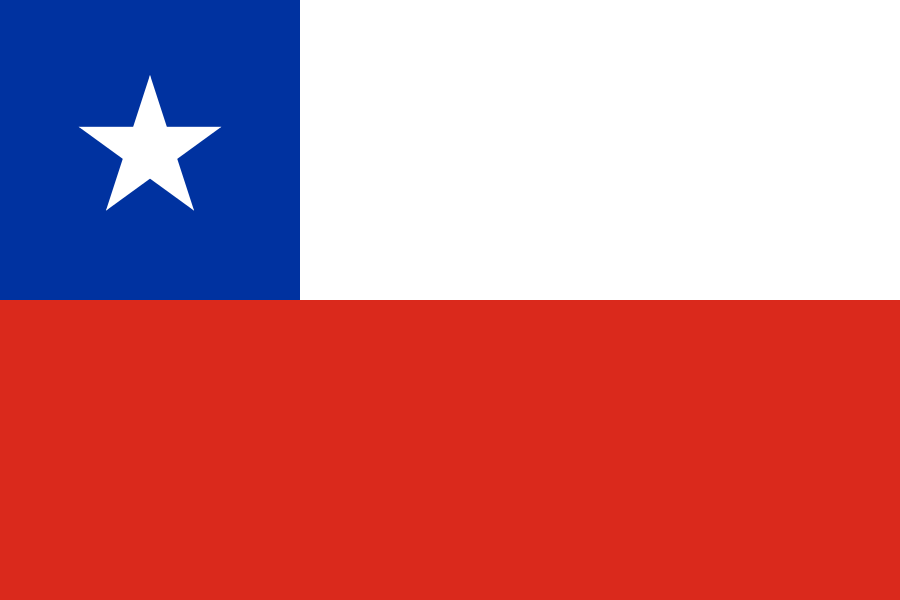
Chile
The longest, narrowest country in the world — 4,300 km from the Atacama Desert to the glaciers of Patagonia. Chile is lunar landscape, snow-capped volcanoes, world-class vineyards, the moai of Easter Island and Torres del Paine. It is one of the most developed and safest countries in Latin America, with excellent infrastructure. Pricier than its neighbours, but worth every peso: desert sunsets at one end, icebergs at the other.
Where to go
#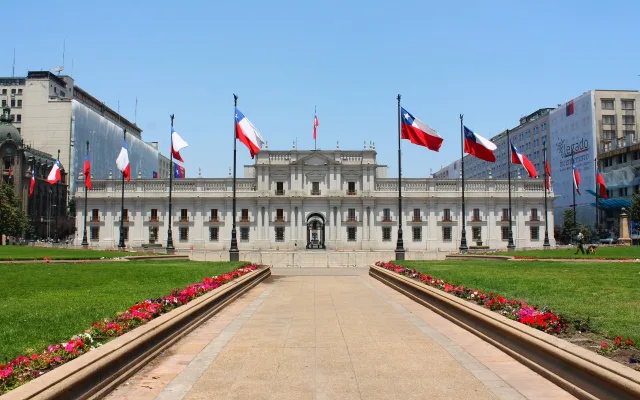
Santiago
Chile's modern capital with views of the snow-capped Andes, the Bellavista quarter, the La Vega Central market and good pisco sour bars.
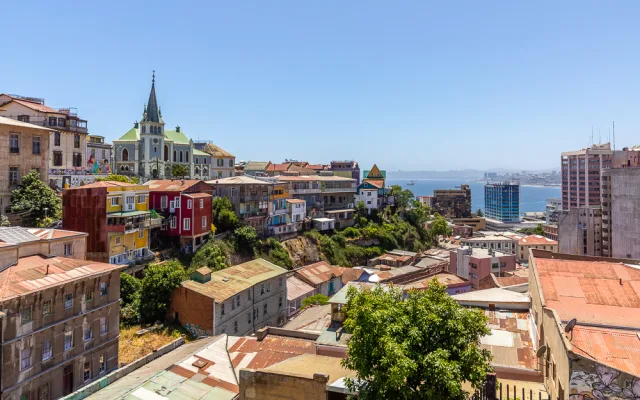
Valparaíso
A labyrinth of hillside barrios covered in street art, vintage funiculars (ascensores) and bohemian bars above the Pacific — Chile's most picturesque port city.
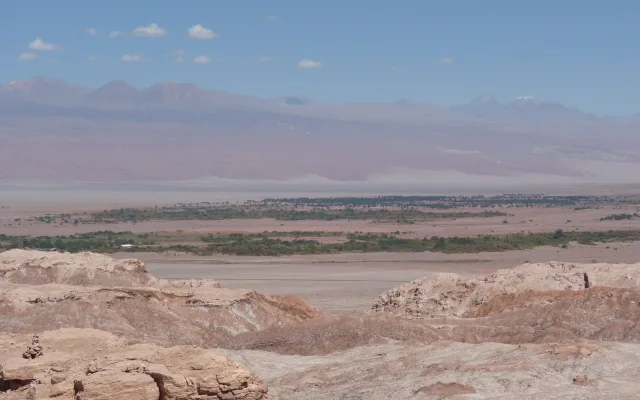
San Pedro de Atacama
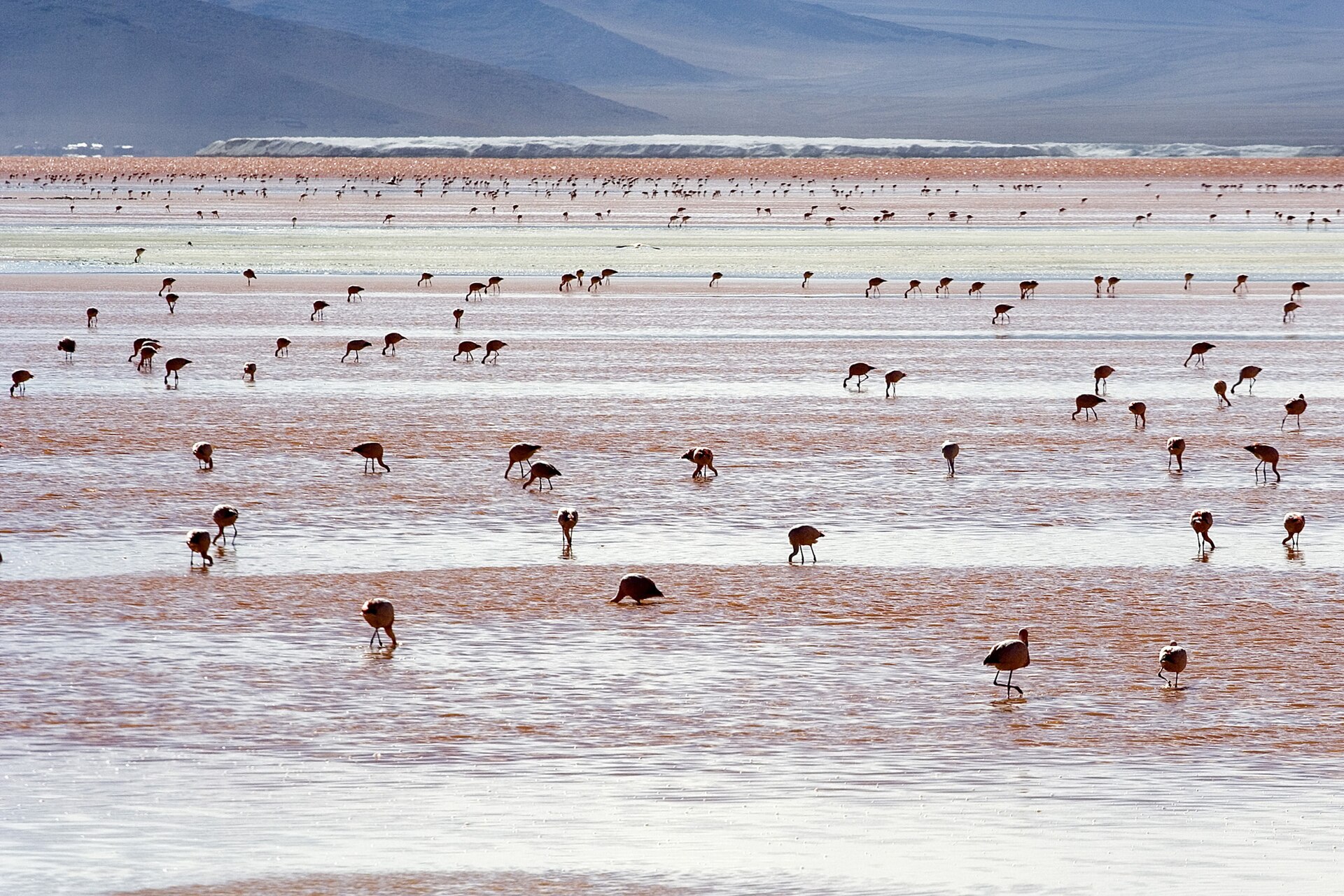
The Atacama Desert — the driest on Earth: El Tatio geysers, Valle de la Luna, flamingo lagoons, and skies free of clouds year-round.
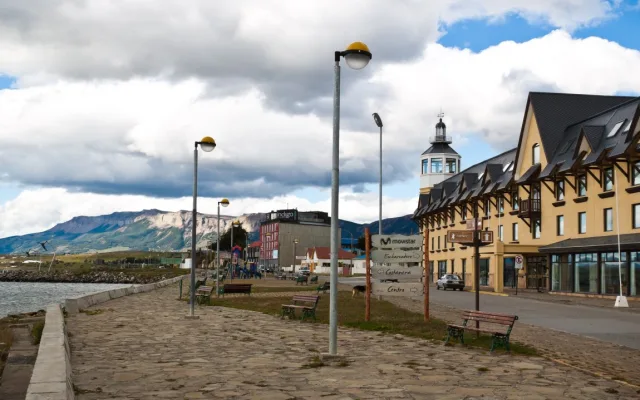
Puerto Natales
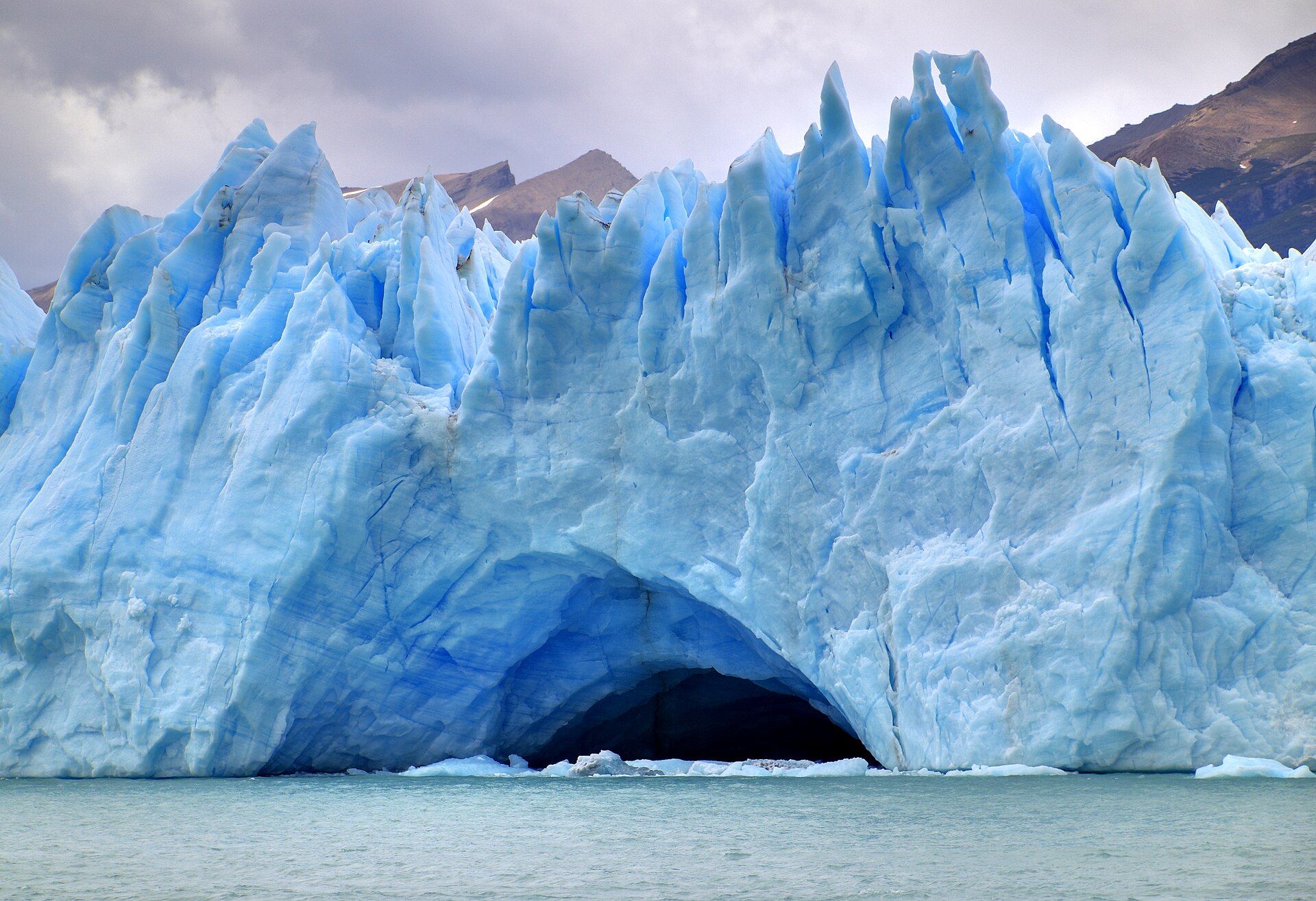
Gateway for trekking in Torres del Paine: Patagonian fjords, Serrano Glacier, guanacos and breathtaking sunsets over the Strait of Magellan.
What to see
#Torres del Paine: These granite towers are why people fly to the end of the world. The most popular option is the five-day W trek, but the refugios along it need booking six months ahead.
Valle de la Luna: In the Atacama, and worth a trip at sunset for the Martian rock and the glittering salt caves. You can reach it on a rented bicycle straight out of San Pedro.
Easter Island: A remote scrap of land with the giant moai statues. Remember that national park tickets cost about eighty dollars for foreigners and visitors may stay no longer than a month.
The Marble Caves: These sit on Lake General Carrera, turquoise grottoes carved into solid marble that can only be reached by boat. The sight is worth every hour spent getting there.
El Tatio geysers: One of the highest geyser fields anywhere. Go for sunrise, when the steam is thickest, but be ready for 4,300 metres of altitude and hard morning cold.
Cerro San Cristobal: Santiago's main viewpoint. A funicular takes you up and a cable car brings you down, and you can do the whole city from there in a day, out to the snowline of the Andes.
Prices
#Currency: The country uses Chilean pesos (CLP), written with a dollar sign. In 2026 one US dollar buys roughly 950 pesos, so it is simplest to think in thousands for everyday spending.
Cards: Visa and Mastercard are accepted almost everywhere in the cities, from supermarkets to metro ticket machines, and Amex in the larger places. Contactless works widely, and a Wise or Revolut card avoids your home bank's markup.
The VAT exemption: Foreign visitors are exempt from the nineteen percent sales tax on hotel bills paid in dollars or with a foreign card. Show your passport and PDI immigration slip to claim what is a substantial discount.
Exchange: Change money at official Casas de Cambio. The airport rate is often brutal, so it pays to reach central Santiago, where competition is higher and the terms are far clearer.
Tipping: Ten percent of the bill is the norm in restaurants. The waiter will usually ask "Desea incluir la propina?", and you can agree or politely decline if the service was poor.
| Item | Price (USD) |
|---|---|
| Set lunch (Menu del Dia) | 8.00 |
| Empanada from a stall | 2.50 |
| Dinner for two with wine | 55.00 |
| Metro ride | 0.90 |
| Cappuccino | 3.50 |
| Bottle of wine in a shop | 7.00 |
| Hostel bed | 18.00 |
| Bus to Valparaiso | 7.00 |
| Flight to the Atacama | 45.00 |
| Torres del Paine entry | 56.00 |
| Petrol, one litre | 1.40 |
| Litre of drinking water | 1.20 |
| Beer in a bar, 0.5l | 5.00 |
| Taxi across town | 6.50 |
| Easter Island park ticket | 80.00 |
Getting around
#Getting in: Santiago has direct flights from Madrid, Paris, London, Sydney and Auckland, and from Miami, Dallas, Atlanta, Houston and New York in North America. If your city has none, connect through Madrid, Sao Paulo, Panama City or Lima, all of which feed Santiago several times a day.
Intercity coaches: The standard way to cross the country. TurBus and Pullman run comfortable vehicles, and seats that recline flat effectively save you a night in a hotel.
Domestic flights: Budget carriers Sky and JetSmart get you the length of the country fast. Booked ahead, Santiago to Punta Arenas or Calama costs less than the exhausting bus ride.
Santiago metro: Clean, efficient and covering everywhere that matters. Buy a plastic Bip! card and top it up at the ticket offices or the machines on the platforms.
Airport transfer: The blue Centropuerto buses run from SCL into central Santiago. They are cheap and safe and drop you at the main metro stations in about forty minutes.
Ride-hailing: Uber and Cabify work reliably and cost sensible money. Licensed taxi drivers sometimes try their luck with the fare, so the apps are the better default.
Car hire: You only need a car deep in the provinces or on the Carretera Austral. In the cities parking is expensive and driving is chaotic, so public transport is far more practical.
Where to stay
#City guesthouses: The best choice if you like character and conversation. In Lastarria or Providencia you can find genuinely atmospheric places in old buildings with very high ceilings.
Cabanas: In the south, especially the Lake District, the tradition is a wooden cabin. Many have a fireplace or a stove, which matters enormously on cool Patagonian nights.
Refugios: In the national parks these are the only alternative to a tent. A bunk in a shared room is not cheap, but it buys you a roof and the option of a hot cooked meal.
Apartments: Meraki and the usual global platforms list good options in Santiago's modern towers. Having a kitchen keeps the food budget down substantially.
When to book: In high season, December to February, the popular places disappear months ahead. If you are planning Torres del Paine, do not leave it late, because the beds go instantly.
Facilities: Even budget hotels usually have Wi-Fi and hot water. Note that Chilean type L sockets have three pins in a row, so a simple adapter is occasionally needed.
What to eat
#Ceviche: The freshest fish cured in lime juice with onion and coriander. It is overpriced in smart restaurants; the small places by the harbour do it far better.
Pastel de choclo: A substantial corn casserole with meat and olives. It is the traditional Chilean lunch, gives you energy for a full day of walking and is at its best in the countryside.
Empanadas: Pastries stuffed with pino, a mix of beef, onion and egg. Buy them where there is a queue of locals, which is the surest guarantee of freshness and of the proper old recipe.
Pisco sour: The compulsory cocktail, built on grape brandy. Chile and Peru argue endlessly about who invented it, but the local version with lemon juice and sugar makes an excellent aperitif.
The once: The Chilean version of a heavy afternoon tea that replaces dinner. Families gather over tea with avocado, cheese and fresh marraqueta rolls, which costs a fraction of eating out.
Seafood: In Santiago's markets, try sea urchin or a thick conger eel soup. It is honest food with no pretension, cooked in front of you from what came in that morning.
Safety
#The general picture: Chile is considered safe, but do not switch off entirely. The main problem is bag and phone theft in crowded places, particularly central Santiago and the busier markets.
Motochorros: Thieves on motorbikes will snatch a phone straight out of your hand as they pass. Use a phone strap and do not take expensive electronics out beside a busy road.
Safer districts: In the capital, Providencia and Las Condes are the easy places to walk around. Bellavista is fun in the evening, but the risk of running into trouble outside the bars rises noticeably after midnight.
Car break-ins: Never leave a backpack on the seat of a parked car. Even for two minutes: windows go through in seconds and your things vanish immediately.
Street scams: Beware of groups who offer to help you wipe off a stain that has mysteriously appeared on your clothing. While you are distracted by the cleaning, their colleagues go through your pockets.
Earthquakes: Chile sits on an active fault system. If the ground starts moving, stay calm and follow the "Zona de Seguridad" signs, which are posted in every large public building.
Etiquette and culture
#Chilean Spanish: The local dialect is fast and full of slang. Chileans swallow word endings and attach the particle "po" to almost every sentence for emphasis, which catches out even fluent Spanish speakers.
Love of the outdoors: People here are sincerely proud of their landscapes. At weekends the trails fill with local families, and the national parks are kept impressively clean.
Social style: People are friendly but keep a certain distance. Compared with other Latin Americans, Chileans are more punctual and take rules and queues seriously.
The daily rhythm: Everything pauses for the once. It is an important social moment when family matters get settled, and dinner in restaurants starts noticeably late as a result.
Music and dance: The cueca is the national dance and turns up at every celebration. If you are here for Independence Day in September, the whole country appears in traditional dress.
Religion: Catholicism is deeply rooted and visible in the architecture of every town. The church on Easter Island is one of the most alive examples, where Rapa Nui culture and Christian faith sit together.
Connectivity
#Choosing an operator: Entel and Movistar give the best national coverage. For cheap data in the cities, WOM often has the most generous packages for visitors.
Buying a SIM: You can pick up a chip in any large shopping centre or phone shop. A passport is not usually required, and since airport prices are inflated it is better to buy in town.
Phone registration: Chile operates a strict IMEI registration system. If you intend to use a local SIM for more than thirty days, the handset has to be formally entered in the database.
Mobile data: 4G is reliable in the cities and along the main highways. Deep in Patagonia or high in the Atacama it drops out, so download the offline maps you will need in advance.
Hotel Wi-Fi: Almost every guesthouse has it, and speeds usually support a video call home. In remote park refugios the internet may be charged for or strictly limited.
Messaging: WhatsApp is the main tool for everything here. Tours are booked on it, hosts communicate through it and food gets ordered with it, so install it before you arrive.
Phrasebook
#| English | Spanish | Pronunciation |
|---|---|---|
| Hi | Hola | OH-lah |
| Thank you | Gracias | GRAH-syas |
| Please | Por favor | por fah-VOR |
| How much is it? | Cuanto vale? | KWAN-toh VAH-leh |
| The bill, please | La cuenta, por favor | lah KWEN-tah por fah-VOR |
| Where is...? | Donde queda...? | DON-deh KEH-dah |
| Get it? (slang) | Cachai? | kah-CHAI |
| Awesome (slang) | Bacan! | bah-KAN |
| Mate, dude (slang) | Weon | weh-ON |
| Beer (slang) | Chela | CHEH-lah |
| Water | Agua | AH-gwah |
| So tasty! | Que rico! | keh REE-koh |
| Sorry | Disculpa | dees-KOOL-pah |
| I don't understand | No entiendo | noh en-TYEN-doh |
| Yes / No | Si / No | see / noh |
| Bye | Chao | chow |
| Help! | Ayuda! | ah-YOO-dah |
| Straight on / Left | Derecho / Izquierda | deh-REH-choh / ees-KYER-dah |
| Discount | Descuento | des-KWEN-toh |
| That's fine | Esta bien | es-TAH byen |
| Cash | Efectivo | eh-fek-TEE-voh |
| Good morning | Buenos dias | BWEH-nos DEE-as |
Good to know
#Electricity: Chile runs on 220 volts. Sockets usually take three pins, but ordinary European two-pin plugs slide in without an adapter, while British, US and Australian plugs need one.
Water: Tap water is perfectly drinkable in most regions. On Easter Island it has a distinct mineral taste, so anyone sensitive should buy bottled.
Clothing: Chilean weather is a study in contrasts. Even in summer, desert nights drop below freezing and Patagonian wind can knock you off your feet, so layering is not optional.
Altitude: Atacama excursions run above 4,000 metres. Drink more water than you think you need, avoid heavy food in the first days and give your body time to acclimatise gradually.
Tipping: Ten percent of the bill is expected in restaurants. Taxi drivers are not tipped, though a small thank-you is reasonable if a host has gone out of their way for you.
National parks: Many popular parks require an online booking through the CONAF website. The same applies to Easter Island tickets, which are best bought in advance online with a foreign card.
Frequently asked questions
#Most Western passports do not, and travellers are allowed up to 90 days in each six-month period. You will need a passport valid for at least six months and may be asked for accommodation details, and you must keep the PDI slip issued at the border until you fly out.
There are direct flights from Madrid, Paris, London, Sydney, Auckland and several US cities including Miami, Dallas and Atlanta. From anywhere else the usual connections are Madrid, Sao Paulo, Panama City or Lima, with total journey times of 15 to 30 hours depending on where you start.
Cards work almost everywhere in the cities, so you need surprisingly little cash. Carry some US dollars to change at a Casa de Cambio for rural travel and markets, and remember that paying hotel bills with a foreign card removes the 19 percent tax.
You must complete the electronic FUI form 48 hours before travelling and hold a booking with accommodation on the official Sernatur register. Visitors may stay a maximum of 30 days, and archaeological sites can only be entered with a certified guide.
A multi-day ticket costs foreign visitors around 56 dollars. If you intend to walk the W trek, booking campsites or refugios in advance is a condition of being allowed into the park at all.
It is one of the most stable and safest countries in the region for independent travel. In the big cities, though, pickpockets and motorbike thieves are a real issue, so keep expensive electronics out of sight and avoid dubious neighbourhoods after dark.
For trips longer than 30 days you must register your handset's IMEI in the national system. It is done online through one of the authorised companies, with your passport details and proof that the phone was legally purchased.
December to March, which is summer in the southern hemisphere. Daylight lasts longest and every tourist service is running, though the ferocious wind never really goes away.
Yes, but with restrictions. Registration is mandatory for drones from 750 g — lighter models can fly without it. Drones over 750 g are registered with the DGAC; flying over people or built-up areas needs separate permits. Rules for other countries are in the drone ranking by country.
Yes — renting a car requires an international driving permit alongside your national licence. Car rental starts at 21. Rental firms ask for it at pickup and police ask for it at roadside checks. Rules for other countries are in the driving and rental table.
You can rent a bike, but you need an international driving permit. Crucially, your licence must include category A. Category B is not enough — this is what catches most riders out. A helmet is compulsory. Bike rental usually starts at 18. Rules for other countries are in the driving and rental table.
Middling: tourist areas are calm, but some districts are best avoided. Intentional homicides: 6.107 per 100,000 a year (UNODC, 2024 data). The main threat here is not violence but pickpockets: stations, metro and queues at the sights. Police — 133, ambulance — 131. Ratings for other countries are in the safety table.
Updated
The data on this page goes out of date. Visa rules and permitted stays, border requirements, prices and budgets, transport and local conditions all change fast, and we do not re-check every page every day. We show the date of our last check where we have one, but before you travel, verify with official sources: the country’s consulate, its immigration service, its e-visa portal and your carrier.