
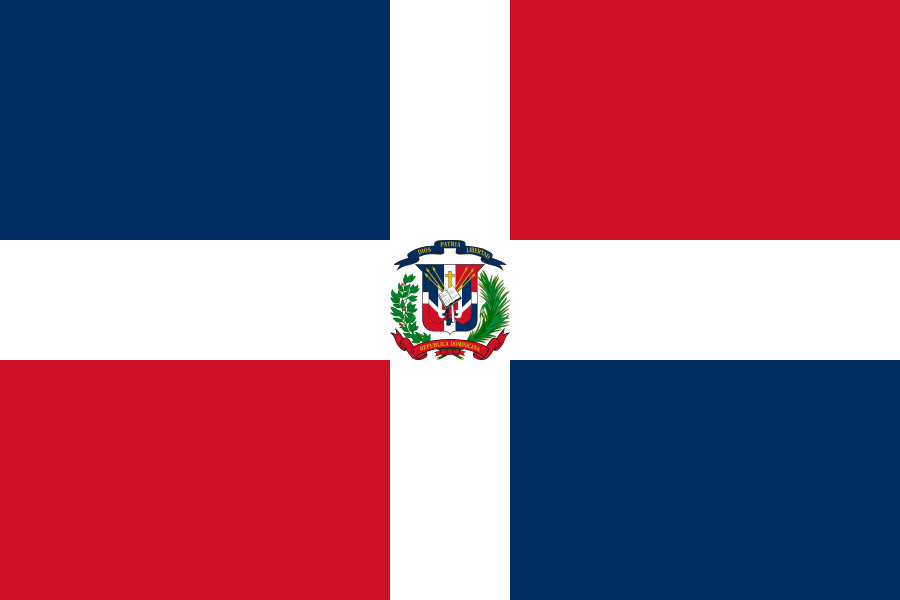
Safety in Dominican Republic
A rating built from four independent indices, plus scams, laws and what to do when something happens
Rating calculated from the indices below
Indices checked on 10.08.2026
Position in global indices
Save these before you fly
The general picture
Resort areas: Bávaro and Punta Cana have a dedicated tourist police force, POLITUR. Walking around by day is entirely relaxed, since the state comes down hard on anything targeting visitors.
Motorcycle theft: In the capital, snatching from passing motorcycles is common. Never take your phone out next to a road and do not wear gold chains, which get ripped off at speed.
Beach theft: On public beaches, do not leave valuables on a towel. It is the single most common problem visitors have. In a hotel, put your passport and cash in the room safe.
Sanky-pankies: Be wary of locals pushing an insistent romance. In most cases it is a route to money, framed as helping a family or paying for a visa.
Sun: The Caribbean sun burns in fifteen minutes even under cloud, so SPF 50+ is compulsory. Use repellent for mosquitoes as well.
At night: Avoid unlit streets and poor neighbourhoods after dark. Call an Uber to get back rather than walking along a busy road.
Hurricane season: June to November brings storms, peaking in September. Modern hotels are built for it, but follow staff instructions during any warning.
How tourists get scammed
The Dominican Republic is a resort country where life inside the hotel grounds is calm and quite different beyond the gates. Most trouble happens at exactly that boundary.
Excursions sold on the beach. Sellers along the beaches of Punta Cana and Bávaro offer boat trips, buggies and Saona tours cheaper than the hotel does. Some operators work without a licence or insurance, and boats are sometimes overloaded. The price difference is not worth it.
Timeshare. "Free breakfast and an excursion" in exchange for a presentation with hours of pressure. The scheme is legal and very persistent.
ATMs. Skimming is widespread. Withdraw only at bank branches and inside hotels, and never let your card leave your hands in restaurants.
Currency exchange. Change money at banks or your hotel. Street changers work with short counts and counterfeit notes.
Motoconchos. Motorcycle taxis are cheap, but without helmets, without insurance and with unpredictable riding. This is the most common way to end a holiday in hospital.
Souvenirs. Larimar and amber are genuine Dominican stones, which is precisely why they are faked at scale. Buy from shops that issue a certificate.
The "friend" on the beach. An introduction, drinks together, and then requests for money or missing items from your room. A resort-zone classic.
What gets you fined or jailed
Drugs are the main risk for a foreigner. The Dominican Republic sits on a transit route, and its airports operate accordingly: dogs, scanners, selective searches. Never carry anyone else's belongings, parcels or "gifts for a relative in Europe". Sentences are long, such charges carry no bail, and conditions are harsh.
Weapons. Importing ammunition and firearms is prohibited and screening is thorough.
Drones require IDAC permission, and flights over hotels and beaches without clearance are prohibited.
Age of consent and child protection. The laws are enforced, international cooperation is active, and penalties are serious.
Exports. Items made from sea turtle shell, coral and certain shells are prohibited under international conventions — they are confiscated at European airports on arrival, and a fine may follow the confiscation.
Roads. Do not drive between towns at night: no lighting, livestock on the road, motorcycles without lights. Renting a car requires confidence — the local driving style is free-form.
The tourist card has been included in the airfare since 2018 and does not need to be bought separately.
Health: vaccines, medicines, care
Vaccinations. None mandatory. Hepatitis A and typhoid are advised. A yellow fever certificate is required from arrivals out of endemic countries.
Water. Not from the tap. Hotels filter their water, but drink bottled, including for brushing your teeth.
Stomach. An upset in the first few days is ordinary, all-inclusive resorts included: salad bars in the heat and seafood account for most of it.
Dengue. Present year-round with outbreaks in the rainy season. Malaria occurs in some rural areas near the Haitian border but not at the resorts. Repellent is needed.
The sea. Rip currents on the north coast, at Cabarete and Sosúa, carry people out regularly. The Atlantic side has heavier surf than the Caribbean side. Swim where there are lifeguards and flags.
Sun. Tropical UV will burn you in forty minutes, especially on the first day and in the water.
Hurricanes. The season runs June to November, peaking August to October. Hotels are prepared, but flights and excursions are disrupted.
Healthcare. Private clinics in Punta Cana, Santo Domingo and Santiago work to a decent standard and are oriented toward tourists. Treatment is paid and expensive, with a deposit required upfront. Insurance is essential.
Police: how to handle them
The Dominican Republic scores poorly on the Corruption Perceptions Index, and low-level extortion is widespread. For tourists it mostly appears on the road.
POLITUR — the tourist police. A dedicated service created specifically to work with foreigners. Posts stand in Punta Cana, Bávaro, Puerto Plata, Sosúa and Santo Domingo, with English-speaking and occasionally Russian-speaking officers. It is the first place to go with any problem and works noticeably better than the ordinary police.
Traffic police. Being stopped for an invented offence with an offer to "settle it here" is ordinary, particularly in a hire car. Calmly ask for an official citation.
Reporting theft. Your insurer needs a police report. File it through POLITUR, where the process is faster and clearer.
Santo Domingo. Street crime in the capital is markedly higher than in the resort zones. Motorcycle robberies in the Colonial Zone and the outskirts are a known problem. Do not carry valuables or a phone in view.
At night avoid unlit districts and beaches outside hotel grounds.
Emergency number is 911; the system is modern and works nationwide.
What else to check
The rating is built from open international indices and foreign-ministry advisories; links to the primary sources are in the cards above. Conditions change faster than annual reports come out — check current travel advice before you go.