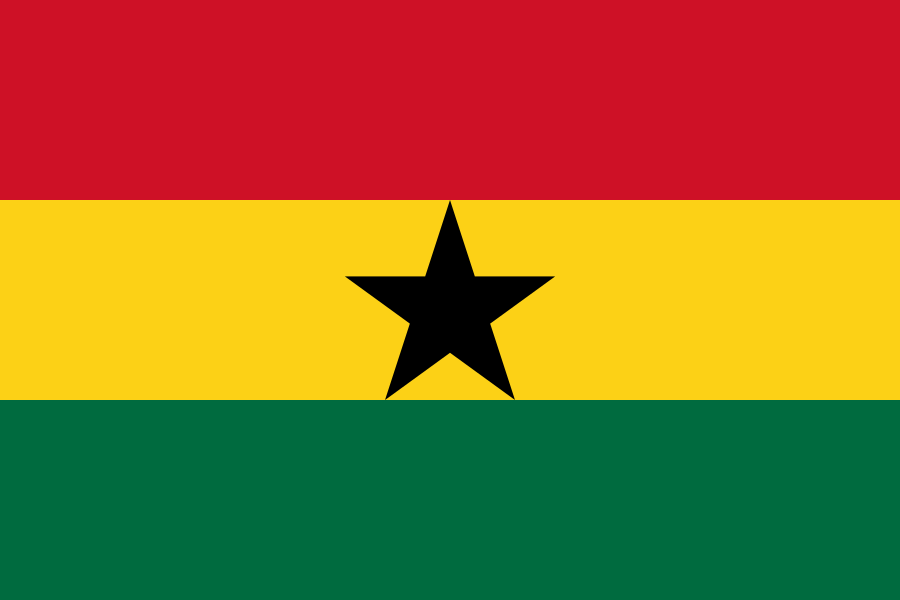
Ghana
GHGhana is often called Africa for beginners — one of the friendliest, steadiest and safest countries in West Africa. It is English-speaking, with a deep history (the UNESCO-listed slave forts, the Ashanti empire), a vivid culture and fine beaches on the Gulf of Guinea. Ghanaians are famous for their hospitality, and the street food is among the best on the continent.
Where to go #
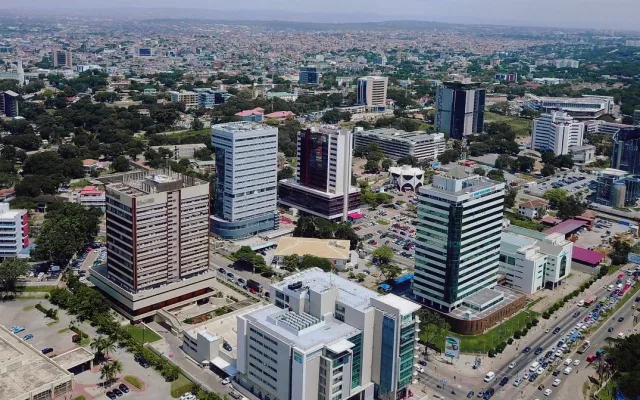
Accra
Accra is the capital of Ghana, home to the W. E. B. Du Bois memorial house, the Mantse Agbonaa market, Labadi beach and a string of historic forts.
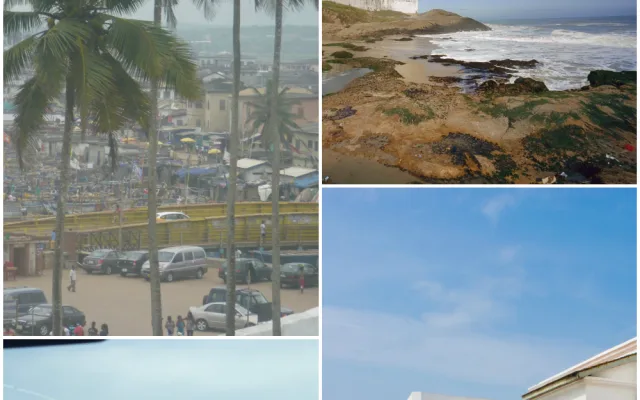
Cape Coast
Cape Coast Castle in Ghana is a UNESCO World Heritage Site. Visit the slave-trade dungeons, the Kakum canopy walkway, and the Fante fishing villages along the coast.
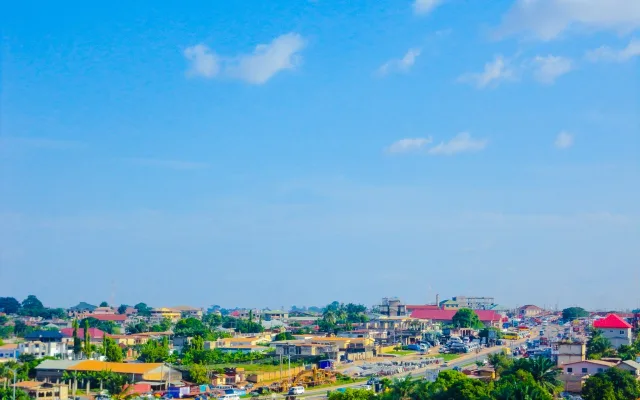
Kumasi
Kumasi is a city in Ghana, known for the Manhyia Palace and the cultural heritage of the Ashanti kingdom. It is also home to Kejetia Market and the Ashanti Cultural Centre.
What to see #
Cape Coast and Elmina castles: the two essential sights, and the hardest. The forts hold the memory of the slave trade, and walking through the dungeons is emotionally very heavy going. Take the guided tour rather than wandering alone.
Kakum National Park: famous for its canopy walkway suspended 30 metres above the forest. The view over the jungle is genuinely striking, but arrive at opening time or you will spend the morning in a queue.
Manhyia Palace Museum: in Kumasi, and the heart of Ashanti culture. In nearby Bonwire village you can watch the bright kente cloth being woven by hand on narrow looms.
Mole National Park: the only place in the country for a walking safari. The chance to approach wild elephants on foot is rare anywhere, though getting there from the capital eats a full day.
Wli Falls: in the Volta region, dropping 80 metres. The forest path in is easy, and the cool pool at the bottom is safe to swim in, which is not true of most water here.
Overrated: the canopy walkway on its own can disappoint, since it is short and full of people shouting. If you want the forest, book a longer guided hike well away from the bridges.
Prices #
Currency: the Ghanaian cedi (GHS) is what you spend inside the country. Dollars and euros change easily at banks and licensed forex bureaux in the larger cities.
Cash: outside the chain hotels in Accra, cards are close to useless. Keep a supply of notes for transport, market food and entry fees at smaller sites, and break large bills whenever you get the chance.
ATMs: machines in Accra, Kumasi and Cape Coast take Visa and Mastercard, but they run out at weekends and charge per withdrawal. Take out larger amounts less often.
Mobile money: locals run their lives on MTN MoMo. If you are staying more than a week or two, linking a local SIM to a wallet is safer and more convenient than carrying wads of cash.
Tipping: around 10 percent in restaurants if the service was good. Guides at the national parks and the castles are underpaid and rely on it.
| Item | Price (USD) |
|---|---|
| Street jollof rice | 2.50 |
| Star beer, 0.5 l | 2.00 |
| Cafe dinner | 15.00 |
| Bottled water, 1.5 l | 0.60 |
| Tro-tro ride | 0.40 |
| Uber ride | 4.00 |
| STC coach ticket | 10.00 |
| Castle entry | 7.00 |
| Kakum canopy walkway | 11.00 |
| Mole safari | 5.00 |
| Cappuccino in Accra | 4.00 |
| Dozen eggs | 2.50 |
| Petrol, per litre | 1.30 |
| SIM card with data | 1.00 |
| Bananas, 1 kg | 1.50 |
Getting around #
Tro-tros: the shared minibuses thread through the entire country for almost nothing. They leave only when full and the seats are tight, but this is how Ghana actually moves.
Coaches: between cities, take an STC or VIP coach. They keep a timetable, the air conditioning works, the seats recline, and tickets are sold at the bus stations rather than online.
Taxi apps: Uber and Bolt work well in Accra and Kumasi. Choose cash payment, since drivers frequently decline card-linked jobs and you will wait a long time otherwise.
Flights: the railways are barely functional, so don't plan around them. For long hauls such as Accra to Tamale, an internal flight saves you an entire day.
Okada: motorbike taxis get you through jams and out into the countryside. Pick an older rider, who will almost always drive more carefully, and say plainly that you want to go slowly.
From the airport: the easiest way out of Kotoka terminal is an Uber. The official ranks quote inflated fares, so walk a short distance from the doors and order a car.
Where to stay #
Guesthouses: the standard option for independent travellers. For 30 to 50 dollars a family-run place gives you a clean room with a fan and a simple home-cooked breakfast.
Accra on a budget: Osu has several decent cheap places within walking distance of the bars and restaurants. Look for the small guesthouses with reliable Wi-Fi rather than the anonymous ones near the ring road.
On the coast: Cape Coast has lodges right on the water, though many are showing their age. Check recent reviews for noise from the beach bars and for damp, which is the usual complaint.
The north: at Mole National Park, book the motel inside the park well ahead. It is the only way to watch elephants at the waterhole from your own terrace at dawn.
Apartments: Airbnb works in the capital, with good flats in East Legon. Worth it if you are a group and want a kitchen, since eating out every night adds up fast.
What to expect: hot water and towels are not guaranteed in cheaper rooms. Pack a quick-drying towel and your own soap and you stop caring about the service level.
What to eat #
Jollof rice: spicy tomato rice, and the dish Ghanaians will happily argue about with their neighbours all night. Two and a half dollars from a street vendor, and better than most restaurant versions.
Waakye: rice and beans with a pile of accompaniments, sold in the mornings from huge metal basins on the pavement. Filling, cheap and on almost every corner before ten.
Fufu and banku: dense pounded dough of cassava or fermented maize. You eat with your right hand, tearing off a piece and dipping it into thick groundnut soup with meat or fish.
Water and hygiene: drink bottled or sachet water and skip the ice. Street food is generally safe if it is cooked in front of you and the stall is busy with locals.
Shito: the black chilli and shrimp sauce that comes with everything. It is properly addictive and a jar of it is the best souvenir you can carry home.
Chop bars: plain local canteens serving the most authentic food you will find. When you need a break from the pepper, Accra has plenty of Lebanese and Indian restaurants.
Safety #
The general picture: Ghana is among the calmest countries in the region. People are genuinely friendly, and solo women travellers report feeling comfortable here in a way they often don't elsewhere in West Africa.
Petty theft: pickpockets work Makola market and the crowds around the tro-tro stations. Nothing valuable in a back pocket, and no waving an expensive phone around in poorer neighbourhoods.
The far north: avoid the border areas with Burkina Faso, particularly around Bawku, where there is real instability. This is not a place to pass through out of curiosity.
After dark: don't walk, even short distances. Order a car through an app; it costs a couple of dollars and removes the attention you would otherwise attract.
The law: legislation affecting LGBTIQ people is severe, and public displays of affection or support can lead to prosecution. Travellers should be aware of this before planning a trip.
Malaria: a real and constant risk. Take the prophylaxis, use repellent, and sleep under the net that nearly every hotel provides. Check your own government's travel advisory for the current regional picture.
Etiquette and culture #
Akwaaba: you will hear the word hundreds of times. It means welcome, it is meant sincerely, and answering it warmly is the fastest way to get on with anyone here.
The right hand: never pass money or food with your left hand, which is considered unclean. Use the right for every social exchange, even if you are left-handed.
Dressing well: Ghanaians value looking neat. Away from the beach, revealing clothes read badly, and knees and shoulders must be covered for a church service or a visit to a chief.
Funerals: these are not only mourning but vast celebrations of a life. Don't be surprised by processions and by coffins shaped like cars or fish, which are a serious local art form.
Photography: always ask before pointing a camera at someone. Most people agree after a short conversation, but taking a shot without asking causes real anger.
Sundays: the country stops and goes to church. Plan around it, because many shops and markets stay closed until late in the afternoon.
Connectivity #
SIM cards: buy one at the airport or at an MTN or Telecel office. You need your passport to register, and the process takes about twenty minutes with the assistant doing the setup.
Coverage: 4G is solid in the big cities and along the coast. In the remote north and around Mole it drops out regularly, so download offline maps before you head that way.
Data prices: bundles are extremely cheap. The best value comes from the tourist packages or daily unlimited offers activated through the operator's app rather than at a counter.
Apps: Uber and Bolt for getting around town, Google Maps for routing. Maps knows the roads well but consistently underestimates journey times, because it cannot model Accra traffic.
Wi-Fi: hotels in Accra have it, but outside the capital it is rare and weak. Plan to run everything off your own mobile data.
Plugs: Ghana uses British three-pin type G sockets, so bring an adapter. Some hotels keep a few at reception, but don't count on it.
Phrasebook #
| English | Twi | Pronunciation |
|---|---|---|
| Good morning | Maakye | MAH-chay |
| Good afternoon | Maaha | MAH-hah |
| Welcome | Akwaaba | ah-KWAH-bah |
| Thank you | Medaase | meh-DAH-say |
| Please | Mepa wo kyew | meh-PAH wo chow |
| How are you? | Wo ho te sen? | wo ho teh SEN |
| I'm fine | Me ho ye | meh ho YEH |
| It's good / fine | Eye | EH-yeh |
| How much is it? | Eye sen? | eh-yeh SEN |
| It's expensive | Ne bo ye den | neh bo yeh DEN |
| Foreigner (slang) | Obroni | oh-BROH-nee |
| Shared minibus | Tro-tro | TROH-troh |
| Let's go | Yenko | YEN-kaw |
| Water | Nsuo | n-SOO-oh |
| Food | Aduane | ah-DWAH-neh |
| Yes / No | Aane / Daabi | AH-nay / DAH-bee |
| Sorry | Kafra | KAH-frah |
| Friend | Adamfo | ah-DAM-foh |
| Help me | Boa me | BWAH meh |
| It's delicious | Eye de | eh-yeh DEH |
| Goodbye | Nante yie | nan-TEH yee-EH |
Good to know #
When to go: November to March is the window. Humidity is lower, rain is rare, and the roads north stay passable for public transport, which matters if you want Mole.
Harmattan: from December to February the wind carries Saharan sand across the country. The sky turns grey and visibility drops, so photographers should pick a different month.
Getting there: Kotoka in Accra is the hub, with direct flights from London, Amsterdam, Brussels and New York, plus good connections through Istanbul or Addis Ababa. Fares are lowest outside the Christmas period, when the diaspora fills every seat.
Airport charges: a new departure levy came in for 2026, and ticket prices have risen by 50 to 100 dollars because of it. Factor it in rather than being surprised at checkout.
Water: 500 ml sachets are sold everywhere, cheap and safe. For a long road journey, buy proper bottles at a city supermarket instead.
Sun: the tropical sun is vicious. Bring high-factor cream, a hat, and loose clothes in cotton or linen that cover your arms.