
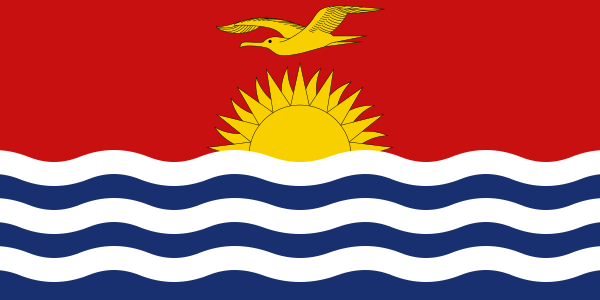
Safety in Kiribati
A rating built from four independent indices, plus scams, laws and what to do when something happens
Rating calculated from the indices below
Indices checked on 10.08.2026
Position in global indices
Save these before you fly
The general picture
Crime: The crime rate is extremely low and people are unusually peaceable. You can walk around without worrying about robbery, though basic care still applies.
Sun: Equatorial radiation here is extreme and unprotected skin blisters in about twenty minutes. Use maximum-factor sunscreen, wear a hat and keep your shoulders covered even while swimming.
Water: Tap water is not drinkable and should not be used for brushing your teeth without boiling. Keep several litres of bottled water in reserve, bought from a supermarket in advance.
Medical care: Healthcare is very limited and serious cases require an evacuation flight to Australia. Bring a full personal medical kit with everything you might plausibly need, because pharmacies are scarce.
Reefs: Swimming without reef shoes is a bad idea, given the sharp coral and the venomous things living in it. Cuts from coral heal very slowly in this climate.
Currents: Be extremely careful with tidal flows, which can be ferocious around the causeways and narrow channels. Never swim alone in a place you do not know.
Dogs: Villages have a lot of stray dogs, and packs can be aggressive towards strangers. Give them a wide berth, and carrying a stick is a normal and understood signal here.
How tourists get scammed
Kiribati is thirty-three atolls stretched across thousands of kilometres over the equator and the date line. Among the least visited countries in the world.
South Tarawa. The capital atoll is overcrowded: a narrow strip of land with high population density and weak sanitation. Street crime is low, but conditions are hard.
Taxis and buses. Minibuses run along the single road at a low fixed fare.
Cash. The currency is the Australian dollar. Cards barely work and ATMs are very few. Bring cash.
Prices. Everything is imported — expensive for modest quality.
Between the atolls. Flights are infrequent and often cancelled, and ferries are irregular. Reaching the Northern Line Islands (Kiritimati) is separate logistics via Fiji or Honolulu. Allow a very large margin.
Kiritimati. Christmas Island is a world-class location for bonefishing and birdwatching.
What gets you fined or jailed
Land and communities. Land belongs to families, and visiting outer atolls and villages requires permission.
The maneaba. The community house is the centre of village life. The rules there are strict: remove shoes and hat, do not pass in front of seated elders, and do not stand at full height. Your guide will explain.
Dress. Society is conservative. Women must cover their thighs, with swimwear only on resort beaches. Men should not appear shirtless in a village.
Drones. Permission is required.
Drugs. The law is strict.
Marine life. The Phoenix Islands Protected Area is one of the world's largest marine reserves. Fishing and collecting are regulated.
The date line. Kiribati stretches across it and the country has three time zones. Kiritimati is among the first places on the planet to see a new day.
Health: vaccines, medicines, care
Healthcare is the defining risk. The hospital on Tarawa is basic, and outer atolls have health posts staffed by medical assistants. Anything serious means evacuation to Fiji, Australia or Honolulu, taking days because of flight schedules. Insurance with air evacuation is essential.
Sanitation. South Tarawa has serious water and sewerage problems. Intestinal infections are common.
Water. Bottled or boiled only. Fresh water on the atolls is scarce.
Vaccinations. Hepatitis A and B, typhoid and tetanus. A yellow fever certificate is required from arrivals out of endemic countries.
Dengue. Outbreaks occur.
Ciguatera. Reef fish poisoning is common. Follow local choices.
Sun. The equator, with reflection off the lagoon. People burn very quickly.
Climate. The atolls rise two or three metres. Storm surges and droughts are a constant problem.
Emergency number is 999 or 192.
Police: how to handle them
Kiribati is a calm country with low crime against foreigners.
Police. Few in number; English is official alongside Gilbertese.
Reporting theft. Reports are taken; cases are rare.
South Tarawa at night. Alcohol produces noisy groups. Aggression toward foreigners is uncommon, but unlit stretches are best avoided.
Communities. On the outer atolls, elders take decisions in the maneaba, and it is a functioning system.
Attitude to visitors. Tourists are very few and interest is sincere and warm.
What actually matters. In Kiribati the danger comes from remoteness, sanitation and the absence of healthcare. This is one of the world's hardest destinations to reach, and a trip requires patience with logistics.
Emergency number is 999.
What else to check
The rating is built from open international indices and foreign-ministry advisories; links to the primary sources are in the cards above. Conditions change faster than annual reports come out — check current travel advice before you go.