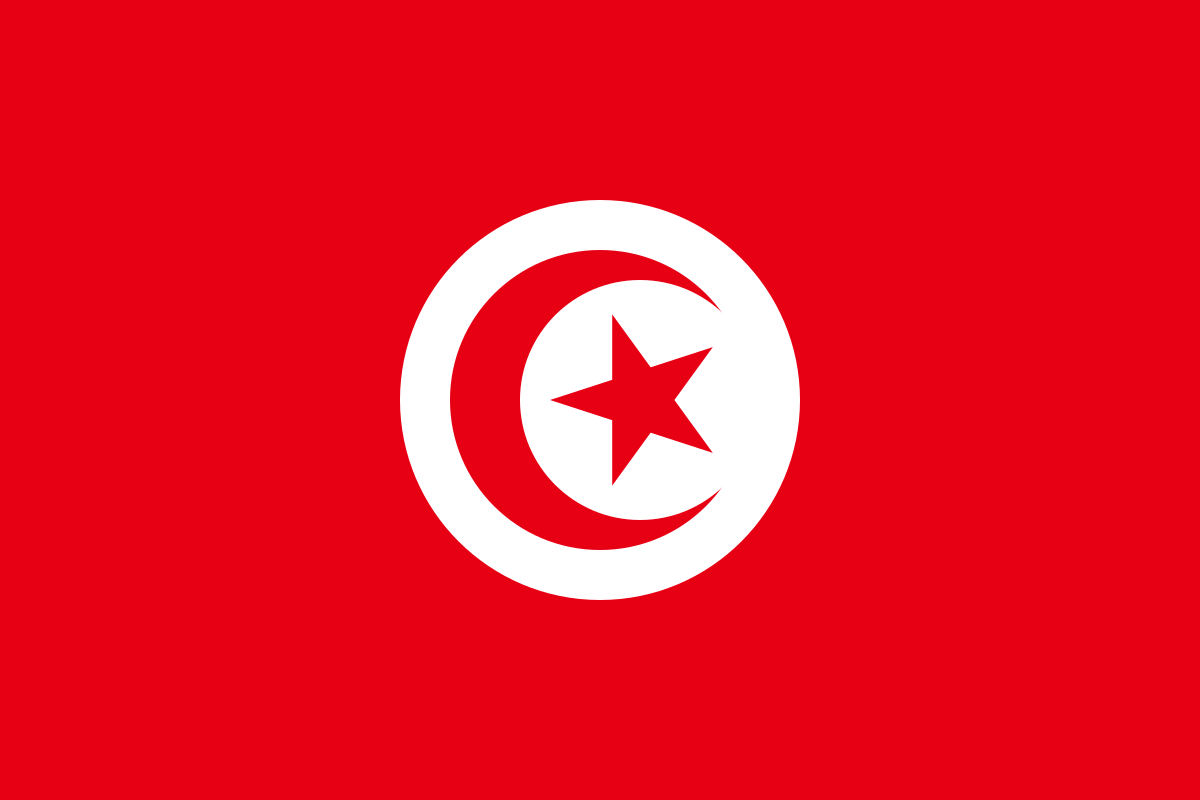
Tunisia
TNThe closest African country to Europe — just two hours' flying from Rome. Tunisia is the ruins of Carthage, blue-and-white Sidi Bou Said, the edge of the Sahara with its oases and Star Wars sets, Roman amphitheatres and world-class thalassotherapy. It is one of the most affordable Mediterranean countries, and the hospitality is generous.
Where to go #
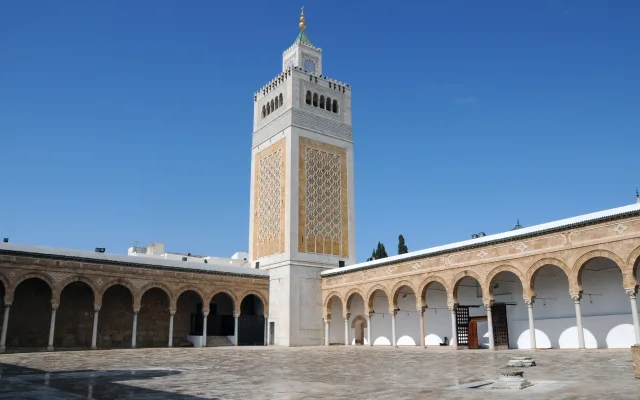
Tunis
The capital of Tunisia — the UNESCO medina, the Bardo Museum's mosaics and Carthage next door.
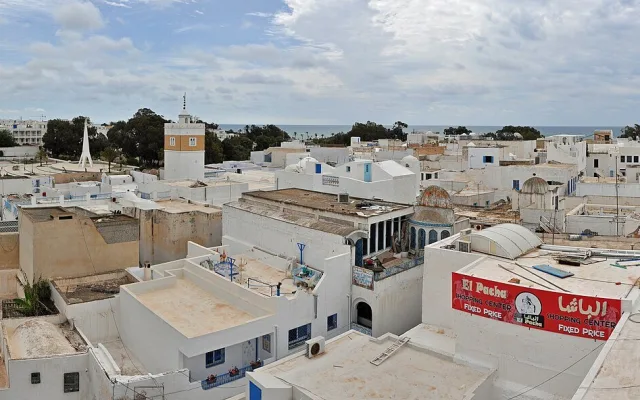
Hammamet
Tunisia's main resort — white beaches, a medina, a yacht club and a large hotel district.
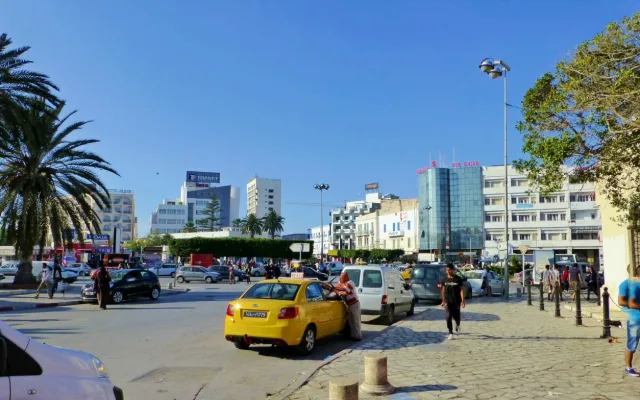
Sousse
A port city — a medieval ribat on the UNESCO list, a medina and Port El Kantaoui.
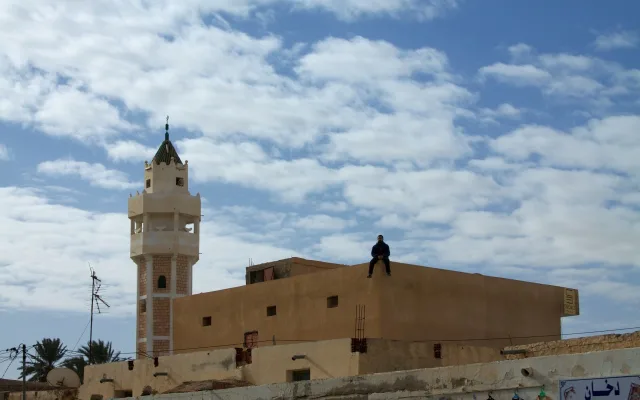
Douz
The gateway to the Tunisian Sahara — camel caravans into the Grand Erg Oriental, the Thursday market and the Sahara Festival.
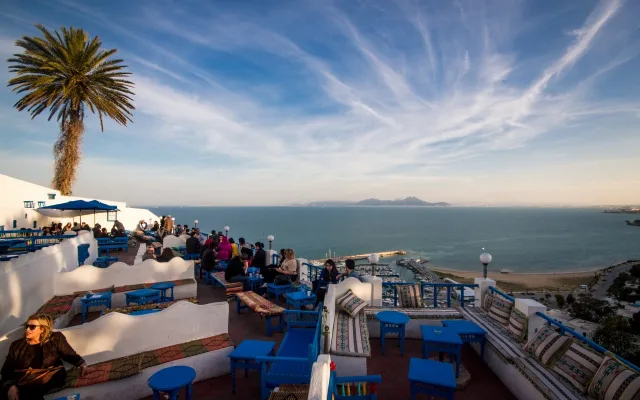
Sidi Bou Said
The blue-and-white village on a cliff above the sea, next to Carthage — famous doorways and mint tea with pine nuts.
What to see #
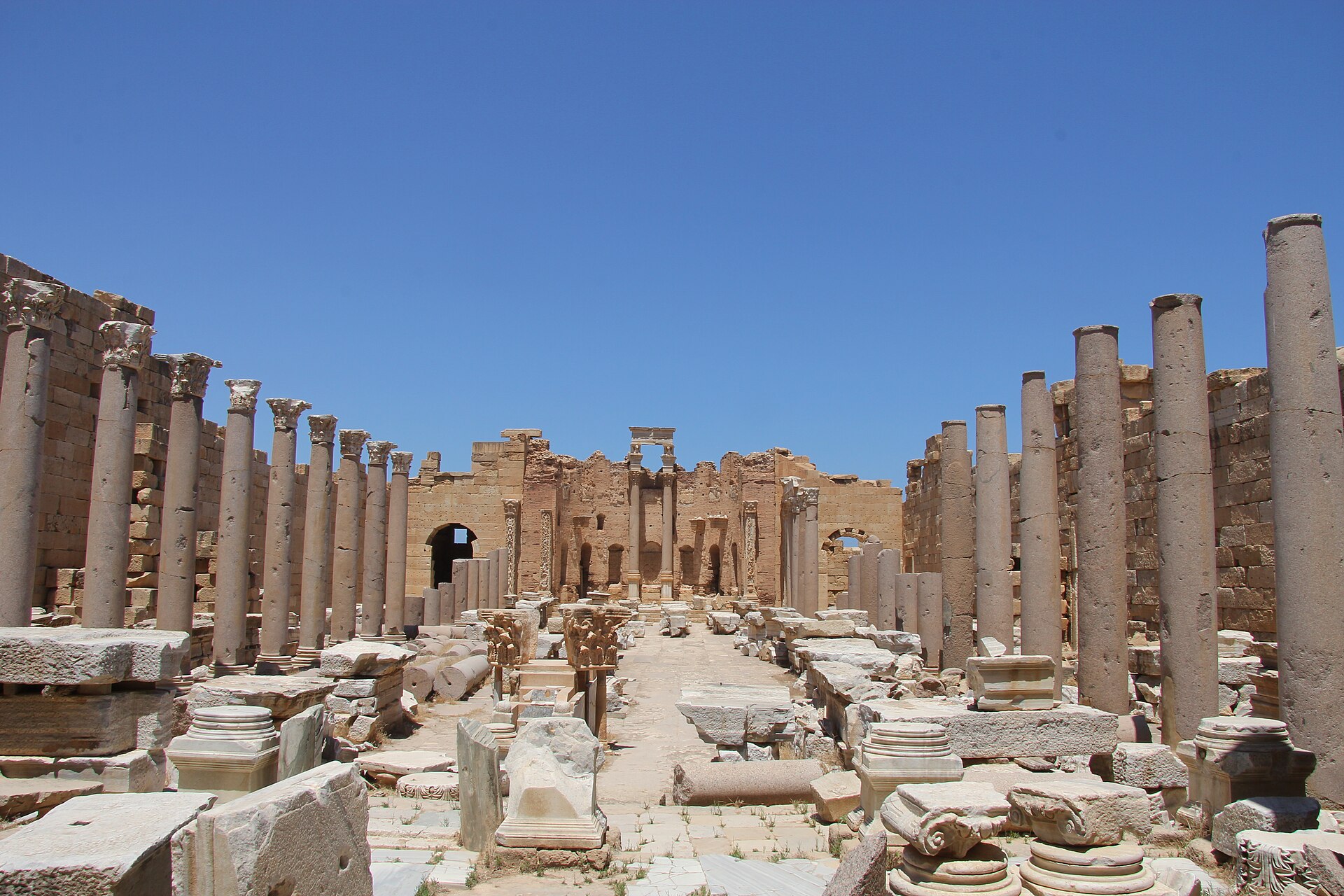
Carthage: The ruins of the great power sit in the capital's suburbs. See the Antonine Baths and climb Byrsa hill for the panorama over the bay. One ticket covers every site, and you can do it in a day using the TGM tram.
El Djem: This Roman amphitheatre has survived far better than the Colosseum. You can legally descend into the underground galleries where gladiators waited. Easiest reached by louage from Sousse, and it genuinely lives up to the hype.
Bardo Museum: A vast collection of Roman mosaics housed in a former bey's palace. It is a world-class institution and simply not to be skipped. Arrive at opening so the coach groups do not get in your way.
Matmata: The Berber cave dwellings served as Tatooine in Star Wars. People come for the science-fiction atmosphere and for a night in an unusual underground guesthouse dug straight into the earth.
Sidi Bou Said: The blue and white cliff village is the country's defining image. Walk it early, before the traders set up their stalls. The sea views are superb, though restaurant food here is often unjustifiably expensive.
The Sahara: A two-day desert trip shows you an entirely different Tunisia. Expect the dunes of the Grand Erg, a night under the stars and sunrise over the salt lakes. It is the most powerful experience the country offers.
Prices #
Cards: Foreign Visa and Mastercard work in supermarkets and larger hotels, and Amex is rarely accepted. For everything else you will need cash dinars, so never rely on plastic alone.
Exchange: Never change money with someone who approaches you in the street, which is illegal and a good way to end up with forgeries. Use banks or an official Bureau de Change, and keep every receipt until you leave.
ATMs: Every town has them, but withdrawal fees on foreign cards can be steep. Single-withdrawal limits are usually low at around 300 dinars, which is awkward if you need to pay for something big.
Which currency to bring: Euros are the easiest to exchange, with US dollars a close second. A Wise or Revolut card cuts down on conversion losses, though you still want a cash reserve for the medina.
Tipping: Around ten percent in restaurants where service is not included. Rounding up is enough for taxi drivers, and small millime coins are always worth keeping for markets.
| Item | Price (USD) |
|---|---|
| Brik from a street stall | 1.20 |
| Casse-croute sandwich | 1.80 |
| Couscous in a cafe | 4.50 |
| Dinner for two | 22.00 |
| Espresso | 0.80 |
| Mint tea with pine nuts | 1.50 |
| Water 1.5 l | 0.40 |
| Celtia beer | 2.10 |
| SIM card with 6 GB | 5.20 |
| Louage Tunis to Sousse | 4.10 |
| Second-class train ticket | 6.50 |
| Taxi, 5 km | 2.50 |
| Carthage entry | 4.00 |
| El Djem entry | 4.00 |
| Night in a dar hotel | 45.00 |
| Litre of petrol | 0.85 |
Getting around #
Getting there: Tunis and Djerba take direct flights from most of Western Europe on Tunisair, Nouvelair and the low-cost carriers out of Paris, Lyon, Frankfurt and Milan. From North America you connect through Paris, Frankfurt or Istanbul, and Turkish Airlines runs a reliable year-round route.
Louages: These white shared minivans run between towns, with a red stripe for long distance and blue for suburban routes. Fares are fixed and they leave when full, making them the fastest and cheapest way to move around.
Trains: SNCFT lines connect the capital with Sousse and Sfax. More comfortable than a louage but frequently delayed. Second class costs almost nothing and the difference from first class hardly matters for a short hop.
City taxis: The yellow cabs run on a meter that locals call the compteur, and you should ask for it as you get in. A ride across town rarely costs more than five to eight dinars in daylight.
TGM tram: This much-loved line links central Tunis with Carthage and Sidi Bou Said for less than a dinar. It is easily the best way to cover the historic outskirts on the cheap.
Car hire: Book ahead through an aggregator to avoid enormous deposits and credit-card-only policies. Photograph every existing scratch when you collect the vehicle.
Bolt: The app works in the capital and larger cities and removes any haggling. The price is fixed in advance and a car usually arrives within a couple of minutes.
Where to stay #
Dars and riads: Traditional houses in the old medinas converted into small hotels. Mosaic courtyards and quiet terraces make this the most atmospheric choice, and the best one for an independent traveller.
City hotels: Central Tunis and Sousse have plenty of inexpensive options, often in colonial buildings with very high ceilings. Renovation standards vary wildly, so read recent reviews before you book.
Apartments: Along the coast, renting a flat through the usual international platforms works out well. It lets you shop at the market and cook, and it pays to pick something away from the noisier clubs.
Resort zones: The enormous complexes at Hammamet are frequently overpriced and characterless. You will not see the real country from inside one, so treat them as somewhere to drop in for a thalasso session instead.
Booking: Reserve early for the summer season, when the good places go quickly. Whichever platform you use, always confirm that air conditioning is actually included in the room description.
On arrival: In small guesthouses you may be greeted like an old friend. Do not be surprised by an invitation to drink tea with the owner before anyone touches the paperwork, since that is simply how hospitality works here.
What to eat #
Couscous: The national dish of steamed grain with vegetables and meat. Tunisians make theirs spicy and often add fish along the coast. On Fridays it is cooked in almost every home and every proper cafe.
Brik: A crisp triangular pastry of paper-thin malsouka dough, usually filled with egg, tuna and fresh herbs. It is the most popular street food in the country and eaten hot, standing at the counter.
Tajine: Nothing to do with the Moroccan stew. The Tunisian version is a dense baked egg dish with meat, cheese and potato, often served cool or warm as a starter before the main course.
Harissa: The country's defining condiment, a fiercely hot paste of red chilli and garlic. It arrives with every meal alongside olive oil and fresh baguette, and you should approach your first spoonful with real caution.
Mint tea: Brewed thick, very strong and very sweet, with fresh mint and a handful of pine nuts. Drinking it is a ritual that accompanies every conversation in a local cafe.
Seafood: Markets and harbours always have fresh sea bream, sea bass and prawns. Ask a small restaurant by the water to grill your fish, which is always good and far cheaper than the hotel equivalent.
Safety #
Overall: Tunisia is welcoming and safe for anyone applying basic common sense. A dedicated tourist police force patrols the resort areas and is easy to spot by the uniform and armbands.
Petty theft: Keep an eye on your bag and phone in markets and in the crush of the medina. Pickpockets are not common, but vigilance costs nothing, so carry valuables in front of you.
Traffic: Drivers do not give way to pedestrians, crossing or no crossing. Look both ways very carefully every single time, since driving here is chaotic and often fast.
Pushy helpers: Self-appointed guides in the medina can be extremely persistent. A free tour always ends in a shop with inflated prices, so say "la, shukran" firmly and keep walking.
Water and hygiene: Drink bottled water and use it to wash fruit too. Skip ice in street cafes, and pick places busy with local customers, which is the surest sign of fresh ingredients.
Where not to go: Do not plan trips to the border zones with Libya and Algeria in the south, where counter-terrorism operations take place. Stick to the well-travelled routes in the north and centre, and read your own government's travel advisory before you book.
Etiquette and culture #
Hospitality: Tunisians are open and genuinely enjoy talking to visitors. You may be offered tea or directions for no reason at all, so be courteous in return while keeping a sensible distance.
Religion: Tunisia is a secular state, but respect for Islamic tradition is expected. Do not enter mosques during prayer, cover your shoulders in residential neighbourhoods, and keep shorts for the beach.
Haggling: Bargaining is a form of conversation, not just a way to save money. Open at a third of the asking price, smile throughout, and treat it as something both sides should enjoy.
Ramadan: During the holy month life slows to a halt until sunset. Many cafes close during the day, and eating or smoking in the street is considered poor form. Resort areas largely carry on as normal.
The left hand: By old tradition it is considered unclean. Try not to hand over money or objects with it, or use it to greet someone. It is a small thing that earns you real respect.
Photography: Always ask before photographing a person, and especially a woman in traditional dress. Tunisians dislike cameras pointed at them unannounced, and a nod is usually all it takes.
Connectivity #
Language: Arabic is official, though the Tunisian derja dialect is very much its own thing. Almost everyone understands French, a legacy of the past. English is common only in hotels and the main tourist centres, and menus in English are limited to those places.
Mobile: Buy an Ooredoo or Orange SIM on arrival at the airport, where prices match the city offices and you save time. You will need your passport for the registration.
eSIM: If you would rather skip the counter entirely, an eSIM from Airalo or a similar provider covers you from touchdown. It costs more than a local package but works instantly.
Internet: Mobile data is cheap and stable in almost every town. Hotel wifi is often overloaded in the evening, so your own SIM is the better bet for navigation or remote work.
IMEI registration: If you plan to use a local SIM for more than a month, register the handset on the Sajalni site. Otherwise the phone gets blocked on Tunisian networks after 30 days.
Apps: Use Bolt for taxis in the capital, which is cheaper and more reliable than flagging one down. Maps.me handles the tangled lanes of the medina better than most alternatives, and top-up vouchers are sold in any supermarket or kiosk.
Phrasebook #
| English | Tunisian Arabic | Pronunciation |
|---|---|---|
| Hello | Aslema | as-LEH-ma |
| Goodbye | Bislema | bis-LEH-ma |
| Thanks | Yaishek | ya-EE-shek |
| Thank you very much | Shukran | SHOOK-ran |
| Please | Min fadlak | min FAD-lak |
| Yes | Ey | ay |
| No | Le | leh |
| No, thank you | Le, shukran | leh SHOOK-ran |
| How much is it? | Bqaddesh? | b-ad-DESH |
| That's expensive | Ghali barsha | GHA-li BAR-sha |
| Lower the price | Naqes | NAH-es |
| Enough, stop it | Yezzi | YEZ-zi |
| Mate, bro (slang) | Sahbi | SAH-bee |
| Help! | Awnni | AWN-nee |
| Where is...? | Win...? | ween |
| Water | Ma | mah |
| Tea | Tay | tay |
| Coffee | Qahwa | AH-wa |
| Delicious | Bnin | b-NEEN |
| Good, fine | Behi | BEH-hee |
| Gift | Cadeau | ka-DOH |
Good to know #
Currency rules: It is illegal to take dinars out of the country and your wallet may be checked on departure. Spend what you have or convert it back, which requires the receipt from your original exchange.
Who to call: Police answer on 197 and the ambulance service on 190, both around the clock. In resort areas the tourist police unit is responsible for visitor safety and is usually the quickest help.
Transport hubs: Louage stations are generally on the edge of town, so take a city taxi to reach them. At railway stations always check the current timetable, which can change without notice.
Sun: North African sun catches people out even under cloud. Use factor 50 and wear a hat, and treat noon until four in the afternoon as the hours to stay in the shade.
Consular help: Most European countries keep an embassy in Tunis, and others cover Tunisia from Rome or Algiers. Note the consular number down before you travel in case documents go missing.
Opening hours: Shops and government offices close early, especially on Fridays. Factor in the midday siesta when streets empty out in the heat, and get anything important done in the morning.