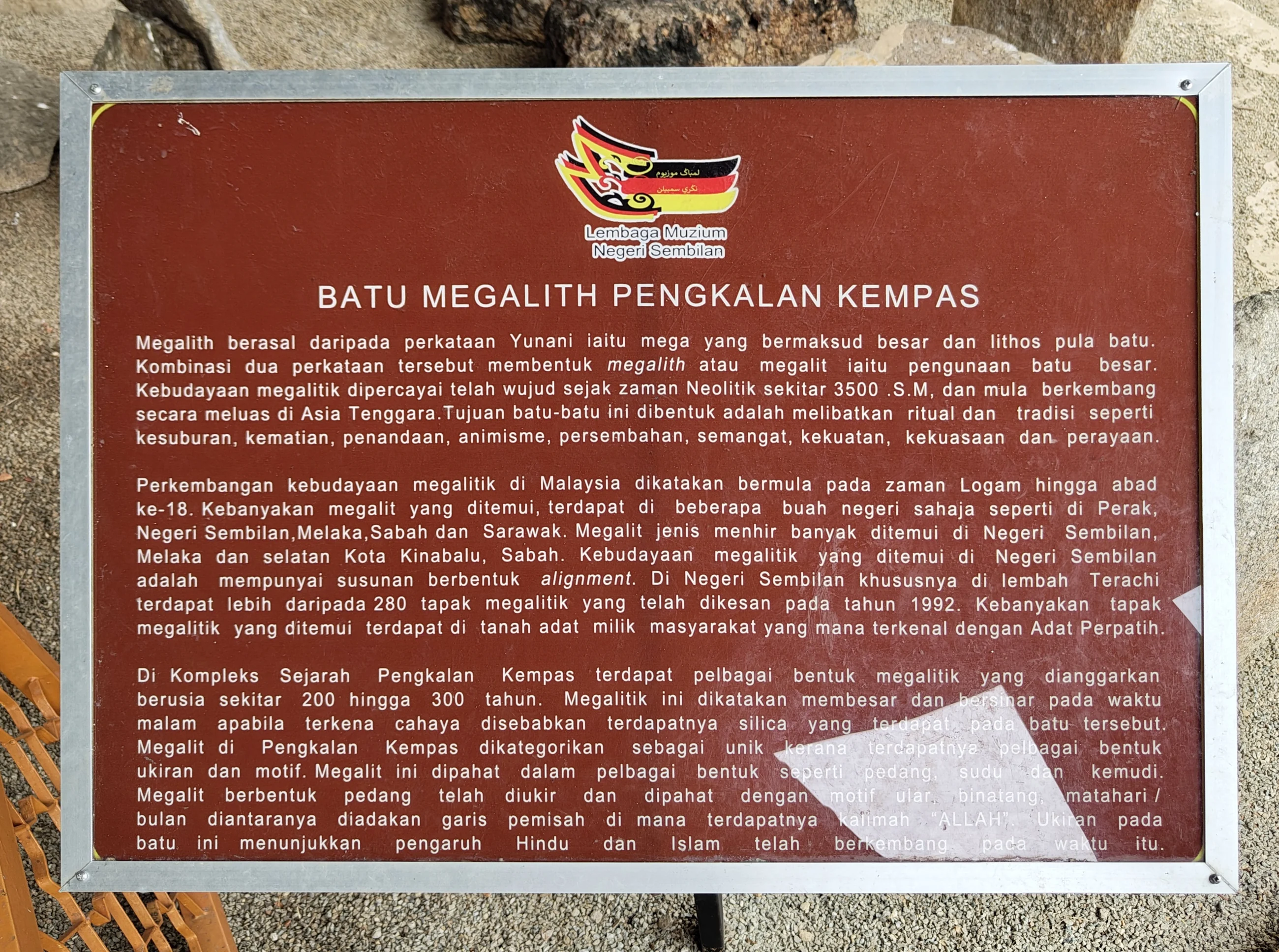
Pengkalan Kempas Historical Complex is in Port Dickson District, Negeri Sembilan, on the west coast of Peninsular Malaysia. This open-air archaeological site is known for its granite megaliths and the tomb of Sheikh Ahmad Majnun, a Muslim religious figure associated with the fifteenth century. I. H. N. Evans carried out the first archaeological investigation here in 1919. Researchers place the complex broadly in the fourteenth to fifteenth centuries, partly by comparing it with the tomb, whose date is associated with Ahmad Majnun’s death in 1467. This is a relative dating for the site, not a precise construction date for every stone.
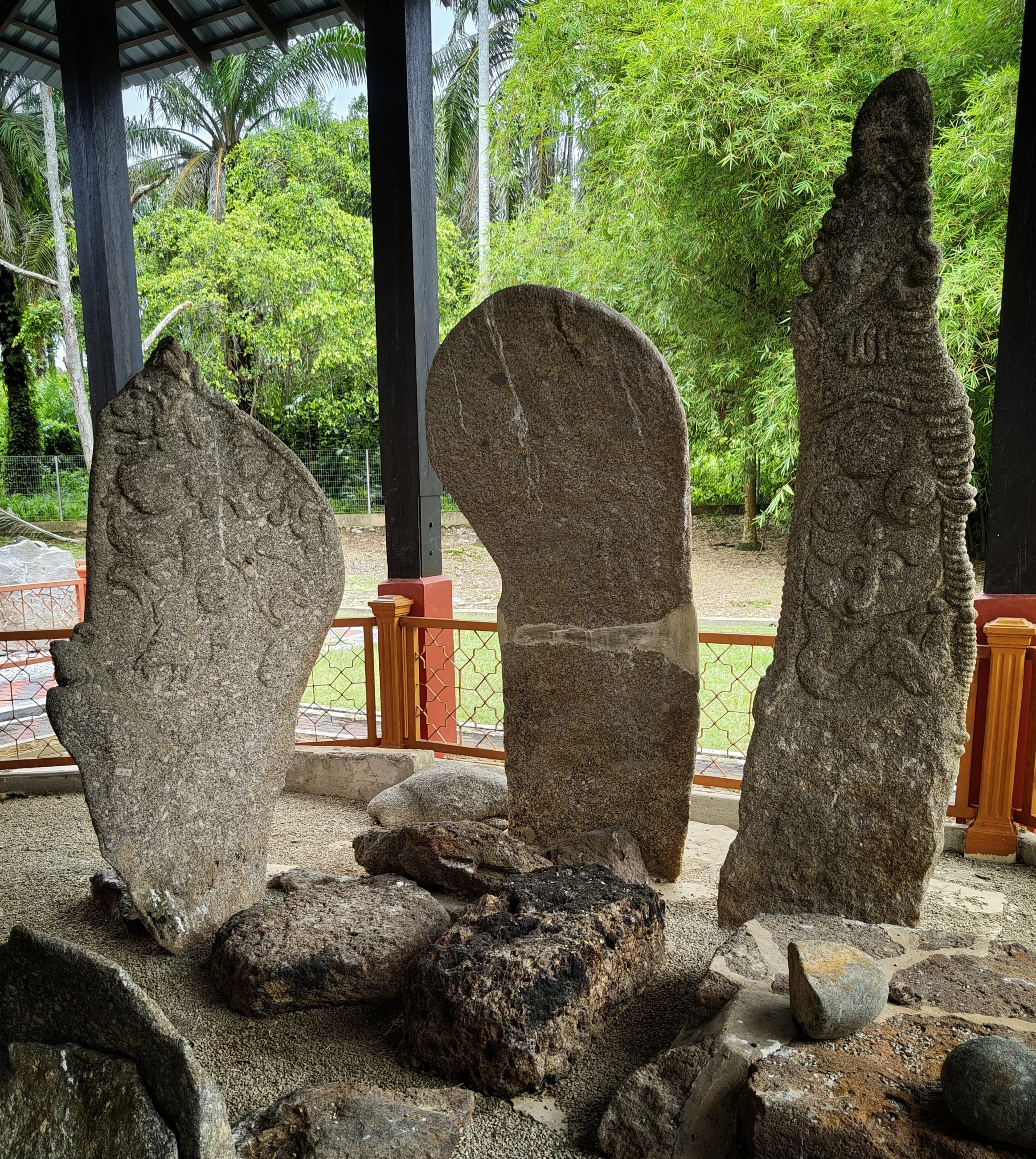
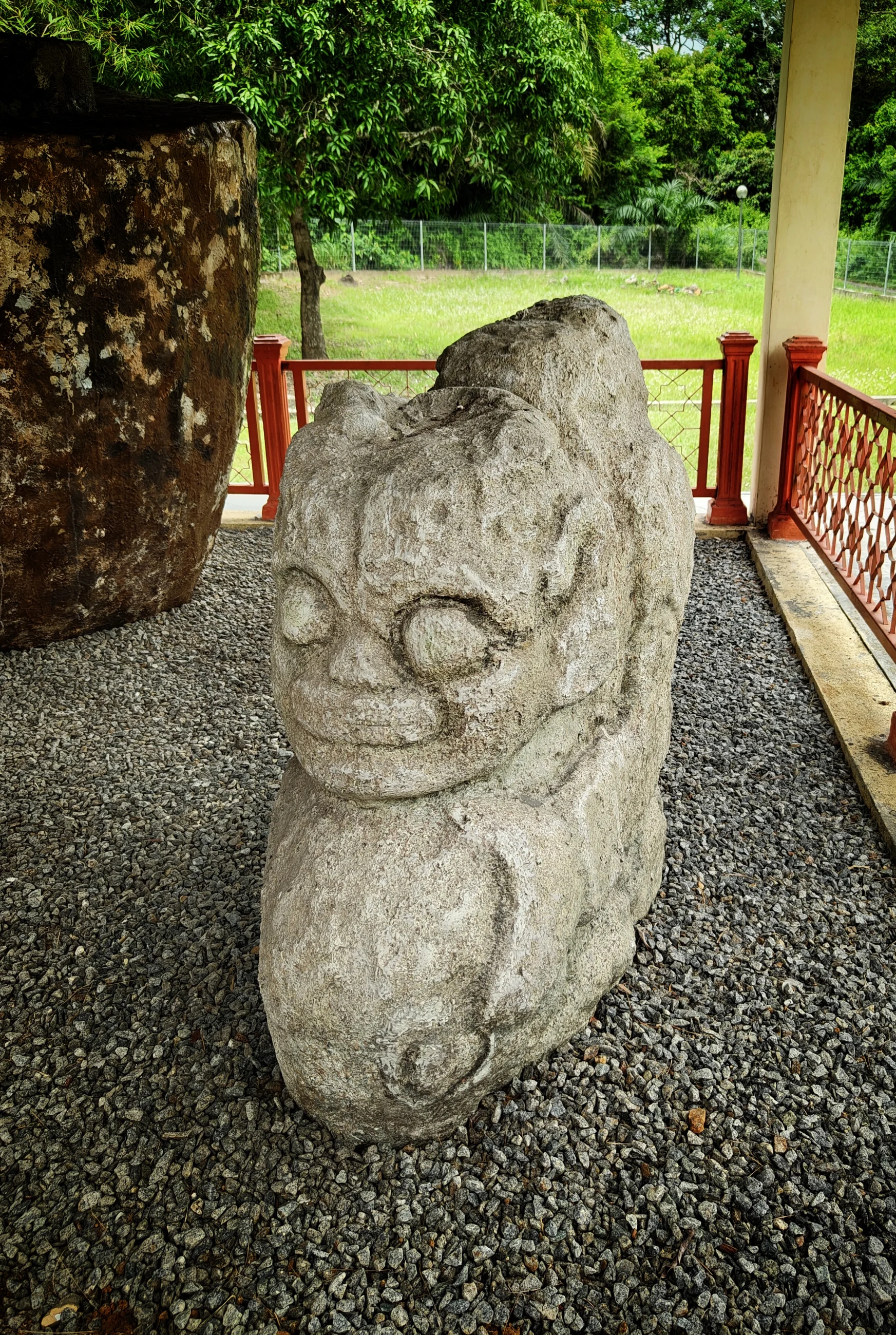
The grounds contain around fifteen forms of granite stones. Three prominent menhirs are named for shapes resembling a boat’s rudder (kemudi), a spoon or parasol (sudu/payung), and a kris dagger (pedang/keris). Some stones carry carved animal forms, sun and moon motifs, and the word “Allah” in Arabic script. Their shapes and decoration connect the monument with local traditions and the cultural history of Negeri Sembilan. The site is registered as Malaysian national heritage and brings together an archaeological setting and a burial place, giving it significance beyond a small display of old stones.
Visitors can focus on comparing the menhirs’ silhouettes, looking closely at their carved details and reading the museum panels. The shelters and railings are part of the modern presentation that protects the stones. Pengkalan Kempas is a small settlement in Port Dickson District, so the complex is best planned as a separate stop while travelling through Negeri Sembilan. Archaeological and ethnographic interpretations discuss possible roles for megaliths; the evidence does not justify assigning one fixed purpose to every stone.
- Address
- Kompleks Sejarah Pengkalan Kempas, Port Dickson District, Negeri Sembilan, Malaysia
- Website
- Website
On the map

Reviews (0)
No reviews yet. Be the first!
Updated