Description
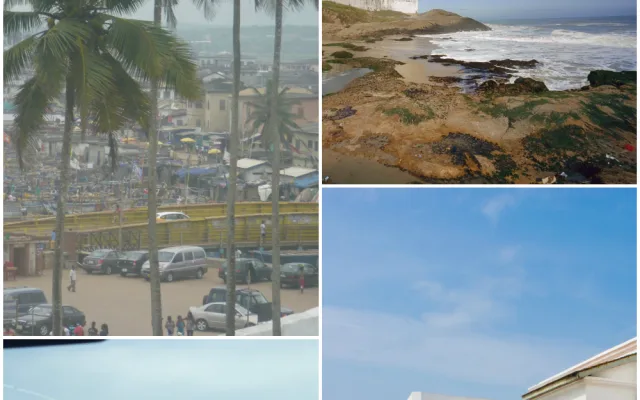
Accra is the capital of Ghana, home to the W. E. B. Du Bois memorial house, the Mantse Agbonaa market, Labadi beach and a string of historic forts.
Wiki
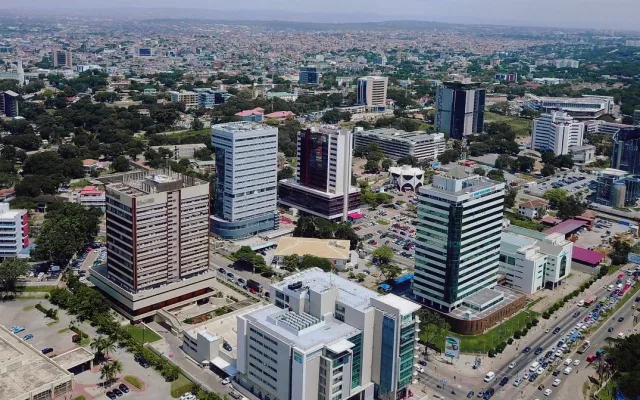
Accra is the capital and largest city of Ghana, spread along the Gulf of Guinea coast in the south of the country. It is the administrative, financial and cultural centre of the nation, with a population of around 2.5 million, and it is known for a mixture of colonial heritage, pan-Africanist ideas and energetic modern life.
History and character
The settlement grew out of the villages of the Ga people, who lived here long before the Europeans arrived. From the 17th century the Portuguese, Danes, Dutch and British established themselves along the coast, leaving a chain of forts and trading castles. Under the British, Accra became the capital of the Gold Coast colony in 1877, and in 1957 the capital of independent Ghana — the first country in sub-Saharan Africa to throw off colonial rule. That moment shaped the city's sense of itself: it was from here that Kwame Nkrumah proclaimed the idea of African unity, and Accra is still seen as one of the symbolic capitals of the pan-African movement.
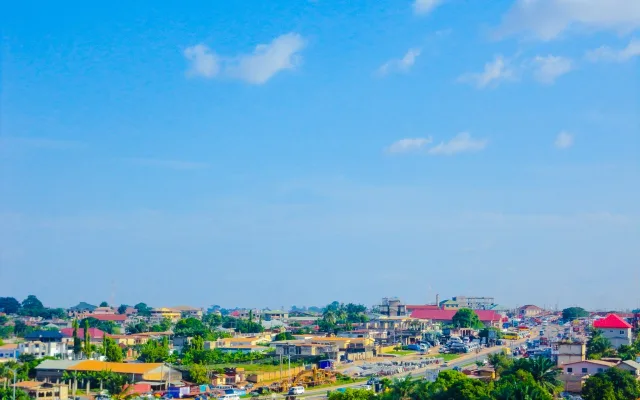
The urban fabric is varied: a business centre of office towers and banks sits alongside busy markets, while the prosperous districts of Osu, Cantonments and Airport Residential contrast with the dense fishing quarters by the sea.
Main sights
- Independence Square (Black Star Square) — a vast ceremonial space with the Independence Arch and the Black Star Gate, the setting for the main national parades.
- The Kwame Nkrumah Mausoleum — a memorial park and the tomb of the first president, surrounded by fountains and sculpture, with a small museum of his personal belongings alongside.
- Jamestown — the oldest seaside district, with its British lighthouse, a noisy fishing harbour, boxing gyms and a great deal of street art, much of it owed to the Chale Wote street festival.
- The W. E. B. Du Bois Memorial Centre — the house where the American sociologist and civil rights campaigner spent his last years after taking Ghanaian citizenship; his library and grave are here.
- Mantse Agbonaa market and the other trading squares give a sense of everyday life: textiles, spices and the work of local craftspeople.
Around Accra and the slave-trade heritage
A few hours west along the coast stand fortresses inscribed on the UNESCO World Heritage list. Cape Coast Castle and nearby Elmina Castle served as holding points in the transatlantic slave trade; the surviving dungeons and "doors of no return" are now memorial museums. The trip is emotionally heavy but an important part of any itinerary, and it is often combined with Kakum National Park and its canopy walkways through the rainforest.
Beaches
The nearest place to unwind is Labadi Beach (La Pleasure Beach), the most popular with city residents, with drummers, highlife dancing and food stalls at weekends. Quieter stretches of sand run east of the capital towards the lagoons.
Food
Ghanaian cooking is hearty and well spiced. The calling card is jollof, rice in a tomato and pepper sauce, over which the country conducts a good-natured culinary quarrel with Nigeria. Try fufu of cassava and plantain with light soup, and banku and kenkey (fermented maize dough) with fried tilapia and hot shito sauce. A simple lunch at a local chop bar costs around $4-7, dinner in a restaurant $15-25. Prices are as of 2026.
Getting there and getting around
The air gateway is Kotoka International Airport (ACC), served by KLM, British Airways, Lufthansa, Ethiopian and Turkish Airlines. Within the city the easiest option is the Bolt and Yango apps; the colourful but less predictable alternative is the tro-tro minibus, where a ride costs a few cents. STC buses run to Cape Coast, or you can hire a driver for the day.
When to go
The best time is the dry season from November to March: hot, around 28-32°C, but without prolonged rain. December is the peak of the diaspora's return, with music festivals and city events. The rainy season runs from April to July, with a second, shorter wet spell in October.
How long to allow
Three days are enough to see the historic centre and the memorials, walk through Jamestown and Osu, give a day to Labadi beach and make an excursion out to the coastal forts.