United Arab Emirates
AESeven emirates on the seam between desert and sea — from the futuristic towers of Dubai to the white mosque of Abu Dhabi, from endless malls to desert safaris. A country of superlatives: the tallest, the biggest, the most lavish.
Where to go #
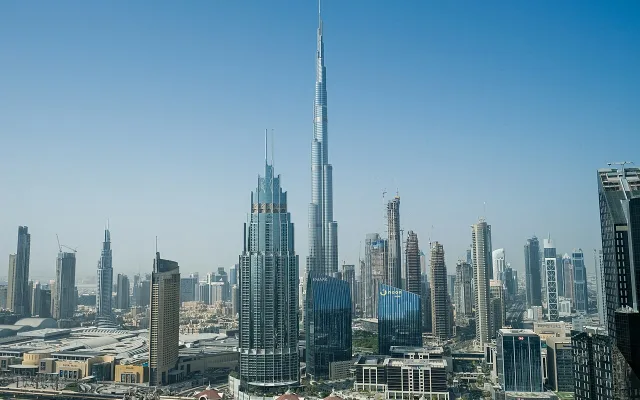
Dubai
A city of skyscrapers in the desert — the Burj Khalifa, Palm Jumeirah and vast shopping malls.
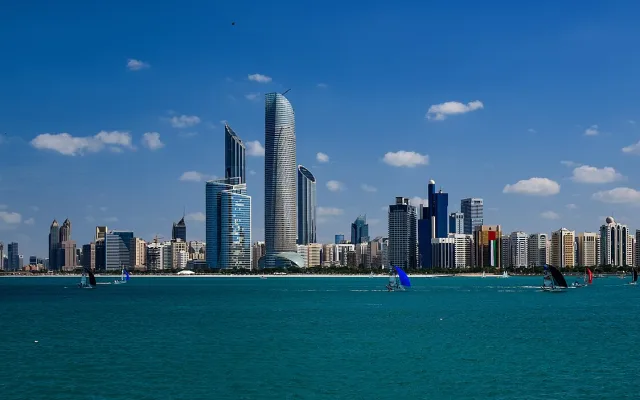
Abu Dhabi
The capital of the UAE — the Sheikh Zayed Mosque, Ferrari World and the Louvre Abu Dhabi.
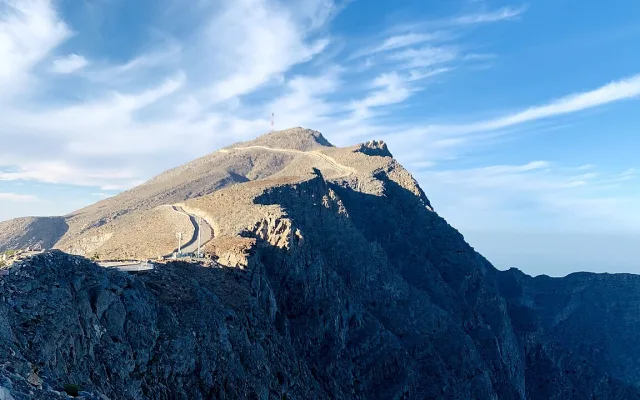
Ras Al Khaimah
The northern emirate — the world's longest zipline on Jebel Jais, plus quiet beaches.
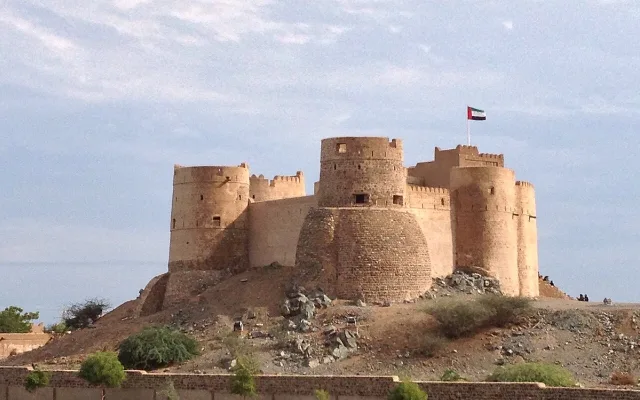
Fujairah
The only emirate on the Indian Ocean — beaches near Khor Fakkan, diving and Al Bidyah, the oldest mosque in the country.
What to see #
Burj Khalifa. You do not have to pay a fortune to go up the observation deck. The fountain show at the base is completely free and runs every half hour through the evening. The best views are from the Dubai Mall promenade.
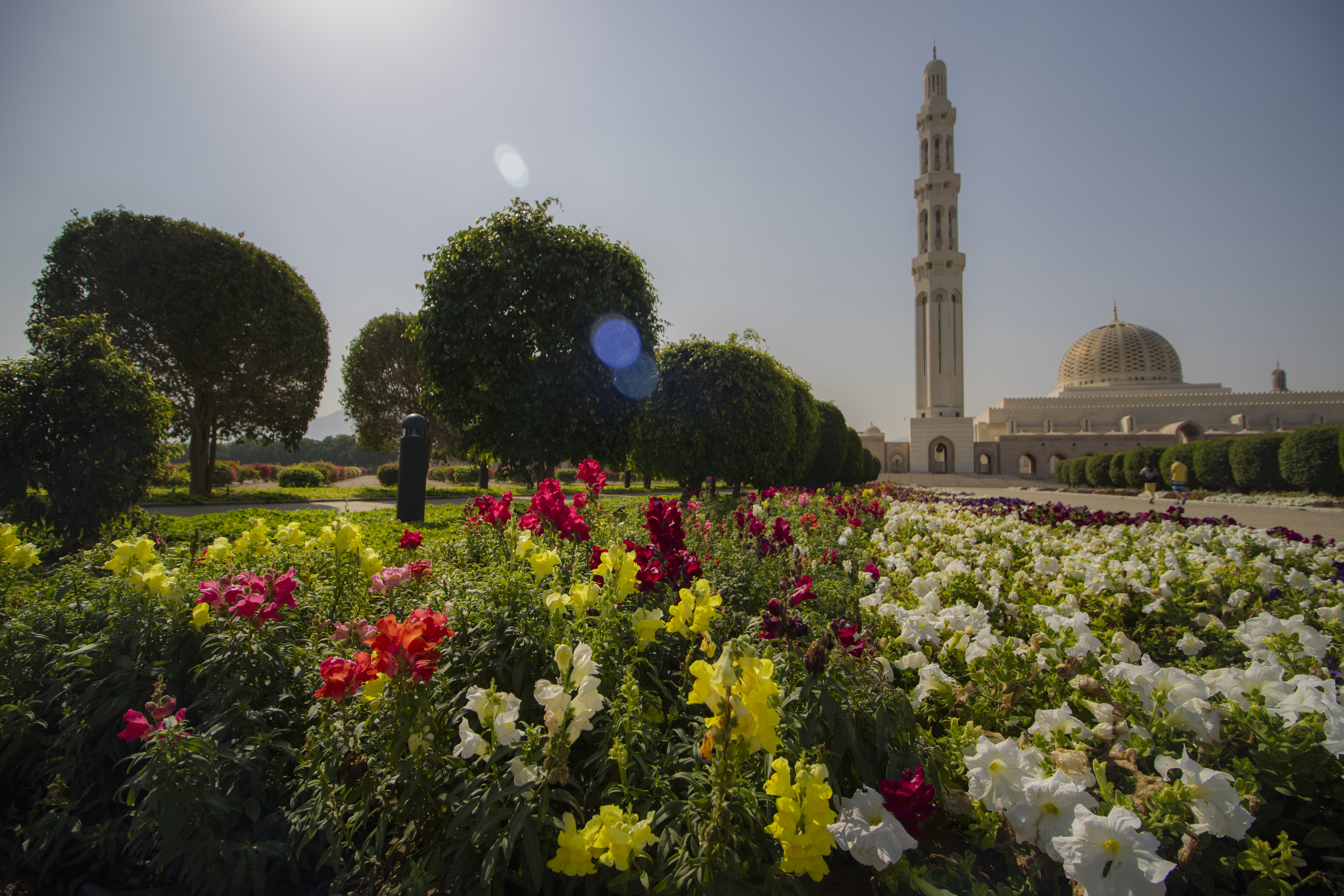
Sheikh Zayed Mosque. One of the few world-class sights anywhere that still charges nothing to enter. The catch is the strict dress code: shoulders and legs covered, and a headscarf for women. Arrive near sunset, when the white walls start to glow.
Old Dubai. Deira and Bur Dubai are the real heart of the city. Crossing the Creek on a traditional abra costs one dirham, which is the cheapest way to feel the region's history without any of the swagger.
Umm Al Quwain Fort. The little museum inside the old fortress costs five dirhams. You get to see the emirate's first passport and a rack of antique weapons, with no crowds to elbow past while you read the labels.
Al Marjan Island. In Ras Al Khaimah you can walk this artificial island for free. The views over the gulf and towards the Hajar mountains are superb, and it makes a good unhurried evening stroll along the water.
The Gold Souk. Worth seeing in Deira even if you have no intention of buying. Windows hung with kilos of gold look faintly surreal. The spice market next door fills the air with an old-Arabia smell that no mall can manufacture.
Prices #
Currency: The dirham is pegged to the dollar at 1 USD = 3.67 AED, and that rate has held for decades. Dollars and euros change easily in shopping-mall exchange houses, which usually beat the airport.
Cards: Visa and Mastercard are accepted almost everywhere, contactless included; Amex is patchier outside hotels and big retailers. UnionPay works selectively. In the small shops of Deira and at the souks, only cash will do, so keep some notes on you.
ATMs and fees: Cash machines are everywhere, though many add a local surcharge on top of what your bank charges. A Wise or Revolut card keeps the conversion cost down and is worth setting up before you fly.
Tipping: Service is often already on the bill and nothing extra is expected. Drivers, porters and valets are usually given 5-10 dirhams if you feel like it.
Hidden extras: Hotel rates quoted online are rarely the final number; VAT, a municipality fee and a tourism levy of 7-20 dirhams a night get added at check-in.
| Item | Price (USD) |
|---|---|
| Shawarma in Deira | 3.5 |
| Lunch at an Indian cafe | 7.0 |
| Hostel bed per night | 20.0 |
| Metro, one zone | 1.1 |
| Intercity bus | 7.0 |
| Abra boat crossing | 0.3 |
| Water, 1.5 l | 0.8 |
| Coffee from a shop | 2.5 |
| Park entry | 1.4 |
| Fort museum ticket | 1.4 |
| City bus ride | 0.8 |
| Supermarket sandwich | 4.0 |
| Dates, per kilo | 11.0 |
| Dubai Frame ticket | 14.0 |
| Metro fine | 27.0 |
Getting around #
The Nol card: This is your only ticket. You cannot board a metro train or a bus without one, because drivers do not take cash. For a visitor the Silver Card makes most sense: 25 dirhams, of which 19 land on the balance.
Dubai metro: Two lines, red and green, running driverless trains with a great forward view from the front carriage. Keep an eye on your balance, because below 7.5 dirhams the gate simply will not let you through.
Intercity buses: Routes E100 and E101 link Dubai and Abu Dhabi for 25-35 dirhams. The coaches are comfortable and properly air-conditioned, leaving from Al Ghubaiba or Ibn Battuta metro stations.
On the water: The abras in the old city are the most characterful way to get around, one dirham to cross the creek. Pricier ferries exist, but the traditional boats are both cheaper and more fun.
Taxis and apps: Taxis are expensive but sometimes unavoidable. Use the Careem app to order a metered car; the minimum fare is usually around 12 dirhams.
Flying in and hiring a car: Dubai and Abu Dhabi are among the world's biggest hubs, with nonstop flights from London, Frankfurt, Paris, New York and most Asian capitals, plus budget carriers across the region. If you plan to see all seven emirates, rent a car: fuel is cheap and the roads are flawless, just budget for Salik toll gates and expect fines for even a slight speed overrun.
Where to stay #
Cheap districts: In Dubai, look in Deira or Bur Dubai. These are the older quarters with a huge choice of inexpensive city hotels and the country's rare hostels. They are noisy and crowded, but a metro station is never far.
Hostels: Dorm beds are not a big part of the market here, but they do exist, and a bed in Dubai runs 15-30 dollars. Pick something near a red line metro station and you will save a lot of commuting time.
Taxes on rooms: Remember that the price on a booking site is often not the final figure. VAT, a municipality charge and a tourism fee of 7-20 dirhams a night are added, and those are paid separately at check-in.
The Sharjah trick: Sleeping in the neighbouring emirate is frequently 30-40% cheaper. Sharjah runs straight into Dubai, so the location works fine; the drawback is potential congestion at the city boundary in rush hour.
Staying a month: For longer stays look at the JVC or Arjan districts, where there are plenty of newer apartments at sane prices. A studio there costs far less than anything in the centre or near the sea.
Deposits: Even budget hotels may ask for a deposit, typically 100-500 dirhams per room. You get it back on checkout provided you have broken nothing and stayed out of the minibar.
What to eat #
Indian canteens: The real budget saviour is the workers' canteen. Look for them in Deira or Al Barsha, where 20-40 dirhams buys a mountain of rice and chicken that two people can happily share.
Street fast food: Shawarma here is a benchmark rather than an afterthought, costing 10-15 dirhams and sold on every corner. Falafel in pita is the other cheap, filling option when you are eating on the move.
Supermarkets: Lulu, Carrefour and the Viva discount chain will keep your costs down. Their prepared-food counters are excellent, with sandwiches, salads and grilled chicken for very little, and buying water in multipacks is several times cheaper.
Mall food courts: If you are already inside a shopping centre, head for the upper floors. There is always a food court mixing global chains with local Lebanese places, and lunch there runs 35-50 dirhams, well below restaurant prices.
Drinking water: Tap water is not for drinking here. Carry a bottle of bought water at all times, especially in summer, because heatstroke arrives quickly and thirst feels sharper in a desert climate.
Sweet things: Supermarkets sell chocolate-coated dates and maamoul biscuits cheaply. It is a good way to snack and sample the local repertoire without setting foot in an expensive patisserie.
Safety #
The general picture: The Emirates is one of the safest countries anywhere. Cameras cover almost every street and the police work quietly but effectively, so walking around at night with your wallet on you is not a concern.
What is forbidden: Do not photograph government buildings, military sites or local people without permission, and be especially careful about photographing women. Breaking this can mean a heavy fine or deportation.
Metro rules: Eating, drinking and chewing gum are banned in the carriages, and inspectors issue a 100-dirham fine for it. Do not wander into the gold-class or women-only carriages without the right ticket either.
Alcohol and the law: Drinking in the street or being visibly drunk in public is a criminal matter, not a telling-off. Even after a few drinks in a hotel bar, take a taxi back rather than walking.
Gestures and swearing: Offensive gestures or foul language aimed at another person can land you in a cell. Keep your temper even in a roadside argument, because local law protects personal dignity very seriously.
Dress code: Cover shoulders and knees in mosques and government offices. Dubai is relaxed about tourists, but in Sharjah revealing clothing can earn you a warning or even a police call-out.
Etiquette and culture #
Religion sets the rhythm: Islam shapes the daily pattern of life, and the call to prayer sounds from the mosques five times a day. Nothing shuts down, but it is worth being a little quieter out of respect while it is happening.
Ramadan: If your trip falls during the fasting month, the rules change. You cannot eat or drink in public during daylight, and most budget cafes either close until sunset or serve takeaway only.
Hospitality: Arabic coffee with dates is the symbol of welcome. If it is offered to you in a shop or a museum, do not brush it off; accepting is the polite move and reads as respect for your host.
The weekend: Friday still matters. The working week now looks broadly European, but plenty of small shops and markets stay shut through Friday morning, and the metro starts later that day.
Emiratis are a minority: Nationals make up roughly ten percent of the population. They value privacy and personal dignity, so avoid over-familiar conversation and never clap a stranger on the shoulder.
Talking to women: Keep your distance. Do not try to strike up conversation with local women or approach them in the street; it can be taken as an insult and turn into a legal problem very quickly.
Connectivity #
Language: Arabic is the official language, but essentially everyone speaks English. In hospitality, transport and retail it is the working standard, and even rusty school English is enough to get by.
SIM cards: Free tourist SIMs with a couple of hundred megabytes are often handed out at the airport. For proper connectivity, buy a package from Du or Etisalat; 10 GB costs roughly 25-30 dollars.
eSIM: If you would rather land connected, an eSIM from Airalo or a similar provider works well here and spares you a queue on arrival. It is also the simplest backup if your physical SIM misbehaves.
Internet calls: Voice and video calls on WhatsApp and Telegram are frequently blocked. Messages send fine, but for talking to people at home use the local BOTIM app or a VPN.
Public wifi: Malls and the metro offer free internet, though authentication often demands a local phone number. Speeds are good, plenty for checking a route or your email.
Apps worth having: Download S'hail for planning public transport journeys, Talabat for food delivery and Careem for the cheapest taxis, choosing the Hala Taxi option. Google Maps works perfectly, but save offline maps anyway, because the narrow lanes of Deira are easy to get lost in.
Phrasebook #
| English | Arabic | Pronunciation |
|---|---|---|
| Hello | السلام عليكم | as-sa-LAM a-LAY-kum |
| Thank you | شكراً | SHUK-ran |
| Please | من فضلك | min FAD-lak |
| Yes | نعم | NA-am |
| No | لا | la |
| How much is it? | بكم هذا؟ | bi-KAM HA-tha |
| Expensive | غالي | GHA-li |
| Discount | خصم | khasm |
| Where is...? | أين...؟ | AY-na |
| Metro | مترو | MIT-ru |
| Bus | حافلة | HA-fi-la |
| Water | ماء | maa |
| Coffee | قهوة | QAH-wa |
| Food | طعام | ta-AAM |
| The bill, please | الحساب من فضلك | al-hi-SAB min FAD-lak |
| Sorry | عفوا | AF-wan |
| Help | ساعدوني | saa-i-DU-ni |
| Good | جيد | JAY-yid |
| Goodbye | مع السلامة | maa as-sa-LA-ma |
| Straight ahead | على طول | ala TUL |
Good to know #
Your embassy: Most countries keep a mission in Abu Dhabi and a consulate in Dubai; save both addresses offline. If you lose your documents or hit a serious problem with the police, that is the first place to call.
Opening hours: Malls trade until midnight and longer at weekends. Government offices work a short day and usually stop seeing the public by two or three in the afternoon, so do official errands in the morning.
Plugs: The Emirates uses the British three-pin socket. Budget hotels rarely hand out adaptors, so buy your own in any supermarket for a couple of dollars.
S'hail: The transport authority's official app is genuinely useful for an independent traveller, showing accurate bus arrival times and stopping you missing a metro interchange.
Entertainer discounts: This app gets you two tickets or two dishes for the price of one. It costs money up front but pays for itself in a day or two if you are hitting water parks and cafes hard; watch for subscription promotions.
Offline translation: Download the Arabic and English packs into your translation app before you go. In some Indian shops, or with a driver who has run out of English, it will save both the situation and your patience.