Saudi Arabia
SAA kingdom opening up to the world at speed: from the ancient Nabataean tombs of Hegra to the futurism of NEOM. This is the country of Islam's two holiest sites, of vast deserts and terracotta canyons, and of ultra-modern cities.
Where to go #
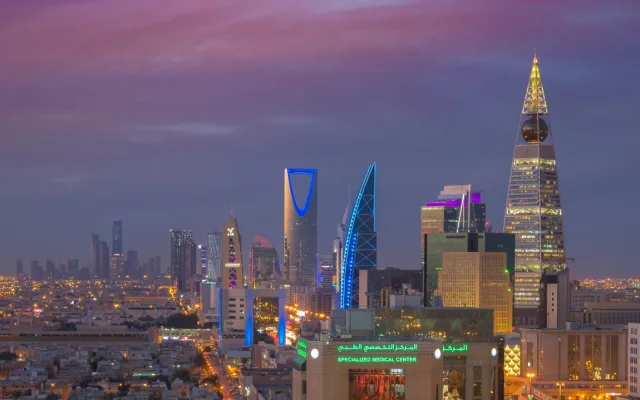
Riyadh
The capital of Saudi Arabia — the Kingdom Centre tower, the Masmak fort, Diriyah and strikingly modern districts.
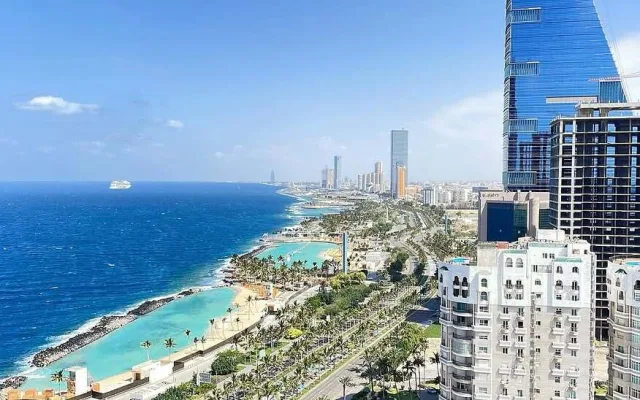
Jeddah
Saudi Arabia's Red Sea gateway: the UNESCO-listed Al-Balad quarter, a 30 km corniche, the tallest fountain in the world and coral reefs just offshore.
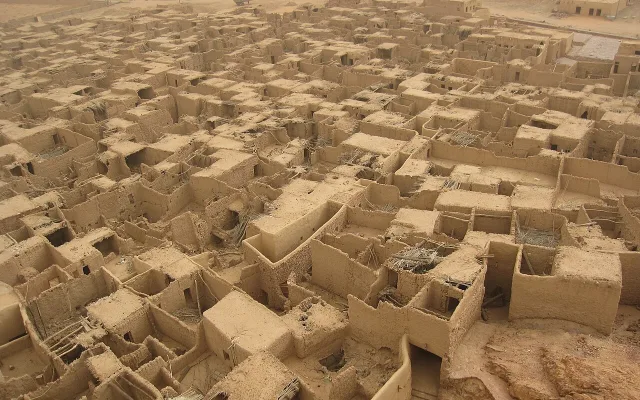
AlUla
Nabataean Hegra in the Saudi desert — rock-cut tombs, Elephant Rock, canyons and a mud-brick old town.
What to see #
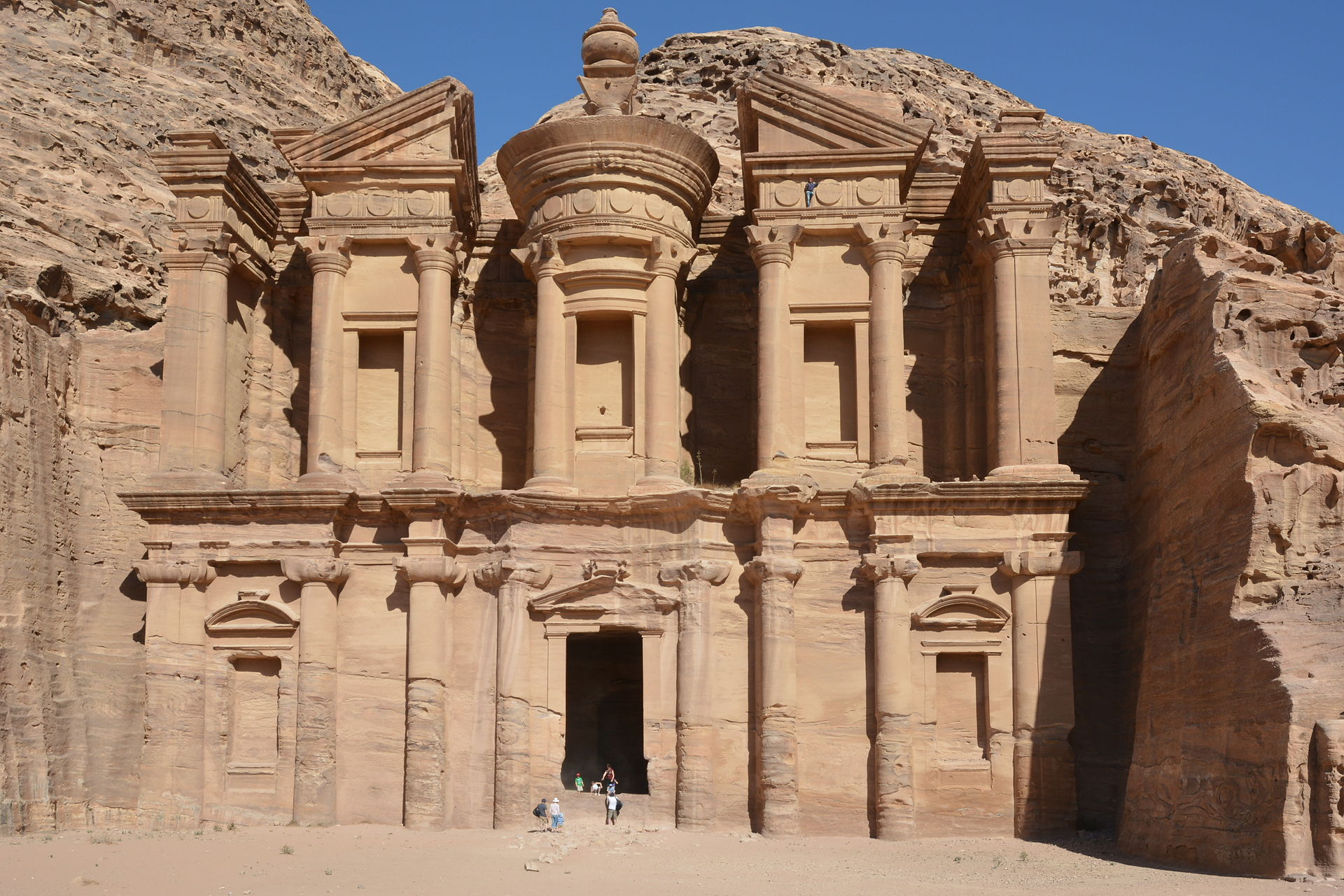
Hegra: This is the unmissable one. Tombs carved into the rock, very much like Petra but with a fraction of the crowds. Book the tour in advance through the official site, because you cannot simply walk in on your own.
Edge of the World: The vast Tuwaiq escarpment sits a couple of hours from the capital and delivers the desert panorama everyone comes for. Go by 4x4 or with a private driver, since the track in is rough.
Maraya: This enormous building in the AlUla desert is entirely clad in mirrors and reflects the cliffs behind it. Getting inside is difficult, but the photograph from the outside is worth the drive on its own.
Al-Balad: A labyrinth of houses with carved wooden balconies where the air smells of spice. Fit Nassif House into your day and buy the best perfume you will find anywhere in the local souks.
King Fahd Fountain: The jet climbs 300 metres into the sky. The show starts after dark when the lighting comes on, and that is the best hour for a walk along the water in Jeddah.
Diriyah: The mud-brick ruins of At-Turaif, the birthplace of the state, have been restored into a large museum complex. It is a lovely place to walk in the evening when the lights come up and the restaurants open.
Prices #
Currency: The Saudi riyal is pegged to the US dollar at 3.75 to 1, so the rate has not moved in years. That makes budgeting straightforward.
Cards: Card acceptance is close to universal, and Visa and Mastercard work in essentially every shop, taxi and coffee stand. Amex is accepted in hotels and larger chains but not always in small places, so carry a backup card.
Contactless: You can pay for taxis, coffee and street food with a phone almost anywhere in the big cities. Apple Pay and Google Pay are widely supported, and Wise or Revolut cards work fine at the terminals.
Cash and exchange: Change money at banks for the best rate, and carry some riyals for smaller towns and tips. ATMs are everywhere in the cities and dispense riyals on foreign cards.
Tipping: Ten to fifteen per cent is customary in restaurants. Taxes are normally already baked into the displayed price of goods.
| Item | Price (USD) |
|---|---|
| Lunch at a local majlis | 6 |
| Dinner for two | 35 |
| Street shawarma | 2 |
| Cappuccino | 4 |
| Water, 0.5l | 0.3 |
| Dorm bed | 12 |
| Guesthouse room | 45 |
| City hotel | 75 |
| Metro ride | 1 |
| 3-day travel pass | 5.5 |
| Taxi, 5 km | 4 |
| Litre of petrol | 0.6 |
| Hegra ticket | 25 |
| Local SIM card | 10 |
| Train to Medina | 45 |
Getting around #
Riyadh Metro: A fully automated network covering the whole city and the airport. Trains have separate sections for single men and for families, and a fare is around 4 riyals for two hours of travel.
Haramain railway: High-speed trains link Jeddah, Mecca and Medina at serious pace. Buy on the official site a couple of weeks ahead, since seats often sell out on the day.
Ride-hailing: Uber and Careem work flawlessly in every major city. This is the most predictable way to move, with fixed prices and drivers who usually speak some English.
SAPTCO coaches: On a tight budget, the intercity coaches are comfortable and cheap. They are air-conditioned, have Wi-Fi, and reach even remote corners of the country.
Domestic flights: Distances are enormous, so flying between Riyadh and Jeddah simply makes sense. The low-cost carriers flynas and flyadeal offer excellent fares if you book ahead.
Driving: Car hire is easy and fuel is extremely cheap, which makes road trips to AlUla or the Edge of the World genuinely appealing. You will need an international driving permit alongside your own licence.
Where to stay #
Local rentals: Gathern is the Saudi equivalent of the big apartment-booking platforms. It lists comfortable studios and villas with private patios, often cheaper and warmer than a hotel.
Hotels and apartments: The usual international booking sites work reliably, with plenty of choice in Olaya or near Al-Balad. In Riyadh, pick somewhere near a metro station so you are not paying for taxis all week.
Historic guesthouses: Jeddah and AlUla keep opening small family-run properties. Staying inside a coral-stone house is the best way to feel the hospitality the country is known for.
Airport sleep pods: For a long night connection in Riyadh, the terminals have modern capsule hotels. Perfect for a few hours of rest before the next departure.
Desert camps: AlUla has glamping at every level of comfort. Prices bite, but a night under that sky among ancient rock formations is worth building into the budget.
Booking ahead: AlUla in the cool season and the big cities during major events fill up completely. Lock in rooms early if your dates are fixed.
What to eat #
Kabsa: The national dish is a mountain of fragrant rice with chicken or lamb. Portions are enormous, one plate usually feeds two adults, and it is traditionally eaten with the right hand.
Al Baik: This fast-food chain is a national institution, famous for fried chicken in a secret coating and its garlic sauce. The queues never disappear, but it is the cheapest good meal in the country.
Alcohol: Alcohol is banned completely. It cannot be sold, imported or consumed anywhere, including hotels. Instead, order Saudi champagne, a mix of apple juice, fruit and sparkling water.
Street food: Mutabbaq, a flatbread stuffed with meat and egg, is made on every corner. Shawarma here is small, costs almost nothing and is exactly the right thing between museums.
Coffee and dates: Cardamom-scented Arabic qahwa is poured for you free almost everywhere, always with dates alongside. The ajwa variety is the best, and the markets are the place to buy them.
Eating out: Restaurants stay open late and the dinner hour is much later than in Europe. Expect substantial Levantine, Yemeni and Indian options in every city alongside the Saudi staples.
Safety #
Crime: Saudi Arabia is one of the safest countries anywhere. You can walk at night with your phone out in any residential district without worrying about robbery or pickpockets.
Heat: The genuine danger to your health is the sun, especially June to September. Carry water everywhere, use high-factor sunscreen and stay off the streets in the middle of the day.
Dress code: Rules have relaxed, but overly revealing clothing can still draw a comment. Knees and shoulders covered applies to both sexes, and it is a matter of respect for local norms and law.
Traffic: Be extremely careful crossing the road, even at a marked crossing. Local drivers frequently ignore the rules and speed, so look twice and do not hurry.
Photography: Photographing military installations, government buildings and airports is strictly forbidden. Always ask before pointing a camera at a person.
Practicalities: Emergency services respond quickly and hospitals in the major cities are excellent, though treatment is paid, so travel insurance is worth having. Check your own government's travel advisory before you book.
Etiquette and culture #
Prayer times: Five times a day, life pauses for 20 to 30 minutes. Shops and cafes close, so plan shopping and meals around the prayer schedule unless you enjoy waiting on the pavement.
Ramadan: During the holy month, eating and drinking in public between dawn and sunset is not permitted. The rhythm shifts to the night, restaurants open late, and cities look deserted by day.
Dress for women: The abaya is no longer required, but modest loose clothing is. Cover your head with a scarf in mosques, and always take your shoes off before entering someone's home.
Hospitality: If a Saudi invites you for coffee, that is culture rather than mere politeness. Accept with your right hand, and do not refuse outright, which would offend your host.
Restricted places: Non-Muslims may not enter Mecca at all. In Medina you can move around the city and see most of the historic sites, but the Prophet's Mosque and the Rawdah remain closed to other faiths.
Language and English: Arabic is the language of everything official, but English is widely spoken in hotels, malls and by younger people, and signs in the cities are bilingual. Away from the tourist route, a translation app earns its keep.
Connectivity #
Operators: The three big providers are STC, Mobily and Zain. The easiest place to buy a SIM is the airport after baggage claim, and you need your passport and a fingerprint scan.
eSIM: For independent travellers, an eSIM from Airalo, Yesim or a similar provider is simpler. You set it up on the plane and have data the moment you land, with no queue.
Internet: 5G blankets the major cities and is fast and stable. Wi-Fi is in nearly every hotel and mall, though authentication sometimes demands a local number.
Messaging: WhatsApp, Telegram and the rest work without restriction. Voice calls through them are occasionally blocked, so text is the reliable channel.
Useful apps: Download Uber or Careem for taxis and Darb for the Riyadh metro. For booking AlUla experiences and the permits that go with them, use the official Visit Saudi platform.
Language: Menus, signage and metro announcements are bilingual in the cities, so getting around in English is straightforward. Rural areas are a different story and worth preparing for.
Phrasebook #
| English | Arabic | Pronunciation |
|---|---|---|
| Hello, peace be upon you | السلام عليكم | as-sa-LAAM a-LAY-kum |
| How are you? | كيف حالك؟ | kayf HAA-lak |
| Good, fine (slang) | زين | zayn |
| Thank you | شكراً | SHUK-ran |
| You're welcome | عفواً | AF-wan |
| Yes | نعم | NA-am |
| No | لا | laa |
| How much is this? | بكم هذا؟ | bi-KAM HAA-tha |
| Expensive | غالي | GHAA-lee |
| Where's the toilet? | وين الحمام؟ | wayn al-ham-MAAM |
| Water | موية | MOY-ya |
| Coffee | قهوة | GAH-wa |
| Tea | شاي | shaay |
| Delicious | لذيذ | la-THEETH |
| Help me | ساعدوني | saa-i-DOO-nee |
| Straight ahead (slang) | سيدا | SEE-da |
| Left | يسار | ya-SAAR |
| Right | يمين | ya-MEEN |
| Excuse me, please | لو سمحت | law sa-MAHT |
| Goodbye | مع السلامة | ma-a s-sa-LAA-ma |
| Awesome! (slang) | كفو | ka-FOO |
| Understood | واضح | WAA-dih |
Good to know #
Getting there: Riyadh and Jeddah both take direct flights from London, Frankfurt, Paris and Amsterdam, and the national carrier and the Gulf airlines connect them to the rest of the world. From North America there are direct services from New York and Washington, plus one-stop routings via Doha, Dubai or Istanbul. Fares are lowest outside the winter high season.
Plugs: The country uses the British three-pin type G socket. Bring a universal adapter or borrow one from your hotel reception.
The working week: The weekend here is Friday and Saturday. On Friday morning almost everything is shut until prayers finish, so do not plan shopping or bank visits then.
Drinking water: Tap water is heavily desalinated and not recommended for drinking. Bottled water is cheap in every shop under brands like Nova or Arwa, and you should always carry more than you think you need.
Tourist levies: Some hotels add a small fee on top of the room rate. This is standard practice, so just keep your receipts for the duration of the trip.
When to go: November to March is the comfortable window, particularly for AlUla and the desert. Summer in the interior is genuinely punishing.