Qatar
QAA tiny but fabulously wealthy peninsula on the Persian Gulf, where futuristic towers stand beside traditional souks and the desert starts just outside the city. Qatar means world-class museums, the artificial island of The Pearl, dune safaris and Souq Waqif with its scent of spices. It is one of the safest countries in the world, with excellent infrastructure and a metro. Expensive, but a perfect one- to three-day stopover if you are transiting through Doha.
Where to go #
What to see #
Souq Waqif: The essential stop for the feel of the old Gulf, a maze of alleys full of spices. It comes alive in the evening, and the stalls sell everything from falcons to gold.
Museum of Islamic Art: Worth the trip for the building alone, an I. M. Pei masterpiece on its own artificial island. Inside is a superb collection of ceramics and weaponry, and the windows frame the best view of the skyline.
National Museum: What to see if you love contemporary design; the building is shaped like a desert rose. The exhibition traces the country from bedouin life to the oil boom, and the interlocking discs are startling up close.
Katara Cultural Village: Where to go for amphitheatres, galleries and gold-domed mosques. It is a huge space to walk, with its own beach and restaurants, and there is nearly always a festival on.
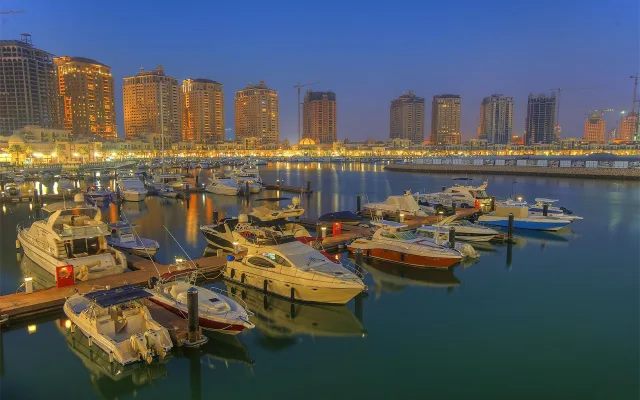
The Pearl: Spend a day walking Mediterranean-style promenades among expensive yachts. It is a district of luxury apartments where you can have dinner looking out over the bay.
Khor Al Adaid: Worth the trip into the desert where enormous dunes meet the sea near the Saudi border. This inland sea is only reachable in a serious 4x4, so go with an operator.
Prices #
Currency: The Qatari riyal is pegged to the US dollar, which makes mental arithmetic straightforward. One riyal divides into a hundred dirhams.
Exchange: Bring US dollars or euros in cash, both easily changed at banks or city exchange offices. Airport rates are usually worse thanks to added fees.
Cards: Qatar is thoroughly cashless and Visa and Mastercard are accepted everywhere, including the metro and most souq stalls. Amex is accepted at hotels and larger restaurants but less reliably elsewhere.
ATMs: Machines are everywhere and dispense riyals without drama. Wise and Revolut both work well here and keep the conversion margin low.
Tipping: Not obligatory, since many bills already include a service charge. Ten percent in a restaurant or rounding up a taxi fare is more than enough.
| Item | Price (USD) |
|---|---|
| Street shawarma | 4 |
| Karak tea | 1 |
| Metro fare | 0.5 |
| Museum ticket | 14 |
| Lunch at a local cafe | 12 |
| Dinner for two | 70 |
| Box of dates | 8 |
| Fridge magnet at the souq | 2 |
| Bottle of water | 0.5 |
| Taxi ride | 10 |
| Coffee in a cafe | 6 |
| Litre of petrol | 0.6 |
| Desert safari | 90 |
| Night in a guesthouse | 60 |
Getting around #
Getting there: Hamad International is one of the great global connecting airports, with Qatar Airways flying non-stop from virtually every major city in Europe, North America, Asia and Australia. That also makes Doha the easiest long stopover in the Gulf.
Metro: The fastest and most modern way around Doha, with three lines linking the airport to every major sight and stadium. The trains are fully automated and run without drivers.
Carriages: Trains are divided into standard, family and gold class. Men travelling alone are firmly not allowed in the family carriages, and station staff do enforce it.
Tickets: Fares are trivial and a day pass pays for itself quickly. Cards are sold from machines at every station, as there are no ticket clerks.
Taxis: Uber and the state-run Karwa app both work reliably and honestly. They are the practical option for anywhere the rails have not yet reached.
Buses: The Karwa network covers the outskirts and the districts well away from the centre. The vehicles are modern with powerful air conditioning, which matters enormously here.
Trams: Lusail and Msheireb both run modern tram lines. They are a pleasant way to cover those two districts and connect neatly with the metro.
Where to stay #
Souq Waqif: Stay here for the atmosphere of the old town and to be a minute from the market. Small boutique hotels in traditional style offer something you will not find elsewhere in the Gulf.
Msheireb: The most modern and deliberately sustainable district, right in the centre. It has new hotels with clever cooling systems, strong design and direct metro access.
Al Sadd: Where to look if you are watching your budget. There are plenty of decent apartments and guesthouses, with shops and cheap eateries all around.
West Bay: The prestige district of towers, better suited to business trips and pure comfort. Prices sit above average, but the panoramic views over the bay are genuinely impressive.
Stopover deals: The national airline regularly offers heavily subsidised hotel nights to transit passengers. It is the cheapest possible route into a five-star room.
Standards: City hotels almost always have a pool and a gym, and even budget options are clean with service at a genuinely good level.
What to eat #
Machboos: The national dish of spiced rice with meat or fish is on the menu of every traditional cafe. Trying it is a non-negotiable part of any trip here.
Street food: At Souq Waqif go for regag flatbread and fresh seafood. It is cheap, extremely good and the fastest way into everyday Qatari life.
Karak tea: Milky, cardamom-spiced tea is the fuel the whole country runs on. It costs pennies, is drunk everywhere in huge quantities and will get you through an afternoon.
Sweets: Traditional desserts such as kunafa are extraordinarily sweet. Keep water to hand when you tackle these cheese-and-syrup bombs.
International food: Doha is a genuine melting pot of cuisines. The Indian, Lebanese and Turkish restaurants here are excellent and surprisingly reasonably priced.
Alcohol: Spirits are sold only in bars attached to large international hotels. You will not find them in ordinary cafes or shops, and bringing your own into the country is prohibited outright.
Safety #
Overall: Qatar consistently ranks among the safest countries on earth. Walking around at night carries no realistic risk to you or your wallet.
Heat: The biggest genuine threat to your health is the summer temperature. Heatstroke arrives fast, so carry water and keep your head covered at all times.
The law: Follow local rules to the letter, particularly around prohibited substances. Penalties are severe, and the police are inconspicuous but highly effective.
Photography: Never photograph military installations, government buildings or local people without clear consent. It is treated as a serious breach of privacy and decency.
Public behaviour: Displays of affection between men and women are not acceptable here. Hugging or kissing in the street can draw a warning or worse.
Traffic: Drivers can be aggressive, so take real care crossing roads. Pedestrian infrastructure is improving fast but is far from universal. Check your own government's travel advisory before you go.
Etiquette and culture #
Religion: Islam sets the rhythm of the entire country and its long-standing traditions. Respect prayer times and expect some businesses to close briefly through the day.
Friday: The sacred day off, when life effectively pauses until early afternoon. Metro, museums and shops all open later than usual, so plan around it.
Dress: Dress modestly in any public place, covering shoulders and knees. This applies to men as much as to women and simply avoids unnecessary friction.
Ramadan: During the holy month you cannot eat or drink in public during daylight. Many restaurants stay shut until sunset, after which the whole city turns into a celebration.
Majlis: Being invited into a majlis is a real honour. Take your shoes off at the door and accept coffee and food with your right hand only.
Falcons: Hunting with falcons is a matter of enormous national pride. The main souq has dedicated falcon hospitals, and the birds are valued well above expensive cars.
Connectivity #
Operators: Two providers cover the country, Ooredoo and Vodafone. A dedicated tourist SIM is easy to buy in the arrivals hall at the airport.
Internet: 5G coverage is near-universal, reaching metro stations and deep into the desert. Speeds are very high, which makes navigation and streaming trivial.
eSIM: Airalo, Yesim and similar providers let you connect before you take off. That saves time and skips the counter queue entirely.
Calls: Voice and video calling over the usual messaging apps works without restriction, so calling home costs nothing beyond your data.
Free wifi: Available in most hotels, the big malls and some Doha parks. Note that authenticating often requires a local phone number, which is another argument for a SIM.
Language: Arabic is official but English is the working language of the city, spoken by almost everyone in shops, taxis and restaurants. All signage is bilingual and menus in English are the default.
Phrasebook #
| English | Arabic | Pronunciation |
|---|---|---|
| Hello, peace be upon you | السلام عليكم | as-sa-LAAM a-LAY-kum |
| Thank you | شكرا | SHUK-ran |
| Yes | نعم | NA-am |
| No | لا | laa |
| Please | من فضلك | min FAD-lak |
| How much is this? | بكم هذا؟ | bi-KAM HAA-tha |
| Expensive | غالي | GHAA-lee |
| Where is the metro? | وين المترو؟ | wayn al-MIT-ro |
| Help me | ساعدوني | saa-i-DOO-nee |
| Water | ماء | maa |
| Coffee | قهوة | GAH-wa |
| Food | طعام | ta-AAM |
| Delicious | لذيذ | la-THEETH |
| Tomorrow | بكرة | BUK-ra |
| God willing | إن شاء الله | in-shaa-AL-lah |
| Wonderful, well done | ما شاء الله | maa-shaa-AL-lah |
| Excuse me | عفوا | AF-wan |
| Goodbye | مع السلامة | maa sa-LAA-ma |
| Welcome | أهلا وسهلا | AH-lan wa SAH-lan |
| All good | تمام | ta-MAAM |
| Enough, that's it | خلاص | kha-LAAS |
Good to know #
Electricity: Sockets are British-style with three flat pins. Bring a universal adapter or ask at your hotel reception, where they usually lend them out.
Drinking water: Tap water is treated but not recommended for drinking. Bottled water costs almost nothing in supermarkets.
Apps: Download the official Visit Qatar app for current information, detailed maps, event listings and what is actually open.
Air conditioning: Indoor spaces and public transport are kept aggressively cold. Even in the worst of the heat, carry a light layer for long spells inside a mall.
Sun: UV levels are punishing even on cloudy days. Use strong sunscreen or you will burn within a couple of hours of walking.
An honest note: Do not spend much time on the artificial islands unless you are there to shop. They are often just concrete promenades without much soul, and are consistently overrated.