Description
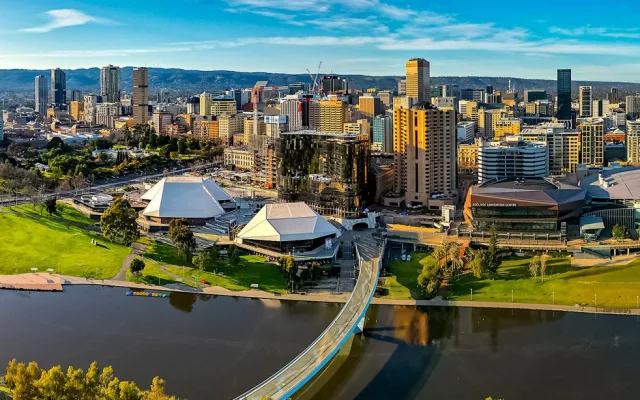
Adelaide is the capital of South Australia, known for the vineyards of the Barossa Valley, the Fringe festival and the scenery of the Adelaide Hills.
Wiki
Adelaide is the administrative and cultural centre of South Australia, spread across the plain between Gulf St Vincent and the ridge of the Mount Lofty Ranges. Founded in 1836 as Australia's only colony of free settlers, one that never took convicts, the city is named after the consort of King William IV and still prides itself on a reputation as a spacious, green and well-ordered place to live.
History and the shape of the city
Adelaide's plan was drawn up in 1837 by Colonel William Light: the central core is set in a strict grid of streets, ringed on every side by the Adelaide Park Lands. That arrangement made the city one of the world's first examples of a green belt. The River Torrens (Karrawirra Parri) runs through the centre, and the main cultural institutions stand along its banks.
The North Terrace axis is a museum boulevard of sorts: the Art Gallery of South Australia, the South Australian Museum with its large collection of Aboriginal cultural material, the State Library and the country's oldest university campus. The religious variety of the early colonists, among them many German Lutherans and settlers of several denominations, earned Adelaide the nickname "the city of churches".
Districts and surroundings
- The CBD — the business core, with Victoria Square, the Rundle Mall shopping street and the bohemian Rundle Street quarter of bars and cafés.
- North Adelaide — a quiet historic suburb north of the parklands, with Victorian mansions and a panorama of the city from the Montefiore Hill lookout.
- The Adelaide Hills — the cool hills to the east, home to the German village of Hahndorf, craft wineries and the lookout at the summit of Mount Lofty.
- The coast — a chain of beach suburbs from Glenelg and Henley Beach to Brighton, popular for swimming and for sunset walks.
Wine, festivals and culture
South Australia produces a substantial share of all Australian wine, and Adelaide is the gateway to its famous regions. Beyond the powerful reds of the Barossa Valley, an hour or an hour and a half away lie the cool Adelaide Hills with their elegant sparkling wines and sauvignons, and McLaren Vale by the sea, known for rich grenache and shiraz.
Festival life is the city's calling card. Every southern autumn brings the Adelaide Fringe, the second-largest arts festival in the world after Edinburgh, along with the Adelaide Festival, WOMADelaide for world music, and Tasting Australia for food. Locals call this crowded period "Mad March".
Food
The dining scene rests on local produce: fish and seafood from Spencer Gulf, Adelaide Hills cheeses, olive oil, and fresh fruit and vegetables from the valleys. The Central Market remains the heart of that culture, with a busy Chinatown beside it. Mediterranean influence is strong — the legacy of post-war Italian and Greek settlers — alongside a contemporary Australian approach built on seasonality and local ingredients. The coffee houses make drinks to the standard of the best cities in the country.
Three days in Adelaide
- Day 1 — the city centre: North Terrace and its museums, the Central Market, the botanic garden and a walk along the Torrens, with the bars of Rundle Street in the evening.
- Day 2 — out to the vineyards of the Barossa or the Adelaide Hills for tastings and lunch at a winery, calling at Hahndorf on the way.
- Day 3 — the coast: the tram to Glenelg, the beach and the Jetty Road promenade, and if you like, a boat trip or a dolphin encounter.
With extra time, the popular excursion is Kangaroo Island, with its sea lion colonies, koalas and the wild landscapes of Flinders Chase National Park.
Practical information
Public transport is unified under Adelaide Metro (buses, tram and suburban trains) with a single MetroCard. A free tram runs through the centre to Victoria Square, and free city buses circle the CBD. For the wine districts a hire car or an organised tour with transfers is easiest — you cannot drive after tastings.
The climate is Mediterranean: dry hot summers and mild wet winters. Autumn and spring are the most comfortable for travelling, with warm days and cool evenings. In summer, allow for the risk of severe heat and high UV, so a hat, sunscreen and a supply of water are useful at any time of year.