Description
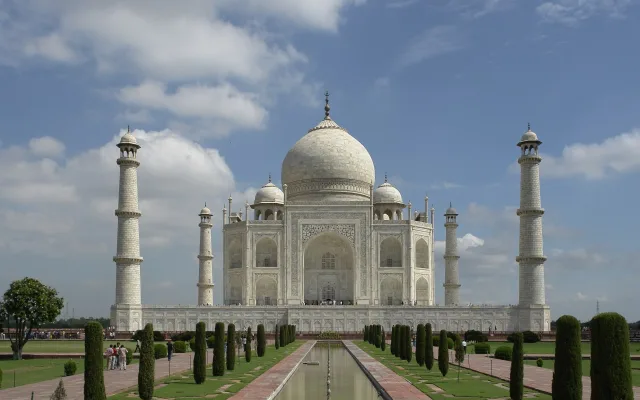
Agra is a city in India known for the Taj Mahal, a UNESCO World Heritage Site, and for the red sandstone Agra Fort.
Wiki
Agra is one of the most visited cities in India and an unavoidable point on the Golden Triangle (Delhi - Agra - Jaipur). People come for a single building, but with sensible planning two days are enough to see the whole Mughal ensemble and avoid the tourist traps.
What is actually worth seeing
- The Taj Mahal — the reason for the whole trip. Go at sunrise: fewer crowds, soft light, and marble that shifts from pink to white. Entering the mausoleum itself is optional — the great impression is from outside and from the bench on the central axis. Allow an hour and a half to two hours.
- Agra Fort — not an add-on but a half-day site in its own right. From here the Taj is seen across the Yamuna — the very view Shah Jahan had while imprisoned by his son. Palace halls, marble pavilions, the hall of audience.
- Itmad-ud-Daulah (the "Baby Taj") — an underrated place with jewel-like marble inlay and few visitors. Good as a contrast: you see that the Taj did not appear out of nowhere.
- Mehtab Bagh — the garden on the far bank, the spot for sunset and a symmetrical shot of the Taj without shooting into the sun.
- Fatehpur Sikri — the abandoned capital 40 km away, a half-day trip of its own. Worth it if you have a second day; the red sandstone ghost city survives almost intact.
Planning two days
- Day 1: sunrise at the Taj Mahal, breakfast, Agra Fort, Itmad-ud-Daulah in the afternoon, sunset at Mehtab Bagh.
- Day 2: out to Fatehpur Sikri in the morning, before the heat, and back by lunchtime. The rest of the day for Kinari Bazaar, and for buying petha and marble work.
Important: the Taj Mahal is closed on Fridays. Plan so that Friday falls on the fort or Fatehpur Sikri.
Getting there and getting around
Agra's own airport takes few flights, so it makes more sense to come via Delhi. The most convenient option is the Gatimaan Express from Hazrat Nizamuddin station, about 100 minutes. A taxi from Delhi takes longer (around three hours) and costs more, but gives flexibility.
Within the city everything runs on auto-rickshaws; Uber and Ola work, and with them there is no haggling over the fare. The tourist cluster is compact: the fort, the Taj and the old city are close together. Vehicles cannot approach the Taj gates (engines are banned near the marble), so the last few hundred metres are on foot or by electric cart.
Where to stay
The best area is Tajganj, right by the south gate of the Taj Mahal. Guest houses with rooftop views stand close together here, the mausoleum visible for free, and the sunrise entrance is five minutes' walk. For comfort and restaurants, Sadar Bazaar works well. There is no point staying far from the Taj: a pre-dawn start with a transfer through traffic destroys the whole idea.
Food and money
The cooking is Mughal: biryani, kebabs, thick curries. The local speciality is petha, translucent sweets made from ash gourd; sold by weight, take a small box to try. Lunch at a local dhaba is cheap, while a restaurant with a rooftop view of the Taj costs noticeably more — you are largely paying for the view.
On spending: entry to the Taj Mahal is the most expensive ticket in the city for a foreigner, with a separate supplement to enter the mausoleum itself; the fort is cheaper. A rickshaw across the centre is a couple of dollars, and a taxi for the day including Fatehpur Sikri is a few tens. By Indian standards Agra carries tourist pricing, but food and transport remain budget.
Safety and common mistakes
- "Guides" and scams. Around the Taj there is no shortage of people offering to show you round "for free" and then leading you to a marble shop for a commission. Buy tickets only at official counters or online.
- What you can carry. Tripods, large bags, food and drones are not allowed into the Taj — the search is thorough, and anything extra must be handed in or discarded.
- Do not allow a single day for everything. Trying to "pop over from Delhi for a couple of hours" is the classic mistake: you will see the Taj and the crowd, and the fort and the old city will pass you by.
- Drink bottled water only, and choose street food by the queues of locals.
When to go
The comfortable season is October to March, dry and 15-25°C. In December and January thick fog can hide the Taj at dawn — keep a spare morning. Summer (April to June) at 40-45°C and the monsoon (July to September) with downpours and humidity are hard going, and open-air sightseeing becomes an ordeal.