Description
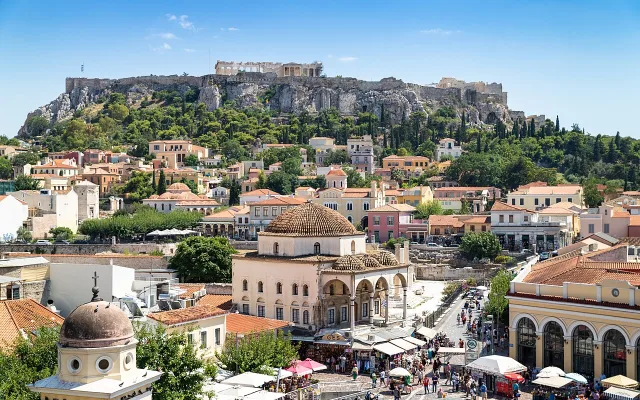
Athens is a city with a deep history, home to the Acropolis, the Parthenon and the famous Monastiraki market. It is also the place to try a good moussaka.
Wiki
Athens is the capital of Greece and one of the oldest continuously inhabited cities on the planet, with a history running back more than five thousand years. Democracy, philosophy and theatre were born here, and for twenty-five centuries the marble Acropolis has risen above what is now a metropolis of almost four million people, receiving around five million travellers a year.
History and significance
The city is named after Athena, the goddess of wisdom, who by legend gave its people the olive tree and became the patron of the polis. Its peak came in the 5th century BC, the "golden age" of Pericles, when Socrates, Plato, Sophocles and Phidias were at work. Later Athens formed part of the Roman and Byzantine empires, spent almost four centuries under Ottoman rule, and in 1834 became the capital of the independent Kingdom of Greece. That many-layered history can be read in the fabric of the city: ancient ruins stand beside Byzantine churches, 19th-century neoclassical mansions and dense blocks of post-war apartment buildings.
Main sights
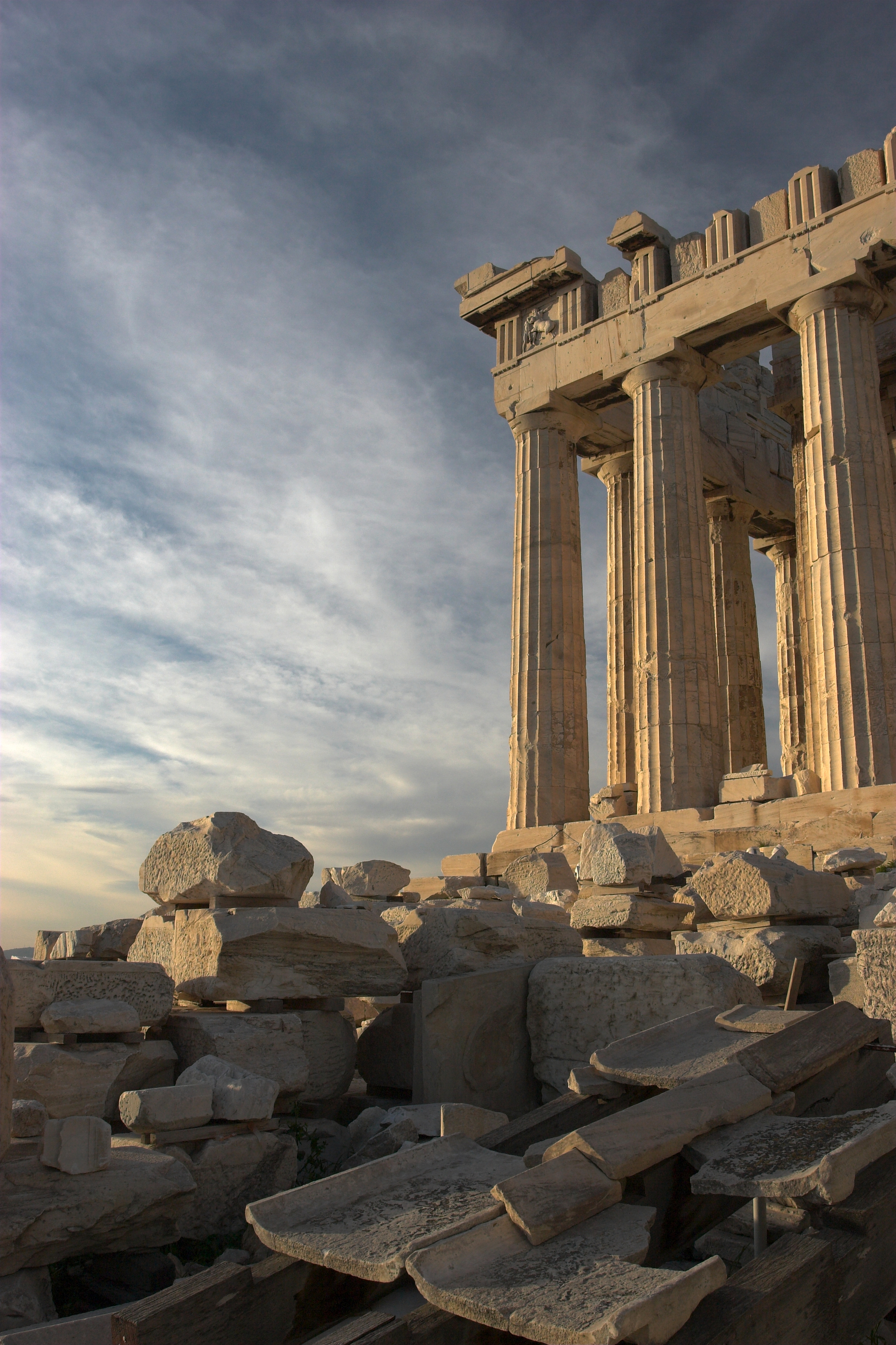
- The Acropolis and the Parthenon — the sacred rock and the temple of Athena Parthenos, the summit of Doric architecture. Book online in advance. A combined multi-day ticket covering the Ancient Agora, the Kerameikos, the Roman Agora and the Temple of Olympian Zeus also exists — check its price and availability on the official site, as the arrangements change. It is better to go up early in the morning or close to the end of the day, avoiding the heat and the queues.
- The Acropolis Museum — a modern building at the foot of the hill, holding the original Caryatids of the Erechtheion, the pediment sculptures and fragments of the Parthenon frieze. Glass floors open a view down onto the archaeological excavations beneath the museum.
- The Ancient Agora — the public heart of the classical polis. Here stands the beautifully preserved temple of Hephaestus (the Hephaisteion) and the reconstructed Stoa of Attalos with a small museum.
- Plaka — the oldest residential quarter, on the slope of the Acropolis, with narrow lanes, shops and tavernas; the adjoining Anafiotika district is built up with whitewashed houses in the Cycladic style.
- Monastiraki — a busy square with a flea market, antique shops and the old Tzistarakis mosque; it offers one of the finest views of the Acropolis.
- Syntagma Square — the centre of the city, with the parliament building and the Tomb of the Unknown Soldier, where the evzones in traditional uniform change guard every hour.
- The hills of Lycabettus and Filopappou — viewpoints with a panorama of the city and the sea on the horizon.
Around the city and the islands
The port of Piraeus, the largest in Greece, lies 10 km from the centre and is linked by metro. From here ferries leave for the islands of the Saronic Gulf:
- Aegina — about 45 minutes away, famous for its pistachios and the Doric temple of Aphaia.
- Hydra — roughly an hour and a half; motor vehicles are banned and goods are carried by mule.
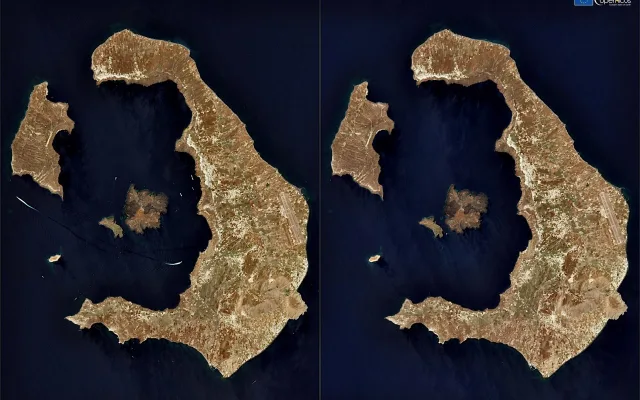
- Santorini and Mykonos — these Cycladic islands are reachable in three to eight hours by ferry depending on the vessel, or 45 minutes by plane.
It is also worth setting aside time for Cape Sounion with its temple of Poseidon, and for Delphi, the ancient oracle in the mountains a few hours' drive away.
Food
Greek cooking is generous and simple. Be sure to try moussaka, a bake of aubergine, minced meat and bechamel, along with souvlaki and gyros in pita bread, horiatiki salad with feta, slow-roasted lamb kleftiko and all kinds of seafood. The ideal format for exploring is meze, a spread of small dishes shared around the table. Meals come with anise-flavoured ouzo and local wine. You can eat cheaply in the tavernas of Monastiraki and Psyri; an average lunch costs from about 10 € (roughly $12), a cup of coffee around 3 € ($3.50). Prices are as of 2026.
When to go, and practicalities
The best months are April–June and September–October: a comfortable 22–27 °C, gentle sun and a moderate flow of visitors. July and August are dry and very hot, sometimes up to 40 °C, and prices are higher. Winter is mild but rainy.
The metro is the convenient way to get about: three lines link the airport, the centre and Piraeus, and antiquities found during the construction of the stations are displayed right there in the concourses. The historic quarters are compact and easily covered on foot.
In three days you can realistically see the essentials: devote the first to the Acropolis, the museum and the Ancient Agora, the second to walks through Plaka, Monastiraki and the central squares with a climb up a viewing hill, and the third to a boat trip to one of the nearby islands or an excursion to Cape Sounion.
Photos