Description
Bariloche is a city in Patagonia known as the Switzerland of Argentina. Visit Lake Nahuel Huapi, ski the slopes of Cerro Catedral, and browse the famous chocolate shops.
Wiki
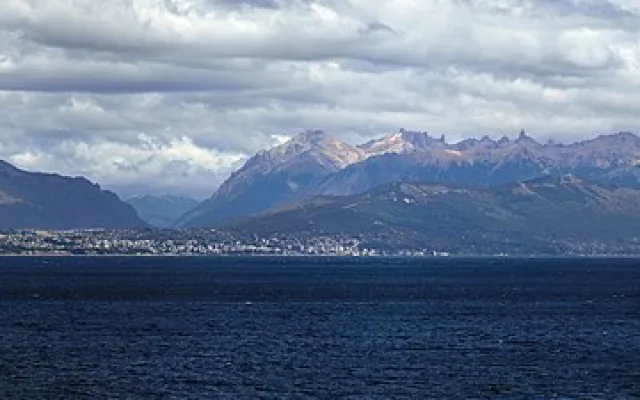
Bariloche is one of Argentina's best-known mountain resorts, spread across the southwest of the country at the foot of the Andes on the southern shore of Lake Nahuel Huapi. The city's full name is San Carlos de Bariloche; its alpine character, abundance of lakes, and proximity to snow-capped peaks have long earned it the nickname "the Switzerland of Argentina."
A little history and general character
The settlement grew up along an old trade route linking Argentine Patagonia with Chilean territory on the far side of the mountains. In the late nineteenth and early twentieth centuries, immigrants from Switzerland, Germany, and northern Italy arrived and brought with them traditions of timber-and-stone architecture, cheesemaking, and chocolate craft. Over time, a modest lakeside village became a resort of national importance. Today Bariloche functions as a tourist hub, the administrative capital of Río Negro Province, and the unofficial capital of Patagonian tourism: visitors come for the lakes and trekking in summer and for downhill skiing in winter (in the Southern Hemisphere the ski season runs roughly from June to September).
What to see
- Lake Nahuel Huapi — a vast glacial lake with an intricate shoreline, fjord-like inlets, and numerous islands. Pleasure boats cross the water; popular routes go to Victoria Island and the Quetrihué Peninsula, where a rare arrayán forest survives — trees with smooth, cinnamon-coloured bark.
- Nahuel Huapi National Park — Argentina's oldest protected area, encompassing southern beech forests, mountain peaks, glaciers, and waterfalls. It forms the core of all outdoor life in the region.
- Cerro Catedral — the largest ski resort in South America, with an extensive network of runs and lifts. In winter it draws skiers and snowboarders; in summer the slopes become hiking terrain with panoramic viewpoints.
- Cerro Campanario — a modest but celebrated viewpoint reached by chairlift. The panorama of curving lakes, peninsulas, and mountain ranges is considered one of the most photographed scenes in Patagonia.
- Civic Centre (Centro Cívico) — an architectural ensemble at the heart of the city, built from local grey stone and timber. It houses the municipal government, the Patagonia Museum, and the main square overlooking the lake.
- Mitre Street and the chocolate shops — the central commercial artery, lined with acclaimed chocolatiers. Artisan chocolate, alfajores, and homemade sweets are a local signature.
The surroundings and scenic roads
Many routes fan out from the city. The Circuito Chico is a short loop road along the lakeshore with viewpoints, the legendary Llao Llao hotel, and bridges over the channels. Beyond it begins the Road of the Seven Lakes (Camino de los Siete Lagos) — a scenic highway threading through a succession of mountain lakes to the towns of Villa La Angostura and San Martín de los Andes. The full journey is best spread over one or two days. Active travellers head to neighbouring peaks — glacier-covered Cerro Tronador or Cerro Otto, which also offers sweeping views across the valley.
Food and drink
Patagonian gastronomy rests on a few pillars: lamb cooked over an open fire, local trout and salmon from the cold lakes, game, and forest produce — mushrooms and berries, including wild raspberries. The German and Swiss heritage shows in the baked goods, smoked meats, cheeses, and an abundance of chocolate. Craft beer is a common sight at the table: Bariloche is one of Argentina's centres of artisan brewing.
Getting there and getting around
Bariloche is served by its own airport, which receives flights from Buenos Aires and several other Argentine cities. Long-distance buses connect the resort with most regions of the country as well as with the Chilean side of the Andes. Local buses run within the city and to nearby attractions, but a hire car or tour transfer is more practical for out-of-town routes.
Allow around four days to take in the city and its immediate surroundings: the first for the centre, the chocolate shops, and the lakefront promenade; the second for the Circuito Chico and Cerro Campanario; the third for Cerro Catedral or trekking in the national park; and the fourth for the Road of the Seven Lakes. Mountain weather is changeable in any season, so warm layers, a windproof jacket, and sturdy footwear are advisable.
Updated