Description
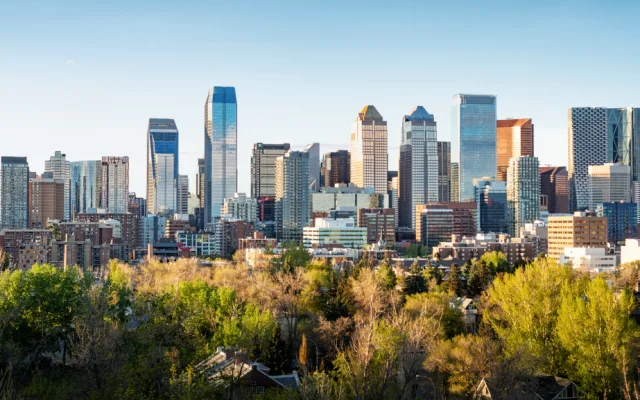
Calgary is Canada's energy capital, sitting at the gateway to Banff National Park. It hosts events like the Stampede rodeo and serves as a base for skiing in the Rocky Mountains.
Wiki
Calgary is Alberta's largest city and the main gateway to the Canadian Rockies — Banff and Lake Louise are a short drive away. For the independent traveller it works better as a convenient base and launchpad than a destination in its own right: two days is enough for the city itself, after which the mountains are the logical next step.
Is it worth staying, and for how long?
Honestly: Calgary's main asset is its location. The city is modern and commercial, with no historic old town or postcard-worthy heritage quarter. Two days is more than enough to walk the downtown, go up the tower, visit a couple of museums and get a feel for the cowboy spirit. If you're here for Banff, treat Calgary as a one- or two-night stopover around your flights and spend most of your time in the mountains.
The exception is the Calgary Stampede in early July. People come from across North America for these 10 days of rodeo, chuckwagon racing, concerts and fairgrounds. If you're visiting during the Stampede, plan well ahead — accommodation prices spike and sell out months in advance.
What's actually worth seeing
- Calgary Tower — 191 m tall, with an observation deck and glass floor. Go on a clear day: in good visibility the Rocky Mountains are visible on the horizon. Not worth it in overcast weather.
- Studio Bell (National Music Centre) — the most interesting museum in the city, interactive and dedicated to Canadian music. Located in East Village.
- Glenbow Museum — history of the Canadian West and Indigenous art; check current status, as the museum was undergoing renovation.
- Heritage Park — an open-air living museum recreating a 19th-century settlement; works well in the warmer months and with children.
- Prince's Island Park and the Bow River waterfront — a green island in the heart of the city, pleasant for a walk or picnic; a long cycling path runs along the river.
- Stephen Avenue — a pedestrian street in the downtown with restaurants and street musicians; a good spot for an evening out.
In winter the ski factor kicks in: resorts in the Rockies (Banff, Lake Louise, Sunshine Village) are within 1.5–2 hours, and day trips to the slopes are common.
Getting there and getting around
YYC airport is a major hub for Air Canada and WestJet, with direct flights from Europe, Asia and across North America. The airport sits to the northeast of the centre; a city bus runs downtown, but most people take a taxi or Uber (roughly CAD 40–55, about $30–40 on the meter) or pick up a rental car straight away.
The downtown is served by the CTrain light rail. A useful quirk: travel along 7th Avenue within the downtown core is free on the CTrain (the Free Fare Zone). Outside the centre, though, the city is hard to navigate without a car — Calgary sprawls considerably, and public transport links from the airport to Banff are limited (shuttle buses exist but run to a schedule).
Renting a car is nearly essential if you plan to explore the mountains. Fuel in Alberta is cheaper than in most of Canada, the roads are excellent, and the Trans-Canada Highway to Banff is a scenic drive. In winter, allow for winter tyres and extra time on mountain passes.
Where to stay
- Downtown / Beltline — the best choice for one or two nights without a car: walkable, restaurants, CTrain, free fare zone. Beltline is slightly livelier for bars and cafés.
- East Village — a regenerated riverside neighbourhood, close to Studio Bell and the waterfront.
- Near the airport — practical if you have an early departure or late arrival and are travelling by car anyway.
Food and prices
The food scene is meat-heavy and filling: Alberta AAA beef steak, bison burgers, poutine, butter tarts. Calgary is a good place to try a quality Canadian steak at a fair price. Rough guides: a café lunch CAD 25–35 (about $18–25), dinner at a steakhouse CAD 70–140 ($50–100), a craft pint CAD 11–14 ($8–10). Canada is a tipping culture — budget 15–20% on top, and note that tax is added at the till on top of the listed price. Prices are as of 2026.
To save money: eat your main meal at lunch (lunch menus are cheaper than dinner), drink beer at craft bars in Beltline rather than hotel bars, and buy groceries at supermarkets. The CTrain's free zone cuts transport costs in the centre.
When to go and what to watch out for
- Summer (June–August) — warm, everything is open, but this is peak-price season, especially around the Stampede in July. The mountains are at their most accessible.
- Winter — dry cold, but sharp swings are common: a chinook (warm wind off the mountains) can raise temperatures by tens of degrees within hours. Dress in layers.
- Weather in the foothills is changeable: snow is possible even in the shoulder seasons — check the forecast before heading into the mountains.
Common mistakes
- Pencilling in too many days "just for Calgary" — the city is quickly covered; that time is better spent in Banff and the lakes.
- Going to the mountains without a car or a reservation — public transport is limited, and popular spots like Moraine Lake are closed to private vehicles in summer (shuttle buses only, advance booking required).
- Underestimating the distances: Drumheller (dinosaur country) and Lake Louise are in opposite directions — you can't combine both in a single day.
- Forgetting to factor in tax and tips when budgeting — the final bill is noticeably higher than the menu price.