Khiva
Description
The best-preserved medieval town in Central Asia: the walled Ichan-Kala, a UNESCO site packed with minarets, madrasahs and khans' palaces.
Wiki
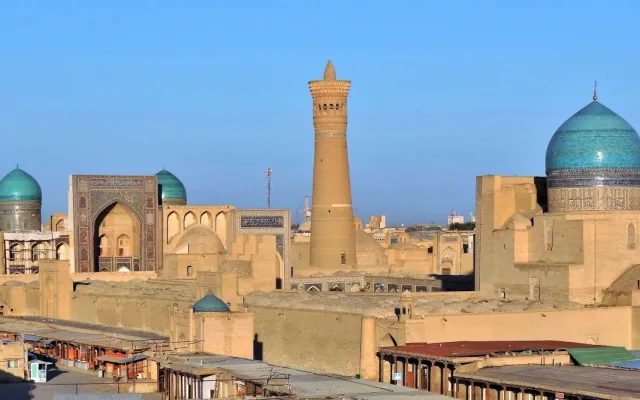
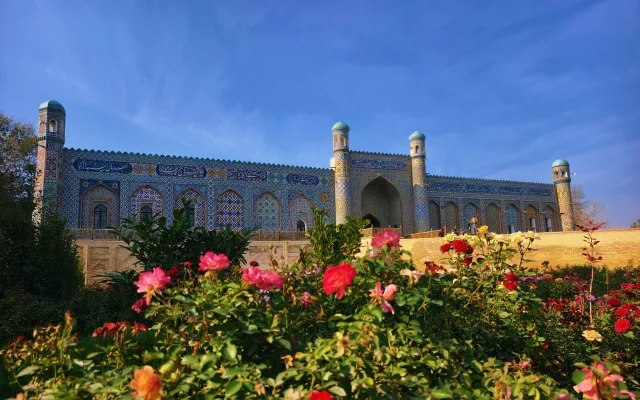
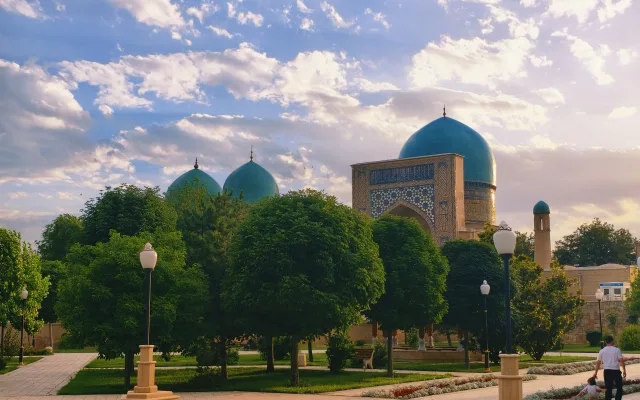
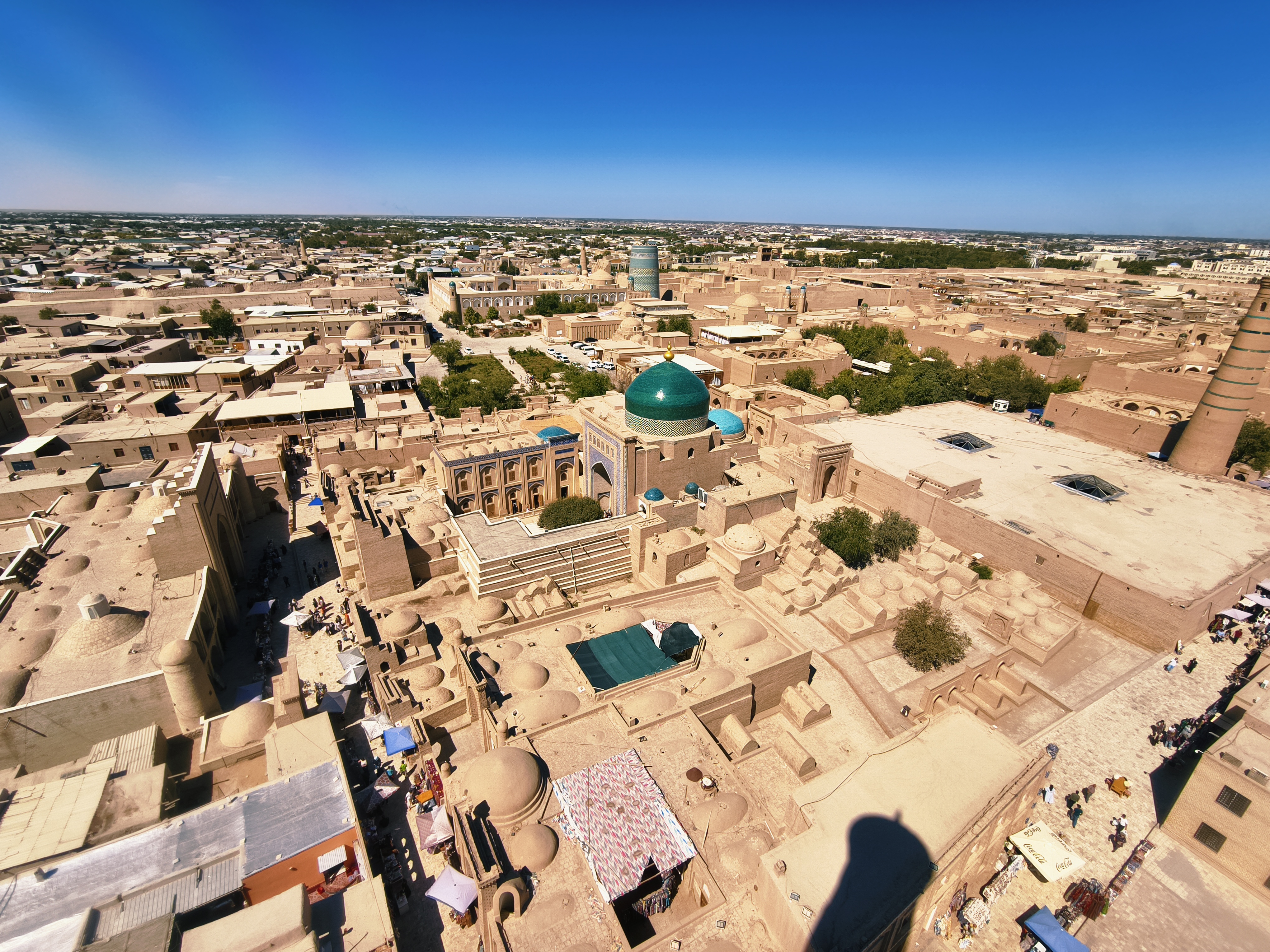
The most completely preserved medieval town in Central Asia — around 90,000 people in the Khorezm oasis in western Uzbekistan, on the edge of the Karakum. Its walled core, Ichan-Kala, has been a UNESCO World Heritage Site since 1990, the first in Uzbekistan. Khiva was the capital of the Khanate of Khiva (1511–1920) and one of the great slave markets of the Silk Road, where Persian and Russian captives were bought and sold well into the nineteenth century. After the Russian conquest of 1873 the khanate became a protectorate; it was overthrown in 1920. Today Ichan-Kala is close to an open-air museum: dozens of mosques, madrasahs, minarets and mausoleums packed into a few hundred metres.
The main sights
- Ichan-Kala — the UNESCO site itself: 26 hectares of inner town, a rough rectangle of about 650 by 400 metres enclosed by mud-brick walls up to 10 m high and roughly 2.2 km around. Every major monument is inside. A single ticket, around 150,000 sum ($13), covers them all.
- Islam Khoja Minaret — the tallest in Khiva at almost 45 m, built in 1908–1910, the last raised before the revolution. The climb up the dark spiral stair is worth it for the rooftop view.
- Kalta Minor — the unfinished "short minaret", 29 m of a planned 70–80, sheathed in turquoise majolica. It was meant to be the tallest in the Islamic world, but Muhammad Amin Khan, who commissioned it, was killed in 1855 and work stopped.
- Kunya-Ark (the old citadel) — the khans' residence, founded on a much older fortress and rebuilt in its present form at the end of the seventeenth century. Inside are the summer and winter throne rooms, the mint, the harem and a mosque. The watchtower is the best sunset spot in town.
- Tosh-Hovli (the Stone House) — Allakuli Khan's palace, built 1830–1838: 163 rooms around three courtyards. The harem court has the finest carved woodwork and tiling in Khiva.
- Muhammad Amin Khan Madrasah — the largest in Khiva (1851–1855), now a hotel; you can walk into the courtyard even if you are not staying.
- Shergazi Khan Madrasah — the oldest surviving one (1718–1726), where the Turkmen poet Magtymguly studied.
- Pahlavan Mahmud Mausoleum — Khiva's chief shrine, the tomb of the wrestler-poet and patron saint of the city, with the most beautiful tiled interior in Ichan-Kala.
- Dishan-Kala — the outer town, also walled, and far more lived-in than the inner core.
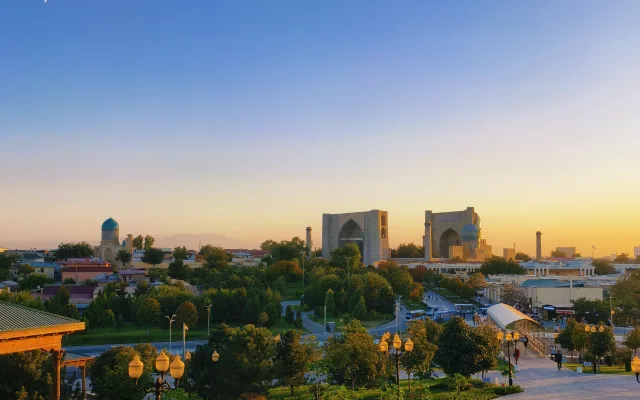
- Old Khiva at sunset — the real experience: the empty lanes of a medieval city in golden light, once the day-trip coaches have left.
Urgench, the modern provincial capital 30 km away, is where the nearest airport is; there is nothing to detain you there.
Food and prices
The cooking is Khorezmian and distinct from the rest of Uzbekistan. The dish to seek out is shivit oshi — green dill noodles served with a garlicky yoghurt sauce and a meat-and-vegetable stew — which is essentially a Khiva speciality. Also worth trying: tuhum barak (dumplings filled with egg and milk), gumma (thin-crust filled pastries), shovla and dymlama.
Lunch in a chaikhana runs 60,000–105,000 sum ($5–9), dinner in a restaurant 145,000–300,000 sum ($12–25). Dried fruit at the bazaar is 35,000–85,000 sum ($3–7) a kilo. Petrol is about 9,500 sum ($0.80) a litre, a Yandex taxi within Khiva 12,000–36,000 sum ($1–3), and a taxi from Urgench 60,000–120,000 sum ($5–10). Prices are as of 2026.
Transport
Urgench international airport (UGC) is 30 km away and served by Uzbekistan Airways; the flight from Tashkent takes about 1.5 hours and costs 700,000–1,200,000 sum ($60–100). By rail, the overnight train from Tashkent takes 14–16 hours and costs 180,000–360,000 sum ($15–30); since 2026 there has also been a much faster direct high-speed service running a few days a week. From Bukhara the train takes about 6 hours, or a shared taxi crosses the desert in around 5 for 480,000–720,000 sum ($40–60). In Khiva itself you walk: everything in Ichan-Kala is within 500 m.
When to go
April–May and September–October are ideal, at 18–28°C. Summer (June–August) is extreme — 38–45°C, as Khorezm is one of the hottest corners of Central Asia. Winter (December–February) is cold, from −5 to +5°C, with occasional dust storms. Khiva under snow is a special sight, but it only happens a handful of days a year.
Updated