 Города и дороги
Description
The jewel of the Silk Road and Timur's capital: the Registan, the Shah-i-Zinda necropolis, Gur-e-Amir and Ulugh Beg's observatory.
Wiki
The oldest continuously inhabited city in Central Asia — more than 2,700 years — and the spiritual capital of the Silk Road, with around 530,000 people in Uzbekistan. A UNESCO World Heritage Site. It was the capital of Timur's empire in the fourteenth and fifteenth centuries and the seat of one of Central Asia's greatest civilisations. Azure domes, turquoise mosaics and madrasahs with hypnotic geometry: this is the architectural high point of the Islamic world. Since 2017 the country has opened up to tourism and the infrastructure has improved noticeably.
The main sights
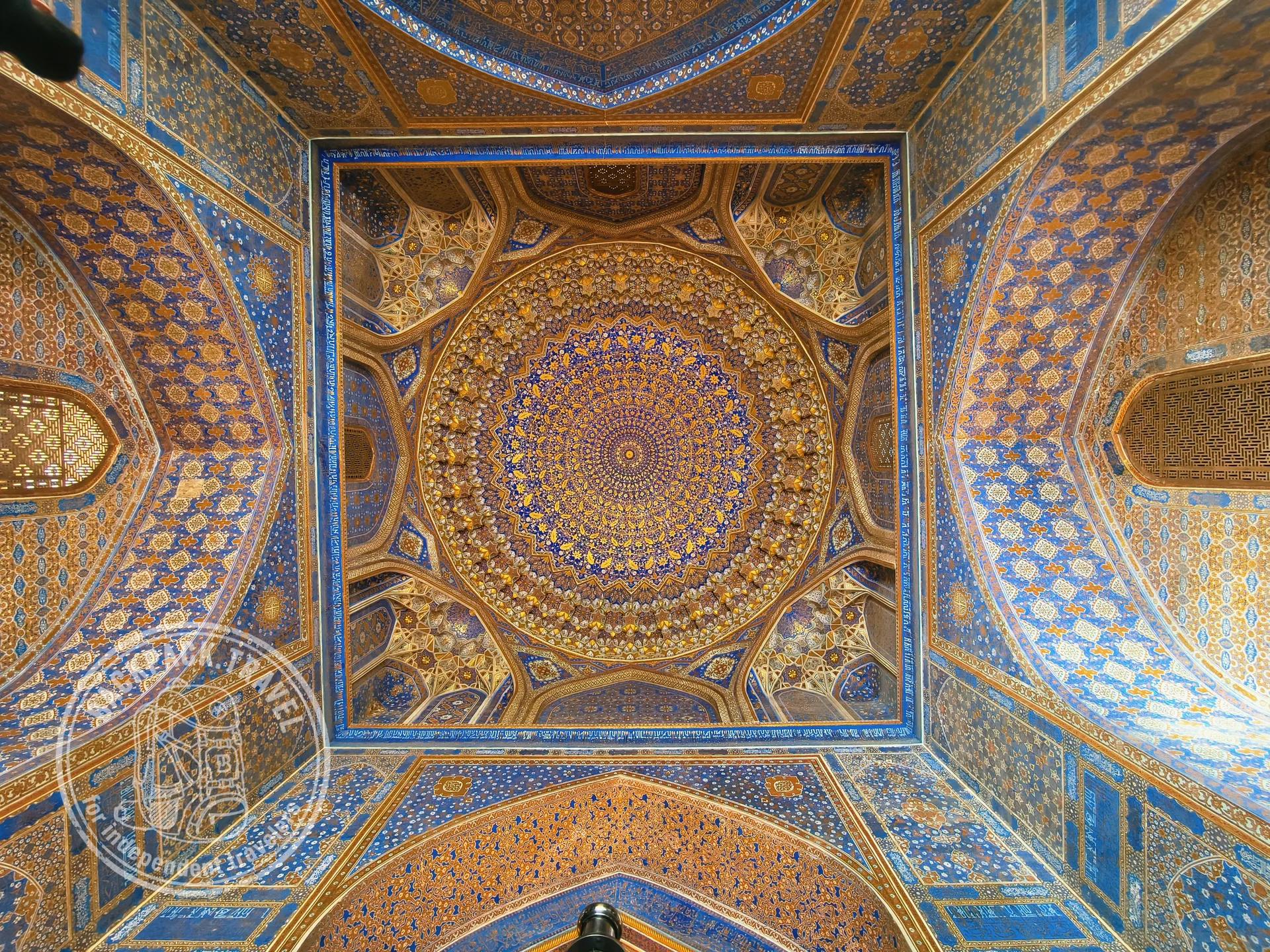
- The Registan — Samarkand's central square and one of the most spectacular public spaces anywhere. Three madrasahs of the fifteenth to seventeenth centuries: Ulugh Beg (1417–1420), Sher-Dor (1619–1636) with its tigers and sun-faces, and Tilya-Kori (1646–1660), which holds a gold-leafed mosque.
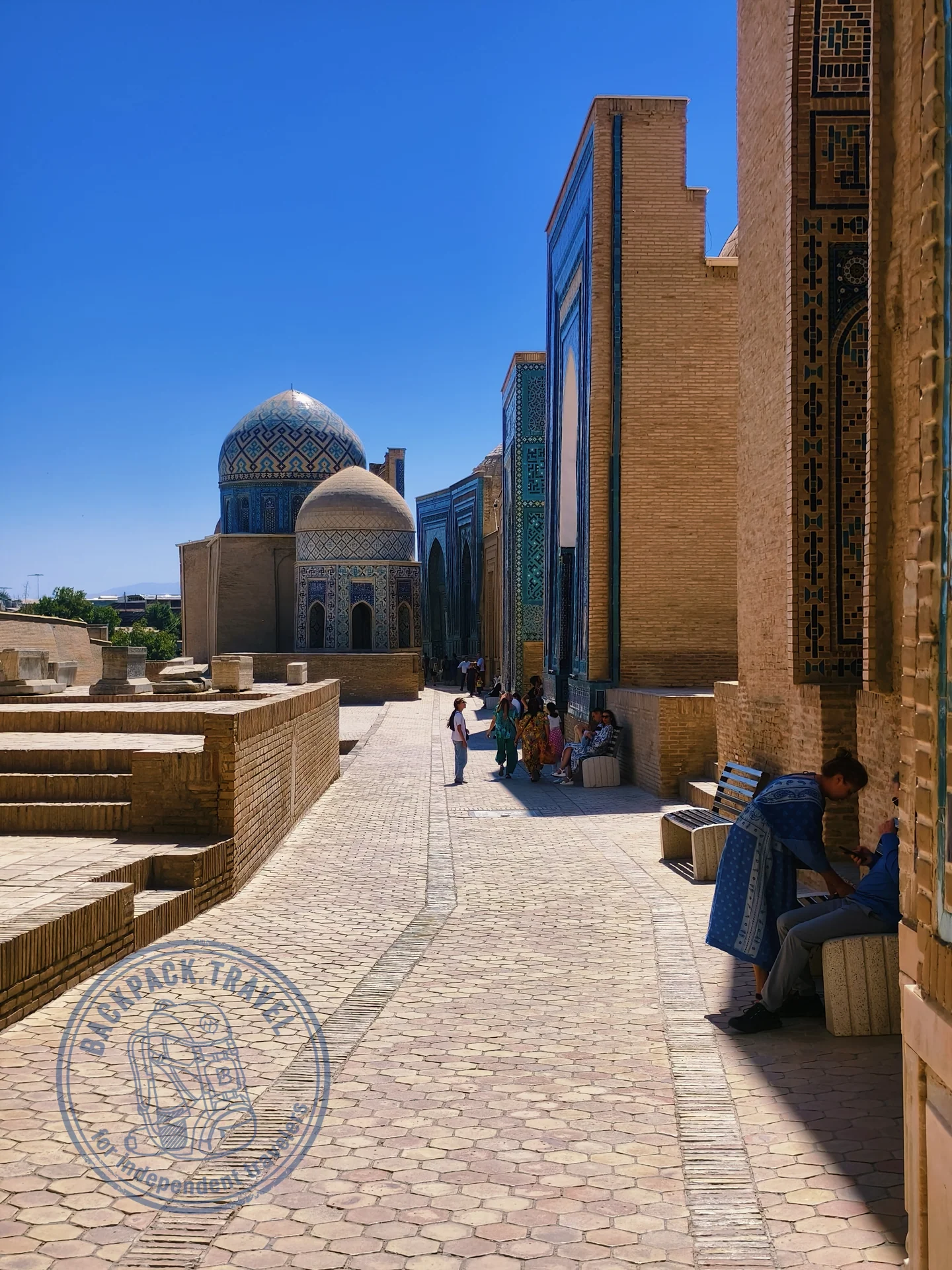
- Shah-i-Zinda — the necropolis of the Timurid ruling families and of descendants of the Prophet, and the finest concentration of mosaic work in Uzbekistan. Eleven mausoleums from the eleventh to the fifteenth centuries, lining a single stepped lane.
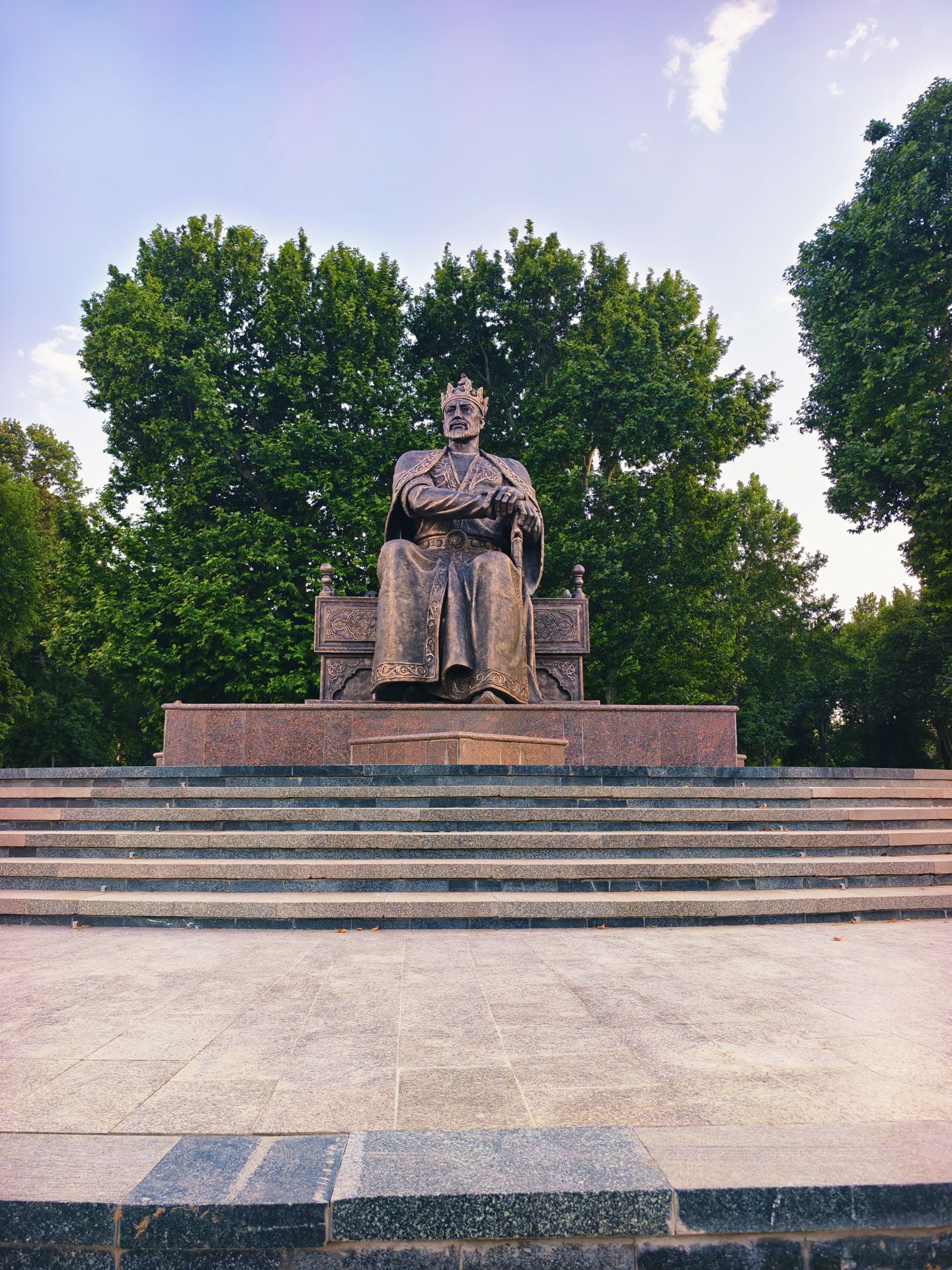
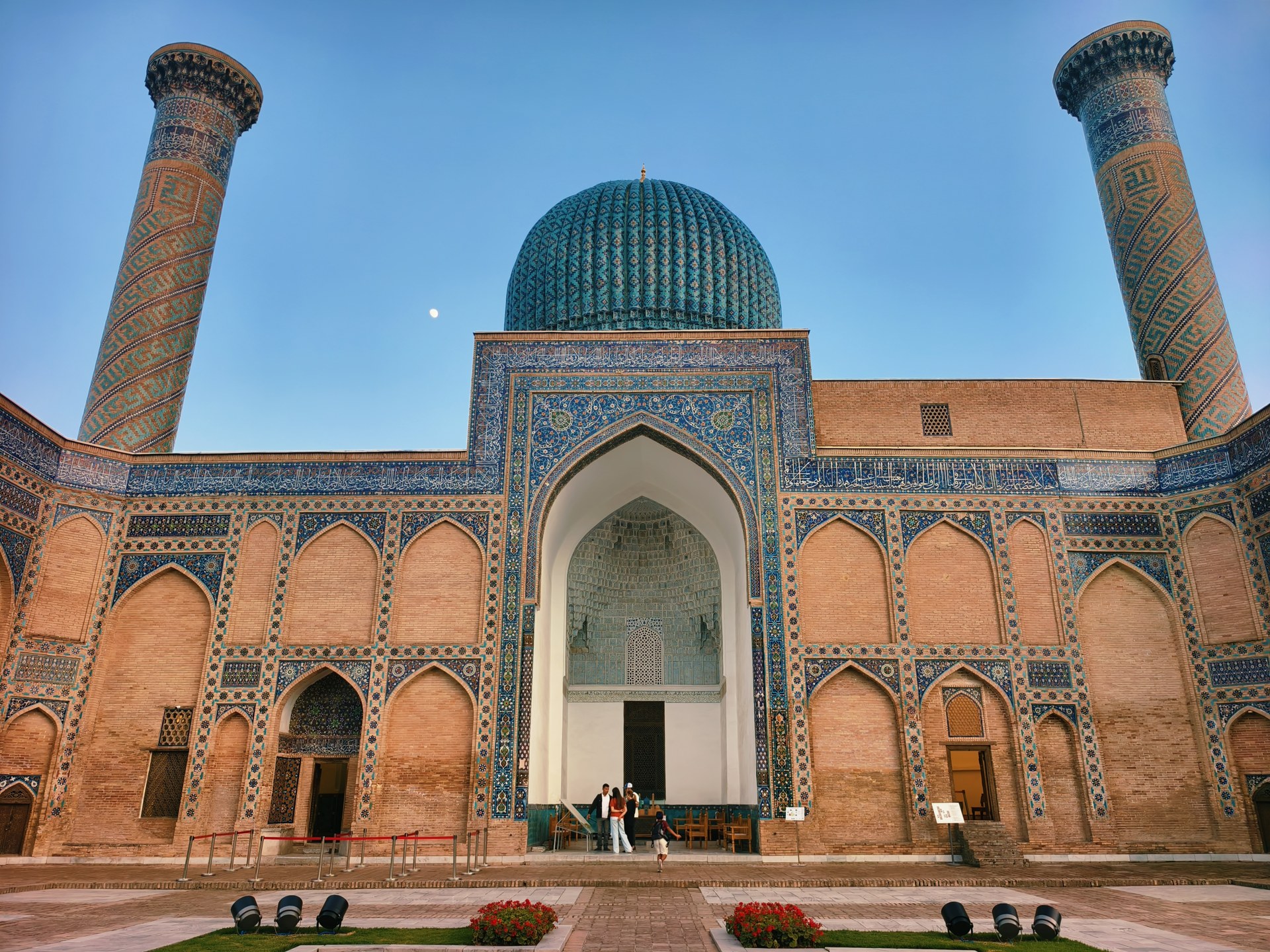
- Gur-e-Amir — the tomb of Timur and his descendants (1404), an azure dome over the grave of a world conqueror.
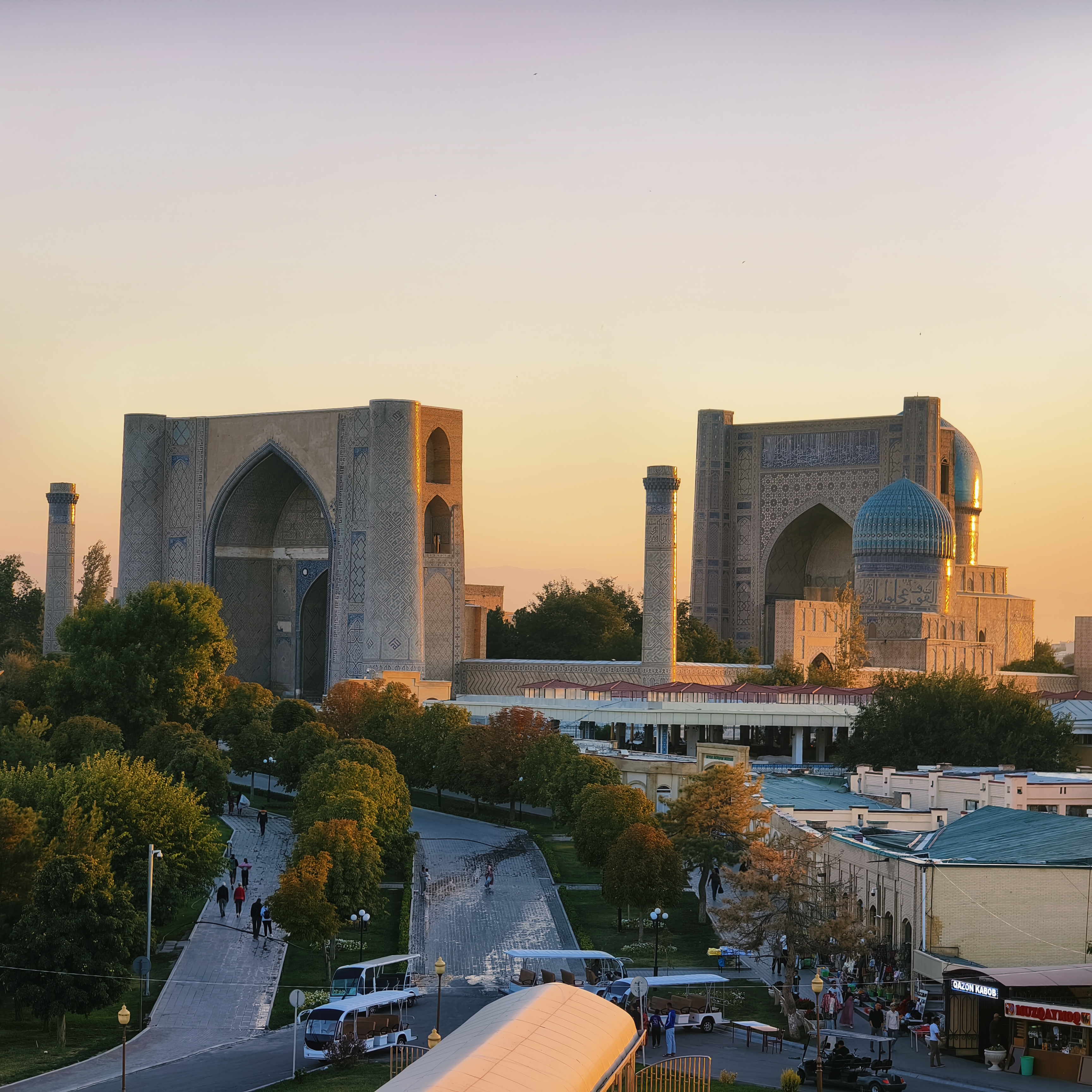
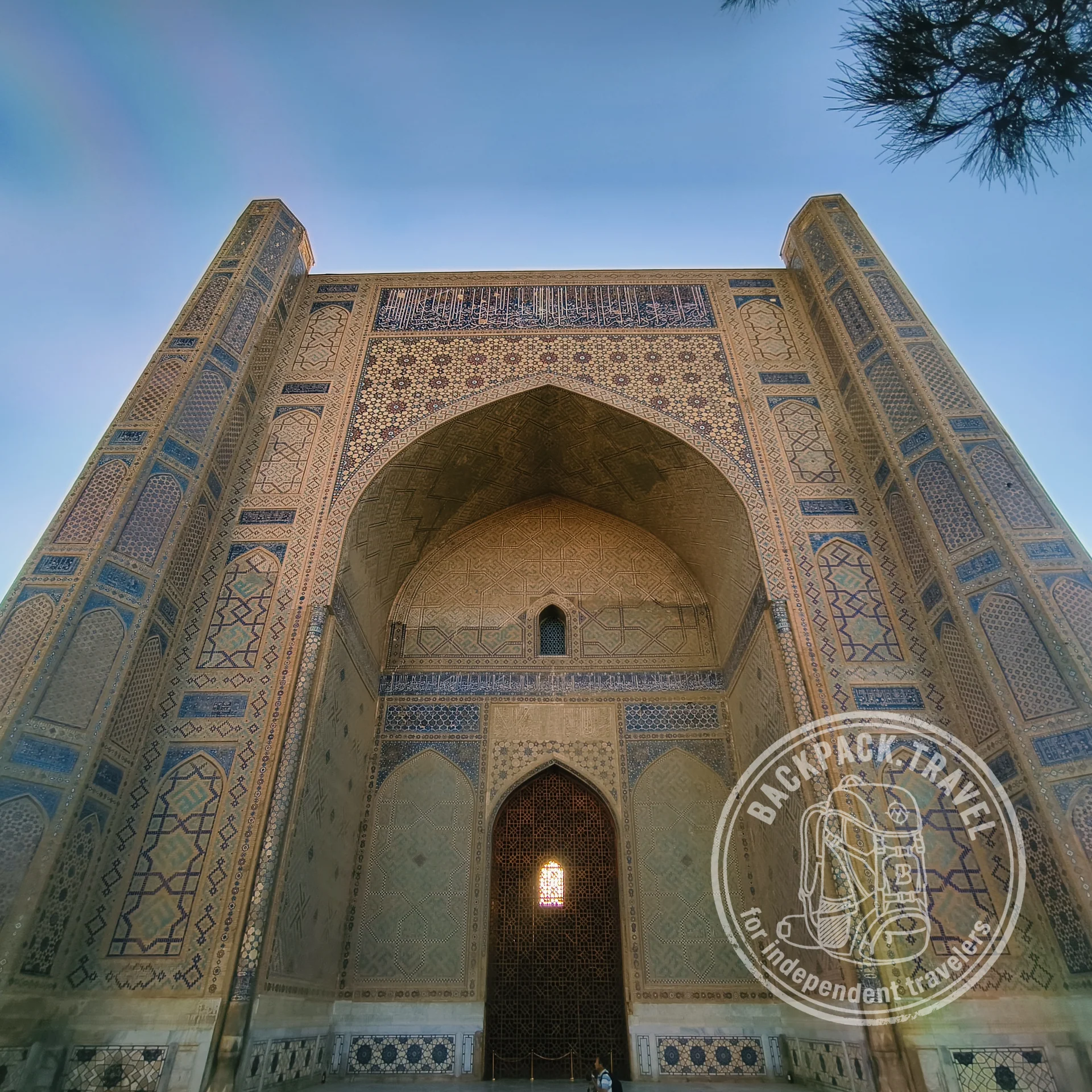
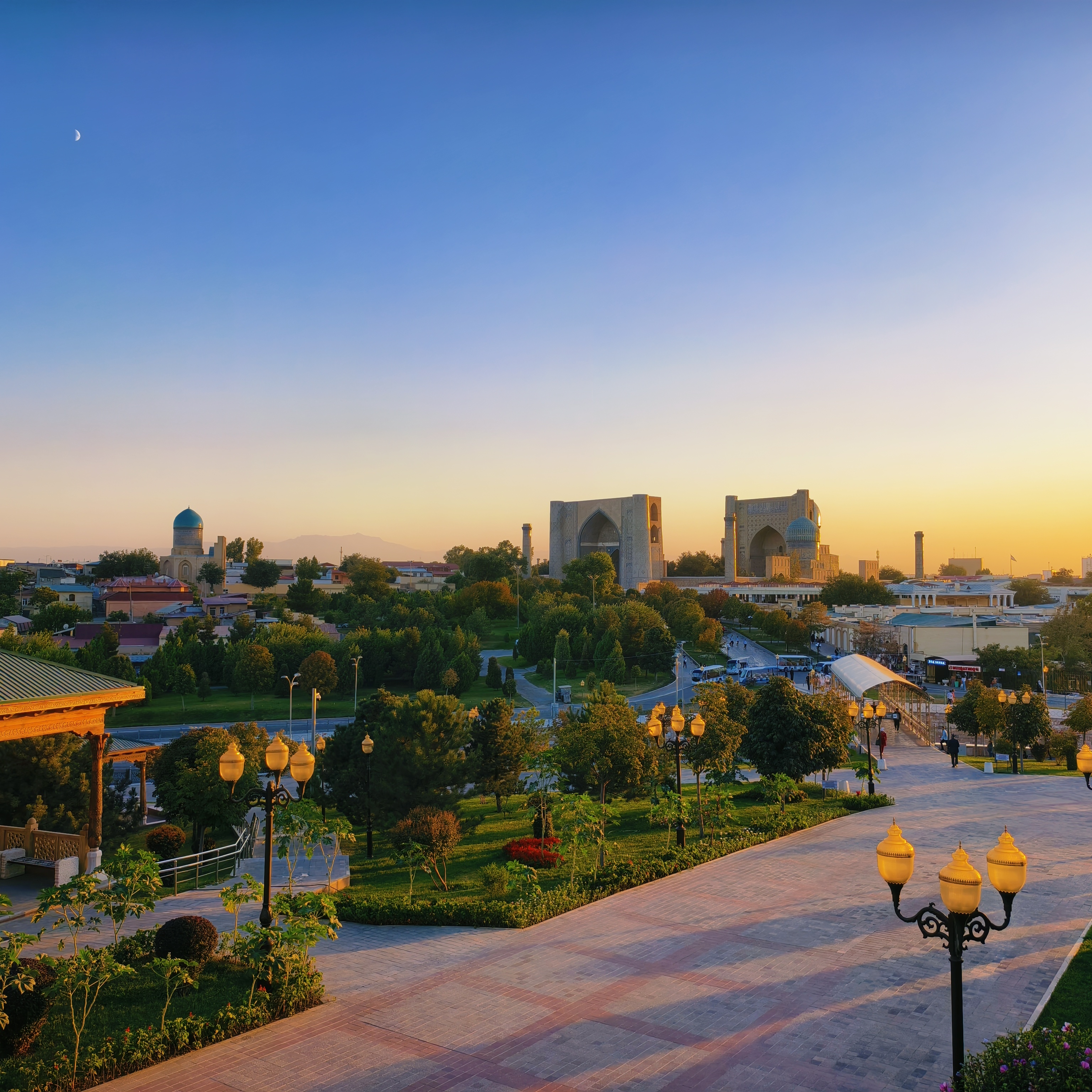
- The Bibi-Khanym Mosque — Timur's great Friday mosque (1399–1404), named for his wife. Enormous at 167 by 109 metres, and partly ruined.
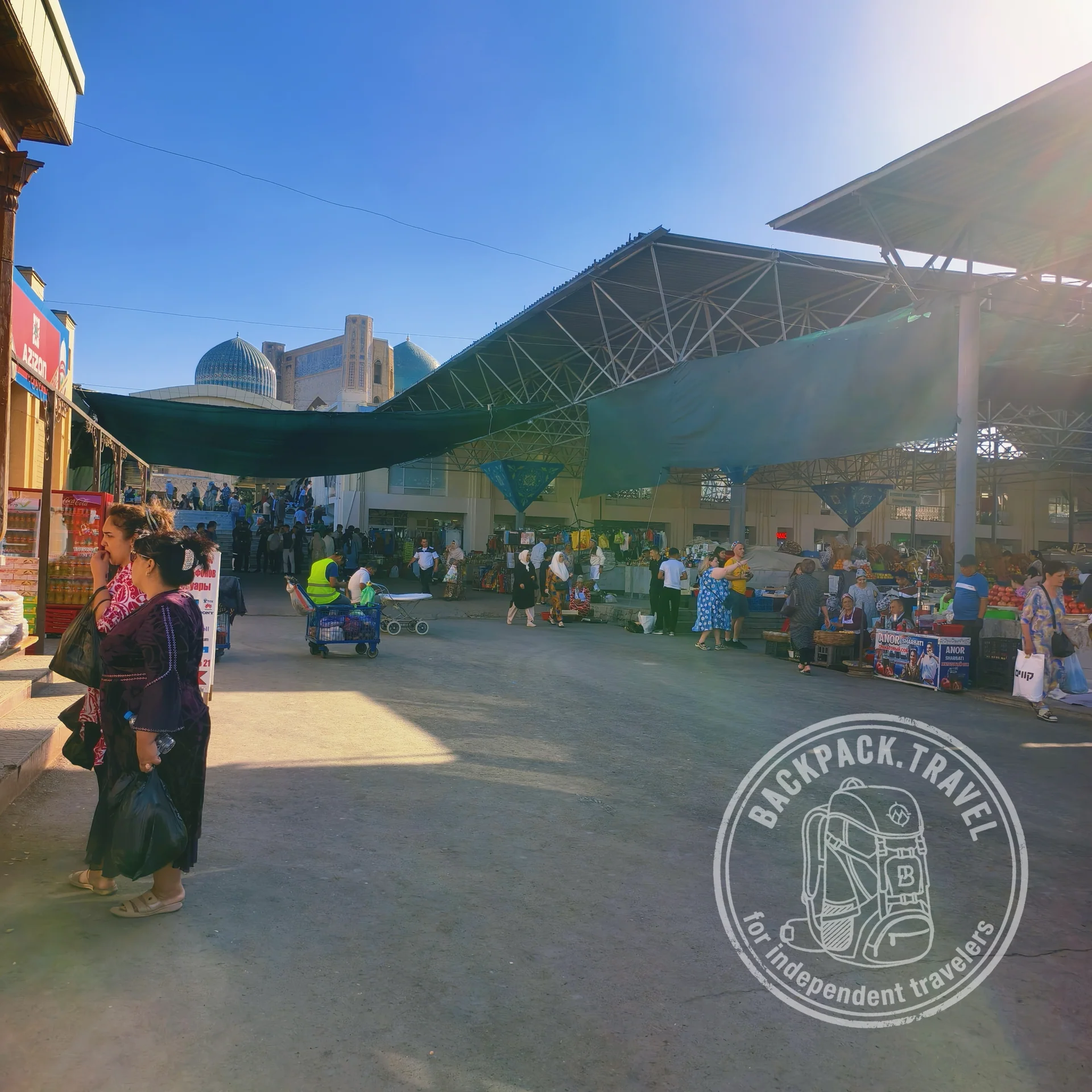
- The Siab bazaar — the city's main market: spices, nuts, dried fruit, flatbread, textiles. Right beside Bibi-Khanym, and the best place to eat cheaply.
- The Ulugh Beg Observatory — built in 1424 by Timur's grandson, an astronomer of the first rank, around a giant sextant sunk into the rock for measuring the positions of stars. Only the underground arc survives, with a museum alongside.
- Afrasiab — the ancient site of Sogdian Samarkand, occupied from around the eighth century BC until the Mongols destroyed it in 1220. The site museum holds the seventh-century Ambassadors' murals.
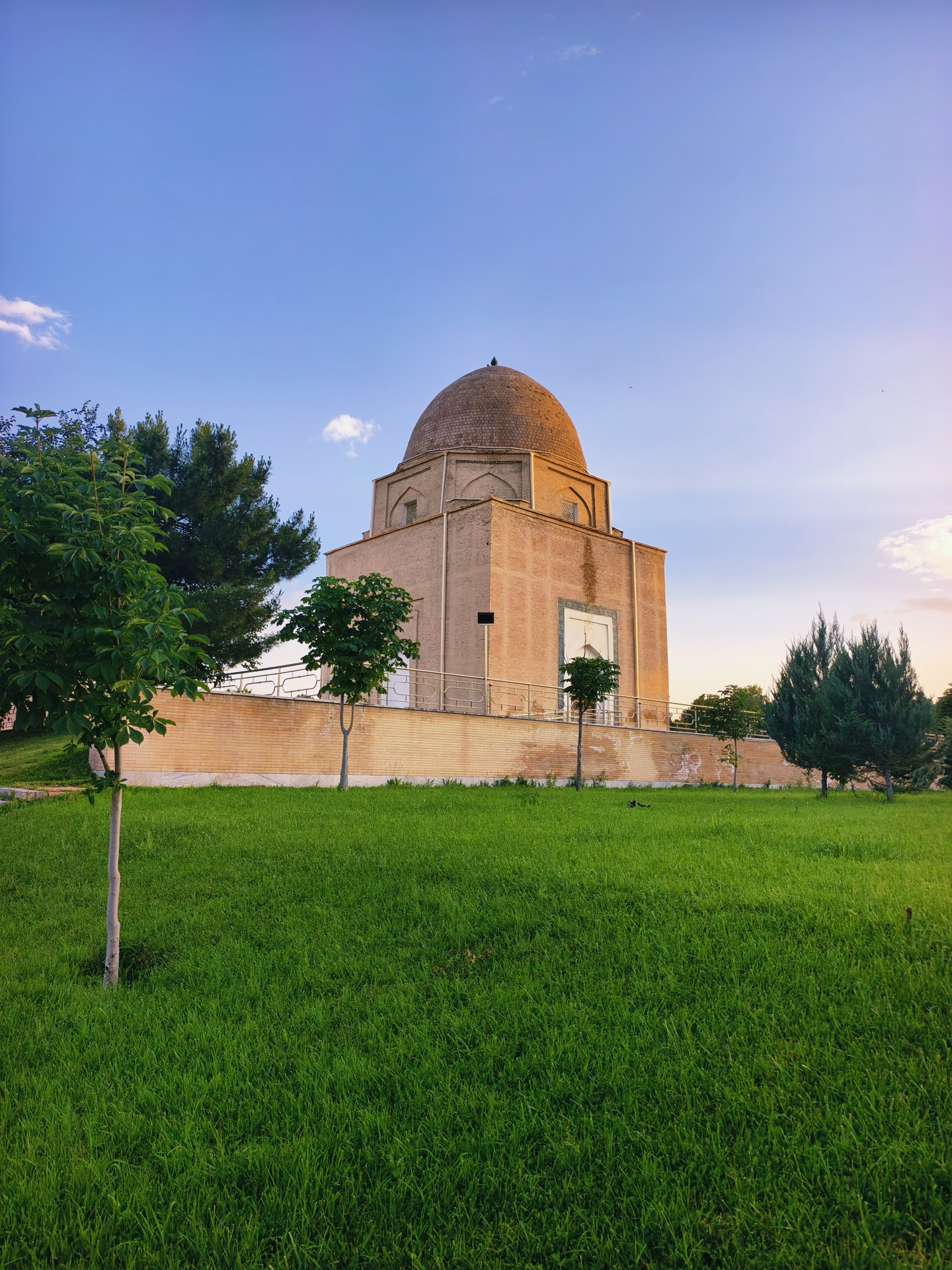
- The Khoja Doniyor mausoleum — by tradition the grave of the prophet Daniel, venerated by all three Abrahamic faiths.
- Konigil village — a working paper mill and craft park, where Samarkand paper is made by the medieval method the city has used since the eighth century.
- Shakhrisabz — Timur's birthplace 90 km away, also UNESCO-listed, with the ruins of the Ak-Saray palace.
Food and prices
The cooking is Uzbek with a Samarkand accent: Samarkand plov (a distinct recipe with dried fruit and chickpeas), non bread (the Samarkand version is the hardest and keeps for months), manty, shurpa, kebabs, halva. Lunch in a chaikhana is 60,000–105,000 sum ($5–9), dinner in a restaurant 145,000–300,000 sum ($12–25). Petrol is about 9,500 sum ($0.80) a litre, a Yandex taxi 12,000–36,000 sum ($1–3), a marshrutka ride about 2,500 sum ($0.20). Prices are as of 2026.
Transport
Samarkand international airport (SKD) is served by Uzbekistan Airways and a handful of foreign carriers; a taxi into the centre is 60,000–85,000 sum ($5–7). From Tashkent the Afrosiyob high-speed train takes 2 hours and costs 180,000–360,000 sum ($15–30) — one of the better train rides in the region. From Bukhara it is about 1.5 hours, 180,000–300,000 sum ($15–25). Around town, use Yandex taxis and marshrutkas.
When to go
April–May and September–October are ideal, at 18–28°C. Summer (June–August) is extreme, at 35–42°C. Winter (December–February) is cold, from −5 to +5°C, and often foggy — though the Registan under snow is something in itself. Navruz on 21 March is the biggest festival of the year.
Photos