Luxembourg City
LuxembourgDescription
Capital of the Grand Duchy — UNESCO-listed fortress casemates, the Grund quarter above the gorge, and understated luxury.
Wiki
The tiny capital of one of the world's wealthiest countries is a city where ancient fortifications loom over green ravines while glass towers of European institutions stand just across the street from the Middle Ages. For the independent traveller it is a convenient and remarkably compact destination: the centre is walkable in a day, and all public transport in the country has been free since 2020 — no tickets needed on buses, trams, or second-class trains.
Getting There and Getting Around
Findel Airport is a few kilometres from the centre; regular buses run into the city and, like all transport, they are free. Luxembourg is an important rail hub with direct trains to Brussels, Metz, Trier, and other nearby cities, making the capital a practical base for regional day trips.
A car is unnecessary in the city and more of a hindrance — parking is expensive and streets are narrow. The upper town (Old Quarter) is entirely pedestrian in spirit. The defining feature of the terrain is the sharp drop between the upper town and the lower quarters in the valley. To avoid climbing and descending flights of stairs, use the free Pfaffenthal lift (panoramic, glass cabin) and the inclined funicular — both connect the plateau with the Alzette valley.
What Is Actually Worth Seeing
- Bock Casemates — the main reason to come. Underground tunnels cut into the rock, the remnant of what was once Europe's mightiest fortress. It is tight inside, low in places, and cool; there are firing embrasures with views over the valley. Bring a jacket and comfortable shoes.
- Chemin de la Corniche — the famous "balcony of Europe," a promenade terrace running along the old walls above Grund. It takes 15–20 minutes to walk, but the views are the best in the city; perfect at sunset.
- Grund quarter — the lower town by the river: stone bridges, a former abbey, atmospheric pubs. Head down on foot or by lift — the contrast with the formal upper town is sharp and enjoyable.
- Notre-Dame Cathedral — restrained Gothic with the tomb of John the Blind; entry is usually free.
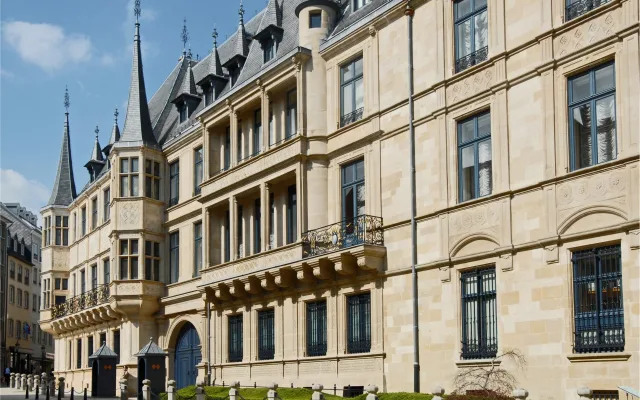
- Grand Ducal Palace — the changing of the guard can be watched from outside; guided tours of the interior run in summer only, and tickets are worth booking in advance.
- MUDAM and Fort Thüngen in Kirchberg — a contemporary art museum designed by I. M. Pei, woven into old fortifications. Even if contemporary art is not your thing, the building itself and the surrounding park are worth the walk.
- Kirchberg — the business district housing EU institutions; interesting for the contrast of glass and concrete against the old town, but mostly a "see in passing" destination.
How Much Time to Allow
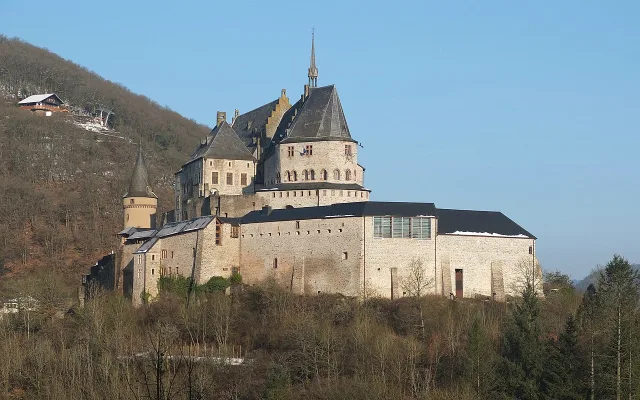
Two days is comfortably enough. On the first day cover the entire upper town, the casemates, the Corniche, and the descent into Grund. Use the second day for museums, Kirchberg, or — the more logical choice — a day trip by train: nearby Vianden with its castle, the Roman ruins of Trier in Germany, or the Moselle valley vineyards. The free trains make this almost cost-free.
When to Go
The best time is late spring through early autumn: warm weather, greenery in the ravines, open terraces, and summer palace tours. December is pleasant for the Christmas markets on the city squares. In winter it is damp, dark comes early, and some outdoor sights lose their appeal.
Where to Stay
The most convenient areas are the upper town and the station district (Gare). The station area is cheaper and has a good range of hotels; it is a couple of stops or 15 minutes on foot from the centre, livelier and more mixed in the evenings but generally calm. The upper town is more expensive but puts everything within walking distance.
Food and Money
Luxembourg is an expensive city and it shows: restaurants, coffee, and hotels are noticeably pricey, with some of the highest wages in Europe. Local cuisine is a hearty mix of German and French traditions: pork knuckle, smoked collar of pork with broad beans (judd mat gaardebounen), river fish, and pâtés. The centre and Place d'Armes are full of tourist terraces with a corresponding markup.
Ways to save:
- Transport is free — your single biggest saving; ride without limits.
- Eat lunch on the plat du jour (daily special) — noticeably cheaper than dinner at the same restaurants.
- Pubs and restaurants in Grund and near the station are usually better value than the city centre.
- Many viewpoints, the walls, and the best views are free — the most rewarding things here cost nothing.
Common Mistakes
- Planning too many days — the city is small; two days covers everything, after which you need day trips.
- Underestimating the terrain: trying to walk everywhere via staircases instead of using the lift and funicular.
- Eating dinner only in the centre — you will overpay and miss the more lively quarters.
- Visiting off-season and being surprised that the palace and some tours are closed.