Manila
PhilippinesDescription
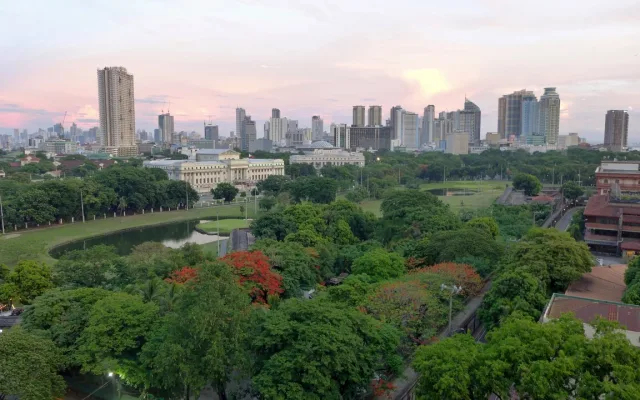
The capital of the Philippines: Spanish Intramuros with Fort Santiago, Rizal Park, Binondo — the world's oldest Chinatown — and a chaotic megacity on the bay.
Wiki
The capital of the Philippines and one of the most densely populated capitals in the world — around 1.8 million people in the city proper and nearly 14 million in the Metro Manila conurbation. A city with a Spanish colonial past (the Philippines were Spanish from 1565 to 1898) and a 20th-century American inheritance. Most visitors use Manila as a stopover on the way to the islands, but a day or two here earns its place: the old town of Intramuros, a strong food scene and arguably the best Chinatown in Southeast Asia.
The main sights
- Intramuros — the walled Spanish city of the 16th century and the core of old Manila. It was almost completely destroyed in 1945 and has only been partly rebuilt.
- Fort Santiago — the main citadel of Intramuros and the memorial to the national hero José Rizal, executed in Manila in 1896. The cell where he spent his last night survives.
- Manila Cathedral — the country's principal Catholic cathedral and already the eighth building on the site: fires, earthquakes and war destroyed its predecessors.
- San Agustín Church — a UNESCO site and the oldest stone church in the Philippines, completed in 1607. It is effectively the only building in Intramuros to have survived the Battle of Manila.
- Rizal Park (Luneta) — the national park of the Philippines, with a memorial on the spot where Rizal was shot.
- Binondo — the oldest Chinatown in the world, founded in 1594. You come here for the food rather than the architecture; it is the best eating adventure in the city.
- Quiapo — a loud market district around the Basilica of the Black Nazarene.
- Bonifacio Global City — the new business district, with parks, street art and restaurants: the exact opposite of the old town.
- Makati — the main business centre of the conurbation, full of restaurants and shopping galleries.
- Tagaytay — a cool town on a caldera rim 60 km south, looking out over the active Taal volcano.
- Corregidor — the island fortress in Manila Bay, a key site of the fighting in 1942 and 1945; day boats run out to it.
Food and prices
The cooking is Filipino: adobo (the national dish, pork or chicken in vinegar and soy), sinigang (a sour tamarind soup), lechon (a whole roast suckling pig), pancit (noodles) and halo-halo for dessert. Binondo has the best Chinese-Filipino food: siopao (steamed buns), lumpiang shanghai (thin fried rolls) and beef mami noodles. Lunch in a café runs 300–600 pesos ($5–10) and dinner in a restaurant 900–2,100 pesos ($15–35). A litre of petrol is about 60 pesos ($1), a taxi or ride-hailing trip 250–900 pesos ($4–15), and a jeepney 20–30 pesos. Prices are as of 2026.
Transport
Ninoy Aquino International Airport (MNL) is served by Philippine Airlines, Cebu Pacific and the major Asian and Middle Eastern carriers. A taxi into the centre is 500–900 pesos ($8–15), but at peak times the journey takes one to two hours. Around town there are ride-hailing apps, jeepneys (those painted jeeps) and the short MRT and LRT light rail lines. Be warned: Manila traffic is world class, so plan every journey with slack in it.
When to go
December–March is dry and bearable, at 25–31°C. April and May run 32–38°C with high humidity. From June to October it is typhoon season, with the risk of cancelled flights and flooding. As for events: Christmas here starts in October, and at Holy Week (Semana Santa) in spring the city half empties as Filipinos travel to their families, leaving the transport packed.