Description
Cambodia's capital at the meeting of the Mekong and Tonlé Sap — the Royal Palace, the Silver Pagoda and the genocide memorials.
Wiki
Cambodia's capital, home to some 2.3 million people at the confluence of the Mekong and the Tonlé Sap. The "Pearl of Indochina" of the 1920s, with its French colonial architecture, suffered badly under the Khmer Rouge (1975–1979): the city was emptied entirely and the educated class destroyed, part of a death toll across the country put at up to two million. Today Phnom Penh is a fast-growing capital of sharp contrasts — new towers and poverty, gilded pagodas and genocide memorials. A two-day stop before Siem Reap is essential.
The main sights
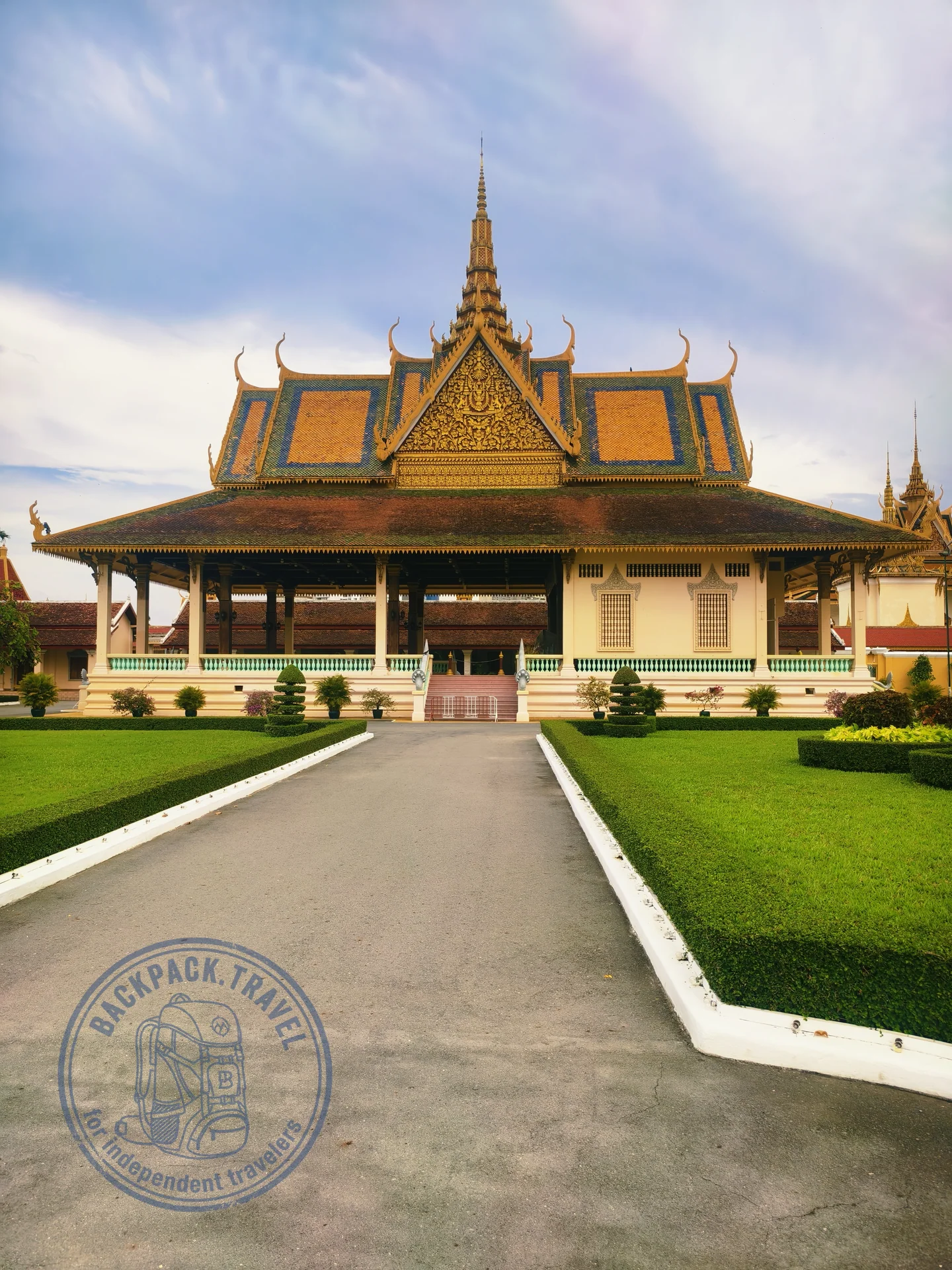
- The Royal Palace — the working residence of King Norodom Sihamoni. Part of the compound is open to visitors.
- The Silver Pagoda (Wat Preah Keo Morakot) — the royal family's private pagoda, its floor laid with 5,329 silver tiles of about a kilogram each. It holds a crystal "Emerald Buddha" and a Maitreya Buddha of 90 kg of gold set with 9,584 diamonds.
- Tuol Sleng (S-21 Genocide Museum) — a former school turned into a Khmer Rouge prison. Of roughly 17,000 people held here, seven are known to have survived. A hard visit, and a necessary one.
- Choeung Ek (the Killing Fields) — the memorial to Khmer Rouge victims 17 km out, with a stupa holding the skulls of around 9,000 of the executed.
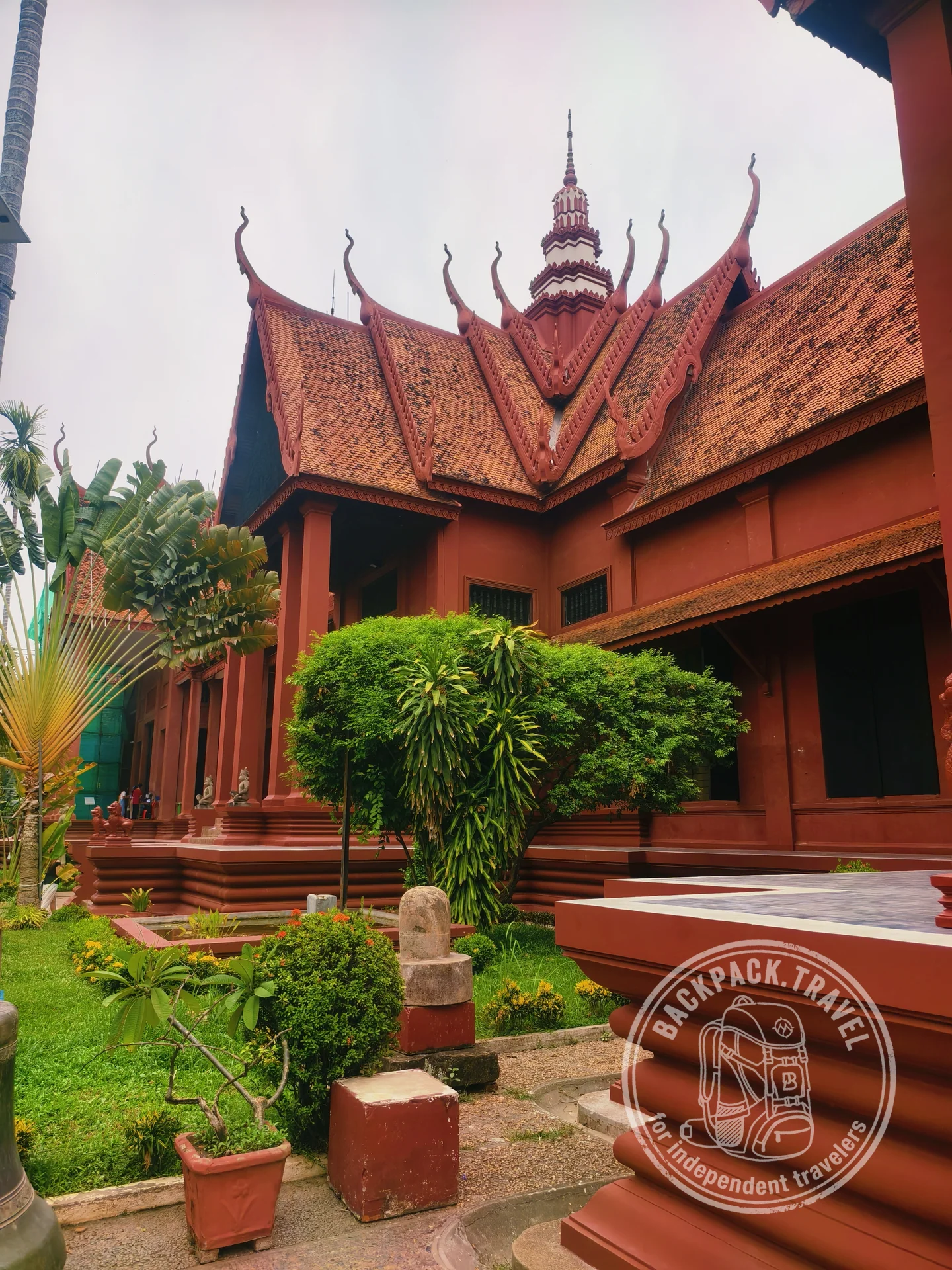
- The National Museum — the world's largest collection of Khmer art, and especially of sculpture from the ninth to fifteenth centuries, Angkor included.
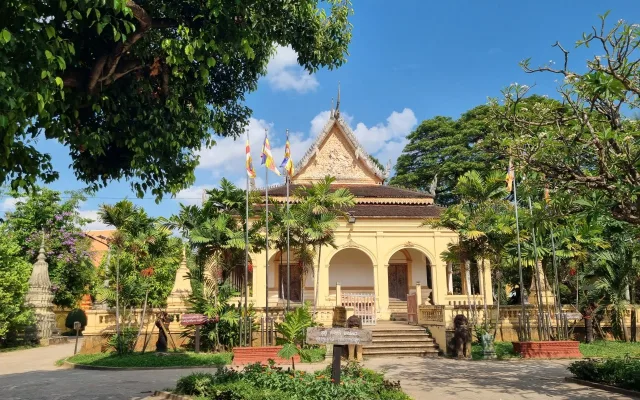
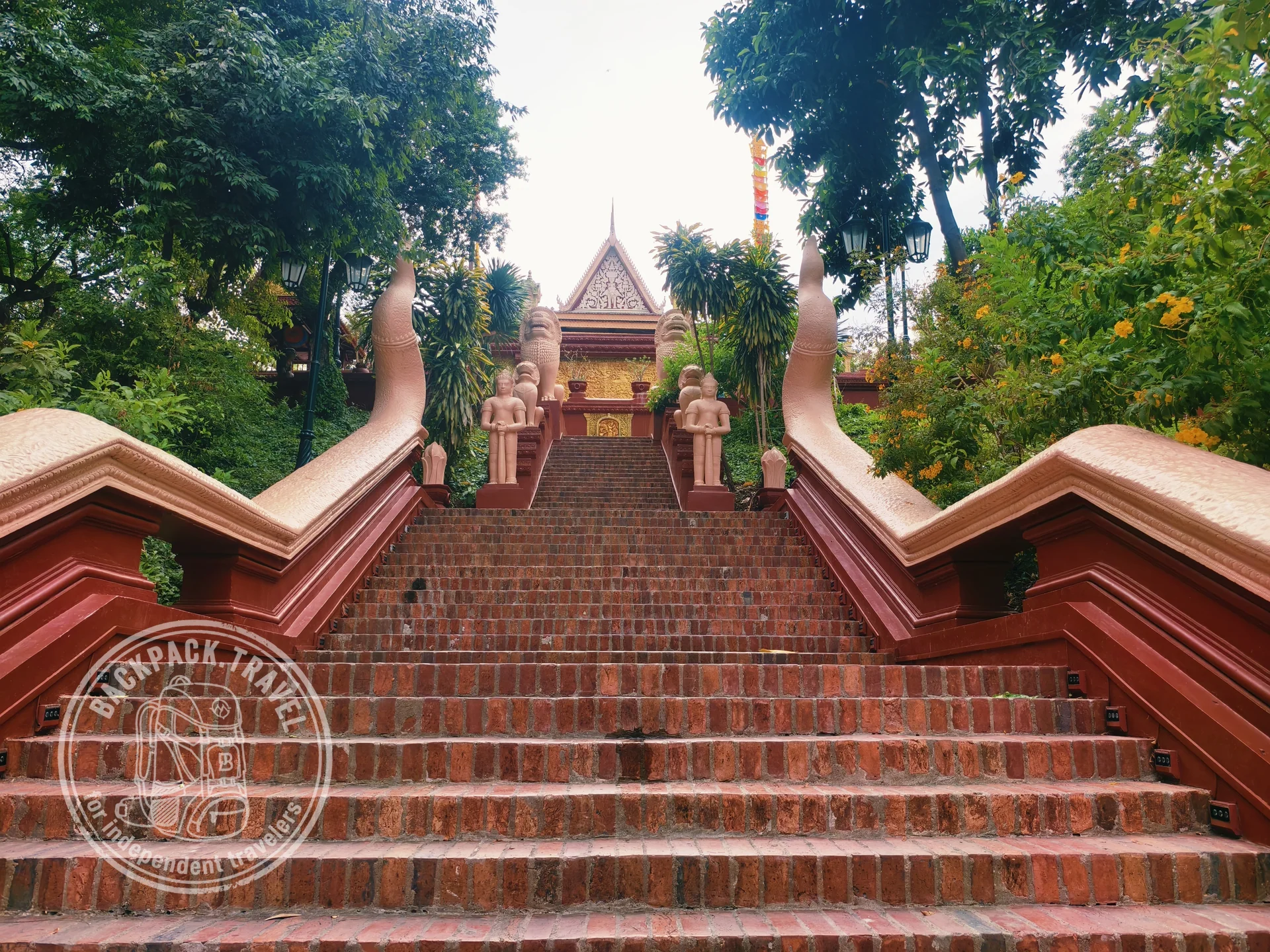
- Wat Phnom — the city's principal pagoda, on its only hill, founded in 1373.
- The Russian Market (Phsar Toul Tom Poung) — the biggest tourist market in the city: crafts, textiles and copied everything.
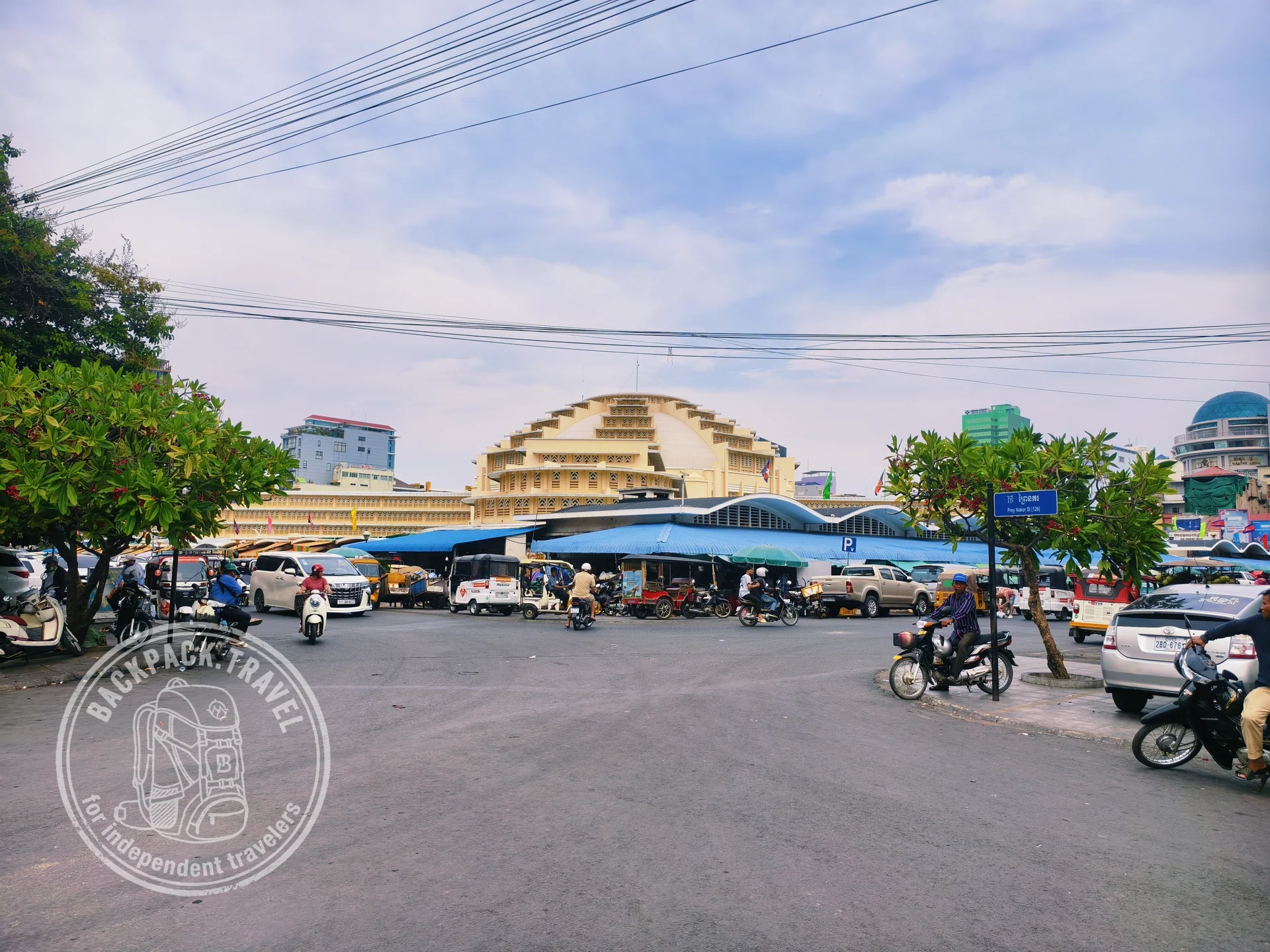
- The Central Market (Phsar Thmey) — a covered market in an Art Deco building of 1937, selling jewellery and clothes.
- The Foreign Correspondents' Club (FCC) — the legendary bar with a terrace over the river, once the haunt of war reporters.
- Sisowath Quay (the Riverside) — the main waterfront, lined with bars and restaurants.
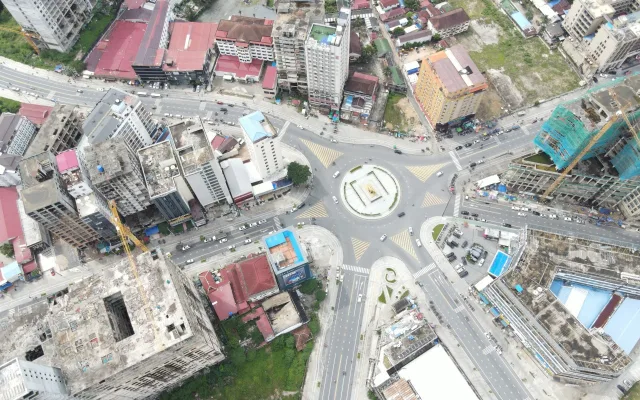
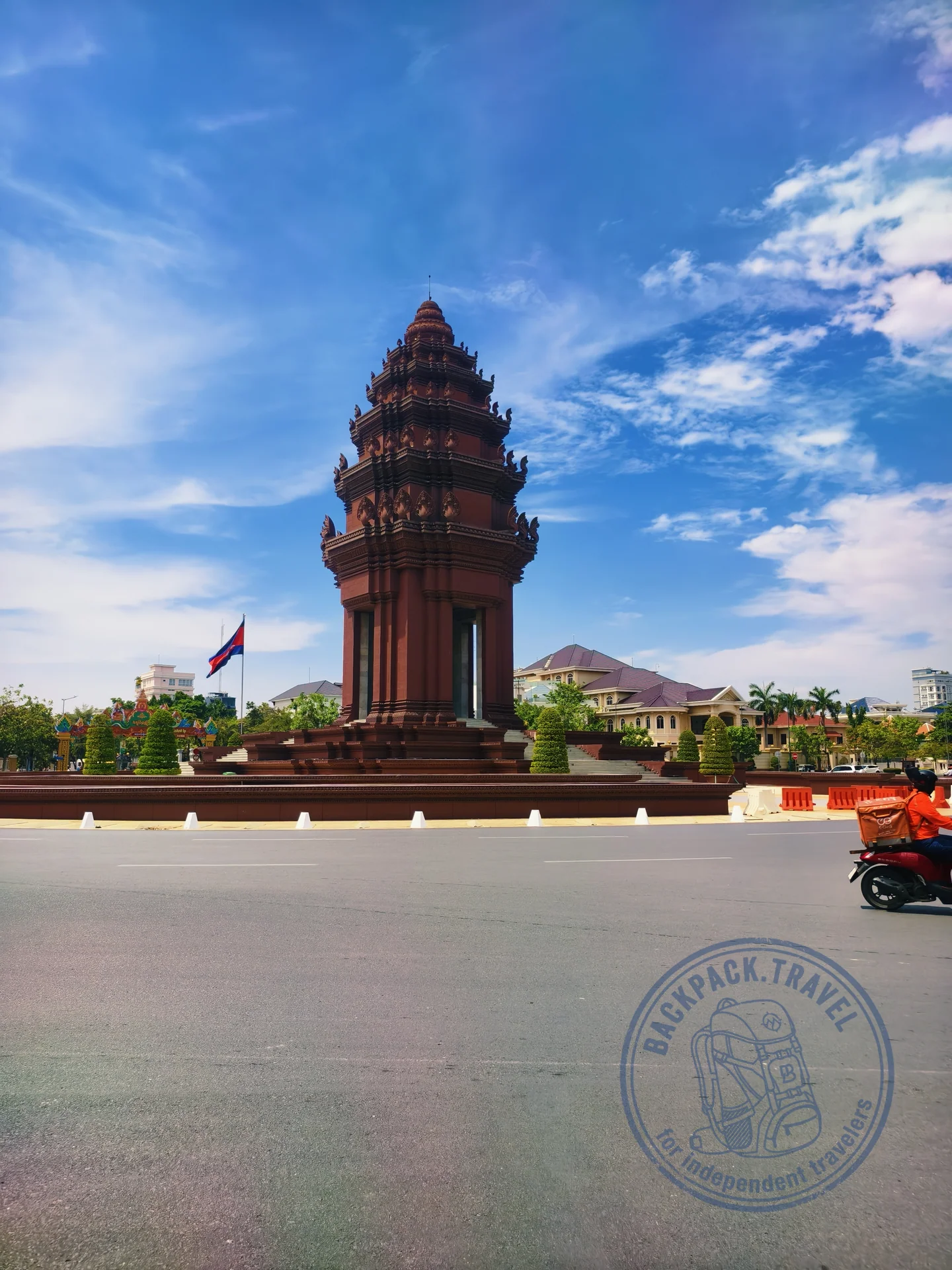
- The Independence Monument — the symbol of independence from France in 1953.
- A sunset cruise on the Mekong — boat trips of one to two hours, $8–15.
Food and prices
The cooking is Khmer: amok (fish in coconut curry steamed in a banana leaf, the national dish), lok lak (seared beef with pepper and lime), num banh chok (rice noodles with fish curry) and bai sach chrouk (grilled pork with rice, the standard breakfast). Lunch at a local place is $4–7, dinner in a restaurant $12–25, an Angkor beer $1.50. Petrol is about $1 a litre, a tuk-tuk across town $2–5, a Grab ride $3–7. Prices are as of 2026. The currency is the riel, but almost everything is quoted and paid in US dollars.
Transport
Phnom Penh International Airport (PNH) is served by Cathay Pacific, Singapore Airlines, AirAsia, Vietnam Airlines and Cambodia Angkor Air. A taxi or Grab into the centre is $12–15. From Siem Reap it is a 45-minute flight ($60–100) or a six-hour bus ($12–20). Around town you use tuk-tuks, Grab and motorbike taxis through the PassApp app.
When to go
November to March is dry, 23–32°C, and ideal. April and May are extremely hot, 35–40°C. The rainy season (June–October) brings short heavy downpours. Khmer New Year (13–15 April) is the biggest festival of the year, and Pchum Ben, the festival of the ancestors, falls in September or October.