 Города и дороги
Description
The oldest city in Belarus: the 11th-century St Sophia Cathedral above the Dvina, the Convent of St Euphrosyne, and the geographical center of Europe marked by a sign downtown.
Wiki
Polotsk is the oldest city in Belarus: the Primary Chronicle mentions it under the year 862. Vseslav the Sorcerer ruled here, and this is the home town of Euphrosyne of Polotsk and of the first printer Francysk Skaryna. Today it is a quiet city of 79 thousand people, with its monuments scattered along the Western Dvina and ordinary buildings in between. It is worth coming for two pre-Mongol monuments of a kind that exist nowhere else in Belarus.
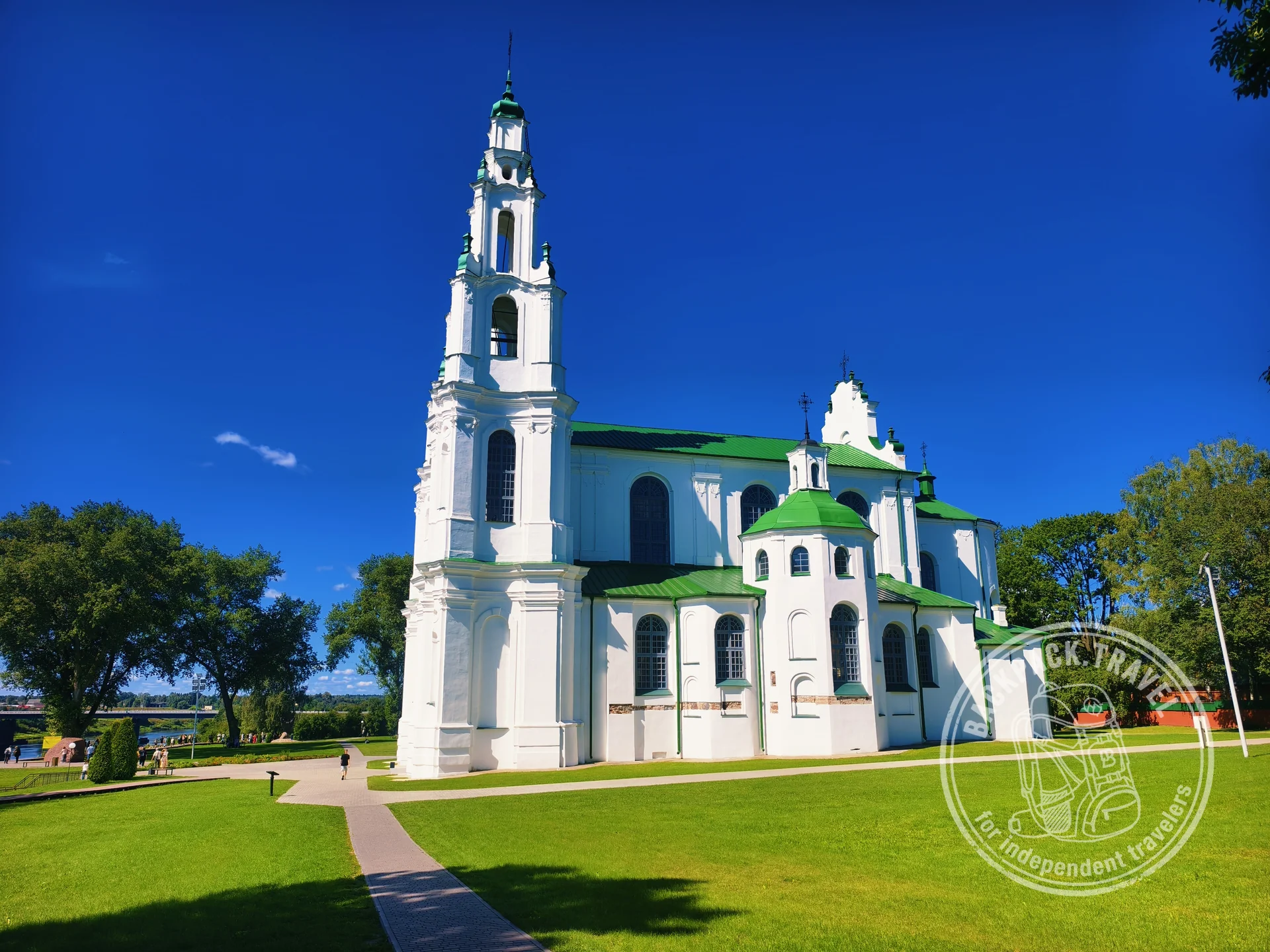
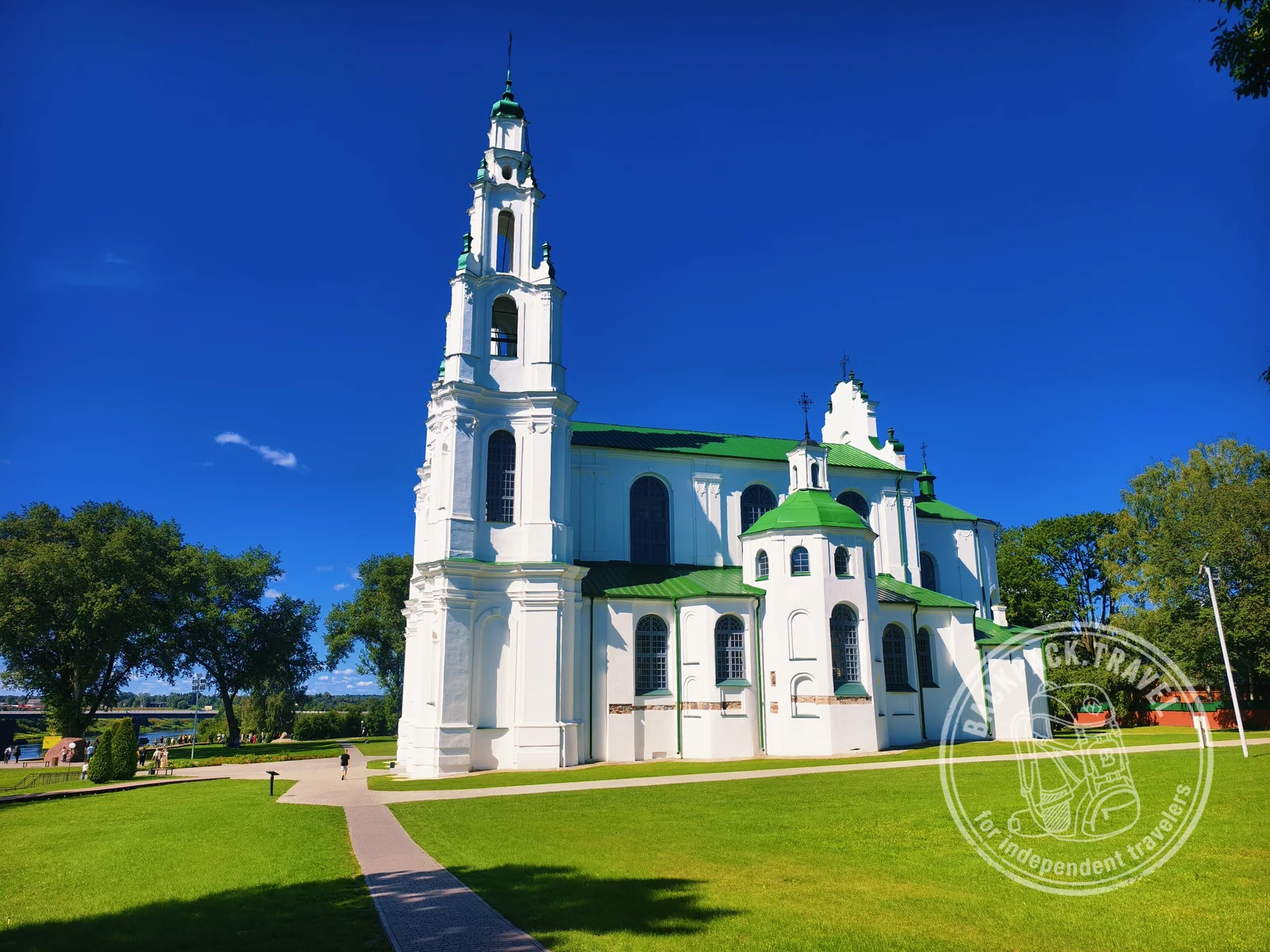
St Sophia Cathedral: what here is genuine
The cathedral was raised between 1044 and 1066 under Vseslav Bryachislavich, the third Sophia of early Rus after those of Kyiv and Novgorod and the first stone church on Belarusian land.
Not much of that building is visible now. In 1705 the cathedral was closed and its narthex taken over as a powder store; on 1 May 1710 the store blew up, and the church lay in ruins for three decades. The common line that Peter I blew up the Sophia is a simplification, as no order to detonate it was given. Between 1738 and the 1750s the ruins were rebuilt from scratch, this time as a twin-towered Vilnius Baroque basilica under the direction of Johann Christoph Glaubitz, with the church turned so that the altar faced north and the ancient apses ended up at the side.
What survives from the 11th century is the foundations, the lower parts of the walls and piers, fragments of apses standing up to twelve meters in places, plinfa brickwork and the remains of frescoes. All of it is exposed in the lower level, along with 11th-century inscriptions scratched into the stone bearing the builders' names. The genuine Polotsk is here, it is simply below floor level.
Inside there is the Museum of the Architectural History of St Sophia Cathedral and an organ installed in 1985, and the hall puts on more than three hundred concerts a year. The cathedral does not function as a parish church. Nearby on the bank lies the Boris Stone, a boulder with a cross and a 12th-century inscription.
The Convent of St Euphrosyne
This is a working convent on the edge of the center, and in terms of authenticity it gives the Sophia a head start.
- The Church of the Transfiguration of the Saviour was built in the mid-1150s during Euphrosyne's lifetime, and according to her Life it was raised by the master builder Ioann, a rare case where the name of an early Rus builder is known. This is the only 12th-century monument in Belarus where the painting survives almost in full, from the foot of the walls to the dome. For centuries it lay hidden under later plaster, and the main stage of uncovering it ran from 2017 to 2024. The church is small and dark, and the access arrangements should be checked on the spot.
- The Cross of Euphrosyne of Polotsk is an altar cross about 52 cm high made by the craftsman Lazar Bogsha in 1161. The original was kept in the Mogilev museum and disappeared in 1941; there are many versions of its fate and none has been proved. What you will see is a reconstruction made in 1997.
- The Cathedral of the Exaltation of the Cross, built in 1893–1897, is the late landmark of the courtyard and holds no antiquities.
Euphrosyne was born around 1100, founded the convent in about 1133 and died in 1167 in Jerusalem.
The rest of the center
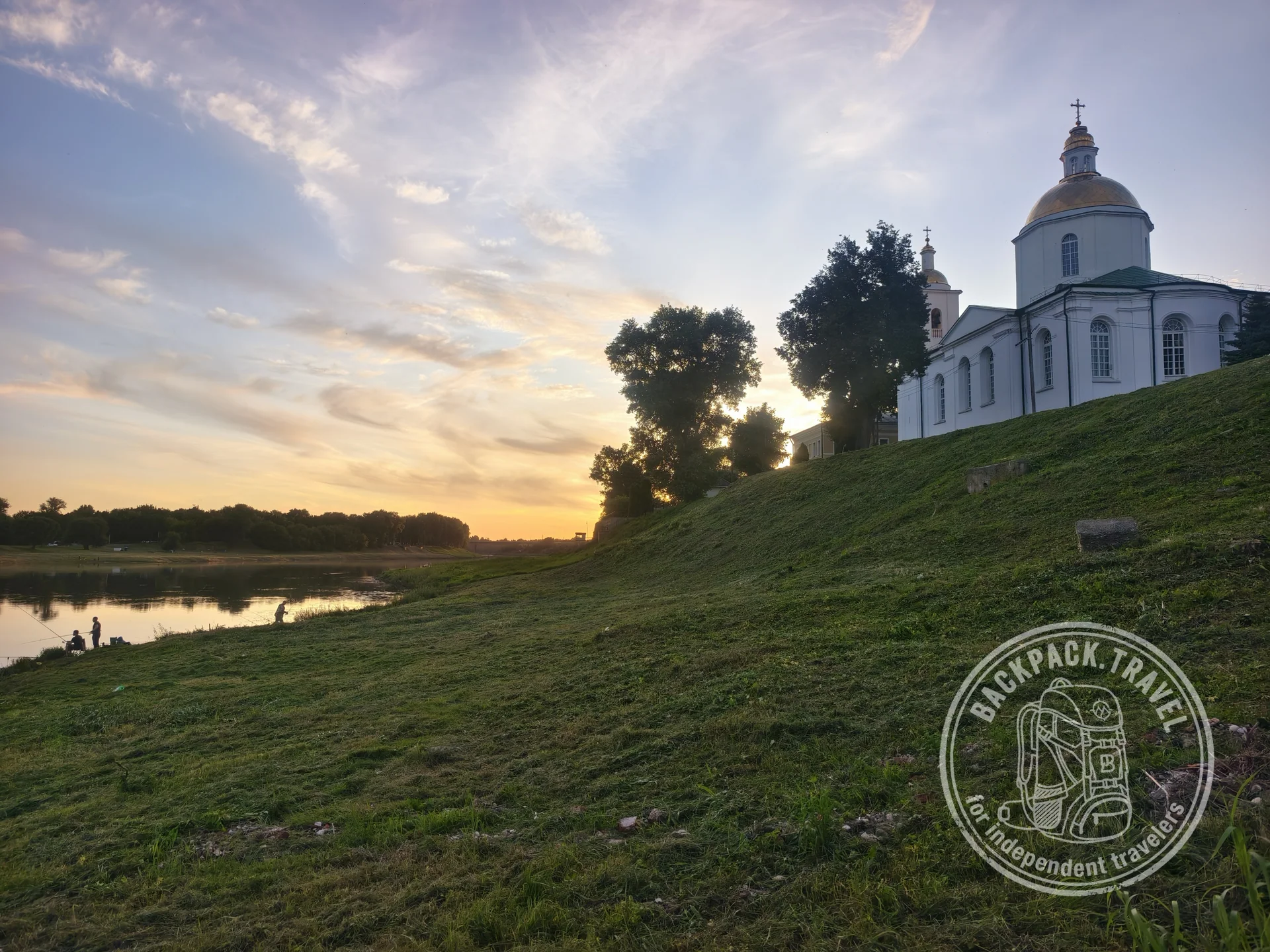
- The Epiphany Cathedral — Baroque, begun in 1761, consecrated in 1777 and still in use. In the buildings of the former monastery beside it is the Museum of Belarusian Book Printing.
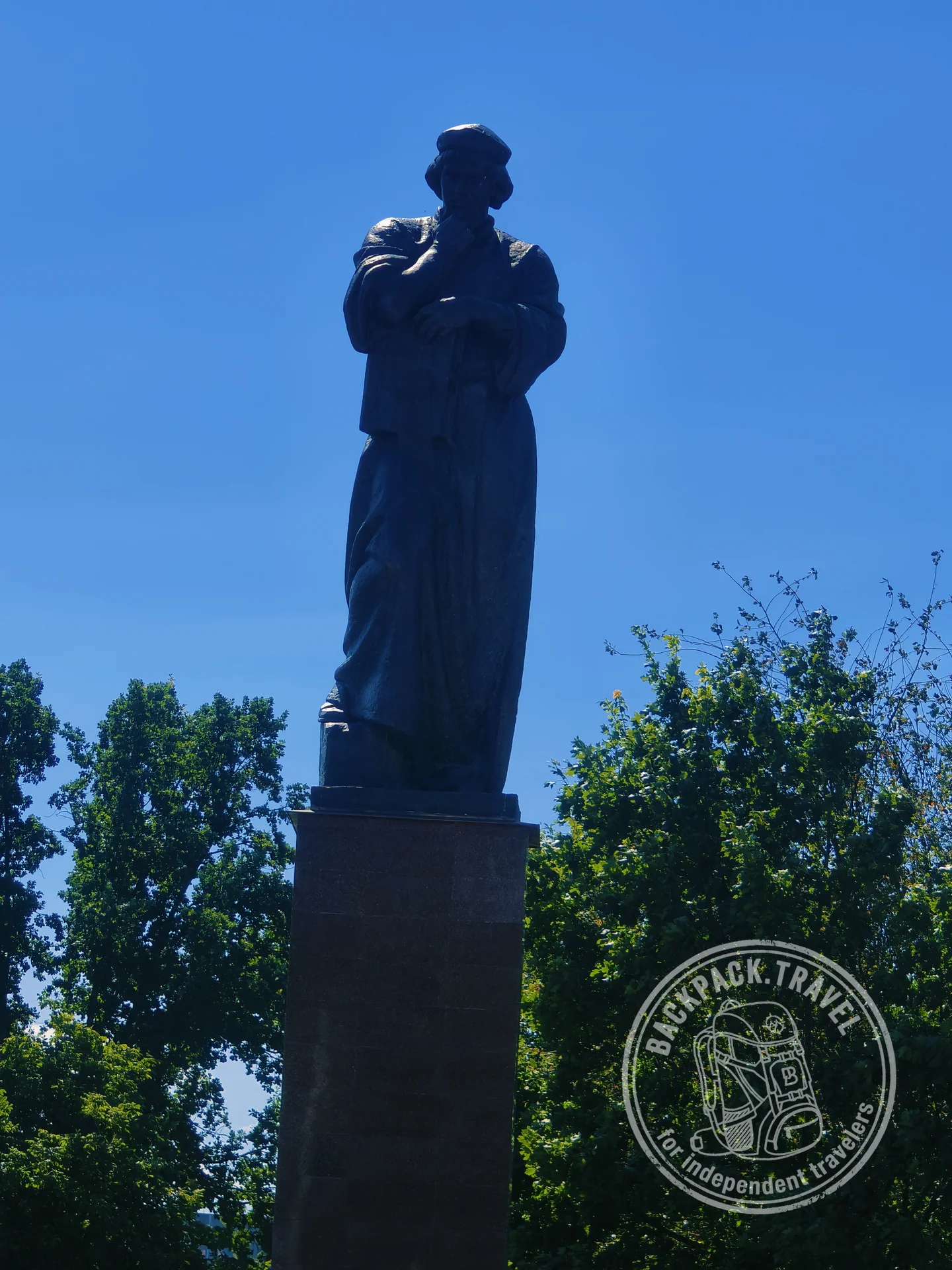
- The monument to Francysk Skaryna — the world's first monument to the printer, erected in 1974. Skaryna began printing the Bible in Prague, and the Psalter was the first volume to appear, in August 1517.
- The Geographical Center of Europe marker was unveiled on 31 May 2008. Take it calmly: the calculation made in 2000 placed the point not in the city but some 48 km to the southwest, and the marker was put in Polotsk for the sake of access. Points in Lithuania, Ukraine, Poland and Slovakia claim the same title.
- Nizhne-Pokrovskaya Street along the Dvina is the oldest in the city. Beside it stands the former Jesuit collegium, which in 1812 was turned into an academy with university status.
In all, the museum reserve takes in eleven museums, and tickets are bought separately for each.
How much time to allow
Half a day goes on the Sophia, the embankment, the tree-lined walk on Skaryna Avenue and the center of Europe marker. A full day is needed if you add the Convent of St Euphrosyne, which is off to one side and best reached by transport, along with one or two museums. Two days are worth allowing for anyone interested in the museums of the reserve, though bear in mind that the choice of accommodation here is modest.
From Vitebsk it is about 105 kilometers, with trains from an hour and a quarter and buses in roughly an hour and a half, which makes for a convenient day trip out and back. From Minsk it is further, about 230 kilometers and some three hours on a direct bus.
Who won't enjoy it: if you are coming for a coherent old town, Polotsk will not deliver, because there is no historic quarter as such, you have to walk through ordinary residential blocks between the sights, and without an interest in early Rus architecture there is essentially nothing here to look at. Anyone expecting to see an 11th-century Sophia is in for a disappointment, since from the outside it is an 18th-century Baroque church and the ancient part is hidden in the basement. But for those who care about authenticity, Polotsk offers surviving 12th-century frescoes and masonry that remembers Vseslav, which exists nowhere else in the country.