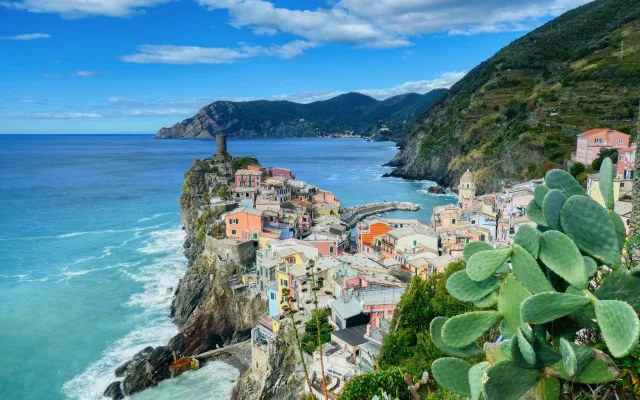
Description
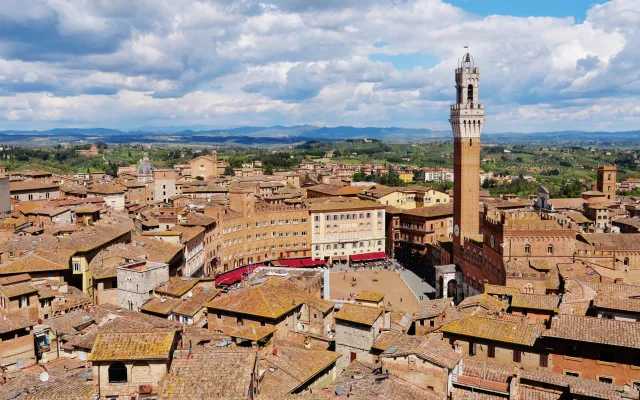
Siena is a city in Tuscany, renowned for its medieval architecture, the Piazza del Campo, and its Gothic cathedral. Twice a year it hosts the legendary Palio horse race.
Wiki
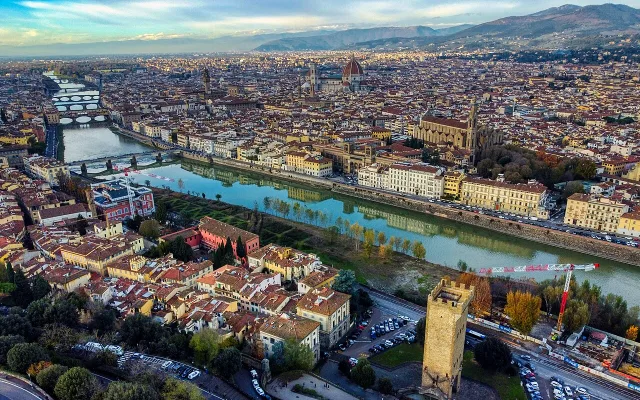
Florence's greatest medieval rival and one of Europe's best-preserved medieval urban landscapes — a city of around 53,000 people in Tuscany. Its historic centre is a UNESCO World Heritage Site. The former Republic of Siena (1125–1555) was the leading financial centre of 13th-century Europe; the Banca Monte dei Paschi di Siena, founded in 1472, is the oldest bank in the world and still operating today. Where Florence is horizontal, Renaissance and stone-grey, Siena is vertical, Gothic and terracotta-red. The unmissable event is the Palio, a medieval horse race run on 2 July and 16 August.
Main sights
- Piazza del Campo — Siena's main square, one of the most beautiful in the world, shaped like a scallop shell. The Palio is run here.
- Palazzo Pubblico — the 14th-century city hall, with the Torre del Mangia tower (88 m, 400 steps).
- Museo Civico — inside the Palazzo Pubblico; the highlights are Ambrogio Lorenzetti's frescoes Allegory of Good and Bad Government (1338).
- Siena Cathedral (Duomo di Siena) — one of Italy's great Gothic cathedrals (13th century), with a black-and-white marble façade and a mosaic floor depicting 56 scenes.
- Museo dell'Opera del Duomo — houses the cathedral's masterworks, including Duccio di Buoninsegna's Maestà (1311).
- Baptistery of San Giovanni — contains a baptismal font with contributions by Jacopo della Quercia, Ghiberti and Donatello.
- Basilica of San Domenico — the city's principal Gothic church, home to a reliquary containing the head of St Catherine, patron saint of Italy.
- House and Sanctuary of St Catherine — the restored birthplace of St Catherine of Siena.
- Palio di Siena (Il Palio) — the famous horse race between Siena's 17 contrade (districts), held on 2 July and 16 August.
- San Gimignano — a UNESCO site 50 km away, the "city of towers" (15 of the original 72 survive); the most popular day trip from Siena.
- Chiusi and Montalcino — towns in the Sienese countryside with wineries producing Brunello di Montalcino.
- Pienza — a UNESCO site 50 km away, an ideal Renaissance planned town.
Food and prices
Sienese cooking centres on pici (thick hand-rolled pasta), pappardelle with wild boar, ribollita, panforte (a dense spiced fruit cake), ricciarelli (almond biscuits), Brunello di Montalcino and Chianti Classico. Lunch at a trattoria runs 14–22 EUR (about $16–25), dinner at a restaurant 25–50 EUR ($29–58). A glass of Brunello costs 6–10 EUR ($7–12), Chianti 4–6 EUR ($5–7). A litre of petrol is around 1.70 EUR ($2), and a local bus ticket 1.50 EUR ($2); taxis run 8–15 EUR ($9–17). Prices are as of 2026.
Getting there and around
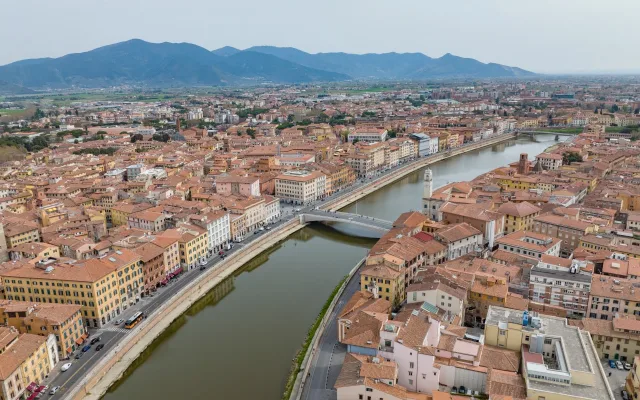
The nearest airports are Florence (FLR, 80 km) and Pisa (PSA, 130 km). SITA buses from Florence take about 1.5 hours and cost 8–10 EUR ($9–12). The train is slower than the bus. Within Siena, everything inside the city walls is walkable; private cars are banned from the centre.
When to go
April to October sees temperatures of 12–30 °C. The Palio on 2 July and 16 August are the defining events of the Sienese year — book accommodation 6–12 months ahead for either race. May and September–October are the sweet spot: warm weather and manageable crowds. Winter (December–March) brings 5–12 °C and rain, but very few tourists.