Description
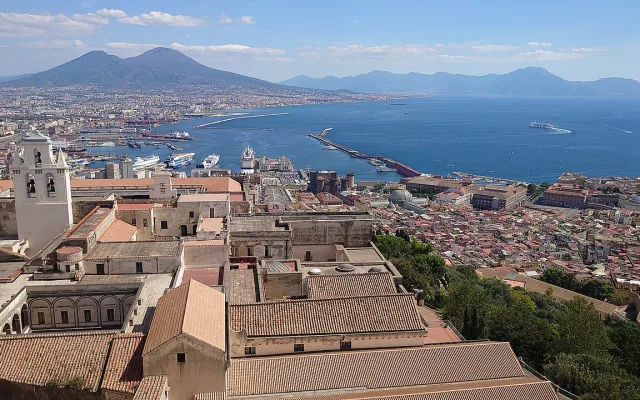
Naples is the Italian city known as the birthplace of pizza. It sits at the foot of Vesuvius, close to Pompeii and to the island of Capri with its famous Blue Grotto.
Wiki
Naples is Italy without the gloss: cramped lanes with washing hung out to dry, the shouting of market traders, scooters on the pavements and the best pizza in the world for five euros. From here it is half an hour to Pompeii, Vesuvius and the ferries to Capri, so the city is most often used as a base — but it is worth a couple of days in its own right.
Getting there and getting around
Capodichino airport is 15 minutes from the centre. The Alibus shuttle runs into town to Garibaldi central station and to the port of Beverello — it is convenient to take it to those end points, since the trains and ferries leave from them.
From Rome, the high-speed train takes about an hour and a half. Tickets are cheaper booked ahead; bought on the day the price is closer to the top of the range.
Within the city:
- On foot — the historic centre is compact and everything important can be walked, but be ready for crowds and climbs.
- The metro — two lines; line 1 doubles as a sight in itself: the Toledo and Universita stations are designed as art installations, and plenty of people ride out specially to see them.
- The funiculars — the simplest way up the Vomero hill to the monastery of San Martino.
- The Circumvesuviana — a battered but indispensable suburban railway to all the key points south of the city. Be especially careful of pickpockets on it.
Where to stay
- Chiaia / Lungomare — calmer, cleaner, with a view over the bay; good for a first visit and for evening walks along the seafront.
- The historic centre (Spaccanapoli) — in the thick of it, maximum atmosphere and maximum noise; choose it for the colour, not for quiet.
- Vomero — a quiet district on the hill, cheaper and greener, but tied to the funicular.
The area around Garibaldi station is best avoided for a bed: handy for transport, but unwelcoming and rather grubby.
What to fit into two days
The logic is simple: one day for Naples itself, the second for a big excursion.
Day 1 — the city. Walk the length of Spaccanapoli, look into the lanes of the Spanish Quarter, and climb up to the Certosa di San Martino for the best panorama of the bay with Vesuvius behind it. If you like artefacts, allow a couple of hours for the National Archaeological Museum: almost everything of value from Pompeii was carried off here, so seeing the excavations without the museum leaves the picture incomplete.
Day 2 — Pompeii plus Vesuvius as a single pairing: first the excavations (allow at least 2–3 hours, bring water and a hat, there is little shade), then the bus up to the crater of the volcano. Alternatively, give the whole day to Capri or the Amalfi Coast.
Pompeii, Vesuvius, Capri
- Pompeii — 30 minutes on the Circumvesuviana. These are not "ruins" but a whole city frozen in time: mark out what you want to see beforehand, or you will lose your bearings.
- Vesuvius — by bus from Pompeii; the last stretch to the crater is on foot up a loose gravel path, so proper shoes are needed. In bad weather the summit is closed — check conditions.
- Capri — ferry from Beverello. The Blue Grotto only operates when the sea is calm and closes early, so do not build the whole day around it; the island itself, with its villas and clifftop paths, is fine without the grotto.
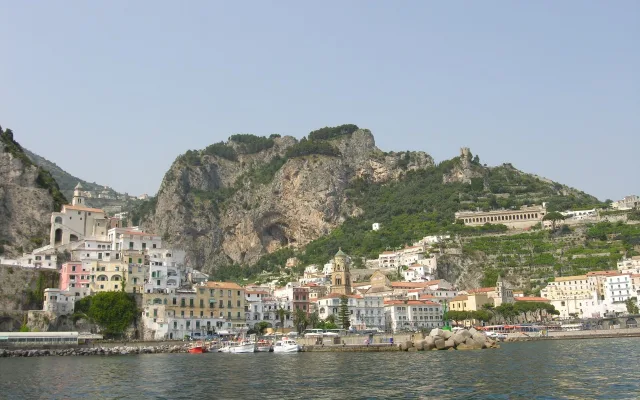
- Amalfi — beautiful, but the hairpin road is slow; in a single day you can realistically take in only one or two towns, so do not try to see everything.
Pizza and food
Neapolitan pizza is thin in the middle with a thick, charred rim, and locals eat it folded in half. The classics are the Margherita and the Marinara. The famous pizzerias in the centre draw queues; if you would rather not stand, there are dozens of less publicised places nearby that are just as good.
Beyond pizza, it is worth trying:
- Coffee — strong and served small; drunk standing at the bar, which is cheaper.
- Sfogliatella — a flaky pastry with ricotta, the perfect breakfast.
- Street fry-ups (cuoppo) — a paper cone of fried seafood or vegetables.
Eating in Naples is noticeably cheaper than in the north of Italy: you can eat well for very little, especially in the neighbourhood trattorias away from the tourist streets.
Safety and typical mistakes
Naples is safer than its reputation, but petty theft is real. Things to keep in mind:
- Keep your phone and bag under control in crowds, on the metro and above all on the Circumvesuviana.
- Cross the road decisively — scooters do not give way, but they steer predictably around anyone walking at a steady pace.
- Do not try to cram Pompeii, Vesuvius and Capri into one day; you get a race rather than an experience.
- Do not take a room by the station to save money, and do not judge the city by its dirty streets: behind the chaos hides one of the most alive versions of Italy there is.