Description
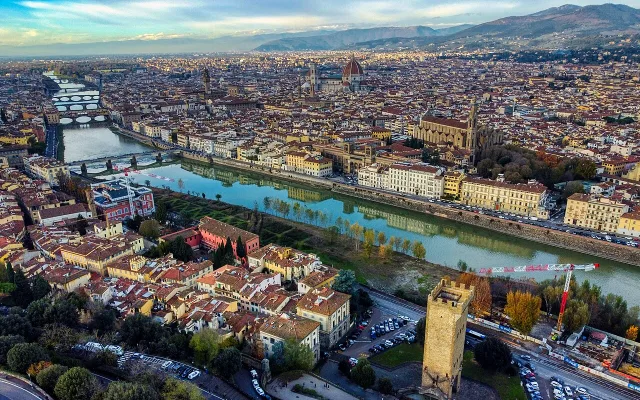
Florence is a city in Italy known as the cradle of the Renaissance. It is home to the Uffizi, the cathedral of Santa Maria del Fiore and the Ponte Vecchio.
Wiki
Florence is the capital of Tuscany in north-central Italy, spread across the valley of the Arno at the foot of the Apennines. This city of some 360,000 people was the cradle of the Renaissance: here Botticelli painted his "Venus", the young Leonardo trained, and the powerful Medici dynasty shaped the course of European history, culture and banking for centuries. The compact historic centre is on the UNESCO World Heritage list and can be covered almost entirely on foot.
A little history
Founded by the Romans in 59 BC as the veterans' colony of Florentia, Florence flourished in the Middle Ages on cloth-making and banking. In the 13th and 14th centuries it minted the florin, a gold coin that became the European standard. The real ascent came in the 15th century, when the Medici family, enriched by finance, turned into patrons of the arts. Cosimo the Elder and Lorenzo the Magnificent gathered painters, sculptors and humanists around them, and later the family gave the Catholic church several popes and France two queens. It was this environment that produced the Florentine miracle — a synthesis of classical inheritance, science and unprecedented artistic freedom.
Main sights
- The Uffizi Gallery — one of the greatest collections of Renaissance art. Besides Botticelli's "Primavera" and "Birth of Venus" and Leonardo's "Annunciation", it holds works by Giotto, Michelangelo, Raphael, Titian and Caravaggio. The building was put up in the 16th century by Giorgio Vasari as the offices (uffizi) of the duchy's administration. Tickets are about €20 and worth booking in advance.
- Michelangelo's "David" — the marble masterpiece of 1504 in the Galleria dell'Accademia. A copy stands on Piazza della Signoria, on the original's historic spot.
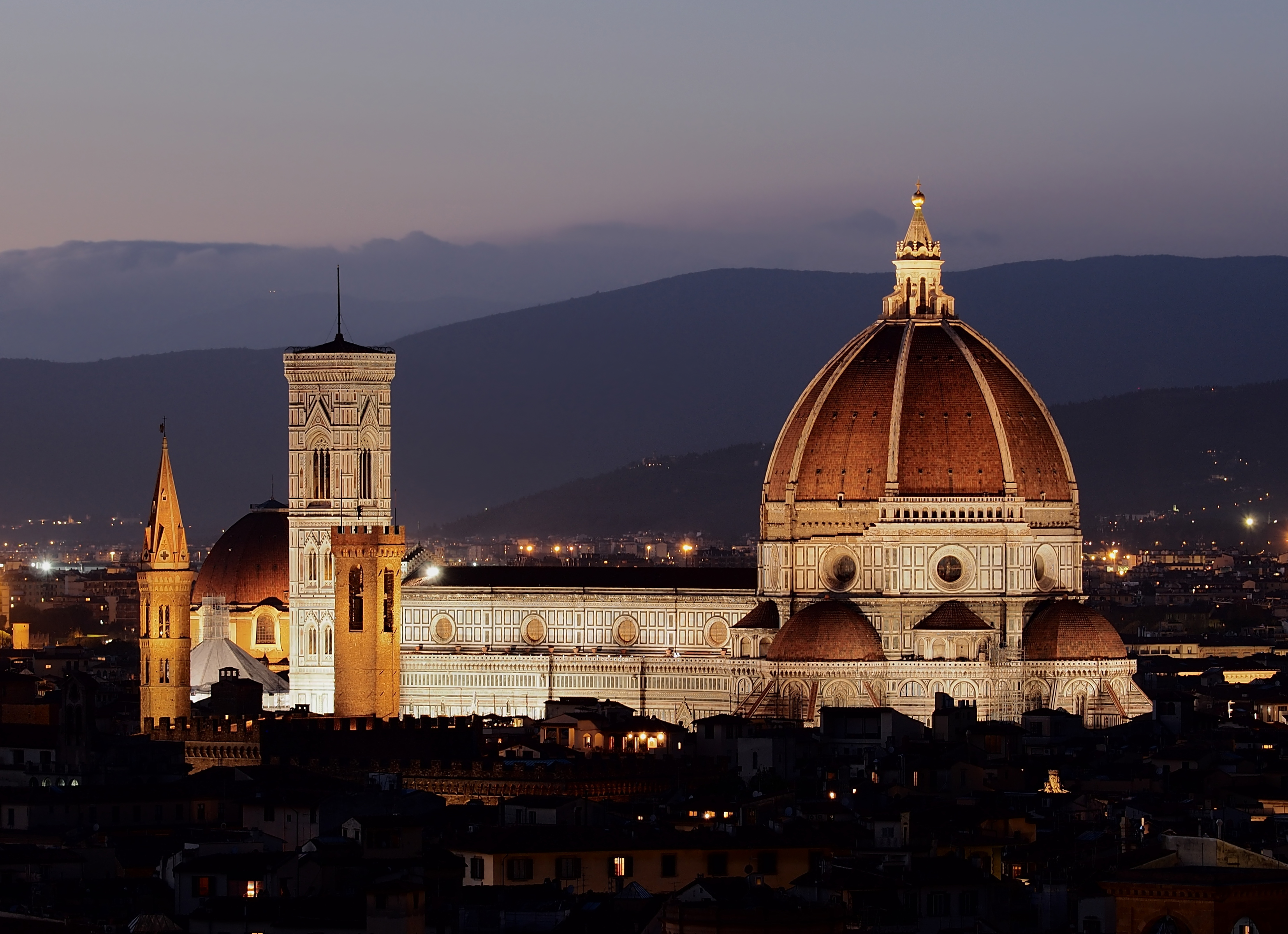
- The cathedral of Santa Maria del Fiore — the duomo with Filippo Brunelleschi's enormous dome, an engineering triumph of the 15th century. The climb to the lantern (some 463 steps) opens a view over the city. Beside it stand Giotto's bell tower and the octagonal Baptistery of St John with Ghiberti's gilded "Gates of Paradise". The facades are faced in white, green and pink marble.
- The Ponte Vecchio — the oldest bridge in Florence, built over with shops that jewellers have occupied since the 16th century. The Vasari Corridor runs along the top, the Medici's secret passage from the palace to the gallery.
- The Palazzo Vecchio — the medieval town hall with the Arnolfo tower, still the seat of the city government, with its magnificent Hall of the Five Hundred.
- The Pitti Palace and the Boboli Gardens — the Medici residence on the left bank, with terraces, grottoes and art galleries.
- Piazzale Michelangelo — a panoramic terrace above the Arno; it is at its best at sunset, when the tiled roofs and the cathedral dome turn to gold.
Districts
The heart of the city lies around the Duomo and Piazza della Signoria, where the museums and palazzi are concentrated. Across the river is the Oltrarno, a quarter of craftsmen, antique dealers and restorers, quieter and more residential; here stands Brunelleschi's basilica of Santo Spirito. At the church of Santa Croce, the pantheon of Florence, lie Michelangelo, Galileo and Machiavelli. The San Lorenzo district is known for its market, the Medici chapels and the Laurentian Library.
Food
Tuscan cooking is simple and built on the quality of its ingredients. Its emblem is the bistecca alla fiorentina, a thick T-bone steak of Chianina beef weighing a kilogram or more, grilled over coals and served rare. It is worth trying ribollita, a thick soup of bread, beans and vegetables, pappa al pomodoro, and the street classic lampredotto, a sandwich of beef tripe. Bread here is traditionally baked without salt. It all goes down with red Chianti from the surrounding hills. For gelato head to tried and tested gelaterie such as Vivoli and Gelateria dei Neri. A modest lunch costs from about €11 (around $13). Prices are as of 2026.
Practical advice
Florence is small: it is a ten-minute stroll from the cathedral to the Ponte Vecchio, and most places can be reached on foot. Three days are enough to see the essentials: devote the first day to the Duomo and the Uffizi, the second to the Accademia, San Lorenzo and the left bank, the third to Santa Croce, the Pitti Palace and sunset at Piazzale Michelangelo. Tickets for the Uffizi and the Accademia are best bought online a couple of weeks ahead — the queues without a booking are enormous. Avoid August with its heat and crush of tourists; the pleasantest time is April to June and September to October, when it is warm but not stifling. Amerigo Vespucci airport is linked to the centre by tram, and trains from Santa Maria Novella station run quickly to Pisa, Siena and Rome.
Photos