Description
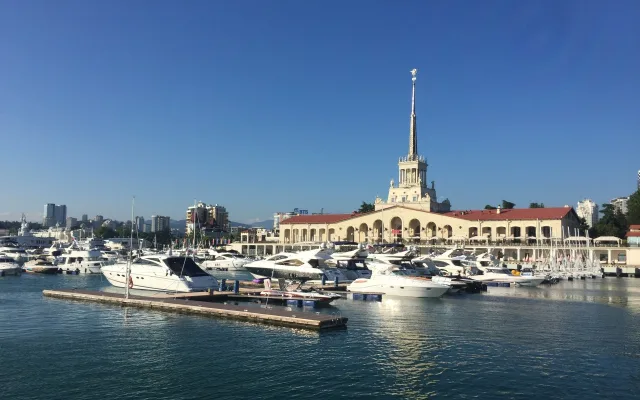
Russia's main resort — a subtropical climate, the ski runs of Krasnaya Polyana and the Black Sea coast.
Wiki
Sochi is Russia's largest resort city, stretching almost 145 kilometres along the Black Sea coast of the Caucasus. What makes it unusual is that humid subtropics with palms and magnolias sit alongside high mountains and snowy peaks in one place, making Sochi both a summer beach and a winter ski destination.
Geography and climate
The city lies in Krasnodar Krai, on a narrow strip between the sea and the Main Caucasus Range. Administratively Greater Sochi divides into four districts: Tsentralny, Khostinsky, Adlersky and Lazarevsky — the last running for tens of kilometres along the coast. The climate is humid subtropical: mild winters averaging around +6…+8 °C and hot summers. The swimming season lasts from late May to October, with water reaching +24…+26 °C at the height of summer. Yet 40 km from the shore, in the mountains at Krasnaya Polyana, snow cover holds from December to April — a rare combination that lets you swim in the sea and ski on the same day.
History
The territory was annexed by Russia during the Caucasian War in the mid-nineteenth century; Fort Alexandria, founded in 1838, is taken as the start of the city's history. Resort development began around the turn of the twentieth century with the first sanatoria and the Riviera park. The real flourishing came in the Soviet 1930s, when a master plan turned Sochi into a national health resort: monumental sanatoria in the Stalinist Empire style, the Winter Theatre and grand resort avenues appeared. A second wave of modernisation came with the 2014 Winter Olympics, which completely reshaped Adler and Krasnaya Polyana.
What to see
Beyond the Olympic legacy and the mountain resorts, the city is rich in natural and historic sites:
- The 33 Waterfalls — a cascade in the valley of the Shakhe river in Lazarevsky district, a popular excursion among boxwood forests.
- The Agura waterfalls and Eagle Rocks — a route through the scenic gorge of the Agura river beside Mount Akhun.
- The Vorontsov Caves — a large karst system with underground halls and galleries.
- The yew and boxwood grove — a relict forest in Khosta, part of the Caucasian Biosphere Reserve, where ancient tree species survive.
- Matsesta — the historic balneological complex with hydrogen sulphide springs that gave the resort its medical character.
- The Church of Michael the Archangel — the oldest Orthodox church on the Black Sea coast.
Food
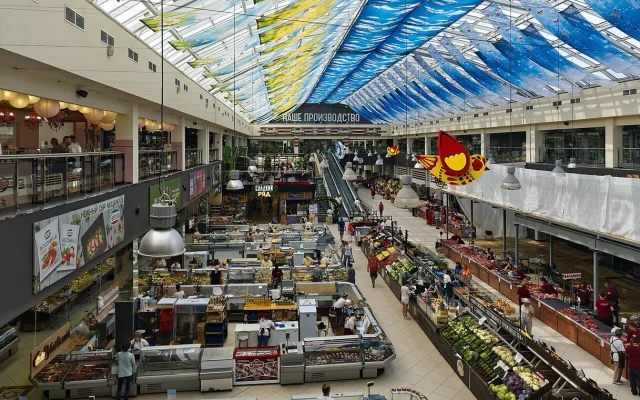
Sochi's cooking draws on both Caucasian and Black Sea traditions. Cafés and markets offer shashlik, Adjarian khachapuri, khinkali, homemade suluguni cheese, churchkhela and fruit pastila. The region is known for its own tea — Krasnodar tea is grown on plantations near Dagomys, the northernmost tea estates in the world. Mountain honey, feijoa, mandarins and local wines round out the table.
Practical information
Flying is easiest: the international airport is in Adler, with Lastochka trains and buses to the centre. Rail links Sochi with Moscow and other cities; fast trains are convenient along the coast and up into the mountains. Distances within Greater Sochi are considerable, so allow time for travel between districts.
A five-day route
- Day 1. Central Sochi: the Marine Terminal, Riviera park, Kurortny Prospekt, the Arboretum and the Winter Theatre.
- Day 2. Khosta: Mount Akhun with its viewing tower, the SkyBridge and the Agura waterfalls.
- Day 3. Krasnaya Polyana: the Rosa Khutor cable cars up to the high country, and walks along the Mzymta embankment.
- Day 4. Adler: the Olympic Park, the Fisht stadium, the Formula 1 circuit and time on the beach.
- Day 5. Nature: an excursion to the 33 Waterfalls, the Vorontsov Caves or the yew and boxwood grove.
The best time for the beach is June to September, and for skiing January to March. The shoulder seasons suit spa treatment and unhurried walks without the summer crowds.