Description
The capital of north-eastern Rus in the pre-Mongol era, with three UNESCO World Heritage sites. The Dormition Cathedral, the Cathedral of St Demetrius and the Golden Gate are masterpieces of 12th-century white-stone architecture.
Wiki
Vladimir is a rare case where everything important in the city fits into a single walking route a couple of kilometres long, and the city itself sits on the convenient Moscow–Nizhny Novgorod railway axis. You can genuinely arrive on a morning Lastochka (a fast regional express), see three 12th-century monuments and return in the evening, but the city opens up noticeably better over one night — especially if you use Vladimir as a base for Suzdal and Bogolyubovo.
What to see, and is it worth it
The three UNESCO-listed sites stand along one street (Bolshaya Moskovskaya) and its continuation. All three belong to the white-stone architecture of Vladimir-Suzdal Rus, a 12th-century tradition of building in dressed limestone blocks covered with relief carving:
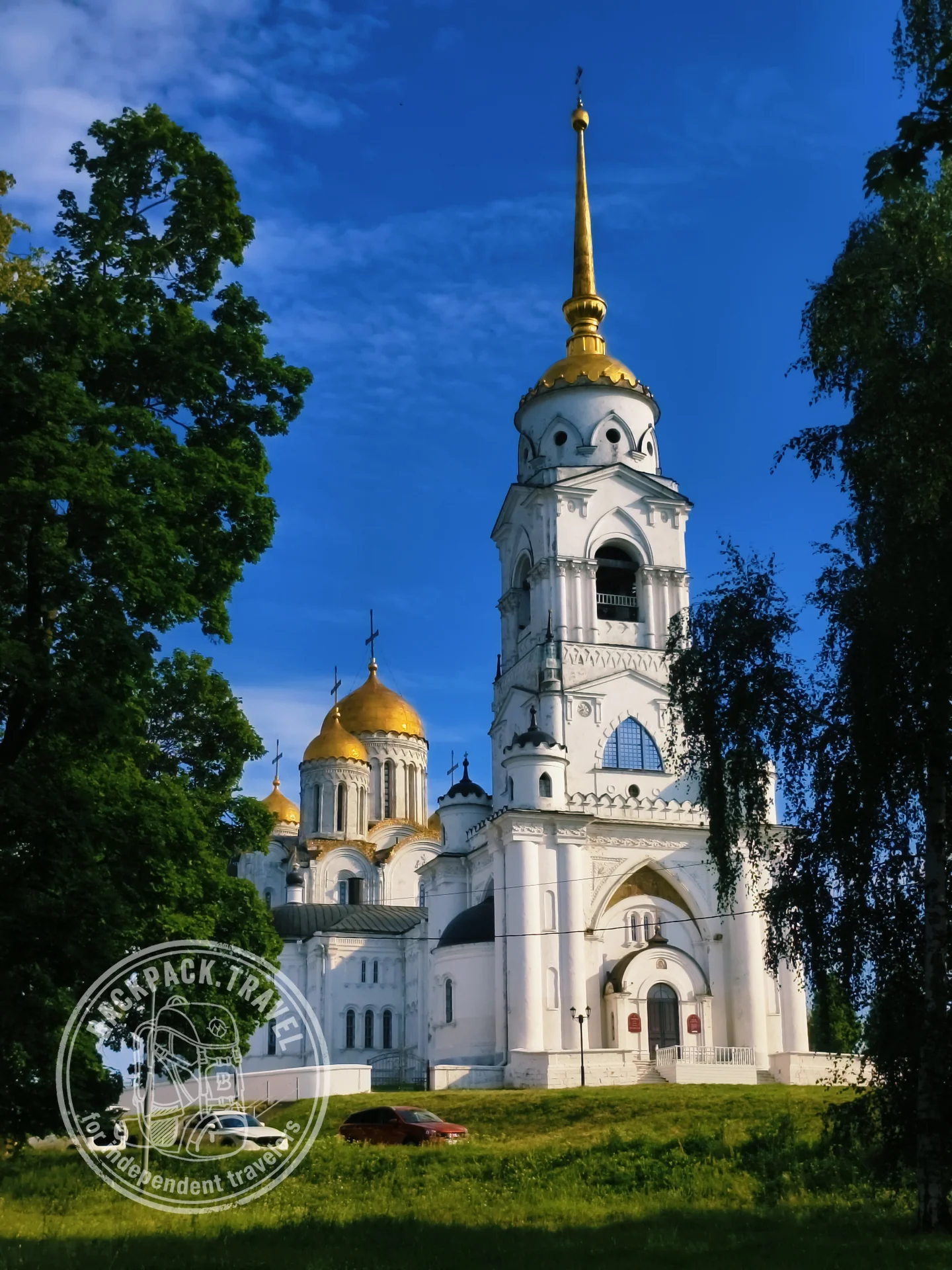
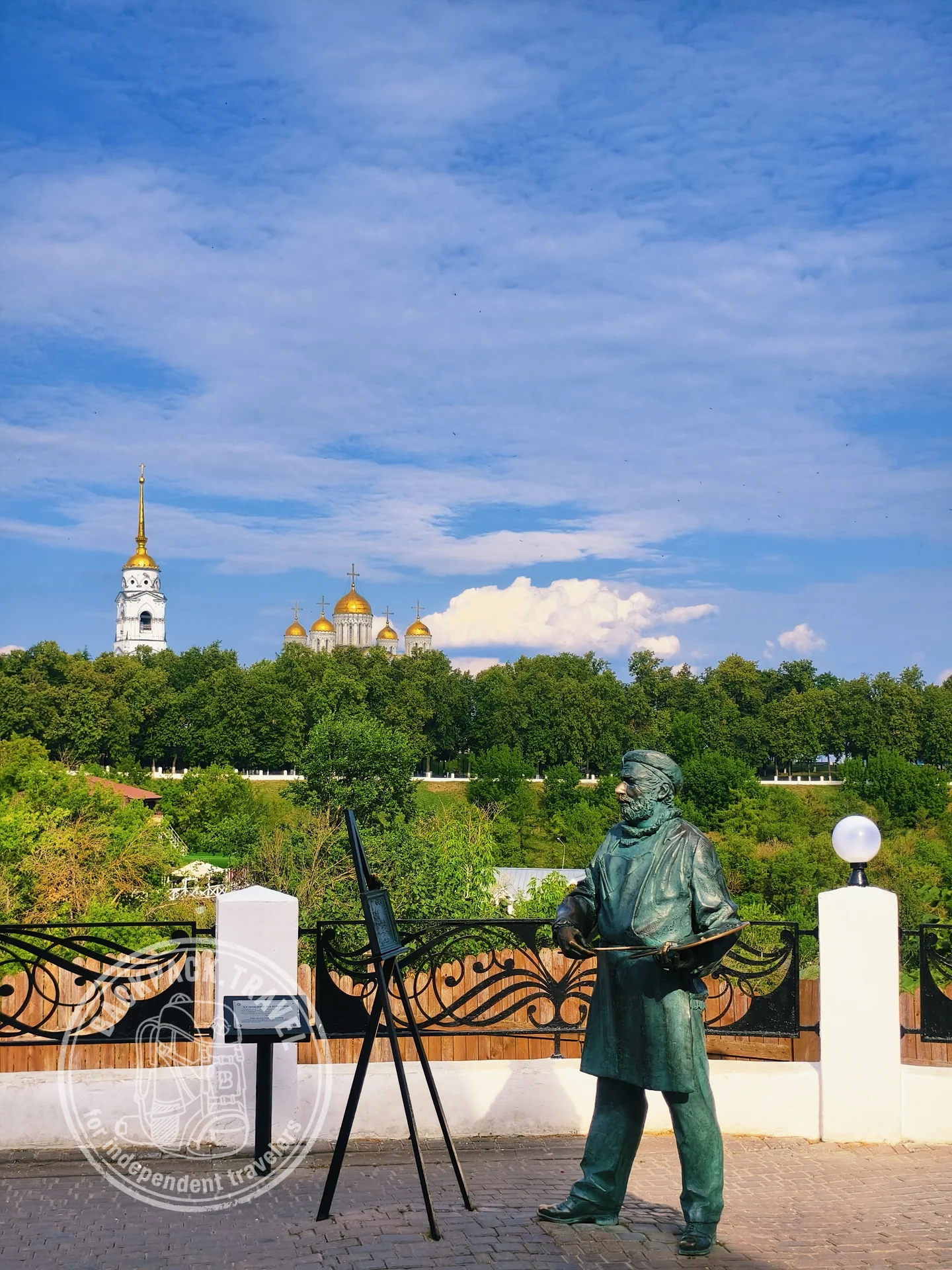
- The Dormition Cathedral — the main one. Built as the cathedral church of north-eastern Rus, it served as the model for the Dormition Cathedral of the Moscow Kremlin. Inside are fragments of frescoes by Andrei Rublev, the greatest Russian icon painter: this is not merely "one of the sights" but one of the few of his works surviving in its original setting. Going inside is essential; from outside the impression is incomplete. The cathedral is in active use, viewing hours are limited and it closes for services — check the schedule locally.
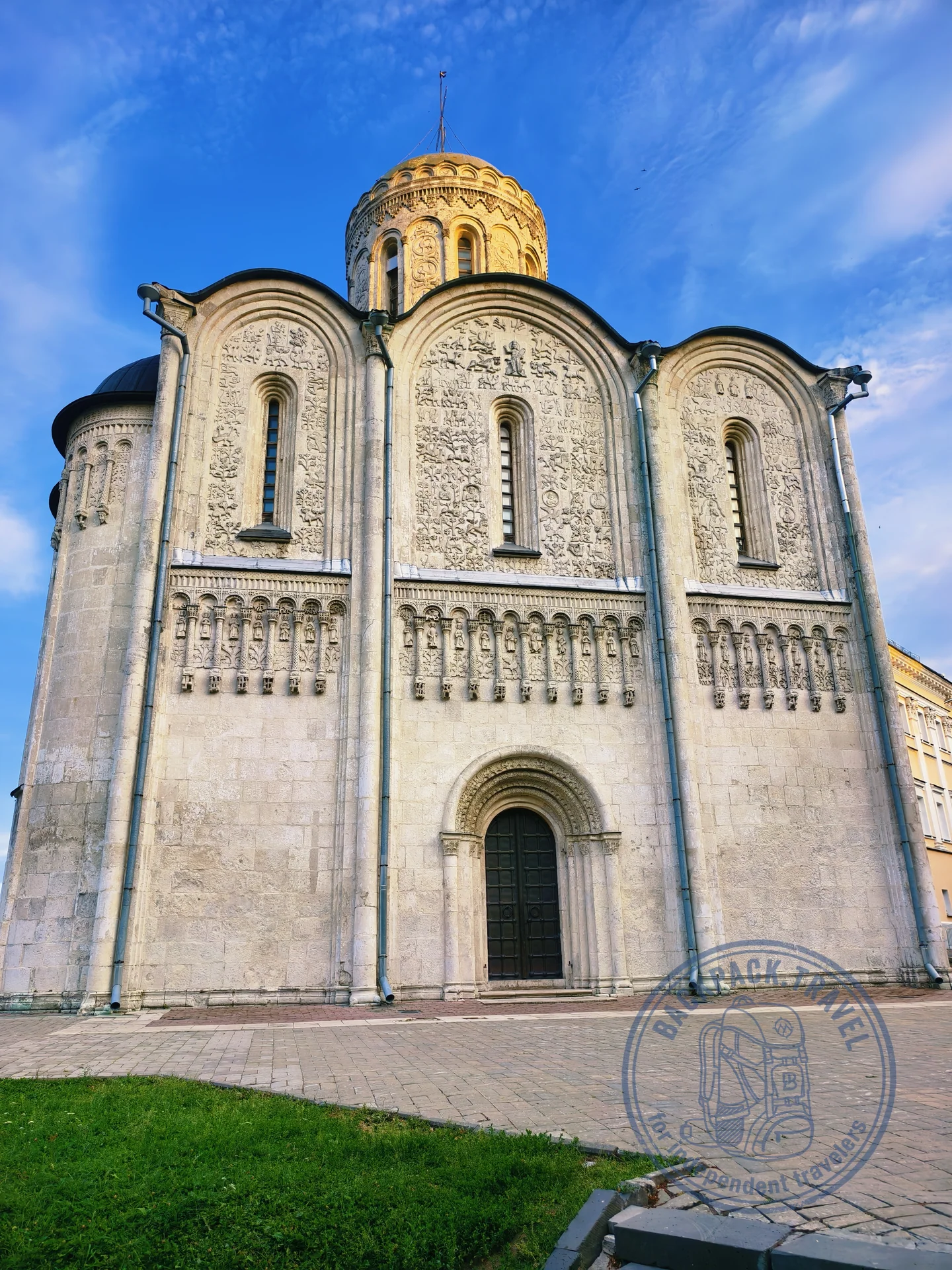
- The Cathedral of St Demetrius — two minutes' walk away. Small and single-domed, its whole upper section covered in white-stone carving: beasts, horsemen, plant ornament. The carving is exactly what people come for; allow time to walk right round the building and study the walls rather than just to tick it off.
- The Golden Gate — the only surviving pre-Mongol city gate in Rus. It now stands in the middle of a traffic circle, with a small display inside. Seeing it takes little time; the main value is in understanding that this was the boundary of the ancient city.
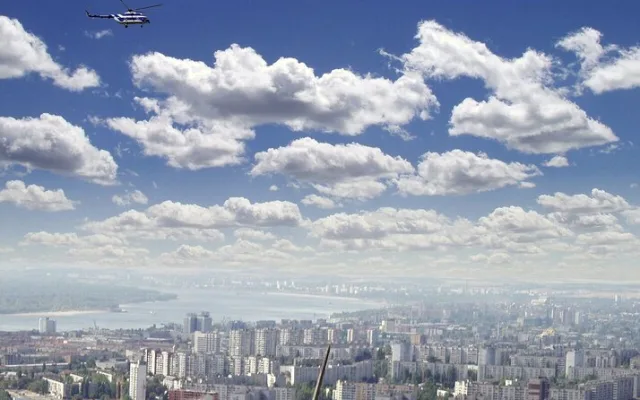
In addition: the viewing platforms behind the Dormition Cathedral, which look out over the flood plain of the Klyazma River, one of the finest lowland views in European Russia. The water tower (the "Old Vladimir" museum), the Patriarch's Gardens and Georgievskaya Street with its souvenir shops and panorama are pleasant but secondary.
How many days to allow
- One day — enough for the three churches, the viewpoints and a walk round the centre.
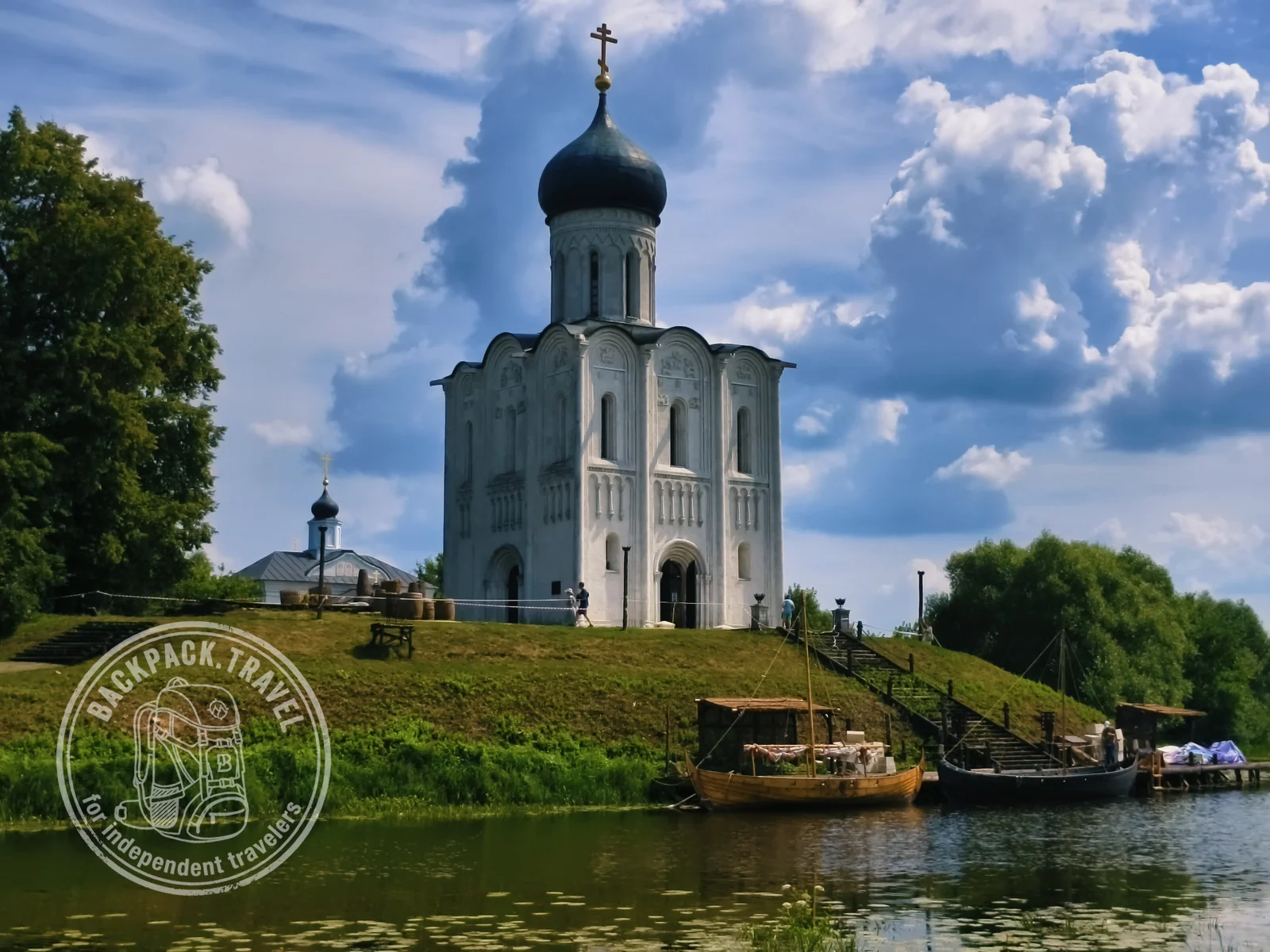
- Two days — Vladimir plus Bogolyubovo (the Church of the Intercession on the Nerl — the famous one standing alone in a meadow by the river; it is a 20–30 minute walk from the station across the field, which can be wet in rain and at high water) and the chambers of Prince Andrei Bogolyubsky.
- Three days — add Suzdal, about an hour from Vladimir by bus. Suzdal is dearer for accommodation, so sleeping in Vladimir and going over for the day is a workable way to economise.
Getting there and getting around
From Moscow there are fast trains from Kursky station taking under two hours; this is the quickest and most predictable option, cheaper than flying and more reliable than the bus. Ordinary long-distance trains take longer but are sometimes cheaper. Buses from the Moscow bus stations are the fallback and depend on traffic on the M-7 highway.
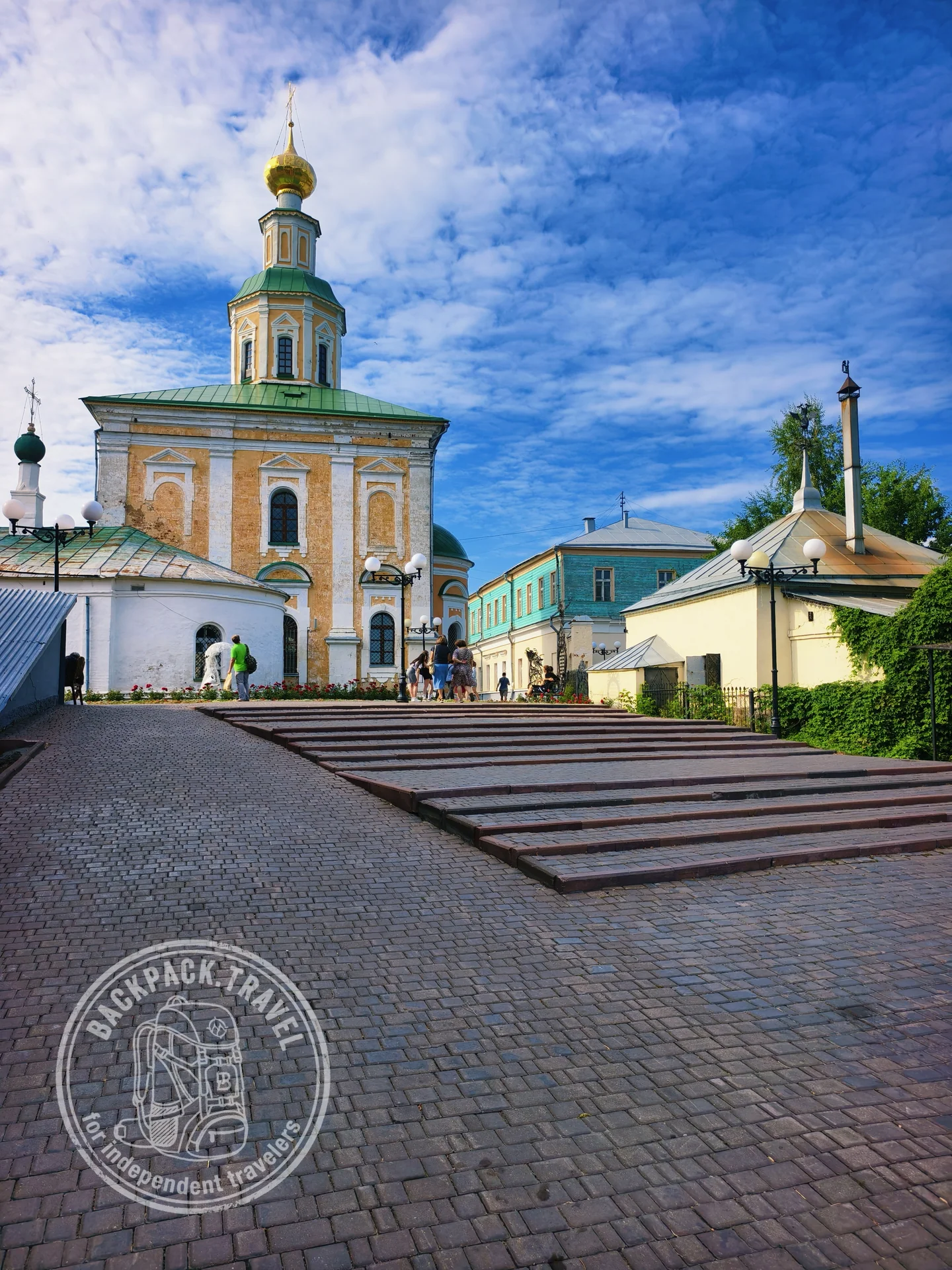
The railway and bus stations stand next to each other at the foot of the central hill. From there it is a 10–15 minute walk up steps and streets to Cathedral Square; with a wheeled suitcase the climb is noticeable, so it is better to take a taxi, which is inexpensive.
Within the city you barely need transport: the whole historic centre can be walked. Buses and trolleybuses are only useful for reaching the outlying districts or the station. For Bogolyubovo take a suburban bus or local train (one stop); for Suzdal, buses from the bus station run regularly through the day.
Where to stay
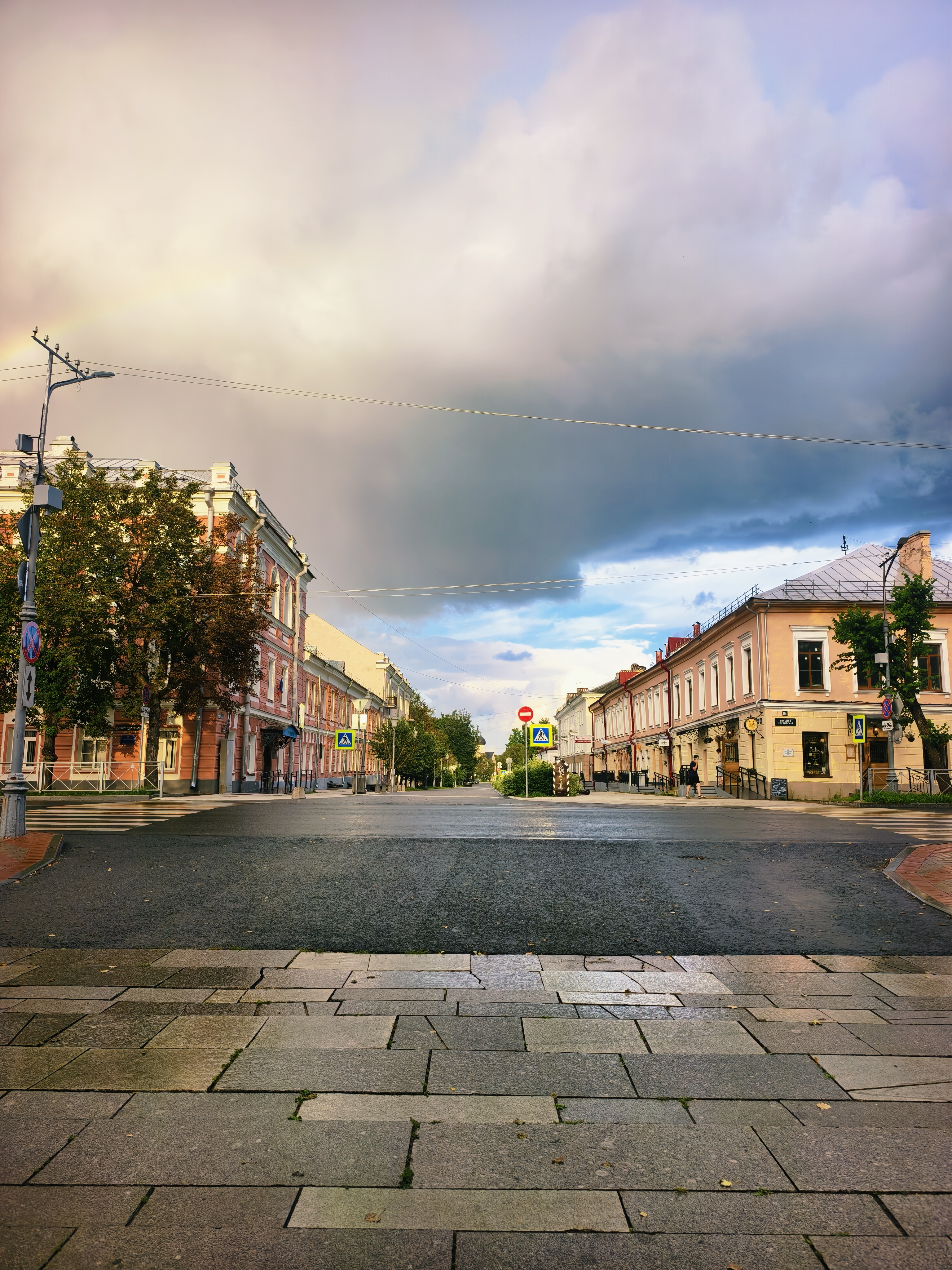
Aim for the area between the Golden Gate and Cathedral Square, that is Bolshaya Moskovskaya and the adjoining streets. Everything is within walking distance from there, and in the evening the centre is lit and quiet. Accommodation by the station is cheaper, but every outing will start with a climb uphill. The residential districts (Dobroye, Yugo-Zapad) save a little and cost time — not justified in a city of this size.
When to go
- May to early June, and September — the optimum: warm, green or golden, without the summer weekend crowds.
- July–August — hot and busy, especially at weekends when coach parties from Moscow are added.
- Winter — the white-stone cathedrals look striking against snow, but the daylight is short: plan your sightseeing for the light hours.
- In any season: avoid weekends and public holidays unless you like queues — Vladimir and Suzdal take the main flow from the capital at those times.
Food and money
Prices are noticeably lower than in Moscow, which is the city's main practical advantage. There are plenty of cafés with local cooking in the centre; look for places on the side streets rather than right by the Golden Gate, where there is a premium for the view. Among local specialities try medovukha honey mead (more associated with Suzdal, but sold everywhere) and river fish dishes. Soviet-style canteens survive in the city and remain the cheapest way to eat well.
Ways to save: do Suzdal as a day trip from Vladimir; buy a combined ticket to the museums of the Vladimir-Suzdal museum reserve if you plan more than two displays; walk rather than take taxis.
Safety and common mistakes
The city is calm with no particular crime issues; ordinary urban caution in the evening is enough. The real risks are practical: slippery steps and slopes in winter, broken pavements on the outskirts.
What not to do:
- Do not plan Vladimir and Suzdal for the same day — you will get a hurried look at both and a proper impression of neither.
- Do not arrive without spare time for the Dormition Cathedral — it may be closed for a service, and on a day trip there will be no second chance.
- Do not treat the Golden Gate as the main event — the strongest impressions come from the Dormition Cathedral with its Rublev frescoes and from the carving of St Demetrius.
- Do not neglect your footwear — the centre sits on hills and you cover a fair amount of ascent in a day.
- Do not leave the Church of the Intercession on the Nerl to "if there's time" — for many people it turns out to be the strongest impression of the whole trip, and you have to reach it on foot across the meadow.