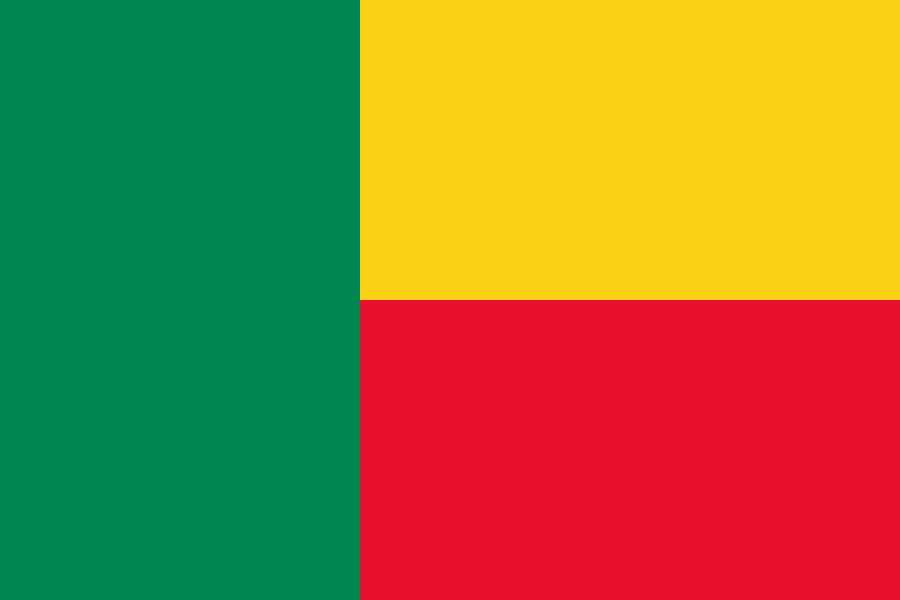
Where to go #
Cotonou
The largest city and the country's main gateway, with the international airport. Visit the vast Dantokpa market and the Zinsou Foundation art centre. It is a loud hub, ideal for starting a route, changing money and buying a SIM card.
Porto-Novo
The official capital feels far calmer and quieter than the economic centre. The interest here is the Afro-Brazilian architecture and the Great Mosque. Half a day is enough for the Honme Royal Palace and a sense of the colonial past.
Ouidah
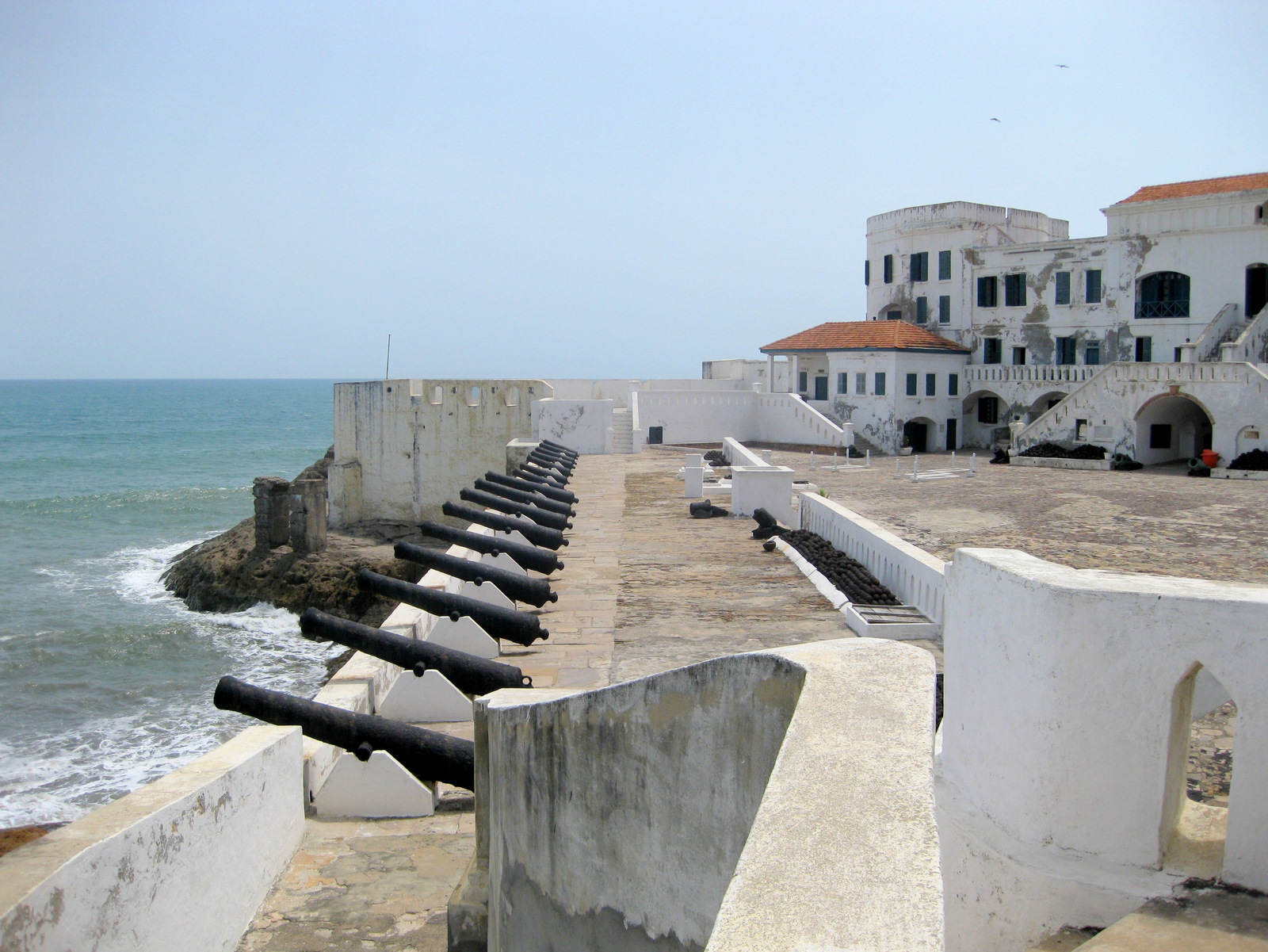
The spiritual heart of the country and the main centre of vodun on the Atlantic coast. The town is saturated with the heavy history of the slave trade, which ends at a memorial by the ocean. It also holds the famous Python Temple and the sacred forests where rites are still performed.
Abomey
The ancient capital of the Dahomey kingdom, still carrying the spirit of its warrior rulers. The draw is the mud-walled royal palaces with their symbolic bas-reliefs. Essential for anyone wanting to understand where Beninese statehood came from.
Ganvie
A unique stilt settlement in the middle of Lake Nokoue, often called the African Venice. The Tofinu people have lived on the water for centuries, moving only by canoe. Come at dawn to catch the floating market at its busiest.
What to see #
What to see: in Ouidah, walk the four-kilometre Slave Route to the Door of No Return on the ocean shore. It is a heavy place and an important one, and it makes the scale of the regional tragedy legible.
Where to go: take a boat to Ganvie to see how thousands of people have lived in houses on stilts for centuries. Lake Nokoue is at its best at sunrise, when the floating market fills with hundreds of canoes.
If you only have a day: head to Abomey and the mud palaces of ancient Dahomey. You can see the kings' thrones and hear the stories of the fearless women warriors of the Agojie regiment.
Wildlife: elephants and rare lions mean going north to Pendjari National Park. That direction currently carries real risk, so check the security situation before committing to the trip.
Mysticism: at the Python Temple in Ouidah you can hold live snakes, which are regarded as sacred spirits. It is a working place of worship where rituals happen in front of visitors.
The forgotten coast: for a quiet few days pick Grand-Popo, with its black sand and thick mangroves. A boat trip through the Mono river delta is the best possible antidote to the chaos of the capital.
Prices #
Currency: the West African CFA franc is fixed against the euro. Bring cash euros or dollars, and make sure the notes are new and undamaged, because worn bills are refused.
Cards: this is a cash economy. Foreign cards are accepted only at a couple of hotels in Cotonou, and ATMs frequently return errors, so never plan a day around finding a working machine.
Exchange: banks and official offices are the safest, though market rates are sometimes better. Count the money before you walk away and ask for plenty of small notes for change.
Tipping: not expected in maquis restaurants or taxis, but around five to ten percent is normal in proper restaurants. A small gift is also welcome after a visit to a vodun shrine.
Haggling: expected everywhere except supermarkets and pharmacies. Halve the opening price on souvenirs and taxi rides, but do it with a smile and no edge in your voice.
| Item | Price (USD) |
|---|---|
| Lunch in a maquis | 3.50 |
| Beer in a bar | 1.80 |
| Bottle of water | 0.60 |
| Zemidjan ride | 0.50 |
| Taxi across town | 5.00 |
| Guesthouse night | 25.00 |
| Cotonou hotel | 85.00 |
| Museum ticket | 8.00 |
| Ganvie excursion | 20.00 |
| SIM card with data | 6.00 |
| Kilo of mangoes | 1.20 |
| Fried plantain alloko | 1.00 |
| Dinner for two | 15.00 |
| Local soap | 1.50 |
| Vodun mask | 30.00 |
Getting around #
Getting there. Cotonou is served from Paris, Brussels, Istanbul, Casablanca and Addis Ababa, which covers most routings from Europe and North America with one stop. Fares are highest around the January vodun festival and the Christmas period, so book those dates months ahead.
Zemidjans. The motorbike taxis in yellow shirts are the quickest way through choked streets. Agree the price before you sit down, and ask the rider to take it slowly.
Buses. For intercity trips such as Cotonou to Parakou, choose one of the large companies with fixed departures. They are more comfortable and far more reliable than the informal minibuses at the stations.
Bush taxis. The shared cars fill to bursting and leave only when every seat is taken. Cheap but slow and cramped; hiring the whole car saves hours.
Boats. In Ganvie and along the Mono river you travel in dugout pirogues, motorised or paddled. Check for life jackets and settle the price on the bank before boarding.
Car hire. Cars are normally taken with a local driver because of the traffic. Driving yourself becomes an ordeal given the state of provincial roads and the number of checkpoints.
Domestic flights. To reach northern regions such as Natitingou quickly, internal flights save you a couple of days of hard road travel.
Where to stay #
What exists. Accommodation is mostly small guesthouses and privately run hotels. In the cities you find them through the aggregators, while in the provinces you often negotiate on arrival.
Cotonou districts. Stay in Haie Vive, which has cafes and is comfortable to walk in the evening. It is popular with expats, so service and comfort run above the city average.
Check the room. Confirm there are mosquito screens on the windows and a net over the bed, which is basic malaria protection. Ask too whether the building has its own generator for power cuts.
Missions. Catholic missions and church guesthouses often let rooms to travellers for a token sum. They are reliably clean and a solid budget option.
Ganvie. A couple of lodges stand right on the water, and staying overnight is worth it. The silence once the day-trippers leave, and dawn over the lake, are worth the reduced comfort.
Booking. For the December to February high season, reserve ahead, especially in Ouidah. Around the vodun festival, decent rooms sell out a couple of months in advance.
Language. Hotel staff work in French, and English is rare outside the top end, so write your booking details down and use a translation app at check-in.
What to eat #
Maquis. These small open-air eateries serve the freshest and tastiest local food for very little. Pick one with plastic chairs and heavy foot traffic; a busy kitchen is a safe kitchen.
Pate. Thick maize or cassava porridge is the base of nearly every meal. It arrives with fiercely hot sauces built on peanut, tomato or greens, plus a piece of fish or chicken.
Cheese. Wagasi, unique to the region, is made from cow's milk and fried in oil. Mild in flavour with a red crust, sold in markets and cooked into thick vegetable stews.
Snacks. Alloko, fried plantain, is on every corner and makes the perfect street dessert. Try akassa too, sour flatbreads of fermented dough that fill you up properly.
Drinks. The local La Beninoise beer is perfectly decent, and in the north the home-brewed millet chukutu is popular. Be careful with sodabi, a powerful palm-wine spirit poured at celebrations.
Water. Drink bottled only and check the seal when you buy. Avoid ice in drinks and unwashed fruit unless you want to spend the holiday near a bathroom.
Vegetarians. Sauces are often built on fish stock even when no fish is visible, so ask directly rather than assuming a vegetable dish is meat-free.
Safety #
The north. Do not travel to the northern districts bordering Burkina Faso and Niger. The kidnapping threat and armed group activity there are real, so keep your route in the south.
After dark. Avoid walking on Cotonou's beaches or empty streets once the sun is down. Robbery is uncommon, but the risk climbs sharply at night and away from the centre.
Roads. Statistically the biggest danger is a motorbike taxi crash, and they happen constantly. Insist on a moderate speed and change rider without embarrassment if yours drives wildly.
Scams. In markets and stations watch for pickpockets and decline the services of self-appointed guides. Count your change immediately and keep valuables in a belt under your clothing.
Health. Malaria is present throughout, so prophylaxis and repellent are genuinely essential. Carry insurance with strong coverage and the contact details of the nearest clinic.
Photography. Never photograph military sites, ports, airports or police. It leads to serious trouble with the authorities, up to detention and a long conversation.
Advisories. Check your own government's travel advice before booking, since the security picture in the north changes and affects insurance validity.
Etiquette and culture #
Vodun. Take the local faith seriously; it is a state religion, not a tourist attraction. In shrines keep quiet, do not touch fetishes and always ask before photographing.
Greetings. The convention is a long exchange of greetings and enquiries about your health before any business. A right-handed handshake and a smile open a great many doors.
Photographing people. Many Beninese believe a camera takes something from them, or simply expect payment. Agree the picture in advance to avoid a confrontation afterwards.
Dress. The country is conservative, especially in the north and in villages, so keep shoulders and knees covered. Revealing clothing belongs on the beach and nowhere near a shrine.
Etiquette. Pass objects and food with the right hand only, since the left is considered unclean. Invited into a home, take your shoes off and praise the food even when it removes the roof of your mouth.
Festivals. The year's big event is the vodun festival on 10 January, celebrated on a huge scale in Ouidah. Masks, dancing and ritual draw thousands of pilgrims from around the world.
Connectivity #
Languages. French is official and used in hotels, shops and transport. A couple of phrases in Fon or Yoruba in the south wins people over immediately and helps you haggle.
English. Barely spoken outside tourist sites and upmarket hotels, so an offline translator earns its place. Download the French language pack before you land.
Networks. MTN and Moov Africa give the best coverage and stable 4G, with offices everywhere. Bring your passport to buy a SIM or the number gets blocked within a day.
eSIM. If your phone supports it, a package from Airalo or a similar provider gets you online the moment you land at Cotonou. It costs more than a local plan but saves the queue.
WhatsApp. Guides, hotels and drivers all use it. It is the main communication channel in the country and how you book boats in Ganvie or arrange a private tour.
Wi-Fi. Hotel internet is often slow and dies along with the electricity. Mobile data from MTN is far more dependable, so lean on the local network instead.
Phrasebook #
| English | French | Pronunciation |
|---|---|---|
| Good day | Bonjour | bon-ZHOOR |
| Good evening | Bonsoir | bon-SWAR |
| Thank you | Merci | mer-SEE |
| Please | S'il vous plaît | seel voo PLEH |
| Yes / No | Oui / Non | wee / nohn |
| How much is it? | C'est combien? | say kom-BYAN? |
| That's too expensive | C'est trop cher | say tro SHER |
| Where are the toilets? | Où sont les toilettes? | oo son lay twa-LET? |
| I don't understand | Je ne comprends pas | zhuh nuh kom-PRON pa |
| Help! | Au secours! | oh suh-KOOR! |
| Motorbike taxi | Zemidjan | zeh-mee-JAHN (slang) |
| White foreigner | Yovo | YO-vo (slang) |
| My friend | Mon ami | mon a-MEE |
| How's it going? | Ça va? | sa VA? |
| All good | Ça va bien | sa va BYAN |
| A discount | Un rabais | uhn ra-BEH |
| Beer | Bière | BYAIR |
| The bill, please | L'addition, s'il vous plaît | la-dee-SYON, seel voo PLEH |
| Tomorrow | Demain | duh-MAN |
| Today | Aujourd'hui | oh-zhoor-DWEE |
Good to know #
Entry paperwork. Almost every visitor needs a visa, and the easiest route is the e-visa applied for before departure on the official government portal. It takes a few working days, and border officers want a printed copy rather than a phone screen.
Yellow fever. A valid international vaccination certificate is compulsory and checked before passport control. Carry the paper original with your passport at all times.
Apps. Install Google Maps and Maps.me for offline navigation, plus a translator with the French dictionary, since signs and maquis menus appear in French only.
Electricity. Type C and E sockets as in continental Europe, so travellers from there need no adapter. The supply fluctuates, so bring a power bank and a surge protector.
Clothing. Pack light natural fabrics that dry quickly. Visiting vodun shrines and sacred forests calls for covered clothing out of respect for the people worshipping there.
Sun and insects. Glare off the water at Ganvie is intense, so good sunglasses and sunscreen are not optional. Bring a strong repellent against malarial mosquitoes.
Documents. Make paper copies of your passport and visa and keep the originals in the hotel safe. Carry an insurance policy that includes medical evacuation, which matters most in the provinces.