Bolivia
BOBolivia is the cheapest and one of the most unusual countries in South America. The Uyuni salt flat is the largest mirror on the planet. La Paz is the world's highest capital city, with cable cars instead of a metro. Lake Titicaca, the Death Road, Amazon jungle, colonial towns and Aymara and Quechua culture — all on a budget that would last three days in neighbouring Peru.
Where to go #
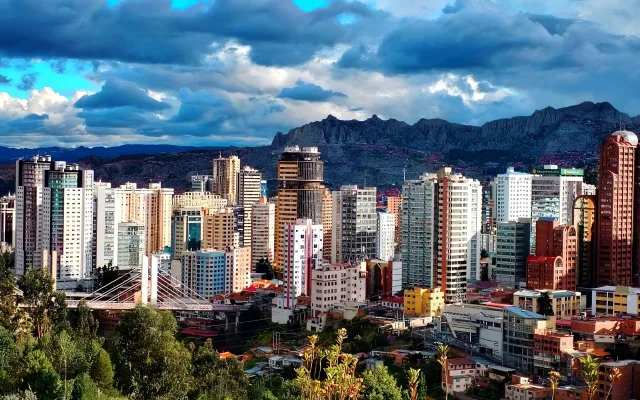
La Paz
La Paz — Bolivia's seat of government, perched at 3,600 metres above sea level. The city is home to an urban cable car network, the Witches' Market, and the notorious mountain road known as the Death Road, popular with downhill cyclists.
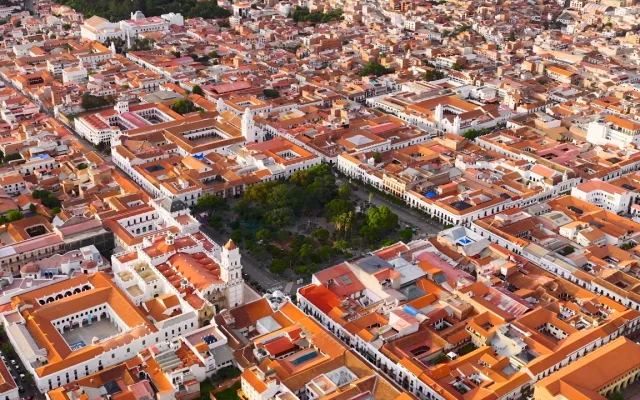
Sucre
Whitewashed constitutional capital of Bolivia, with colonial cathedrals, dinosaur footprints pressed into limestone, and a pleasant climate at 2,800 m.
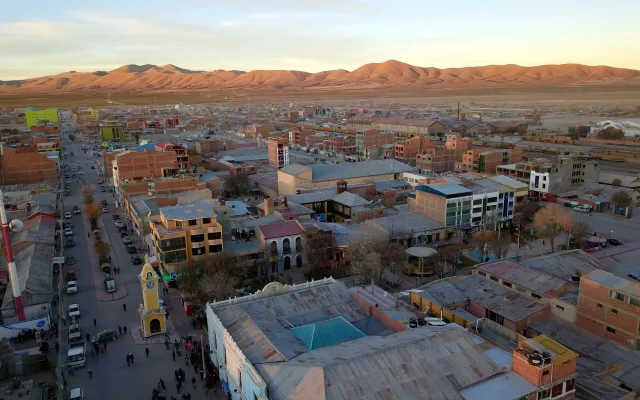
Uyuni
Gateway to the world's largest salt flat — the Salar de Uyuni: an endless mirror plain, flamingos, and pink lagoons on the Bolivian altiplano.
What to see #
Salar de Uyuni is the main thing to see in Bolivia, the giant mirror that produces those surreal photographs. In the wet season a film of water turns the flat into a reflection of the sky; in the dry season the surface cracks into salt hexagons.
Lake Titicaca is worth the trip for Isla del Sol, where legend places the birth of the first Incas. Footpaths through ancient terraces lead to temple ruins with the snow peaks of the Cordillera Real behind them.
The Death Road is the classic route for a dose of adrenaline on a mountain bike. The descent starts in glacier mist at 4,700 metres and finishes in the hot tropical jungle around Coroico.
Valle de la Luna is a strange labyrinth of clay spires and gullies on the edge of La Paz. You can do it in a day and come away with pictures that look like the surface of another planet.
The Witches' Market in the centre of the capital sells llama foetuses, charms and Aymara herbs. It is not a tourist attraction but a working place of power, where locals buy offerings for Pachamama.
Madidi National Park, reached through Rurrenabaque, is some of the most biologically rich jungle in the Amazon basin. Jaguars, caimans and hundreds of bird species live here, none of them findable up in the mountains.
Prices #
Currency. The boliviano (BOB) trades at roughly 11 to the dollar in 2026. Bring newer US dollar notes without tears or writing on them, because damaged bills get refused.
Cards. Card payment works only in large chain hotels and expensive restaurants in the capital. Everywhere else is cash, so notes in your pocket are your only means of buying anything.
ATMs. You can withdraw, but per-transaction limits are low and fees apply. Look for BancoSol or BCP branches, which are the most dependable with foreign cards.
Exchange. Change money at banks or official Casas de Cambio. Street changers sometimes quote a better rate, but the risk of a counterfeit or withdrawn note is far too high.
Tipping. Around ten percent in cafes if service is not already included. Porters at stations and hotels usually get five bolivianos for handling bags.
| Item | Price (USD) |
|---|---|
| Market lunch | 2.50 |
| Restaurant dinner | 11.00 |
| Salteña pastry | 0.80 |
| Water 1.5 l | 1.10 |
| Paceña beer | 2.10 |
| Dorm bed | 10.00 |
| Guesthouse room | 25.00 |
| Uyuni tour (3 days) | 190.00 |
| Cable car ride | 0.40 |
| Taxi across the centre | 2.50 |
| Bus to Uyuni | 20.00 |
| Flight to Uyuni | 95.00 |
| Valle de la Luna entry | 2.20 |
| 5 GB of mobile data | 6.50 |
Getting around #
Getting there. Most international arrivals land at Santa Cruz or La Paz, connecting through Lima, Bogota, Panama City or Sao Paulo, all of which link to Europe and North America. Flying into Santa Cruz first is the gentler option, since it sits low and lets you gain altitude gradually.
Cable cars. In La Paz the Mi Teleferico network is the best way to cross between districts of the canyon. It is fast, modern and gives you the city from the air for small change.
Long-distance coaches. For intercity journeys book the Cama class, where seats recline almost flat. That is the only way to sleep through a ten-hour night on mountain switchbacks.
Taxis. Use only marked Radio Taxi cars with a company number on the roof. There are no meters, so agree the fare before you get in.
Minibuses. Cramped micros and trufis run everywhere and stop wherever you raise a hand. It is the cheapest transport in the country, though decoding the routes without Spanish is hard work.
Domestic flights. BoA and EcoJet save you a full day of grinding road travel. Flights to Uyuni or Sucre are reasonably priced if booked a couple of weeks ahead.
Boats. On Lake Titicaca, motor launches and public boats run between Copacabana and the islands. Tickets are sold at the jetty and departures cluster in the morning and early afternoon.
Where to stay #
Guesthouses. Family-run places are the standard budget option in Bolivian towns. They are usually clean, and the rate often includes a simple breakfast with coffee and fresh bread.
Salt hotels. Around Uyuni you can sleep in buildings constructed entirely from blocks of local salt. It is a genuinely unusual experience, but the insulation is poor and the nights get very cold.
Colonial houses. In Sucre and Potosi many hotels occupy old mansions built around beautiful interior patios. They give you the atmosphere of the Spanish era and a great deal of quiet.
Check the room. In the highlands always confirm there are enough blankets and that hot water works. There is no central heating up here, so warm bedding decides whether you sleep.
Booking. In the cities the aggregators work fine and often allow booking without prepayment. In small villages it is better to arrange directly with owners, in person or by message.
Altitude matters. In La Paz try to stay lower down, for example in the bohemian Sopocachi district. Above four thousand metres sleep becomes noticeably harder.
Language. Hostels and tour-focused places handle English; family guesthouses usually do not, so have your booking details written down in Spanish.
What to eat #
Salteñas. The famous Bolivian pastries with juicy meat filling and slightly sweet dough. Take care with the first bite: they are full of hot broth and it goes everywhere, including on you.
Almuerzo. At lunchtime look for the set menu of the day in local cafes. A small fixed price buys you a bowl of thick soup, a main with rice and a glass of sweet fruit drink.
Llama meat. A llama or alpaca steak is a lean delicacy worth trying in highland restaurants. It tastes like low-fat beef and goes very well with a sauce made from local berries.
Pique macho. An enormous plate of fried beef with chips, sausage, onion and fierce chilli. It is usually ordered for two, because finishing the mountain alone is close to impossible.
Coca tea. An infusion of fresh coca leaves is legal, served everywhere and used against altitude sickness. It lifts you and helps the body adapt to thin Andean air.
Corn drinks. Try api, a hot thick drink made from purple corn with cinnamon and clove. It usually comes at breakfast alongside crisp deep-fried pastries.
Where to eat. Market food halls give you the cheapest and often the best meals, and pointing at the pot works as well as any Spanish you have.
Safety #
Altitude sickness. This is the main threat to your health and ignoring it in the Andes can kill you. For the first days drink a lot of water and avoid exertion and alcohol while your heart and lungs adjust.
Fake police. In La Paz, con artists pose as officers and demand to see your passport or wallet. A real policeman never searches a tourist in the street without cause; insist on going to a station.
Protests and roadblocks. Bolivians frequently close roads in protest, which can wreck a schedule. Build slack into every intercity leg and follow local news before you travel.
Pickpockets. In markets and bus stations keep valuables in a money belt or a backpack worn on your front. The chaos of El Alto is prime working ground for them.
Water. Never drink from the tap, and do not use it to brush your teeth. Buy bottled and check the seal and packaging before you pay.
Insurance. Take a good policy that explicitly covers extreme altitude. Without one, any treatment or private hospital admission costs a fortune.
Advisories. Check your own government's travel advisory before you go, particularly for road blockades and demonstrations, which come and go with the political calendar.
Etiquette and culture #
Cholitas. Indigenous women in bowler hats and layered skirts are the symbol of modern Bolivia. They keep Aymara traditions alive, run successful businesses and even wrestle professionally.
Pachamama. The cult of Mother Earth is woven into Catholicism into something genuinely unique. Bolivians tip a few drops of a drink onto the ground before drinking, as an offering.
Coca leaves. Chewing them is not drug use but a centuries-old cultural practice and a survival tool in a harsh landscape. Leaves are sold by the sack in every market and used in ritual and tea alike.
The Oruro Carnival. The country's biggest folk event, with thousands of dancers in fearsome devil masks. If your trip falls in February, arrange your route to see it.
Photography. Many indigenous people in rural areas dislike being photographed without permission, some believing it takes part of the soul. Always ask politely, and be ready to offer a coin.
Time. Get used to Hora Boliviana, which means an hour late or more. Punctuality is not the local virtue, so do not fret when a bus or a guide is delayed.
Greetings. A handshake and a "buenos dias" before any question is expected, and skipping straight to the request marks you out as rude.
Connectivity #
Spanish is essential. Travelling independently without some basic phrases is genuinely hard. English is understood only in expensive hotels, so learn numbers and the key questions for markets and transport.
Local SIM cards. Entel has the best coverage in the mountains, while Tigo and Viva perform well in the cities. Buying at an official office requires your original passport.
eSIM. For a short trip an eSIM from Airalo or a similar provider saves the paperwork and works on landing, though a local SIM is cheaper if you are staying for weeks.
Coverage. Data is fine in the cities and along the main roads, but it disappears on the Altiplano and in the jungle. Download offline maps for anywhere off the highway.
WhatsApp. Guesthouses, drivers and tour operators all arrange everything through it, so have it installed and working before you arrive.
Wi-Fi. Hostels and cafes generally have it, at modest speeds. High-altitude towns can be slow enough that video calls are not worth attempting.
Translation. Keep an offline translator on the phone, and learn to read prices written by hand, which is how most market stalls quote them.
Phrasebook #
| English | Spanish | Pronunciation |
|---|---|---|
| Hello | Hola | OH-la |
| Thank you | Gracias | GRA-syas |
| Please | Por favor | por fa-VOR |
| How much is it? | ¿Cuánto cuesta? | KWAN-to KWES-ta? |
| Where is it? | ¿Dónde está? | DON-deh es-TA? |
| Help! | ¡Ayuda! | ah-YOO-da! |
| Coca tea | Mate de coca | MA-teh deh KO-ka |
| The bill, please | La cuenta, por favor | la KWEN-ta, por fa-VOR |
| Water | Agua | AH-gwa |
| I don't understand | No entiendo | no en-TYEN-do |
| Goodbye | Adiós, chau | ah-DYOS, chow |
| Beautiful | Hermoso | er-MO-so |
| Way too expensive | Muy caro | mwee KA-ro |
| Altitude sickness | Soroche | so-RO-cheh |
| Long-distance bus | Flota | FLO-ta |
| Food | Comida | ko-MEE-da |
| Spicy | Picante | pee-KAN-teh |
| Mate, buddy | Cuate | KWA-teh (slang) |
| Cool, great | Chala | CHA-la (slang) |
| Cholita, city Aymara woman | Cholita | cho-LEE-ta (slang) |
| All good | Todo bien | TO-do BYEN |
| Sorry | Perdón | per-DON |
Good to know #
Entry registration. Bolivia requires arriving travellers to complete the free online SIGEMIG form before crossing the border. Fill it in in advance and save a screenshot, since staff may ask for the confirmation.
Acclimatise. Do not plan anything active for your first two days in La Paz. Let the body adjust to the missing oxygen by resting and drinking coca tea, and the worst symptoms never arrive.
Medical kit. Bring anti-diarrhoea medication and rehydration salts, since stomachs rebel at market food. Altitude tablets such as Sorojchi Pills are sold over the counter in any Bolivian pharmacy.
What to wear. Andean weather swings hard: the sun burns by day and the temperature drops to freezing after dark. Dress in layers and bring strong sunscreen and good polarised sunglasses.
Airport altitude. Landing at El Alto puts you straight onto 4,000 metres, which is a real shock to the system. If time allows, start the route in Santa Cruz and climb gradually.
Showers. Cheap hotels often heat water with an electric element mounted on the shower head. Be extremely careful and never touch exposed wiring with wet hands.
Your embassy. Few countries maintain a mission in La Paz and several cover Bolivia from Lima. Find out which one handles your nationality and save the contact before you fly.