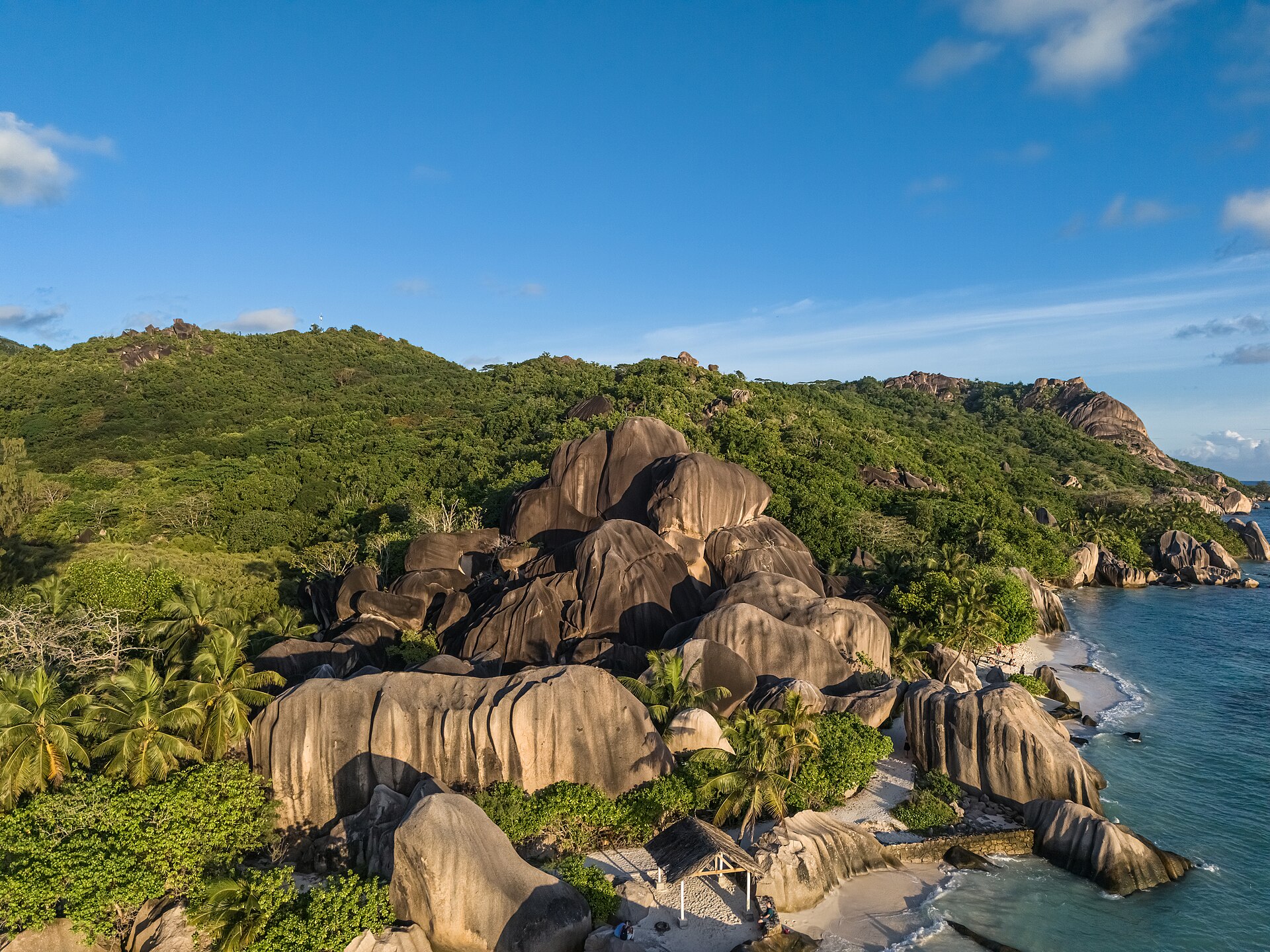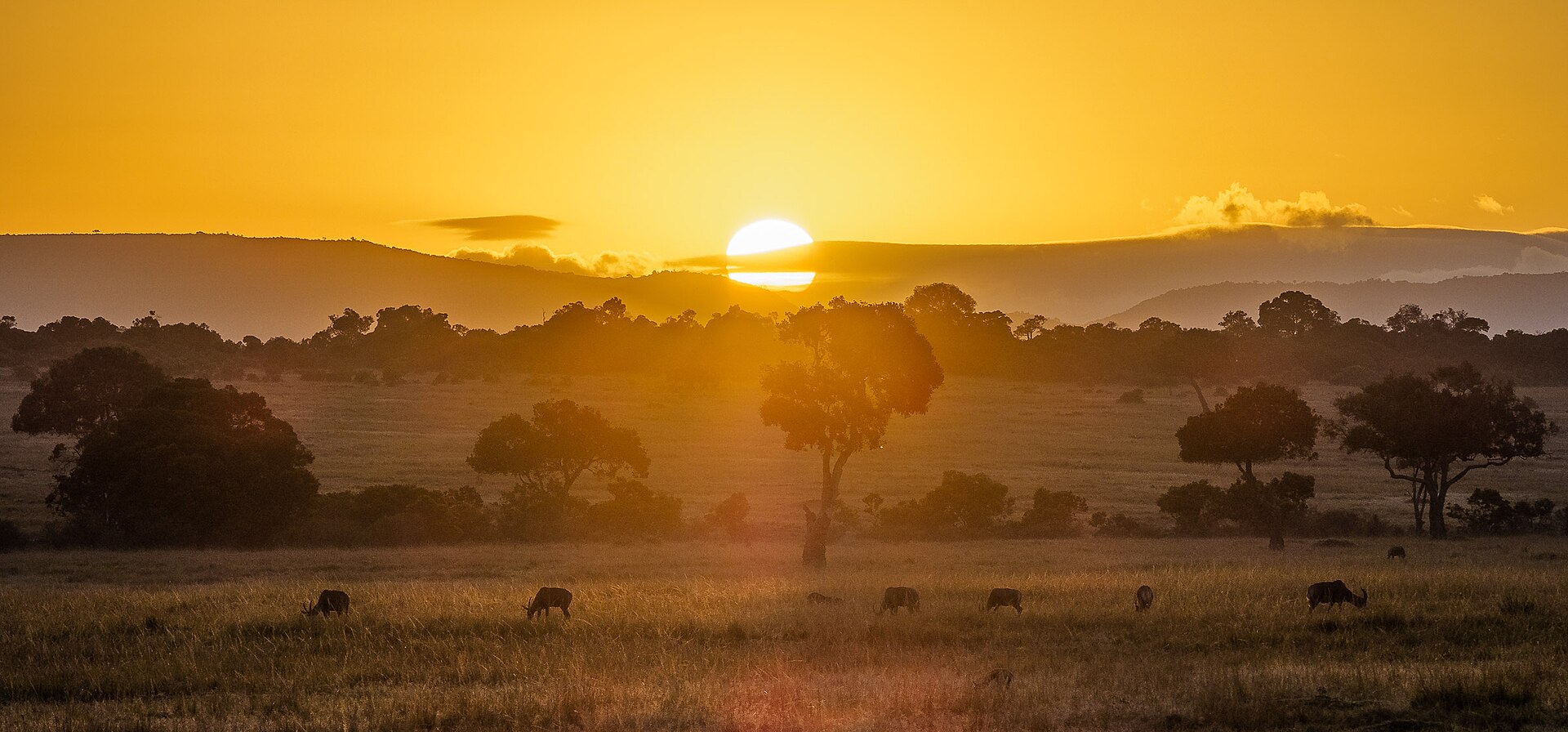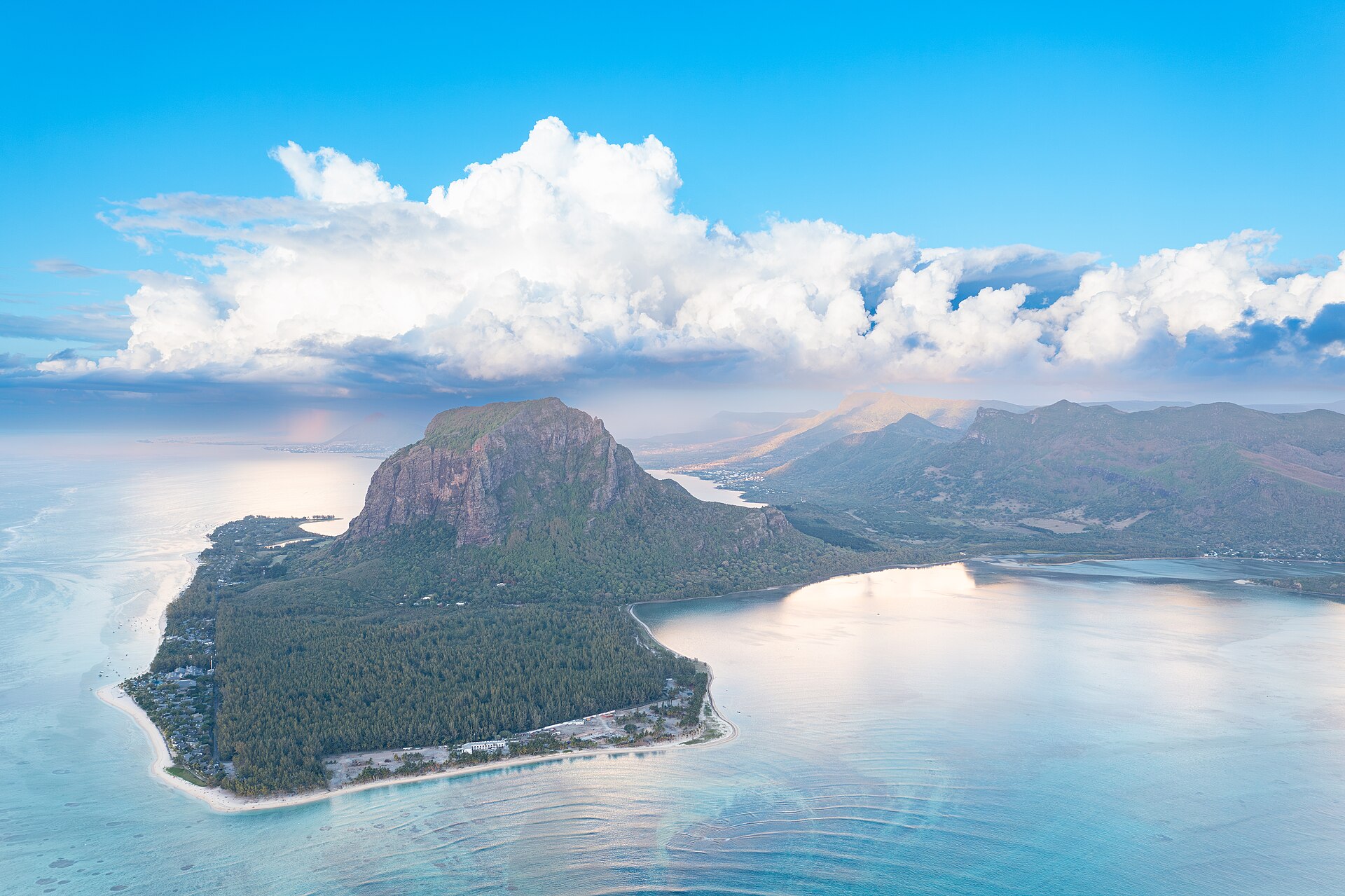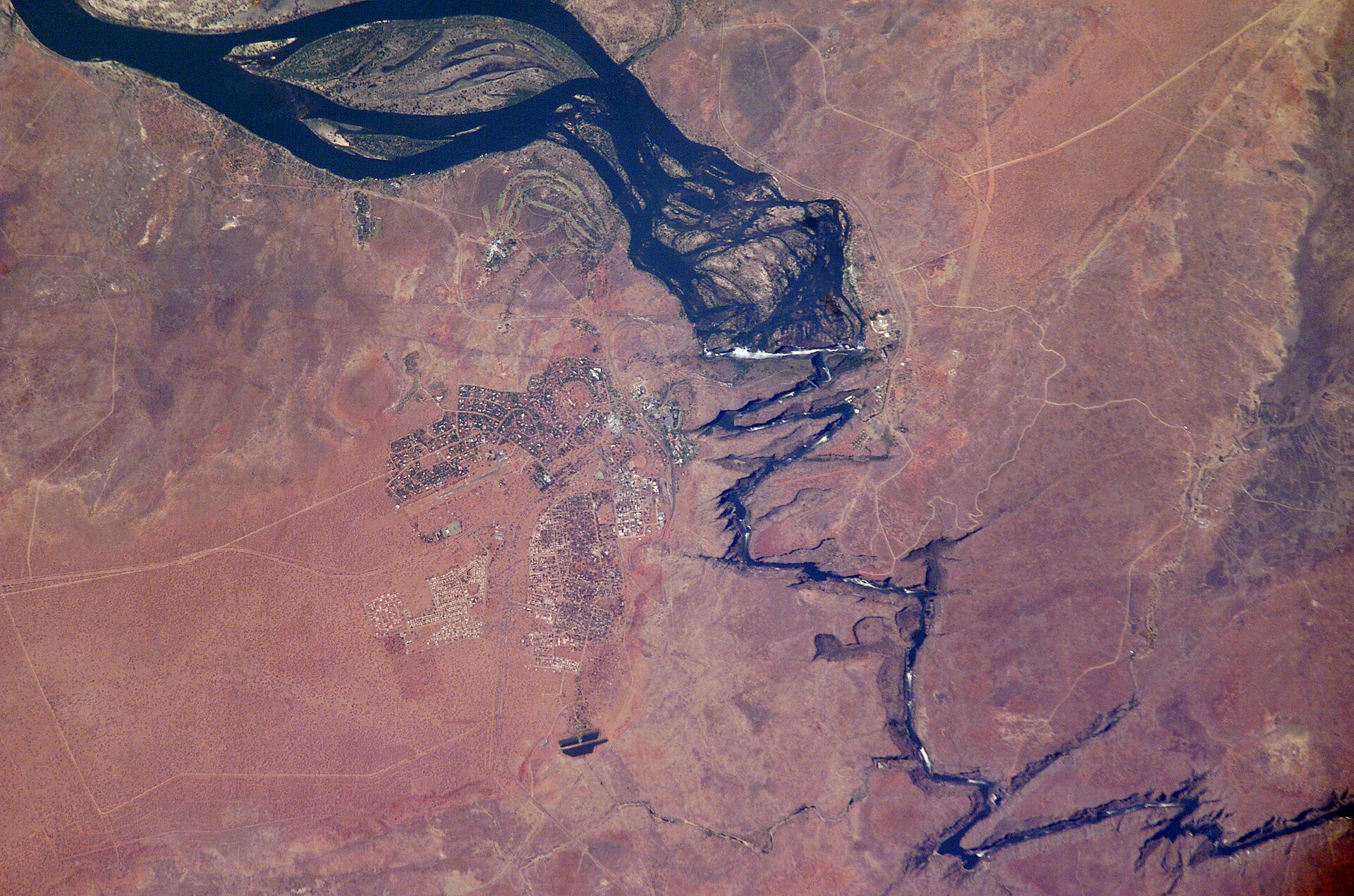

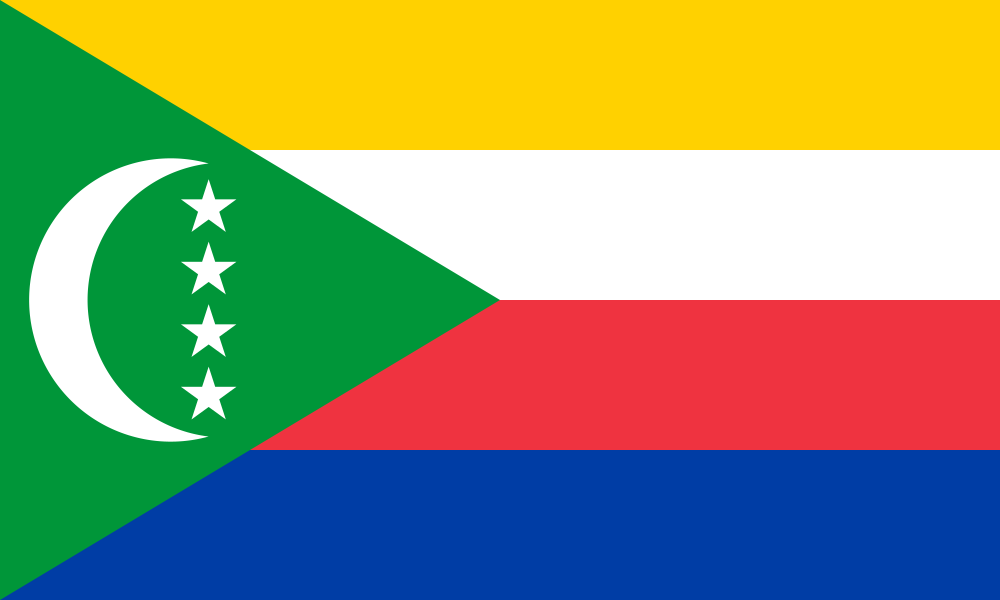
An archipelago of three volcanic islands in the Indian Ocean between Madagascar and Mozambique — one of the least visited nations on the planet. There are untouched coral reefs, the active Karthala volcano, sea turtles, humpback whales and beaches without a single tourist. Comorans, Muslim with Swahili and Arab roots, meet their rare guests with real warmth. A country for anyone long tired of the beaten track.
Where to go
#Moroni
The capital of Grande Comore and the transport hub for the whole country. Look into the old medina with its narrow coral-stone lanes and see the Friday Mosque standing right on the ocean. The Volo Volo market here is the largest in the islands and where everybody actually shops.
Mutsamudu
The second city of the archipelago, on Anjouan. Its old citadel on the hill and the Arab quarters below give it the atmosphere of a trading port from several centuries ago. People come for the clove and ylang-ylang plantations around it.
Fomboni
The tiny administrative centre of Mohéli, where life moves as slowly as it is possible to move. The town is the base for boat trips into the marine park to see dolphins and turtles. Almost no tourists come here, which is precisely the appeal.
Mitsamiouli
A resort village in the north of Grande Comore, worth a trip for the best beaches in the country. White sand and genuinely good snorkelling in turquoise water. The surreal Lac Salé, sitting in a volcanic crater, is right next door.
Domoni
An ancient town on Anjouan that still holds the ruins of sultans' palaces. Walking its lanes brings you past the famous carved doors in the Zanzibar style. This is history without any restoration or polish.
Iconi
A picturesque settlement south of the capital, known for its black lava cliffs. The ruins of the old Kapviridjeo palace stand here, and the place is thick with legends about the island's defenders.
What to see
#What to see: Mount Karthala is the highest point in the country and one of the largest active craters on earth. The trek takes two days with a night on the slope, and a guide is mandatory.
Where to go: Mohéli Marine Park is the best place in the archipelago for whales and dugongs. From July to October humpbacks come remarkably close to shore and can be watched from a small boat.
Worth a trip: Lac Salé in the north of Grande Comore looks like another planet. The water changes colour and nobody has ever established quite how deep it goes.
Can you do it in a day: Moroni's medina is a living labyrinth of coral stone. There are no souvenir shops in it, only the genuine feel of fifteenth-century Arab trade.
Something different: The citadel above Mutsamudu opens up a panorama over the whole of Anjouan. It was built against pirates and has survived in remarkably good condition.
Beaches: Chomoni bay draws people with white sand framed by black frozen lava. It is one of the most photogenic beaches in the Indian Ocean and you will have it largely to yourself.
Prices
#Currency: The Comorian franc is pegged hard to the euro, which makes the rate entirely predictable. One euro is roughly 492 francs, and the dollar sits slightly below that.
Cash: There are essentially no cash machines outside the capital, and the ones that exist are frequently empty. Bring a reserve of euros in small denominations and treat cash as your only real option.
Cards: Visa and Mastercard are accepted at a couple of expensive Moroni hotels and nowhere else. Guesthouses, taxis and markets all run on physical money, so a Wise or Revolut card is of no practical use here.
Exchange: Change at the BIC or BFC banks during working hours. Shops and market traders will often take euros directly, though at a rate that favours them rather than you.
Tipping: Not a strong local custom. A guide who takes you up Karthala over two days should be tipped properly, but nobody expects anything in a restaurant.
| Item | Price (USD) |
|---|---|
| Street pastry | 0.80 |
| Cardamom coffee | 0.50 |
| Lunch at a local place | 6.50 |
| Grilled lobster | 12.00 |
| Water 1.5 l | 0.90 |
| Shared minibus ride | 0.60 |
| Taxi across town | 3.50 |
| Taxi to the airport | 14.00 |
| Guesthouse per night | 35.00 |
| Ferry ticket | 30.00 |
| Domestic flight | 75.00 |
| Volcano guide | 40.00 |
| Litre of petrol | 1.40 |
| SIM card with 1 GB | 6.00 |
| Bunch of bananas | 1.20 |
Getting around
#Getting there: Almost everyone arrives via Addis Ababa on Ethiopian Airlines or Nairobi on Kenya Airways. Air Austral connects the islands to Réunion and onward to Paris, and there are regional links from Dar es Salaam and Antananarivo. Build a generous connection buffer, because delays are routine.
Taxi-brousse: These shared minibuses are the backbone of independent travel here. They leave when full and link every sizeable village on each island.
City taxis: Moroni runs shared taxis where you pay for a seat. Wave one down, say where you are going, and the fare is fixed and very low.
Between islands: Royal Air and AB Aviation fly between Grande Comore, Anjouan and Mohéli. The aircraft are small and departures are frequently pushed back for weather.
By sea: Ferries and boats run from Moroni port on a schedule best described as flexible. The crossings can be long and rough, so this is the cheap rather than the comfortable option.
Car hire: Only available in the capital and not cheap. The roads are narrow and potholed, and there is essentially no street lighting anywhere after dark.
On foot: Inside the medinas and the small towns, walk. It is the only way to notice the carved doors and the coral stonework, and it starts conversations.
Where to stay
#Guesthouses: The standard choice for independent travellers. Simple rooms with a fan, and a genuine sense of how Comorians actually live day to day.
City hotels: Moroni has a handful of hotels with basic facilities. Air conditioning and reliable power are both luxuries, since the electricity is cut regularly.
Eco-lodges: On Mohéli you can stay in huts directly on the beach. It costs more, but it puts you where turtles come ashore to lay eggs at night.
Staying with families: On Anjouan it is easy to arrange a bed with a local household. It costs almost nothing and gives you complete cultural immersion.
Booking: Most places simply do not appear on the international platforms. Find contacts through social media or arrange on arrival, since there is nearly always space.
What to expect: Be ready for no hot water and weak internet. Simplicity rather than comfort is the standard here, so pack adapters and a large power bank.
What to eat
#The basics: Comorian cooking blends African tradition with Arab spicing. Rice cooked in coconut milk with fish or meat is on the table in every eating house.
Lobster: Lobster in vanilla sauce is the signature dish of the islands. Eat it on the coast where seafood is startlingly cheap, and check it has come out of the sea that day.
Spices: Vanilla, clove and cardamom are everywhere, added even to plain rice. The smell of the spice stalls in the markets is genuinely overwhelming at first.
Drinks: Coffee is brewed very strong and often spiced. Alcohol is hard to find, since this is a Muslim country, and is sold in only a couple of places.
Fruit: Mango, papaya and bananas grow at the roadside and cost next to nothing. Markets always have fresh jackfruit and coconut water for the heat.
Street food: The markets fry mkatra flatbreads and mabawa chicken wings in a hot marinade. It is the fastest and cheapest way to eat during a long day walking.
Safety
#Overall: Comorians are peaceable and serious incidents are rare. The main rule is simply not to produce a thick roll of notes in a crowded place.
Malaria: This is the real health threat across the archipelago. Take prophylaxis seriously and sleep under a net every single night without exception.
The ocean: Currents can be strong and deceptive even close to shore. Swim only where locals swim and do not head out into open water.
The volcano: Karthala is active and its status needs checking before you set off. Always take a licensed guide who knows both the safe routes and the weather.
After dark: Streets are poorly lit, so take a taxi once the sun goes down. That is as much about broken pavements as about anything else.
Health: Drink bottled water and wash fruit carefully. Medical care is basic, so carry a kit including antibiotics, and read your own government's travel advisory before you go.
Etiquette and culture
#Religion: Islam shapes the entire rhythm of island life. Friday is the day off, when most shops close and men head to the main prayer.
Dress: Modesty is expected of every visitor. Cover shoulders and knees, particularly in the old quarters and in villages.
Traditions: Comorian women wear brightly patterned shiromani cloth and paint their faces with sandalwood paste. It protects the skin from the sun and is considered beautiful.
Grand Mariage: The great wedding is the most significant event in any Comorian life. If you are invited to one, go, because it is both an honour and a rare thing to witness.
Etiquette: Always ask before photographing anyone. People here are extremely courteous provided you show respect for their privacy and their faith.
Pace: The local sense of time is elastic. Nobody is in a hurry, so bring patience and let the slowness work in your favour.
Connectivity
#Operators: Two companies cover the country, Telma and Comores Telecom. You can buy a SIM at the airport or in any of the small shops around Moroni.
Internet: 4G reaches the larger settlements only. In remote parts of the islands and on the Karthala trek the signal disappears for long stretches.
eSIM: Do not count on an international eSIM here. Coverage depends on the same two local networks and roaming agreements are patchy, so a physical local SIM is the reliable choice.
Wifi: Free hotspots are genuinely rare even in the capital. Hotels advertise a network, but in practice it is intermittent and slow.
Messaging: WhatsApp is what everyone uses. Voice calls work acceptably when the mobile signal holds.
Language: English is barely spoken anywhere. French and Comorian are the working languages, there are no menus or signs in English, and an offline French translator is not optional here but essential.
Phrasebook
#| English | Comorian | Pronunciation |
|---|---|---|
| Hello | Bariza | ba-REE-za |
| How are you? | Habari? | ha-BA-ree |
| Good | Ndjema | n-JEH-ma |
| Thank you | Marahaba | ma-ra-HA-ba |
| Please | Tafadhali | ta-fa-DHA-lee |
| Yes | Ewa | EH-wa |
| No | Aha | A-ha |
| How much is it? | Pesa ngapi? | PEH-sa n-GA-pee |
| Expensive | Ghali | GHA-lee |
| Water | Maji | MA-jee |
| Food | Chakula | cha-KOO-la |
| Hotel | Hoteli | ho-TEH-lee |
| Where is...? | Wapi...? | WA-pee |
| Help me! | Nisaidie! | nee-sa-ee-DEE-eh |
| Beautiful | Nzuri | n-ZOO-ree |
| Friend | Rafiki | ra-FEE-kee |
| Foreigner, westerner | Mzungu | m-ZOON-goo |
| Goodbye | Kwaheri | kwa-HEH-ree |
| Right now (slang) | Sasa hivi | SA-sa HEE-vee |
| All good! (slang) | Swafi | SWA-fee |
Good to know
#When to go: May to November is the dry season and by far the best window. The sea is calm and the roads are not washed out by tropical downpours.
Arrival: Landing at HAH takes patience, since every procedure is done by hand. A taxi into Moroni is the only dependable way to reach your first bed.
Health: Bring a complete set of medicines including malaria prophylaxis. Specific drugs are extremely hard to find in local pharmacies.
Clothing: Light natural fabrics are the right call in this heat. For the volcano you need proper boots and a warm jacket, since the crater rim is cold at night.
Electricity: Sockets are European standard, so visitors from continental Europe need nothing. Travellers from the UK, North America or Australia should bring an adapter, and a surge protector is wise given the voltage spikes.
Consular help: Almost no country maintains a mission on the islands, and most cover the Comoros from Antananarivo, Dar es Salaam or Nairobi. Look up which applies to your passport and save the number before you fly.
Frequently asked questions
#Most nationalities get a visa on arrival at Moroni airport with minimal fuss. You need a passport valid for six months, an onward ticket and roughly 30 to 50 euros in cash, so bring the exact amount.
The practical routes connect through Addis Ababa on Ethiopian Airlines or Nairobi on Kenya Airways. Air Austral links the islands to Réunion and onward to Paris, and connections are infrequent, so allow buffer time.
Budget 40 to 60 euros a day per person for accommodation and food if you are travelling simply. Add inter-island flights and volcano guides and it rises to 100 to 130 euros a day.
The islands sit in the Indian Ocean and the water is clean and warm all year. The best white-sand beaches are around Mitsamiouli in the north of Grande Comore and at Chomoni bay on the east coast.
Humpbacks arrive in the archipelago's waters between July and October. Mohéli Marine Park is the best place to see them, with boat trips arranged directly through local fishermen.
The country is generally very calm and violent crime is rare. The real risks are the limited healthcare and malaria, so insurance and prophylaxis matter far more here than personal security does.
Effectively no. Cards work at a couple of Moroni hotels and nowhere else, and ATMs outside the capital barely exist, so bring euros in cash for the entire trip.
Seven days covers the Moroni medina, the climb up the active Karthala volcano and the northern beaches of Grande Comore. If the flights cooperate, add a short hop to Mohéli for the turtles.
Updated
The data on this page goes out of date. Visa rules and permitted stays, border requirements, prices and budgets, transport and local conditions all change fast, and we do not re-check every page every day. We show the date of our last check where we have one, but before you travel, verify with official sources: the country’s consulate, its immigration service, its e-visa portal and your carrier.