
Costa Rica
The world's eco-capital: 5% of global biodiversity on 0.03% of its land. Costa Rica abolished its army in 1948 and put the money into education and nature — the result shows everywhere. Volcanoes, rainforest, two oceans, sloths, toucans and turtles. It is the most developed and safest country in Central America, and also the most expensive. Pura Vida, the national motto, is less a slogan here than a philosophy.
Where to go
#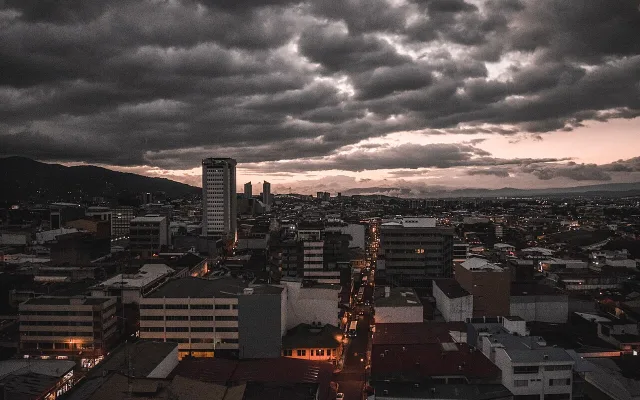
San José
The lively, cosmopolitan capital of Costa Rica, with the Mercado Central market, the cultural neighbourhood of Barrio Escalante, and easy access to the jungle.
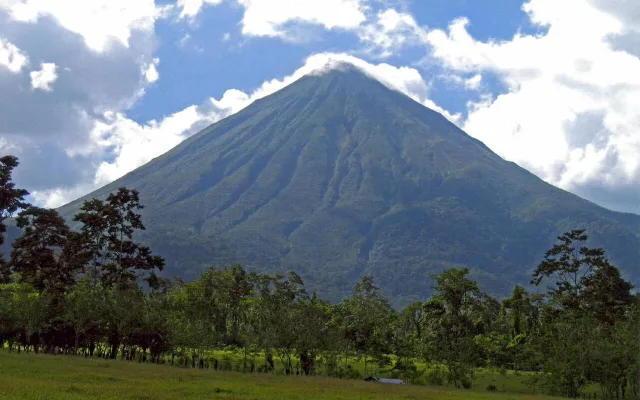
La Fortuna
A small town at the foot of Arenal Volcano — hot springs, a waterfall, and suspension bridges in the cloud forest.
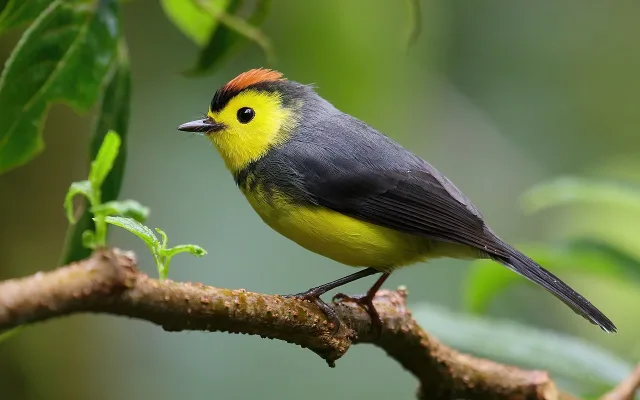
Monteverde
Cloud forest with suspension bridges and ziplines at 1,400 m — exceptional biodiversity and resplendent quetzal.
What to see
#Arenal Volcano: The near-perfect cone is the country's postcard image, and morning is the time to see it before cloud closes in.
Manuel Antonio: The most popular park in Costa Rica, where sloths wander along the beach itself. Worth a trip purely for the wildlife.
Cloud forest: In Monteverde you have to walk the hanging bridges. It is the one place where you can do the whole thing in a day and still feel you saw everything.
Tortuguero: If you are asking where to go for turtles, this is the answer. A boat carries you into the heart of wild canals.
La Fortuna Waterfall: A 70-metre column of water at the bottom of a long stairway. Worth the descent, and worth the climb back up.
Río Celeste: The turquoise river inside Tenorio park, the place people go for photographs that look edited but are not.
Corcovado: Wild country in the south. You will not do it in a day, but the biological density here is the highest anywhere in the country.
Prices
#Currency: The colón is what people use day to day, though US dollars are accepted in almost any shop. Change usually comes back in colones at a rate that is not in your favour, so keep small notes.
Cards: Visa and Mastercard work almost everywhere, including small guesthouses. Amex is patchy outside big hotels. ATMs are plentiful in towns, but most charge a local withdrawal fee on top of whatever your bank takes.
Wise and Revolut: A multi-currency card saves real money here, since spending in colones directly beats letting a shop convert for you at the till.
Cash: Small colón notes are what you need for bus fares and snacks in a soda. Rural areas and park entrances sometimes do not take plastic at all.
Tipping: Restaurants already fold 10% service into the final bill, so anything extra is optional and small.
| Item | Price (USD) |
|---|---|
| Casado lunch | 7 |
| Imperial beer | 3 |
| Coffee in a soda | 2 |
| National park entry | 18 |
| Zipline tour | 65 |
| Interbus shuttle | 45 |
| Intercity bus | 8 |
| Uber ride | 5 |
| Litre of petrol | 1.5 |
| Water 1.5l | 1.5 |
| Eggs, 12 | 4 |
| Night walk tour | 25 |
| Hostel dorm bed | 15 |
| Guesthouse night | 40 |
Getting around
#Buses: The cheap way to move around is the public bus network, leaving from several different terminals scattered across the capital.
Terminals: For the north, look for Terminal 7-10. For the Caribbean coast, you want the Mepe station instead.
Shuttles: Interbus minivans cost more, but they collect you from the door of your hotel or hostel and drop you at the next one.
Rental: If you plan to drive yourself into the mountains and out to remote beaches, take a 4x4 and nothing less.
Insurance: Basic TPL cover is compulsory by law on any rental and runs 10-20 dollars a day on top of the quoted rate.
Navigation: Waze is far more accurate here than Google Maps, especially on washed-out rural roads.
Domestic flights: Sansa saves hours if you need to reach Corcovado quickly rather than spending a full day on the road.
Where to stay
#Guesthouses: Family-run pensions are the best option if you want to spend less and actually talk to someone local.
Eco-lodges: Cabins set inside the forest let you fall asleep to howler monkeys and rain on a tin roof.
Neighbourhoods: In San José, book in the safer districts of Escazú or Barrio Amón rather than near the bus terminals.
Santa Elena: In this village next to Monteverde, room rates are noticeably lower than at the reserve entrance itself.
Booking ahead: Over Easter week and New Year, hotel space runs out a couple of months in advance across the whole country.
Airbnb: Well established here, and you can find a comfortable house with a kitchen right by the ocean.
What is included: Almost everywhere the rate includes the traditional breakfast of rice and beans.
What to eat
#Casado: The classic plate of rice, beans, meat and plantain, and the most filling lunch you will get anywhere.
Gallo pinto: Breakfast of fried rice and beans, served with sour cream and eggs.
Sodas: Look for the small canteens locals eat in. The food is fresher and roughly half the price of a tourist restaurant.
Ceviche: Fresh fish cured in lime juice, best eaten on the coast rather than inland.
Coffee: The country grows arabica only, and the best cup comes through a chorreador cloth filter.
Fruit: At markets, pick up ripe mango, pineapple and the sour cas fruit for refreshing juices.
Lisano: The house sauce that sits on every table and gives dishes that particular local taste.
Safety
#Theft: Petty stealing from beaches and parked cars is the main problem. Never leave anything visible in a vehicle.
Districts: In the capital after dark, avoid walking through the centre and the blocks south of Avenida Central.
Ocean: Rip currents are strong enough to catch experienced swimmers. Stick to beaches with lifeguards or a known safe spot.
Wildlife: Do not touch bright frogs or snakes in the forest. A number of them are seriously venomous.
Roads: Mountain switchbacks have no lighting, so plan your driving days to arrive before dark.
Help: For anything serious, dial 911. Operators generally speak English.
Documents: Carry a photocopy of your passport and leave the original and your cash in the hotel safe.
Advisories: Conditions change with the season, so check your own government's travel advisory before you set off.
Etiquette and culture
#Pura vida: The phrase means "pure life" and works as a greeting, a thank you and the country's unofficial motto all at once.
Ticos: Locals are genuinely friendly, quick to smile, and almost never confrontational with visitors.
Time: "Hora tica" means arriving half an hour late is simply normal and nobody takes offence.
No army: Costa Rica abolished its military, and the money goes into conservation and schools instead.
Environment: People are proud of their nature, so littering or breaking branches in a park is taken seriously badly.
Holidays: On Independence Day, 15 September, streets close for loud parades of school marching bands.
Religion: Catholic tradition runs deep, and during Semana Santa town life comes close to a full stop.
Connectivity
#eSIM: A virtual card from a provider like Airalo gets you online the moment you land, with no queueing at a counter.
Networks: State-owned Kölbi has the best signal deep in the jungle, while Liberty and Claro are strong in the cities.
Buying a SIM: You can pick up a normal SIM at the airport, but you will need your passport to register it.
Coverage: In deep valleys and inside national parks there is often nothing at all, so download offline maps in advance.
WhatsApp: Hotels, guides and drivers all run on WhatsApp. It is the default way to arrange anything here.
Wi-Fi: Free access is standard in cafés and guesthouses, and the speed is usually enough for a video call.
English: English is widely spoken in tourist towns and by park guides, less so in rural villages and on local buses.
Data cost: A 5 GB local package works out around 15 dollars, which beats almost any roaming plan.
Phrasebook
#| English | Spanish | Pronunciation |
|---|---|---|
| Hello! | ¡Hola! | OH-la |
| All good! | ¡Pura vida! | POO-ra VEE-da |
| Please | Por favor | por fa-VOR |
| Thank you | Gracias | GRA-syas |
| The bill, please | La cuenta, por favor | la KWEN-ta por fa-VOR |
| How much is it? | ¿Cuánto cuesta? | KWAN-to KWES-ta |
| Yes / No | Sí / No | see / no |
| Toilet | Baño | BA-nyo |
| Help! | ¡Ayuda! | a-YOO-da |
| Delicious | Rico | REE-ko |
| Where is...? | ¿Dónde queda...? | DON-de KE-da |
| Beer | Birra | BEE-rra |
| Mate (slang) | Mae | MY-eh |
| Cool! (slang) | ¡Tuanis! | TWA-nees |
| Awesome (slang) | ¡Pura vida, mae! | POO-ra VEE-da my-eh |
| Coffee | Café | ka-FEH |
| Tomorrow | Mañana | ma-NYA-na |
| Water | Agua | AH-gwa |
| Goodbye | ¡Adiós! | a-DYOS |
| That's fine | Está bien | es-TA byen |
Good to know
#Waze: The best app for drivers here. It knows about traffic and about the rural roads that wash out in the rain.
Offline maps: For walking in the jungle, download Maps.me, which has almost every forest trail marked.
Your embassy: Note down the contact details for your own country's embassy or consulate in San José before you travel.
Tourist police: There is a dedicated hotline that helps if your documents or belongings are stolen.
Weather: Check forecasts, but remember that in the tropics rain can arrive and clear again within the hour.
Uber: The most transparent way to move around the capital, with prices fixed and visible before you accept.
SINAC: The official portal for national parks has current opening hours, closures and booking rules.
Frequently asked questions
#Many Western passport holders can enter for tourism for up to 90 days without applying in advance, but rules differ by nationality, so check your own passport's requirements. At the border you may be asked for an onward ticket and proof of accommodation.
The dry season from December to April is ideal, with almost no rain on the Pacific coast. On the Caribbean side the best weather usually falls in September and October.
An independent traveller should budget at least 70-100 dollars a day. That covers modest accommodation, meals in local sodas and entry to one national park.
If you plan to reach remote waterfalls and wild beaches, a 4x4 is close to essential. For moving between the main towns, buses and tourist shuttles are perfectly adequate.
It is the calmest country in the region, but petty theft from cars and on beaches is common. Take basic precautions and avoid walking at night through the rougher parts of the capital.
State operator Kölbi leads on coverage, especially in the mountains and national parks. In cities, SIM cards from Liberty or Claro work just as well.
Your chances are highest in Manuel Antonio, Tortuguero and hard-to-reach Corcovado. Monteverde is better for rare birds, including the famous quetzal.
Both are accepted everywhere, but change almost always comes back in colones at a poor rate. Small purchases and bus fares are cheaper paid in the local currency.
Yes, but with restrictions. Registration is mandatory for a drone of any weight. The drone must be registered with the DGAC before the first flight, with no weight threshold. National parks are closed to flying. Rules for other countries are in the drone ranking by country.
No — your national licence is accepted for a car. Car rental starts at 21. National licences are valid for up to 90 days together with your entry stamp. Rules for other countries are in the driving and rental table.
You can rent a bike and your national licence is enough. Crucially, your licence must include category A. Category B is not enough — this is what catches most riders out. A helmet is compulsory. Bike rental usually starts at 18. Rules for other countries are in the driving and rental table.
Updated
The data on this page goes out of date. Visa rules and permitted stays, border requirements, prices and budgets, transport and local conditions all change fast, and we do not re-check every page every day. We show the date of our last check where we have one, but before you travel, verify with official sources: the country’s consulate, its immigration service, its e-visa portal and your carrier.