
Germany
A country of castles, autobahns and beer gardens. From underground Berlin to the Bavarian Alps, from the Christmas markets of Nuremberg to the vineyards of the Rhine, Germany combines its famous precision with unexpected warmth and a great deal of variety at the table.
Where to go
#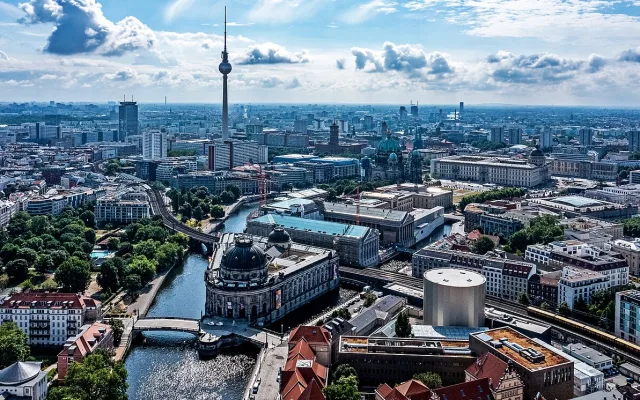
Berlin
Berlin is the capital of Germany, a city with a deep history, a strong art scene and an active startup culture, famous for its nightclubs.
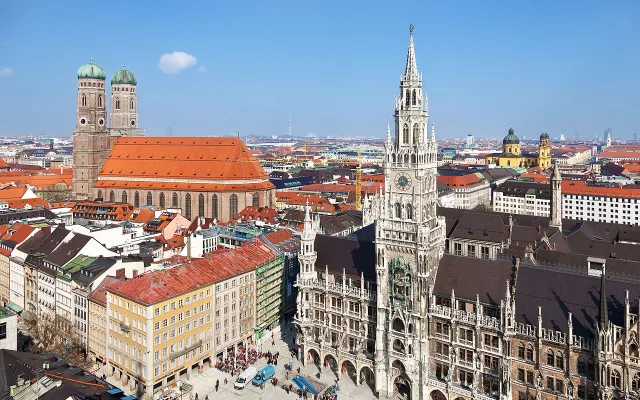
Munich
Munich is the capital of Bavaria, known for the Oktoberfest, for the English Garden and for Neuschwanstein castle nearby.
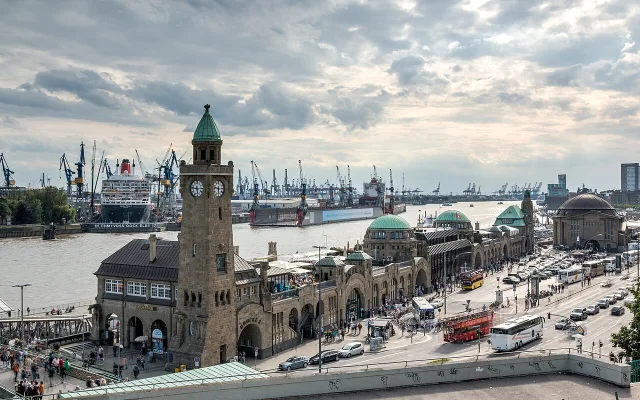
Hamburg
Hamburg is a port city with a fish market, the historic Speicherstadt warehouse district and the famous Reeperbahn.
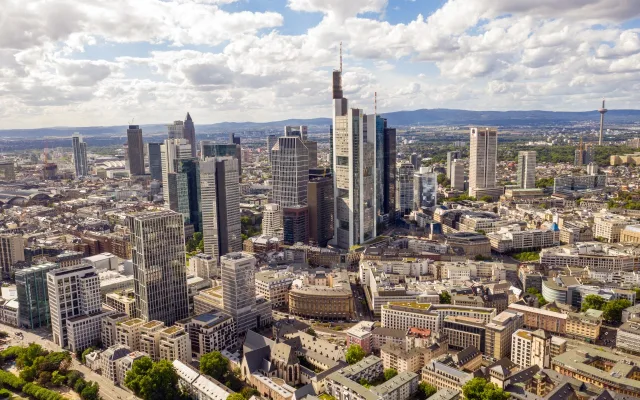
Frankfurt
Germany's financial capital, with skyscrapers rising along the Main River, the historic Römerberg square, and famous apple wine served in traditional Sachsenhausen taverns.
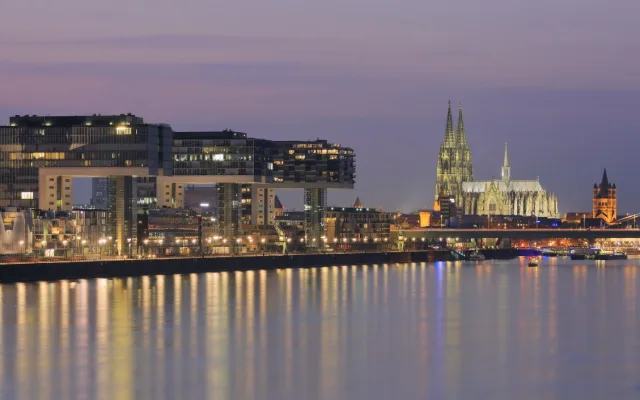
Cologne
Cologne is a city famous for its Gothic cathedral, its carnival, and for being the birthplace of eau de cologne — all set on the banks of the Rhine.
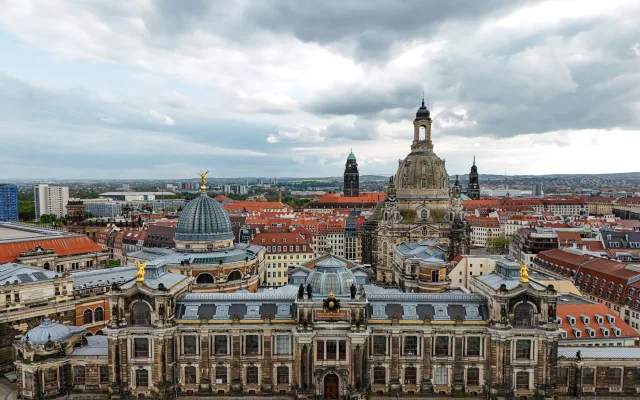
Dresden
Dresden is a city of Baroque palaces, the celebrated Frauenkirche, and the outstanding Old Masters Picture Gallery.
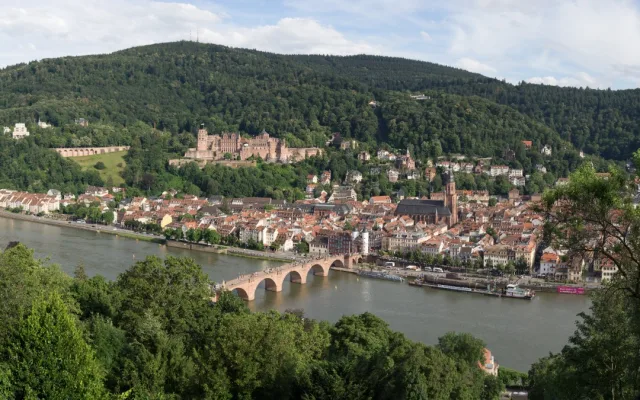
Heidelberg
Heidelberg is a romantic university town in Germany, known for its picturesque castle ruins above the Neckar river and its historic student taverns.
What to see
#Neuschwanstein: the castle that inspired Disney, and the first thing most people put on the list. Book tickets two months out or you will be admiring it from the outside only.
Museum Island: five world-class institutions in central Berlin, including the Neues Museum and the bust of Nefertiti. Give it a whole day rather than trying to squeeze it into a morning.
The Berlin Wall: the longest surviving stretch is at the East Side Gallery, where the murals run for over a kilometre. Open around the clock and free, which makes it perfect for a budget day.
Cologne Cathedral: vast, and free to enter, though climbing the tower costs a few euros. It is an honest test of your legs — more than five hundred steps to the top.
Zugspitze: the highest point in the country, worth the trip for the Alpine panorama and the glacier. If the forecast is grey, postpone, because all you will see up there is fog.
Checkpoint Charlie: badly overrated, reduced to a photo op with people in costume charging for pictures. For the real history of a divided city, go to the memorial on Bernauer Strasse instead.
The Romantic Road: hundreds of kilometres through medieval towns such as Rothenburg. Without a car it is a demanding route that depends on tight bus connections, so plan it properly or hire a car for two days.
Prices
#Currency: the euro, and you want cash on you in Germany more than almost anywhere else in western Europe. Keep coins for station lockers and for the paid toilets at motorway stops and railway stations.
Cards: the country is stubbornly conservative about plastic. Plenty of cafes and bakeries are cash-only or set a ten-euro minimum, and some terminals only handle the domestic girocard rather than Visa or Mastercard.
Where cards do work: hotels, department stores, supermarkets and anything at railway station scale take international cards without fuss. Amex is accepted far less widely than at home.
Tipping: five to ten percent in restaurants. The custom is to say the rounded total out loud as you hand over the money, rather than leaving coins on the table afterwards.
Pfand: most bottles and cans carry a deposit, refunded by machines at supermarket entrances. Plastic bottles return 0.25 euro each, which genuinely adds up on a long trip.
| Item | Price (USD) |
|---|---|
| Doner kebab | 7.50 |
| Beer in a bar, 0.5 l | 6.50 |
| Beer from a shop | 1.30 |
| Currywurst from a stand | 4.80 |
| Lunch in a beer hall | 16.00 |
| Restaurant dinner | 30.00 |
| Coffee and cake | 8.50 |
| Day travel pass | 11.00 |
| Museum ticket | 14.50 |
| Mass of beer, 1 l | 16.50 |
| Pretzel | 1.80 |
| Bakery sandwich | 4.50 |
| Tower climb | 6.80 |
| Dorm bed | 35.00 |
Getting around
#Deutschlandticket: at 63 euros a month, this is the best deal in European travel. It covers every city bus, tram, U-Bahn and regional train in the country, and pays for itself in about four days of moving around.
Fast trains: ICE services cross the country at up to 300 km/h. Book Sparpreis fares on the operator's own site about a month ahead and you avoid paying two or three times the price.
The catch: the 63-euro pass is not valid on long-distance IC, EC or ICE trains. Boarding one with it earns you a serious fine from a conductor with no discretion at all.
Buses: FlixBus remains the budget answer between major cities. Usually cheaper than rail and roughly twice as slow, because the autobahns jam like anywhere else.
Planning journeys: use DB Navigator, which shows live platforms and delays and sells tickets. In Berlin the BVG app is handier for single city tickets.
Bikes: cities are laced with cycle lanes and app-based hire costs very little. It is the best way to see the neighbourhoods that never make it into a guidebook.
Airports: from Berlin Brandenburg, the S-Bahn and the FEX express reach the centre in about half an hour. Buy tickets from the red machines on the platform before boarding.
Where to stay
#Berlin districts: Mitte is the easy first-visit choice, with the main sights within walking distance. For quiet streets and good cafes, look at Prenzlauer Berg instead.
Reliable chains: Motel One offers stylish rooms at sane prices in the centre of most large cities. It is the middle ground between anonymous business hotels and noisy backpacker places.
Gasthof: in Bavaria and the small Alpine towns, look for this sign. These are family-run guesthouses with home-cooked breakfasts and interiors that have not been redesigned since the 1970s, in a good way.
Oktoberfest warning: Munich rates multiply several times over during the festival, and decent rooms are gone six months ahead. If your dates are fixed, book accommodation before you book anything else.
Sundays: the country closes, and even a small guesthouse reception can shut early. Always tell your host what time you expect to arrive.
Saving money: stay in the east. Dresden and Leipzig cost roughly a third less than Frankfurt or Hamburg for the same standard of room.
Longer stays: for more than a week in Fussen or Garmisch, an apartment with a kitchen wins. Many owners hand over a guest card giving discounts on lifts and local transport.
What to eat
#Currywurst: the sausage with curried tomato sauce that became Berlin's culinary emblem. Cheap, filling, on almost every corner, and best from a stand with a queue of builders rather than tourists.
Bavarian classics: in Munich order schweinshaxe, roast pork knuckle with dumplings. Portions are enormous and one plate frequently feeds two, especially with a fresh salted pretzel alongside.
Schnitzel: the Viennese original is veal, but in ordinary cafes it is usually pork. It comes in crisp breadcrumbs with potato salad and a wedge of lemon.
Beer: every region defends its own style, wheat beer in Bavaria, light kolsch in Cologne. In a beer garden you may bring your own food as long as you buy the drinks there, which is a wonderful institution.
Bakeries: they open very early and the smell of bread is part of the morning. A sandwich and coffee from a bakery costs a fraction of a hotel breakfast.
Kaffee und Kuchen: the three o'clock coffee-and-cake ritual is still widely observed. Try Black Forest cherry gateau or apple strudel with vanilla sauce.
Christmas markets: mulled wine and roasted chestnuts are the point. The mug carries a deposit, so return it or keep it as the least expensive souvenir in Germany.
Safety
#The general picture: Germany is orderly and safe, but watch your bag in the crowds at Alexanderplatz. Pickpockets work the U-Bahn and the main stations, where visitors are distracted by maps.
Certain areas: Gorlitzer Park in Berlin has a reputation for drug dealing and is not the place for a solo evening stroll. Stick to lit, busy streets in that part of Kreuzberg after dark.
Oktoberfest: theft spikes during the festival. Never leave a bag on a bench in a beer tent, and keep track of how much you have drunk, since that is what thieves are counting on.
Autobahns: the unrestricted stretches demand total concentration and closing speeds are higher than most visitors are used to. If you have not driven like that before, use the trains.
Healthcare: excellent, and expensive without insurance. Pharmacies close on Sundays, so carry a basic kit of what you actually use.
Fare dodging: travelling without a validated ticket is treated as a real offence and plain-clothes inspectors sweep carriages without warning. Never board without a ticket or an active app.
Schengen rules: non-EU visitors get 90 days in any 180 across the whole zone, and the new Entry/Exit System now logs the dates biometrically instead of stamping passports. Count carefully.
Etiquette and culture
#Punctuality: arriving on time is not a habit here, it is a form of respect. Being five minutes late without a message genuinely colours how people see you.
Sunday quiet: officially a day of rest, with shops and pharmacies closed. Don't plan shopping or noisy activity; go to a museum, a park or a restaurant instead.
Recycling: waste separation is close to a religion, and visitors are expected to keep up. Every building has a row of different bins, and shop bags are deliberately expensive.
Beer garden etiquette: under the chestnut trees, the long tables are communal and democratic. Strangers sitting down next to you is not rudeness, it is the whole idea.
Nudity: the FKK free body culture is widespread and unremarkable. Saunas are fully nude as standard, and you will see sunbathers in city parks.
Greetings: say "Guten Tag" or "Hallo" when you walk into a shop or cafe. Skipping it reads as rude and quietly changes the service you get.
Rules: Germans value them, whether that is waiting for the green man or keeping quiet after ten at night. A stranger correcting you is normal social maintenance, not a personal attack.
Connectivity
#SIM cards: local operators such as Telekom or O2 give the best coverage. Be ready for video identity verification with your passport, which German law requires before a physical card is activated.
eSIM: for a short trip, an eSIM bought before you fly avoids the verification process entirely and works from the moment you land. Airalo and similar providers cover Germany cheaply.
EU roaming: if you already have a SIM from another EU country, it works here at no extra cost. That remains the simplest option for anyone travelling around Europe.
Wi-Fi: common in cafes though often slow. Long-distance trains have reliable onboard internet, so you can plan the next leg while moving.
Apps: DB Navigator for rail tickets and connections, FreeNow for taxis late at night when service intervals stretch out.
Language: in big cities, younger people and anyone in tourism speak excellent English. In rural Bavaria or the east, a handful of German phrases makes a visible difference.
Offline maps: 4G is patchy in the mountains and the countryside. Download the region in Google Maps before you set off on forest trails.
Phrasebook
#| English | German | Pronunciation |
|---|---|---|
| Hello (formal) | Guten Tag | GOO-ten tahk |
| Hi (north, slang) | Moin | moyn |
| Hi (Bavaria, slang) | Servus | ZEHR-voos |
| Thank you | Danke | DAHN-kuh |
| Please | Bitte | BIT-tuh |
| Yes / No | Ja / Nein | yah / nine |
| Excuse me / Sorry | Entschuldigung | ent-SHOOL-dee-goong |
| How much is it? | Was kostet das? | vas KOS-tet dass |
| The bill, please | Die Rechnung, bitte | dee REKH-noong BIT-tuh |
| Keep the change | Stimmt so | shtimt zo |
| One beer | Ein Bier | ine beer |
| Tasty! | Lecker! | LECK-er |
| Toilet | Toilette | twah-LET-tuh |
| Help! | Hilfe! | HIL-fuh |
| Railway station | Bahnhof | BAHN-hof |
| Train | Zug | tsook |
| I don't understand | Ich verstehe nicht | ikh fer-SHTAY-uh nikht |
| Awesome! (slang) | Geil! | gyle |
| Bye | Tschuss | chooss |
| Cheers! | Prost! | prohst |
Good to know
#Getting there: Frankfurt and Munich are among Europe's biggest hubs, with nonstops from most North American and Asian cities, and Berlin is well served by low-cost carriers from across Europe. Rail from Paris, Amsterdam or Zurich is often faster door to door than flying.
Rail planning: bahn.de is the tool for timetables and tickets, and it is also where you subscribe to the Deutschlandticket. Buying anywhere else usually means paying a booking fee for nothing.
Castle tickets: hohenschwangau.de handles Neuschwanstein bookings. Slots go weeks ahead, and turning up at the ticket office in season is close to pointless.
Museums: smb.museum lists what is on across Berlin's Museum Island, with current prices and the timed entry slots for the busiest halls.
Plugs: type C and F sockets at 230 V. European chargers work as they are; UK, US and Australian travellers need an adapter.
When to go: May, June and September give you long days without August prices or crowds. December is its own reason to come, for the Christmas markets.
Frequently asked questions
#Germany is in the Schengen area, so British, American, Canadian, Australian and many other passport holders enter visa-free for up to 90 days in any 180. Other nationalities apply for a Schengen visa in advance, so check the rules for your own passport.
It costs 63 euros a month and covers all local and regional transport nationwide, bought through DB Navigator or a regional operator's site. It is a subscription that renews automatically, so cancel before the tenth of the month if you only need it once.
No, and this surprises visitors more than anything else. Hotels, supermarkets and large shops take Visa and Mastercard, but small cafes and bakeries are frequently cash-only or accept only the domestic girocard.
The fast option is an ICE train with a Sparpreis fare booked well ahead. On a tight budget, FlixBus or regional trains with connections under the Deutschlandticket cost far less, at the price of several extra hours.
You can see the castle from outside and walk up to the Marienbrucke bridge for the classic view. Getting inside without a prior online booking is close to impossible, since the slots sell out one to two months ahead in season.
Yes, more than in most of western Europe. Carry 50 to 100 euros in small notes and coins for bakeries, market stalls, station lockers and public toilets, and top up from ATMs attached to actual banks.
An eSIM bought before departure is the least troublesome route for a short trip. A local physical SIM needs passport video verification under German law, and an EU SIM from another member state simply roams for free.
Drinking in public is generally allowed and is part of the culture, particularly in beer gardens and parks. Behave quietly and note that some cities and transport operators ban alcohol on their networks.
Yes, but with restrictions. Registration is mandatory for drones from 250 g — lighter models can fly without it. You also need to pass a test and hold a pilot certificate. Common EASA rules apply: operator registration is required for drones from 250 g, and for any drone with a camera — which covers virtually every consumer model. You also need the free A1/A3 online test, and the operator ID must be stuck on the drone. One registration is valid across the whole EU. Rules for other countries are in the drone ranking by country.
It depends on where your licence was issued. Car rental starts at 21. EU licences work as they are. With Russian or other non-European licences rental companies usually ask for an IDP — without one they may refuse to rent and police may fine you. A 125 cc scooter is available on a category B licence after three years of driving experience. Rules for other countries are in the driving and rental table.
You can rent a bike; whether you need an international driving permit depends on where your licence was issued. A scooter up to 125 cc can be ridden on category B; anything bigger needs category A. A helmet is compulsory. Bike rental usually starts at 18. A 125 cc scooter needs category B with three years of experience; anything bigger needs category A. Helmets are mandatory across the EU. Rules for other countries are in the driving and rental table.
Calm by world standards: serious incidents involving tourists are rare. Intentional homicides: 0.921 per 100,000 a year (UNODC, 2024 data). Corruption is effectively absent: rank 10 of 180 on the Transparency International index, and offering a bribe is a crime in itself. The main threat here is not violence but pickpockets: stations, metro and queues at the sights. The general emergency number is 112. Ratings for other countries are in the safety table.
Updated
The data on this page goes out of date. Visa rules and permitted stays, border requirements, prices and budgets, transport and local conditions all change fast, and we do not re-check every page every day. We show the date of our last check where we have one, but before you travel, verify with official sources: the country’s consulate, its immigration service, its e-visa portal and your carrier.