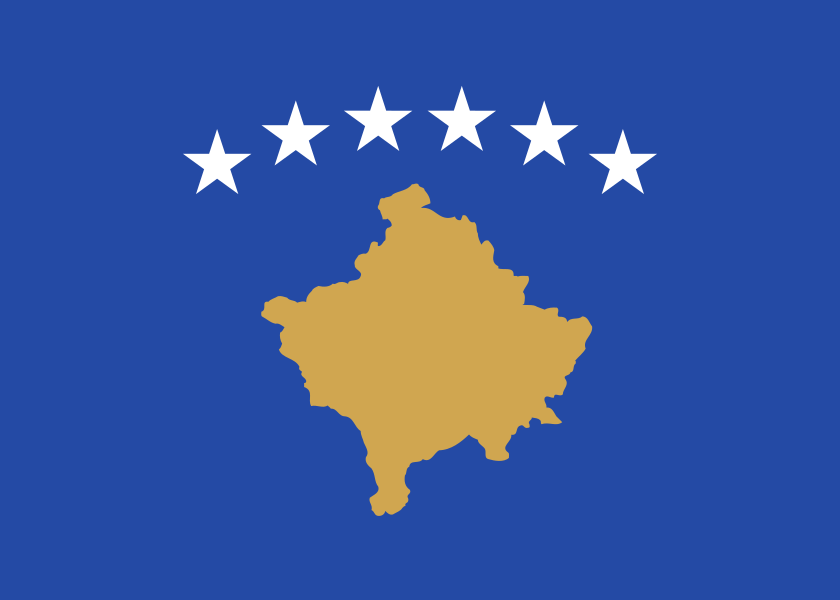
Kosovo
XKWhere to go #
Pristina
The capital and the region's transport hub, which makes it the natural base for day trips in every direction. See the NEWBORN monument and the wildly inconsistent architecture, including statues of American presidents. The city is young, busy and full of genuinely good modern coffee shops.
Prizren
The prettiest and most welcoming town in the country, with obvious Ottoman character and tiled roofs. The stone bridge and the Kaljaja fortress above it are the two fixed points, and the climb up gives you the best panorama in Kosovo. In August the whole place turns into a film festival.
Peja
Sitting at the foot of the Accursed Mountains, this town is the base for anyone who came to hike. Beyond the mountain routes, people come for the old bazaar and the ancient monastery nearby. The mood is more provincial and calmer than the capital.
Gjakova
Known for its restored old bazaar, reckoned to be one of the longest in the Balkans. It is a good place to feel the atmosphere of old trade and to buy something made by a local craftsman. Quieter than the tourist trail and very photogenic.
Mitrovica
A unique place split by the river into Albanian and Serbian halves, which you notice immediately from the flags and the currency. Walking across the bridge feels like crossing an invisible border between two worlds. Climb to the miners' monument to see the contrast from above.
What to see #
Kaljaja fortress: Go up twenty minutes before sunset to watch the sun drop behind the mountains and turn Prizren gold. The walk up is not difficult and entry is usually free.
NEWBORN: A strange but iconic monument in the centre of the capital, repainted every year with a new theme. It stands against the brutalist Palace of Youth and is the obligatory photograph.
Pristina's library: The most unusual building in the Balkans, wrapped in metal mesh and topped with dozens of white domes. You can walk around inside for free, and the interior is every bit as odd as the exterior.
Rugova canyon: Just outside Peja, with dramatic views straight from the road. Zipline, via ferrata and unhurried walks along the cliffs are all on offer here.
Visoki Dečani: A UNESCO-listed Serbian Orthodox monastery with extraordinary medieval frescoes. Your passport will be checked at the gate, since the site is under permanent international protection.
Mirusha waterfalls: A chain of pools and cascades where you can swim in cold water in summer. Easiest reached by car on the road between Pristina and Gjakova.
Gadime cave: An underground world of stalactites formed entirely in marble. The tour lasts about 40 minutes, costs a couple of euros and stays pleasantly cool whatever the weather outside.
Prices #
Currency: The euro is the official means of payment here, even though the region is not formally part of the eurozone. Prices are among the lowest in Europe, which makes a budget trip unusually comfortable.
Cash: Card terminals are rare in small shops and guesthouses, so cash runs the country. Always keep small notes on you for buses, bakeries and market stalls, because change for a fifty is a genuine problem.
Cards and ATMs: Visa and Mastercard work at bank machines, though Raiffeisen and TEB usually add a fee per withdrawal. Amex is essentially useless. Exchange offices operate in the centre of every larger town.
Travel cards: Wise and Revolut work normally and are the cheapest way to withdraw, since your account is already in euros. Decline any terminal offering to convert the amount for you.
Tipping: Nothing is obligatory, but in restaurants people round the bill up. Ten percent will be received with real gratitude.
| Item | Price (USD) |
|---|---|
| Espresso | 1.10 |
| Burek from a bakery | 1.00 |
| Lunch in a kafana | 6.50 |
| Dinner for two | 25.00 |
| Intercity bus ticket | 5.50 |
| Taxi across town | 3.50 |
| Peja beer, 0.5l | 1.80 |
| Car hire per day | 22.00 |
| Litre of petrol | 1.50 |
| Hostel dorm bed | 13.00 |
| Hotel room | 55.00 |
| Museum entry | 2.20 |
| Pack of cigarettes | 3.30 |
| Kilo of cheese | 7.00 |
| Ride to the airport | 16.00 |
Getting around #
Getting in: Pristina airport has budget connections to a long list of European cities, largely because of the diaspora, which keeps fares low. Flying into Skopje in North Macedonia and taking the two-hour bus is often cheaper still.
Buses: Scheduled buses link every town of any size and are how most people travel. Check timetables on the Gjirafa Travel site, but buy the ticket from the driver rather than online.
Car hire: You can pick up a car at the airport from around 15 to 20 euros a day. Kosova Trade frequently waives the deposit and formally permits taking the vehicle into neighbouring countries, which not all firms do.
Taxis: Companies like Blue Taxi operate in the cities and a ride costs very little. Ask for the meter or agree the fare clearly before you get in.
Trains: The rail network barely functions, with rare and extremely slow services. Treat it as a nostalgic day out rather than a way of actually getting somewhere.
The Serbia problem: You cannot cross from Kosovo into Serbia if you did not enter Kosovo from Serbia in the first place, because Belgrade does not recognise the Kosovo entry stamp. Exit via North Macedonia or Montenegro to avoid the argument.
Roads: Intercity highways are in good condition, but mountain sections have serious hairpins. Avoid driving at night, given how aggressively some local drivers take those bends.
Where to stay #
Guesthouses: In the mountains around Peja, stay in family homes where the hosts cook dinner. It is the warmest way to understand daily life here and it costs very little.
Hostels: A dorm bed in Pristina or Prizren runs 8 to 15 euros. These places tend to become social hubs, especially during the big summer festivals.
Where to base yourself: In the capital, look for a room near the pedestrianised Mother Teresa Boulevard. In Prizren, aim for the old town so everything worth seeing is a short walk away.
Booking: Booking.com and Trip.com both work reliably, though messaging the owner directly is sometimes cheaper. Outside the summer season there is always availability.
Season: From July to September the popular places fill fast. If you are coming in high summer, book at least a couple of weeks ahead.
Hotels: City-centre hotels at 40 to 60 euros are plentiful and good value. That price buys modern service, a clean room and a breakfast substantial enough to skip lunch.
What to eat #
Meat: The local kitchen is unapologetically carnivorous. Order qebapa, the small grilled sausages, with flatbread and raw onion; a portion costs almost nothing and will keep you going all day.
Baking: In the morning the towns smell of fresh burek, a layered pastry filled with meat, cheese or spinach. Look for the small bakeries called furra, where it comes out of the oven hot.
Flija: A traditional dish built from many thin layers of batter, cooked over an open fire. Making it is a ritual in itself, and it tastes best in the mountain villages where it is still done properly.
Coffee: Coffee culture here is close to a religion. Macchiato and espresso are made expertly in the plainest cafe, and an invitation "for coffee" means a long conversation rather than a quick cup.
Drinks: Try the local Peja beer and the fierce homemade rakia. With meat you will often be given ajvar, a thick paste of roasted red peppers, which is worth the trip on its own.
Prices: A full lunch in a kafana rarely exceeds six euros a head. Portions are huge, and fresh bread usually arrives with the order at no charge.
Safety #
General picture: The country is genuinely welcoming and street crime is lower than in most European capitals. The attitude towards foreigners is markedly courteous, and people will help you without being asked.
The north: Northern Mitrovica occasionally sees local political flare-ups. Visitors are not the target, but avoid demonstrations and do not get drawn into arguments about the region's status.
Mines: Remote forest near the borders may still contain uncleared ordnance from 1999. Stick to marked trails when hiking and never wander into the undergrowth.
Roads: The main hazard is other drivers, some of whom treat the rules as decorative. Take real care at crossings and while driving a rental.
Pickpockets: Watch your pockets in crowds and around the Pristina bus station. Petty theft happens, though it is not widespread or systematic.
Water: Tap water is not recommended for drinking. Bottled water is sold everywhere and costs almost nothing.
Advisories: Conditions in the north can shift with regional politics, so check your own government's travel advisory before planning a route through Mitrovica.
Etiquette and culture #
Politics: Relations with Serbia are an extremely sensitive subject. Do not volunteer an opinion, and do not use Serbian place names in Albanian-majority areas.
Hospitality: People here are open and genuinely eager to help a traveller. If you are invited to a table or offered coffee, accept, if only out of politeness; refusing reads as a rejection.
Religion: Society is secular, but observe the dress code at mosques and monasteries. Shoulders and knees covered, and women will need a headscarf to enter a mosque.
Shoes off: Always take your shoes off when entering a home or a mosque. It matters here and is noticed immediately.
Gestures: Be careful reading body language. A sharp single upward nod can mean no, which catches out most visitors on their first day.
Corso: Kosovars dress well and spend their evenings walking the pedestrian streets. The nightly promenade of well-turned-out people is a real and very lively part of urban culture.
Connectivity #
SIM cards: The main operators are Vala and IPKO. A tourist package with data costs 5 to 15 euros from any branded shop, and you will need your passport to register it.
Internet: Speeds are high, particularly in the larger towns. 4G covers the main roads, though signal drops in the deeper mountain canyons.
Messaging: WhatsApp and Viber are how you reach apartment owners and taxi drivers. Locals generally prefer a message to a phone call.
eSIM: Installing a virtual SIM before you arrive is the least effort, and several international providers cover Kosovo. It saves hunting for a shop on day one.
Wi-Fi: Free wireless is in nearly every cafe and hostel. The password is often written up on the wall, and staff hand it over without being asked twice.
Roaming: Note that Kosovo is frequently excluded from standard European roaming bundles, including EU roam-like-at-home packages. Turn data off on your home SIM to avoid an unpleasant bill.
Phrasebook #
| English | Albanian | Pronunciation |
|---|---|---|
| Hello (formal) | Përshëndetje | per-shen-DET-yeh |
| Hi | Tung | toong |
| Thank you | Faleminderit | fa-le-min-DE-rit |
| Please | Ju lutem | yoo LOO-tem |
| Yes | Po | poh |
| No | Jo | yoh |
| How are you? | Si jeni? | see YE-nee |
| Good | Mirë | MEE-ruh |
| Do you understand? | A kuptoni? | ah koop-TO-nee |
| How much is it? | Sa kushton? | sah koosh-TON |
| Where is the toilet? | Ku është banjo? | koo USH-tuh BAHN-yo |
| Excuse me | Më falni | muh FAL-nee |
| The bill, please | Faturën, ju lutem | fa-TOO-run yoo LOO-tem |
| Water | Ujë | OO-yuh |
| Coffee | Kafe | ka-FEH |
| Beer | Birrë | BEE-ruh |
| Help! | Ndihmë! | n-DEE-muh |
| Goodbye | Mirupafshim | mee-roo-PAF-shim |
| Brother (slang) | Vlla | vlla |
| Awesome (slang) | Shumë fort | SHOO-muh fort |
| Good morning | Mirëmëngjes | mee-ruh-mun-GYES |
| I don't understand | Nuk kuptoj | nook koop-TOY |
Good to know #
Maps: Download Organic Maps or Maps.me offline, because mobile data lets you down in the mountains. They know the forest trails and the small lanes of the old quarters better than the online alternatives.
Bus planning: The Gjirafa site is the best tool for working out intercity routes. It shows current departure times and an indicative fare between any two towns.
Accommodation: Booking and Trip.com both show honest review histories and let you reserve city hotels without prepayment, which is useful when your plans are loose.
Emergencies: Services answer on 112, but for anything serious it is worth also calling the police directly on 192 to speed things up.
Plugs: Standard European type C and F sockets at 230 volts. Anyone travelling from mainland Europe needs no adapter; visitors from the UK, North America or Australia do.
Documents: Carry your passport when travelling near Mitrovica or visiting the monasteries, since checks happen and photographs of documents are not accepted at monastery gates.