Netherlands
NLA country of canals, tulips and bicycles. Amsterdam is a museum city on the water — the Rijksmuseum and Van Gogh, coffee shops and open-mindedness. Beyond the capital lie windmills, cheese markets, endless tulip fields and one of the most liveable countries in the world.
Where to go #
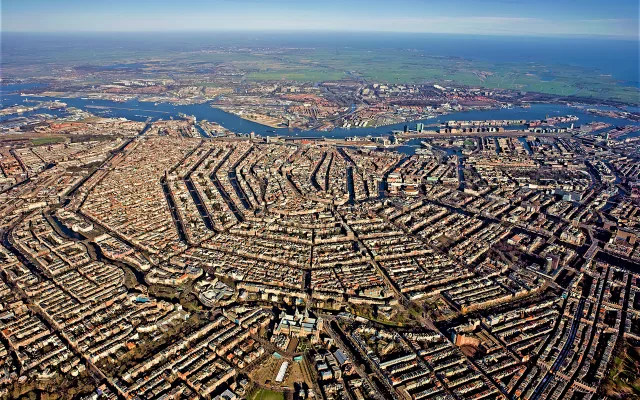
Amsterdam
The city of canals — the Rijksmuseum, Van Gogh, bicycles and the Jordaan.
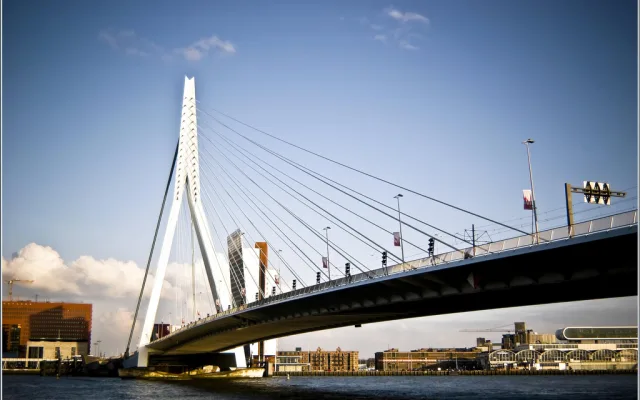
Rotterdam
A modern architectural landmark with Cube Houses, Markthal, and the largest port in Europe.
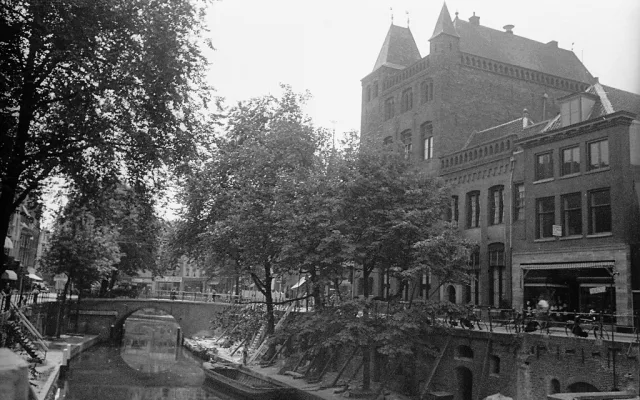
Utrecht
A compact university city with two-level canals, the Dom Tower, and a world-class railway museum.
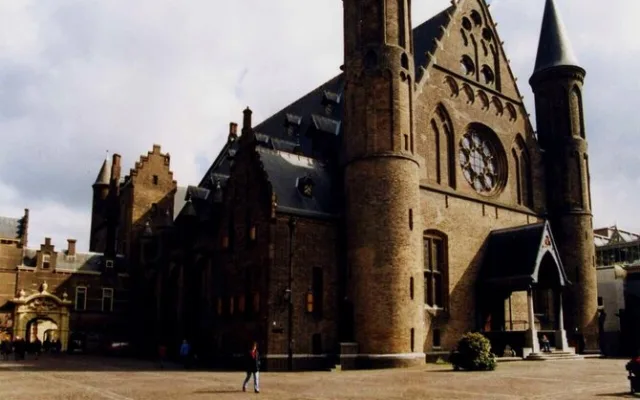
The Hague
Royal residence and seat of the UN's International Court of Justice — the Mauritshuis with Vermeer, and Scheveningen beach.
What to see #
Rijksmuseum: The country's principal art museum in Amsterdam, where you go to see Rembrandt's Night Watch and Vermeer's small masterpieces. Tickets at 27 euros must be bought online for a specific time slot, and there is no way around that.
Van Gogh Museum: The largest collection of his work anywhere, including the sunflowers and the self-portraits. Slots sell out weeks ahead, so plan your visit early through the museum's official site or you will find the doors closed.
Anne Frank House: A heavy but important place of memory, set in the annexe where a Jewish family hid during the occupation. Tickets open six weeks ahead, online only, and disappear within hours, so watch for the release dates.
Keukenhof: A blooming paradise of millions of tulips, open only eight weeks a year in spring. Go on a weekday right at opening time to enjoy the scent and the colour without the endless crowds and to get photographs with nobody else in them.
Kinderdijk: A group of nineteen historic windmills that became the emblem of the Dutch fight against the encroaching sea. It is among the most authentic and photogenic places in the country, sitting a short hop from industrial Rotterdam where history meets landscape.
Zaanse Schans: A popular open-air village museum with working mills, a traditional cheese dairy and a clog workshop. It is twenty minutes by train from the capital, which makes it easy to see the Holland of the past and taste farm cheese on the spot.
Mauritshuis: The royal picture gallery in The Hague, home to Girl with a Pearl Earring. This compact museum in a magnificent old mansion lets you see the best of the Golden Age in a calm, almost domestic setting.
Prices #
Currency: The Netherlands uses the euro and is one of the more expensive countries in the region for active travel. Accommodation, transport and eating out all cost noticeably more than in neighbouring Germany or Belgium, which is worth factoring into your planning.
Cards: The country is nearly cashless, and plenty of supermarkets and small cafes refuse paper money on principle. Visa and Mastercard debit cards work almost everywhere, but note that some shops and market stalls accept only Maestro or local PIN cards, so carry a backup and a little cash.
ATMs and fees: Geldmaat machines are the standard, and withdrawals are generally free with an EU card. A Wise or Revolut account saves you the foreign exchange spread if you are coming from outside the eurozone, and Amex is accepted far less widely than Visa.
Tourist tax: Amsterdam levies the highest tourist tax in Europe at 12.5% of your accommodation cost. Booking sites frequently exclude it from the headline price, so you pay separately at check-in or check-out.
Tipping: In table-service restaurants, 5 to 10% of the bill is normal if you enjoyed yourself. In self-service cafes and bars, rounding up to the nearest euro is quite enough.
| Item | Price (USD) |
|---|---|
| Herring in a bun | 6.50 |
| Portion of fries | 5.50 |
| Stroopwafel | 3.50 |
| Cappuccino | 4.80 |
| 0.5l glass of beer | 7.50 |
| Lunch in an eetcafe | 22.00 |
| Dinner for one | 45.00 |
| 24-hour transit pass | 10.50 |
| Museum entry | 28.00 |
| Bike rental, per day | 16.00 |
| Train to the airport | 6.80 |
| Three fridge magnets | 5.50 |
| 500g of Gouda | 12.00 |
| 0.5l bottle of water | 2.50 |
| Croquette from FEBO | 3.00 |
Getting around #
Getting here: Schiphol is one of Europe's great hubs, with direct flights from almost every North American and European city and connections through it to everywhere else. From London, Paris, Brussels or Frankfurt the Eurostar and Thalys high-speed trains put you in central Amsterdam without ever seeing an airport.
Trains: The NS network is the best way to move between cities. Intercity services run frequently and fast, while Sprinter trains stop everywhere, which suits short hops out to the quieter Dutch suburbs.
Paying: You can tap a contactless bank card straight at the gate through OV-pay, or buy an anonymous transit card for 7.50 euros. For train journeys that card needs a balance of at least 20 euros or the gate simply will not open.
Checking in and out: Always tap the yellow posts on the way onto the platform and again on the way out. Miss the check-out and the system charges you the maximum penalty fare, well above what the journey actually cost.
Bicycles: Dedicated cycle paths cross the whole country, usually surfaced in distinctive red. Rental runs about 15 euros a day, but expect to leave a deposit or pay theft insurance, because bikes vanish regularly in the big cities.
Discounts and ferries: Buying NS tickets online at least a day ahead can find off-peak fares discounted by up to 60%, while station machines always add a euro for issuing a paper card. From the north exit of Amsterdam Centraal, free ferries run around the clock across the IJ, carrying pedestrians and cyclists over to the studios and galleries of Noord.
Where to stay #
Prices: Rates in the capital are unreasonable and rooms in old buildings are frequently tiny. Even a basic central room starts at 150 euros, so book months before you travel.
Alternatives: A good way to save is basing yourself in a neighbouring town such as Zaandam or Haarlem. Trains reach Amsterdam Centraal in about fifteen minutes and rooms run thirty to forty percent cheaper for comparable comfort.
Taxes: Always check whether the city tax is included in your booking, since the capital charges 12.5%. Elsewhere in the country the levy is usually a flat three to seven euros per person per night.
Season: In late April and May, at the height of the tulip bloom, finding anything reasonable is close to impossible. Prices for even modest guesthouses go through the roof in that window, so plan and book as early as you can.
Staircases: Traditional Dutch houses have famously narrow, steep stairs that are genuinely hard to climb. If you have heavy luggage or dodgy knees, confirm there is a lift, because plenty of old buildings simply do not have one.
Where to stay: For a quieter trip, look at Oost or De Pijp, where locals live and the noise drops off. The Jordaan is stunning but expensive, and evenings there bring loud groups past your window well into the night.
What to eat #
Herring: The great Dutch culinary set piece is haring, young pickled herring with onion and gherkin. It is sold from dedicated street stalls and traditionally eaten whole, held by the tail with your head tipped back.
Street food: Try the local fries with thick mayonnaise and hot bitterballen, crisp-crumbed balls of ragout. Avoid the cheap outlets in the busiest spots around the stations and look instead for the places where Dutch people are queuing.
Vending walls: The cult chain FEBO sells hot croquettes straight out of glass hatches in the wall. You drop in the coins, open the door and take your food without speaking to anyone, which saves a surprising amount of time.
Sweets: Thin caramel-filled stroopwafels are best bought fresh off the iron at a food market. If you buy a packet in a shop, rest one on top of a mug of hot tea so the caramel inside goes soft and stretchy.
Cheese: Gouda, Edam and Maasdam underpin the national export trade and are best bought in a proper cheese shop. They always offer free tastings so you can settle on the right age or the right added spice.
Colonial legacy: Historical ties made Indonesian food enormously popular here. Order rijsttafel at least once, a spread of twenty small plates of meat, rice and vegetables that is designed to be shared around a large table.
Safety #
Cycle lanes: The single biggest hazard for a visitor is the red-surfaced bike lane. Never walk in one or stand across it, because cyclists move fast and cannot always stop for an obstacle that appears out of nowhere.
Bike theft: Stealing bicycles is close to a national sport, so use two heavy locks and secure the frame to something fixed. Brightly coloured rental bikes are taken less often than plain black ones, which are far easier to resell quietly.
Pickpockets: Be alert in packed trams and on Dam Square, where pickpockets work steadily. Do not carry valuables in a backpack worn on your back and never put a wallet in a back pocket in a dense tourist crowd.
Cannabis: Soft drugs are sold only in licensed coffeeshops to people over eighteen with ID. Never buy anything from street dealers in the centre; it is both illegal and genuinely dangerous to your health.
Photography: Photographing the women in the windows of the Red Light District is absolutely forbidden. Break the rule and doormen may take or smash your phone, and the police will add a substantial fine on top.
General feel: Dutch cities count among the safest in the world and walking at night is fine. Locals will happily give directions and the police are conspicuously calm and professional, though it never hurts to check your own government's travel advisory before you go.
Etiquette and culture #
Bluntness: The Dutch are famously direct and will simply say what they think. It is not an attempt to offend but a cultural preference for openness and for not wasting anybody's time.
Windows: The old habit of leaving curtains open persists as a signal that the household has nothing to hide. In the evening you can legitimately admire people's living rooms as you walk past houses in any city centre.
Orange: On 27 April the country celebrates King's Day and everyone dresses in bright orange. The canals fill with boats and loud music, impromptu street markets appear everywhere and the whole place turns into one carnival.
Sustainability: People here are serious about the environment and about recycling. Almost every supermarket has a machine that takes empty bottles and cans and issues a voucher you can spend on your shopping.
Gezelligheid: This word describes a particular state of warmth and ease in good company. It can be a candlelit dinner in an old cafe or simply a walk along the canals with friends in fine Dutch drizzle.
Bikes: The bicycle here is not sports equipment, it is a way of life across every social layer. Everyone rides, from students to senior civil servants, so respect their legal priority on the road.
Connectivity #
English: Dutch is a hard language to learn and you will not need a word of it. Practically everyone, including cashiers and drivers, speaks excellent English and is happy to use it, and menus, signs and museum labels are routinely bilingual.
SIM cards: Prepaid SIMs from KPN or Vodafone are sold at any airport or phone shop. For a short visit an eSIM from a provider like Airalo is far more convenient if your phone supports it.
Apps: Install 9292, which plans perfect door-to-door routes across every mode of transport. The official NS app handles ticket purchases and warns you about delays.
Internet: Free fast Wi-Fi is standard on intercity trains, at stations and in most city cafes. 5G coverage extends over the whole country, so you stay connected even deep in the countryside.
Roaming: EU and UK travellers usually roam here on their home allowance, but visitors from further afield should check rates before landing and lean on messaging apps. Hotel internet is normally included, though speeds in old buildings can be modest.
Politeness: Open any exchange with "Hallo" and close it with "Dank u wel". The Dutch value courtesy and are noticeably warmer to visitors who bother with the basics.
Phrasebook #
| English | Dutch | Pronunciation |
|---|---|---|
| Hello | Hallo | hah-LOH |
| Good morning | Goedemorgen | khoo-duh-MOR-khun |
| Thank you | Dank u wel | Dahnk oo VEL |
| Please | Alstublieft | AHLS-too-bleeft |
| Yes / No | Ja / Nee | Yah / Nay |
| How much is it? | Hoeveel kost het? | HOO-fale kost het? |
| Tasty! | Lekker! | LEK-ker! |
| The bill, please | De rekening, alstublieft | Duh RAY-kuh-ning, AHLS-too-bleeft |
| Beer | Bier | Beer |
| Sorry | Sorry | SOR-ree |
| Goodbye | Tot ziens | Tot zeens |
| Help! | Help! | Help |
| Cheers! | Proost! | Prohst |
| Where is the station? | Waar is het station? | Vaar is het sta-SYON? |
| Bicycle | Fiets | Feets |
| Cosy, convivial (slang) | Gezellig | khuh-ZEL-likh |
| Awesome (slang) | Vet | Fet |
| Sweetheart (slang) | Schatje | SKHAT-yuh |
| Layabout (slang) | Luilak | LOW-lahk |
| Bye-bye (slang) | Doei | Dooey |
| Do you speak English? | Spreekt u Engels? | Spraykt oo ENG-uls? |
| Excuse me | Pardon | par-DON |
Good to know #
Power: The Netherlands uses standard European type C and F sockets at 230 volts. Travellers from the UK or North America need a simple adapter, and North Americans should check their devices handle 230V.
Water: Dutch tap water is among the best in the world and completely safe to drink. Fill a reusable bottle from any tap and save yourself the cost and plastic of bottled water.
Toilets: Free public toilets are rare, and using one usually costs between fifty cents and a euro. Stations have modern automatic cubicles that accept contactless cards only.
Pharmacies: Mild painkillers and cold remedies are sold in Kruidvat shops, but anything serious needs a prescription. Carry travel insurance, because a doctor's visit without it runs to several hundred euros even for something trivial.
Smoking: Tobacco is banned in restaurants, hotels, on station platforms and on public transport. Fines are hefty, so look for the marked outdoor smoking areas.
Post: Yellow PostNL boxes are common on the street and stamps are sold in any souvenir shop. A postcard home takes one to three weeks depending on destination and makes a cheap, pleasant memento of the trip.