
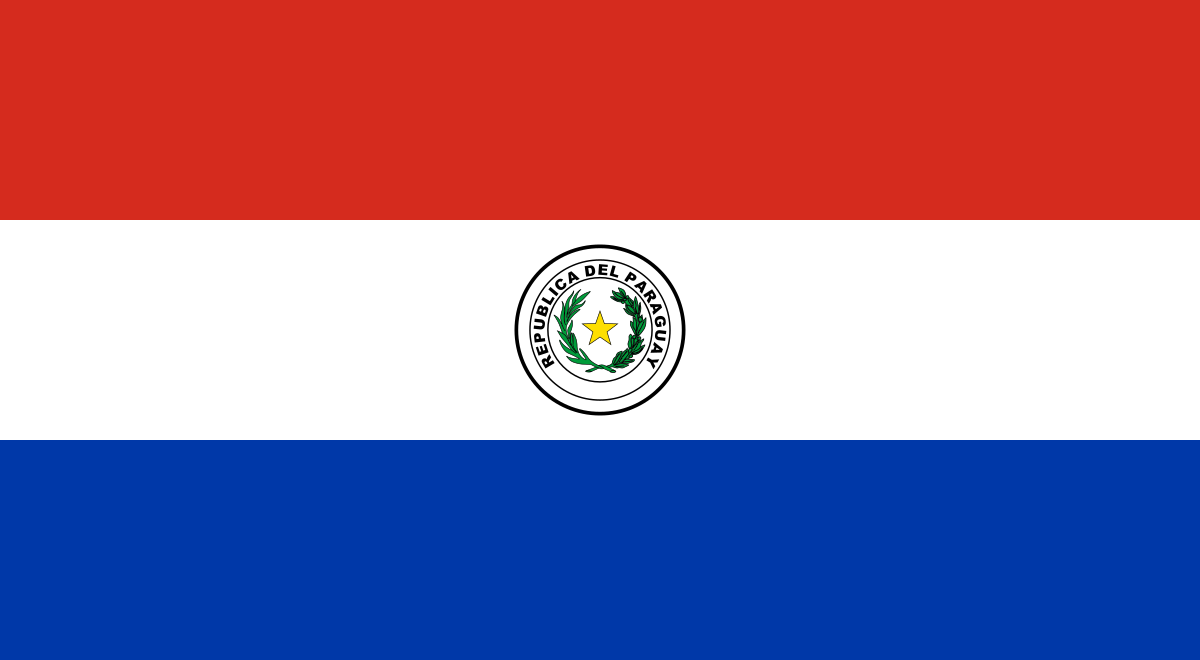
Safety in Paraguay
A rating built from four independent indices, plus scams, laws and what to do when something happens
Rating calculated from the indices below
Indices checked on 10.08.2026
Position in global indices
Save these before you fly
The general picture
The general picture: Paraguay is one of the calmer countries in the region, with low levels of violent crime, but that is not a reason to switch off entirely. Ordinary urban caution covers most of it.
Phone theft: the most common problem by far. Do not stand on a busy street scrolling, because thieves on motorbikes work exactly those moments.
Districts: in the capital avoid Chacarita completely. The old centre empties out quickly after dark, so take a taxi rather than walking back through it at night.
The border zone: be more careful in Ciudad del Este. The area is known for smuggling, and the dark side streets are not where you want to be carrying a camera.
Traffic: driving is chaotic and rules are treated as suggestions. Cross with full attention even on a green light, and never assume a car will stop for you.
Health: dengue fever is a real risk from mosquito bites. Use repellent from December to March, drink bottled water, and check your own government's travel advisory before you travel to remote parts of the Chaco.
How tourists get scammed
Paraguay is rarely visited and fairly calm, and deception as an industry has not developed.
Asunción. Pickpockets in the centre and at the Mercado Cuatro, and theft from cars. Nobody walks the centre at night.
Ciudad del Este. A border city near the Iguazú falls and one of South America's largest smuggling centres. Electronics and counterfeits are traded there, money changers operate, and the atmosphere is noticeably tenser than in the rest of the country. Visit by day with company and do not walk in the evening.
Taxis. Agree in advance. The MUV and Bolt apps operate in Asunción.
Currency exchange. In Ciudad del Este money is changed everywhere and short-changing is frequent. In Asunción, change at banks.
Counterfeits. Buying fakes in Ciudad del Este and carrying them across the border into Brazil or Argentina risks confiscation and a fine.
What gets you fined or jailed
Border areas. The Paraguay–Brazil–Argentina triple frontier is known for smuggling and cross-border crime. Concepción, San Pedro and Amambay departments in the north see armed group and drug trafficking activity. People do not go there.
Drugs. Paraguay is a major cannabis producer and a cocaine transit point. The law is strict and borders are screened.
Photography. Military installations and police are off limits.
Drones. Permission is required.
The Chaco. The western half of the country is semi-desert and nearly uninhabited. Travel there requires four-wheel drive and reserves of fuel and water. There is no coverage.
Roads. Beyond the main highways the surface is dirt and washes out in the rains. Nobody drives at night.
Documents. Carry a passport copy; police check.
Cash. Cards work in Asunción; inland you need guaraníes.
Health: vaccines, medicines, care
Yellow fever. Vaccination is advised, and a certificate is required when travelling on to several neighbouring countries.
Dengue. Major epidemics occur regularly, Asunción included. The mosquito bites by day and repellent is needed constantly.
Vaccinations. Hepatitis A, typhoid and rabies.
Malaria. Minimal risk, mainly in areas bordering Brazil.
Water. Asunción's tap water is formally usable, but visitors are better off with bottled.
Heat. Paraguay is among South America's hottest countries: summer (December to February) in the Chaco passes 45°C at high humidity. Dehydration arrives quickly.
Tereré. The national cold mate, drunk through a shared straw all day. Part of the culture, but bring your own if you have stomach concerns.
Healthcare. Asunción has acceptable private clinics. The Chaco and the north have almost none. Insurance is needed.
Emergency numbers: 911 unified, 141 ambulance.
Police: how to handle them
Paraguay ranks low on the Corruption Perceptions Index, and roadside extortion occurs.
Traffic police. Stops happen with attention paid to hire car documents. Calmly ask for an official report.
Reporting theft. Reports are taken and certificates issued. Spanish is needed; Guaraní is the second official language.
Asunción. Urban caution at the level of an ordinary Latin American city: no valuables in view, and a car at night.
Ciudad del Este. A separate story: a high concentration of shadow economy, pickpockets and fraudsters. By day and with company.
What actually matters. Paraguay is calmer than most of its neighbours, tourists are few, and attitudes toward them are friendly. The main risks are heat, dengue, roads and the border areas.
Emergency number is 911.
What else to check
The rating is built from open international indices and foreign-ministry advisories; links to the primary sources are in the cards above. Conditions change faster than annual reports come out — check current travel advice before you go.