
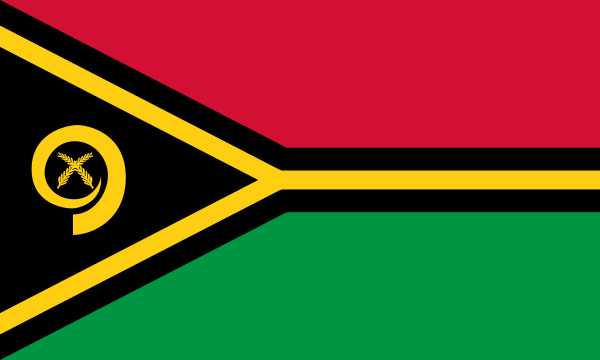
Safety in Vanuatu
A rating built from four independent indices, plus scams, laws and what to do when something happens
Rating calculated from the indices below
Indices checked on 10.08.2026
Position in global indices
Save these before you fly
The general picture
Overall: Vanuatu is one of the calmest countries in the Pacific, with very little crime. People are exceptionally friendly towards independent travellers and will help with directions or transport unprompted.
Natural hazards: The real risk is geological and meteorological. From November to April is cyclone season, when wind and rain can shut down air travel entirely for days.
Health cover: Serious treatment is only available at the hospital in the capital; the islands have small clinics. Make sure your policy pays for an air ambulance to Australia, because major injuries cannot be handled locally.
Wildlife and insects: There are no venomous snakes or dangerous animals in the forests, but plenty of biting insects. The northern islands carry a malaria risk, so use repellent and cover up in the evening.
The ocean: Strong currents and sharp coral catch out even good swimmers. Wear reef shoes going in and do not swim far from shore in unfamiliar places with nobody else around.
After dark: Port Vila goes very dark at night because electricity is rationed. Carry a torch, stick to lit streets and check your own government's travel advisory before you travel.
How tourists get scammed
Vanuatu is an archipelago of eighty islands with very low crime and friendly people. Schemes barely exist here.
Port Vila. Pickpockets at the market and the port on cruise ship days. The level is low.
Taxis and buses. Minibuses with a B on the plate are local transport, stopping on request at a fixed low fare. Taxis carry a T; agree the price beforehand.
Excursions. The Yasur volcano on Tanna is the country's main attraction. Trips are arranged through operators including a flight and ground transfer. Check whether the fee to the community that owns the volcano is included.
Kastom. Traditional law applies on the islands, and visits to villages, waterfalls and sites happen with the community's permission and for payment. That is the norm, not extortion.
Cash. Cards are accepted in Port Vila and Luganville; on other islands you need vatu in cash.
What gets you fined or jailed
Kastom law. Villages apply traditional rules and prohibitions (taboo). Your guide will explain: do not enter certain places, do not photograph ceremonies, do not touch sacred objects. A breach is taken seriously and resolved through compensation to the community.
Land. Almost all land is communally owned. A beach, waterfall or path may belong to a village, and a passage fee is normal.
Yasur volcano. Active, with a changing activity level. Access closes when it rises. Do not go beyond the permitted line near the crater: tourists have died.
Drugs. The law is strict. Kava is legal and part of the culture.
Drones. Permission is required.
Biosecurity. Importing food, seeds and plants is regulated.
Roads. Driving is on the left, and outside Port Vila and Luganville the roads are dirt.
Health: vaccines, medicines, care
Malaria. Risk exists on the northern islands, Espiritu Santo and Malekula included. Port Vila and Efate are considered low risk. Prophylaxis is discussed for your route.
Dengue. Outbreaks occur.
Vaccinations. Hepatitis A and typhoid; rabies is not needed (the country is rabies-free). A yellow fever certificate is required from arrivals out of endemic countries.
Water. Safe in Port Vila; bottled or boiled on the islands.
Cyclones. Vanuatu regularly tops world rankings of vulnerability to natural disasters. The cyclone season runs November to April and the hits can be devastating.
Earthquakes and volcanoes. The country sits on the Ring of Fire with high seismic activity.
The sea. Reefs, stonefish and currents. Reef shoes are needed.
Healthcare is weak. The hospital in Port Vila is basic and other islands have health posts. Anything serious means evacuation to New Caledonia, Australia or New Zealand. Insurance with evacuation cover is essential — the key point for Vanuatu.
Emergency numbers: 112; 22222 for Port Vila police.
Police: how to handle them
Vanuatu is one of the calmest countries in the Pacific. Violent crime against tourists is nearly unknown.
Police. Few in number; English and French are official alongside Bislama, so communication is simple.
Reporting theft. Reports are taken; cases are rare.
Port Vila at night. Broadly calm, but take a taxi after the bars close.
The islands. Remote islands may have no police at all and no communications. This is not a security problem but a logistical one: help will be far away.
What actually matters. In Vanuatu the risk comes from nature: cyclones, the volcano, the sea and remoteness. The country is reckoned among the happiest places on the planet, and attitudes to visitors reflect that.
Emergency number is 112.
What else to check
The rating is built from open international indices and foreign-ministry advisories; links to the primary sources are in the cards above. Conditions change faster than annual reports come out — check current travel advice before you go.