 Города и дороги
Description
The gate of the Rhodopes twenty kilometres from Plovdiv: Asen's Fortress with its cliff-edge church of 1231, Bachkovo Monastery up the gorge and the road into the mountain villages.
Wiki
Asenovgrad is a town in southern Bulgaria at the very entrance to the Rhodopes, with around fifty thousand people, twenty kilometres from Plovdiv. It stands where the Chepelarska river comes out of the mountains onto the Thracian Plain, and it has controlled that passage throughout its history. The town's earlier name was Stanimaka; the present one was given in 1934 in honour of Tsar Ivan Asen II, who rebuilt the fortress above the gorge. Asenovgrad is called the gate of the Rhodopes: the roads to the monasteries and the mountain villages start here.
Why come and what to actually see
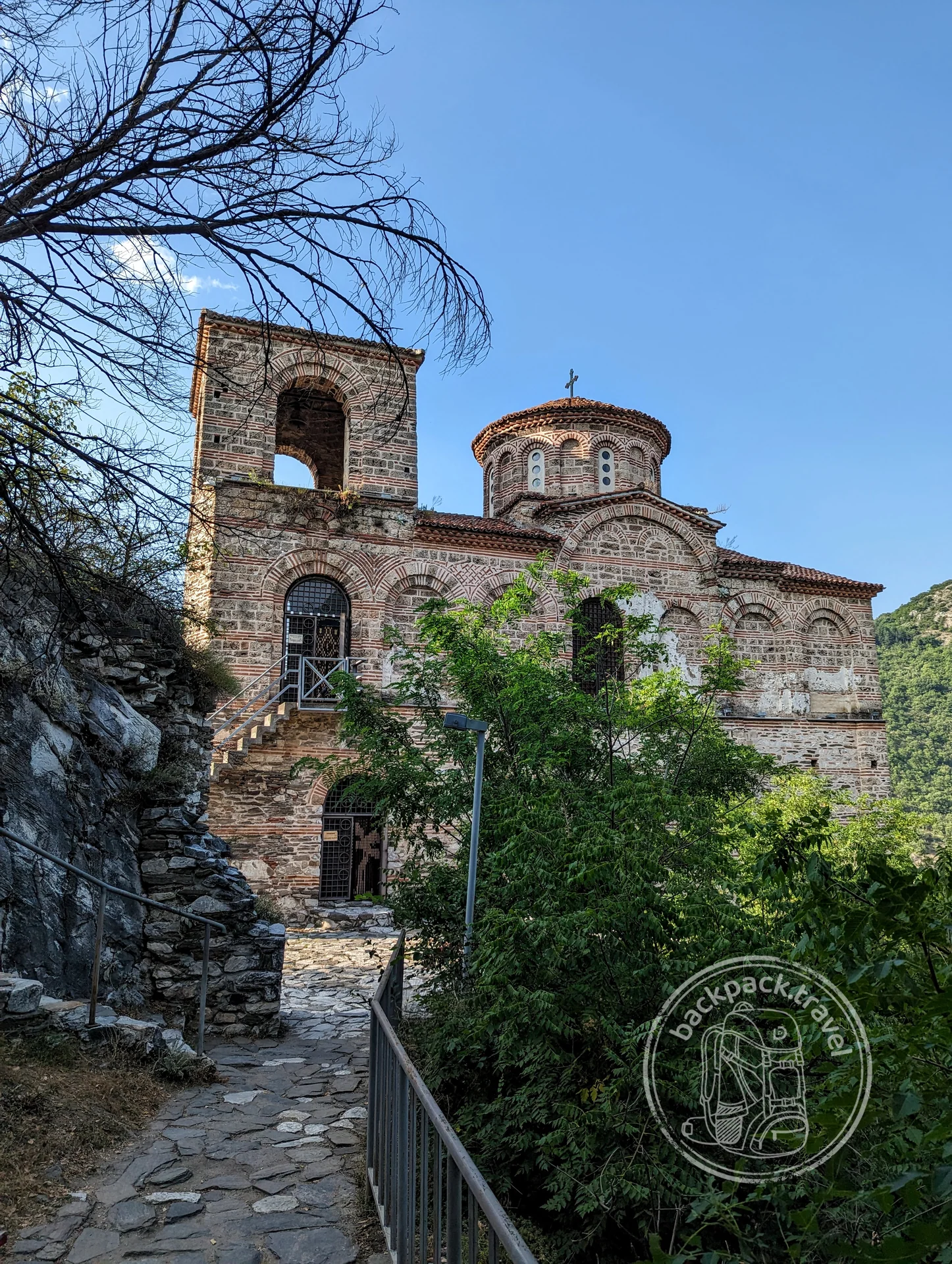
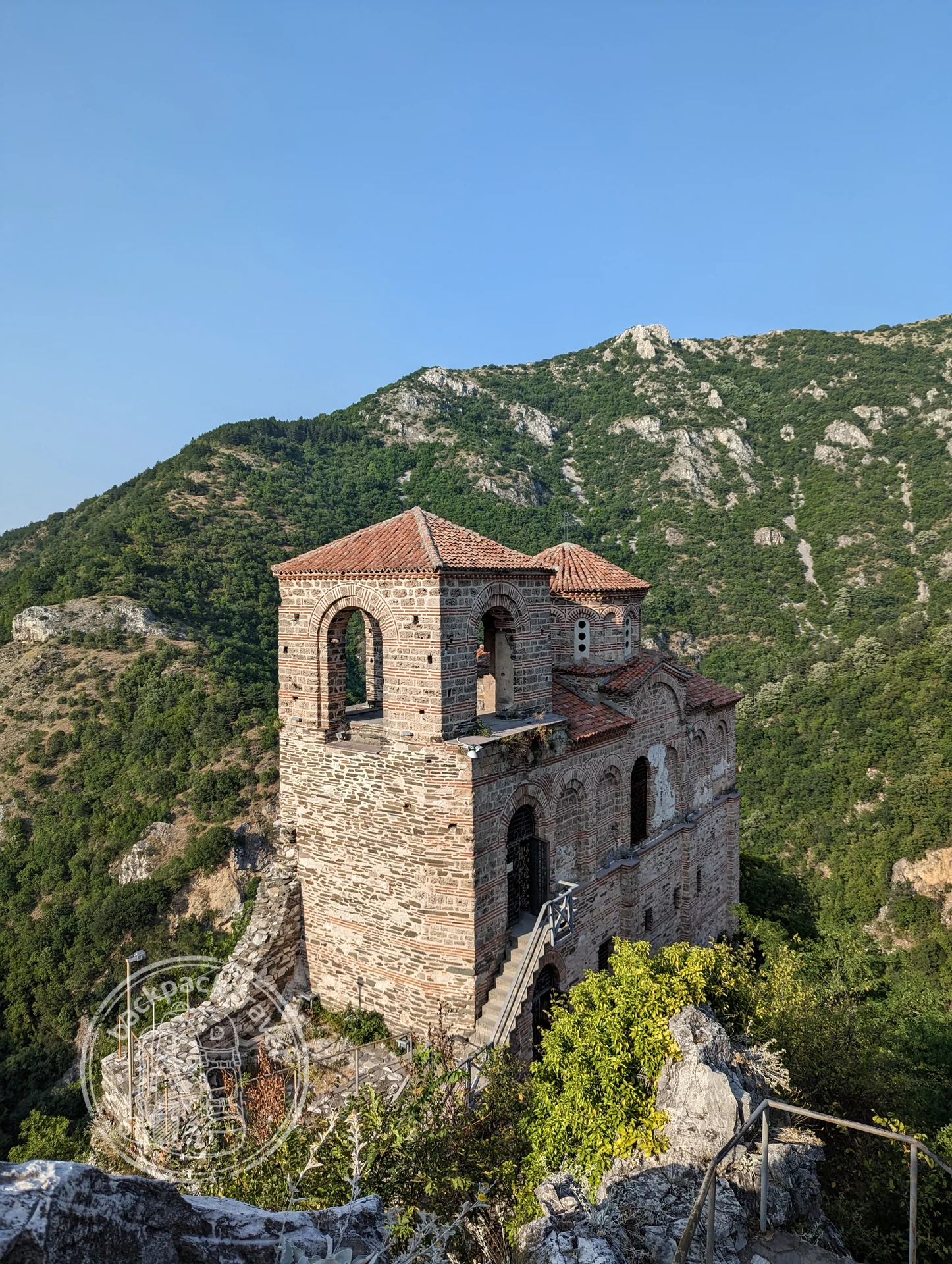
Asen's Fortress sits on a rock spur three kilometres out of town on the road into the mountains. The site has been occupied since Thracian times, the Byzantines built the stronghold, and its present form was given to it in 1231 by Ivan Asen II, as an inscription cut into the rock by the entrance records. Only fragments of the walls and towers are left, but the church of the Mother of God of Petrich has survived almost intact: a two-storey church with a bell tower, a type rare in the Balkans, in which the lower level served as a burial vault and the upper as the church proper. Fourteenth-century frescoes remain inside. The building stands right at the edge of the drop and from below reads as a continuation of the rock.
Bachkovo Monastery, second in importance in Bulgaria after Rila, is ten kilometres further up the gorge. It was founded in 1083 by the Bakuriani brothers, Georgians in Byzantine service, and keeps its eleventh-century ossuary with frescoes, the only building to survive the Ottoman sacking. The main church was painted in the nineteenth century by Zahari Zograf.
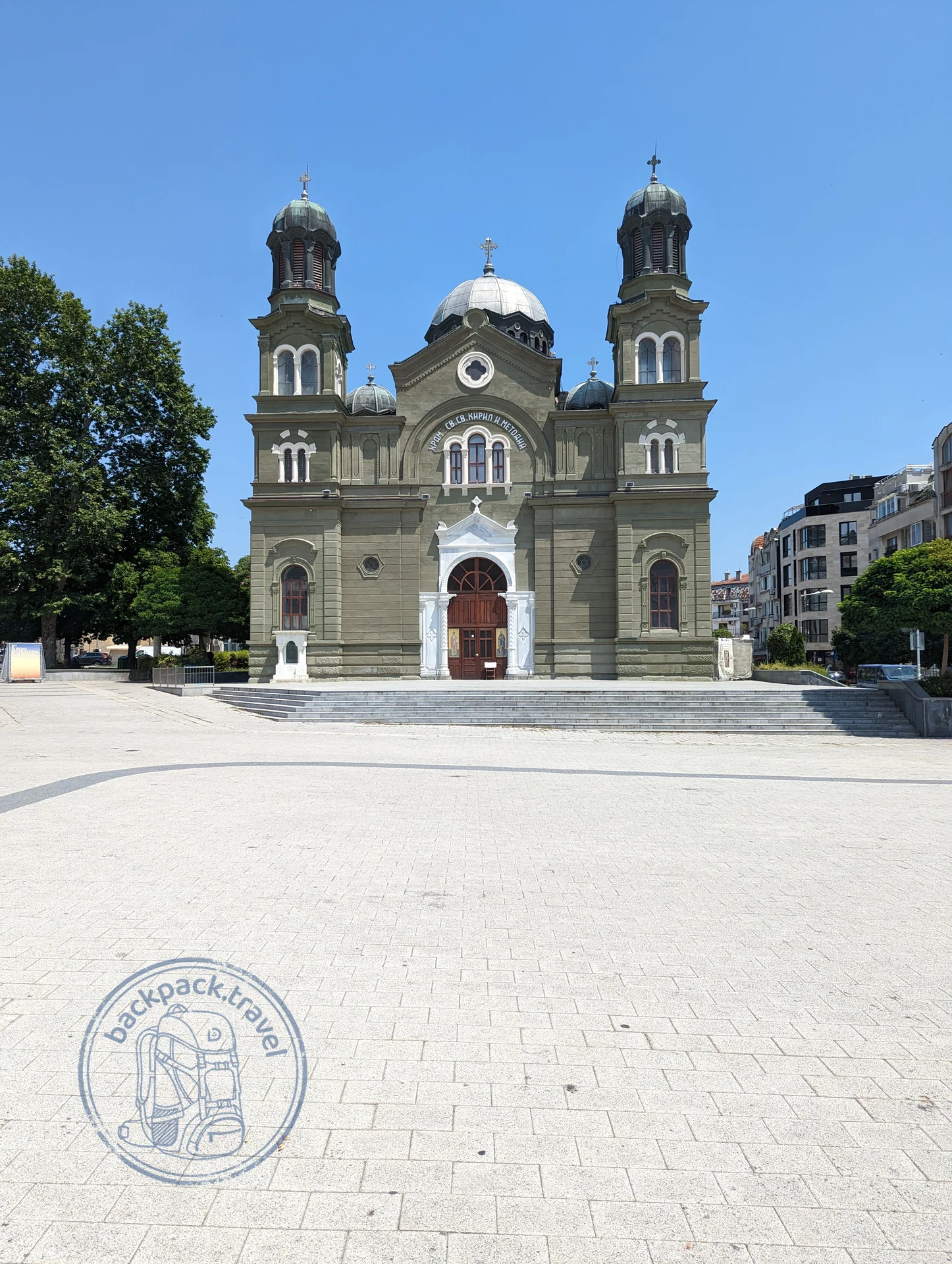
The town itself has dozens of churches — per head of population Asenovgrad leads the whole country — and a small palaeontology museum with finds from the quarries around it.
Getting there and getting around
The nearest airport is Plovdiv, but scheduled flights there are few; flying into Sofia and continuing by road is more practical. Buses and local trains run from Plovdiv every half hour and take twenty to thirty minutes. From Sofia it is about two and a half hours by bus.
The town is small and can be covered on foot. A road leads to Asen's Fortress, served by the bus to Smolyan; you can ride out and walk the last three hundred metres uphill, or take a taxi. From the car park to the church is about ten minutes up steps. The same buses go on to Bachkovo Monastery.
Where to stay
The choice is modest: a few small town hotels and family guest houses, at low prices. Many people come out for the day from Plovdiv, where the choice is incomparably wider, and that makes sense if the mountains are not on the plan.
If the Rhodopes are the point, though, Asenovgrad works as a first night before heading up. Further along the gorge, in the villages of Bachkovo and Narechen, there are guest houses in mountain style, quieter and facing the slopes.
Day trips
Plovdiv, with its old town, Roman theatre and stadium, is twenty kilometres away, half an hour: the obvious pairing.
One road leads into the depths of the Rhodopes, and along it are the Wonderful Bridges, natural stone arches over a river seventy kilometres out, the Uhlovitsa cave, the ski resort of Pamporovo and the town of Smolyan. Further on, a hundred and thirty kilometres away, is Shiroka Laka with its architectural reserve, and beyond that the Trigrad Gorge with the Devil's Throat, the cave into which an underground river disappears with a roar.
When to come
April to October. In spring the gorge is green and the river full; in autumn the Rhodopes give the best colour, with the beech woods on the slopes turning yellow at the end of October. Daytime temperatures then run from eighteen to twenty-eight degrees.
Summer on the plain is hot, up to thirty-five, but the gorge and the monastery are noticeably cooler thanks to the river and the shade. Winter is mild down below and snowy higher up; the fortress is open all year, but the steps to the church ice over and the road into the Rhodopes sometimes calls for chains. The busiest days are the Orthodox feasts, when the whole district converges on Bachkovo Monastery.
Food and money
The cooking is Rhodope and substantial: patatnik, a potato flatbread with white cheese; cheverme, lamb on a spit; klin, a layered pie. Along the road by the monastery people sell honey, wild-berry jam and fried fish from the mountain farms. Asenovgrad is also known for its wine, and the vineyards begin immediately outside the town.
Since January 2026 the currency here is the euro: the lev was converted at the fixed rate of 1.95583 to the euro and stopped being legal tender a month later. Cards are taken in town, but the fortress, the monastery and the mountain villages need cash. The ATMs are in Asenovgrad only.
What to know
The climb to the church at the fortress goes up open steps with no handrail in places, so children need watching there. Entry is charged, the site is open until evening, and in winter on shorter hours.
Bachkovo Monastery keeps the usual monastic rules: shoulders and knees covered, no photography inside the church. In Bulgaria a nod of the head means no. The road into the Rhodopes is narrow and winding, and past the monastery there is almost nowhere to buy fuel, so fill the tank in town.
Updated