 Города и дороги
Description
Bulgaria's maritime capital on the site of ancient Odessos: Roman baths, the gold of the world's oldest known necropolis, the Sea Garden along the shore, and the Pobiti Kamani stone forest half an hour away.
Wiki
Varna is Bulgaria's third-largest city and its main Black Sea port, with a population of around three hundred thousand. It stands on the site of Odessos, founded by Milesian Greeks in the sixth century BC, and has never been abandoned since: Roman, Byzantine, Bulgarian and Ottoman Varna lie on top of one another, and archaeology surfaces downtown with almost every new construction site. The present character was shaped in the late nineteenth and early twentieth centuries, when the railway arrived and the city became a resort.
Why come and what to actually see
The strongest argument is the Archaeological Museum, home to the gold of the Varna Necropolis. These are the oldest known gold artefacts anywhere: the burials are around six and a half thousand years old, predating Egyptian and Mesopotamian finds by roughly a millennium. More than three thousand objects came out of three hundred graves, and they are distributed very unevenly — a kilo and a half of gold in one burial, nothing in its neighbours. The usual conclusion is that social stratification emerged here earlier than had been assumed.
The second downtown site is the Roman baths of the second century, among the largest surviving in the Balkans and fourth in size in the former empire. Walls stand several metres high, and you can make out the vaults, the hypocaust flues and the layout of the rooms from changing hall to caldarium. The complex worked for about two centuries, then fell into disrepair, and smaller baths were built nearby — those have been excavated too.
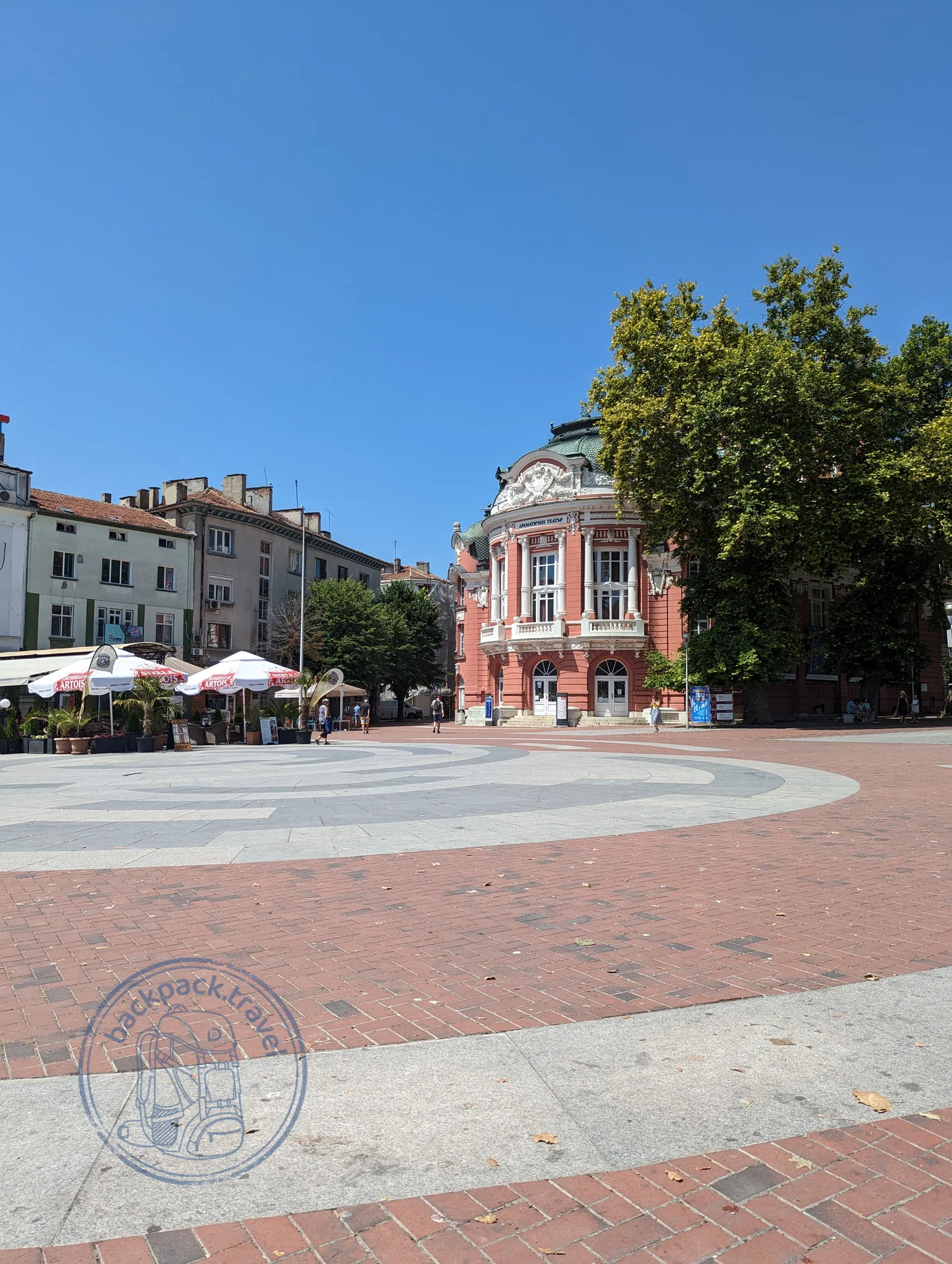
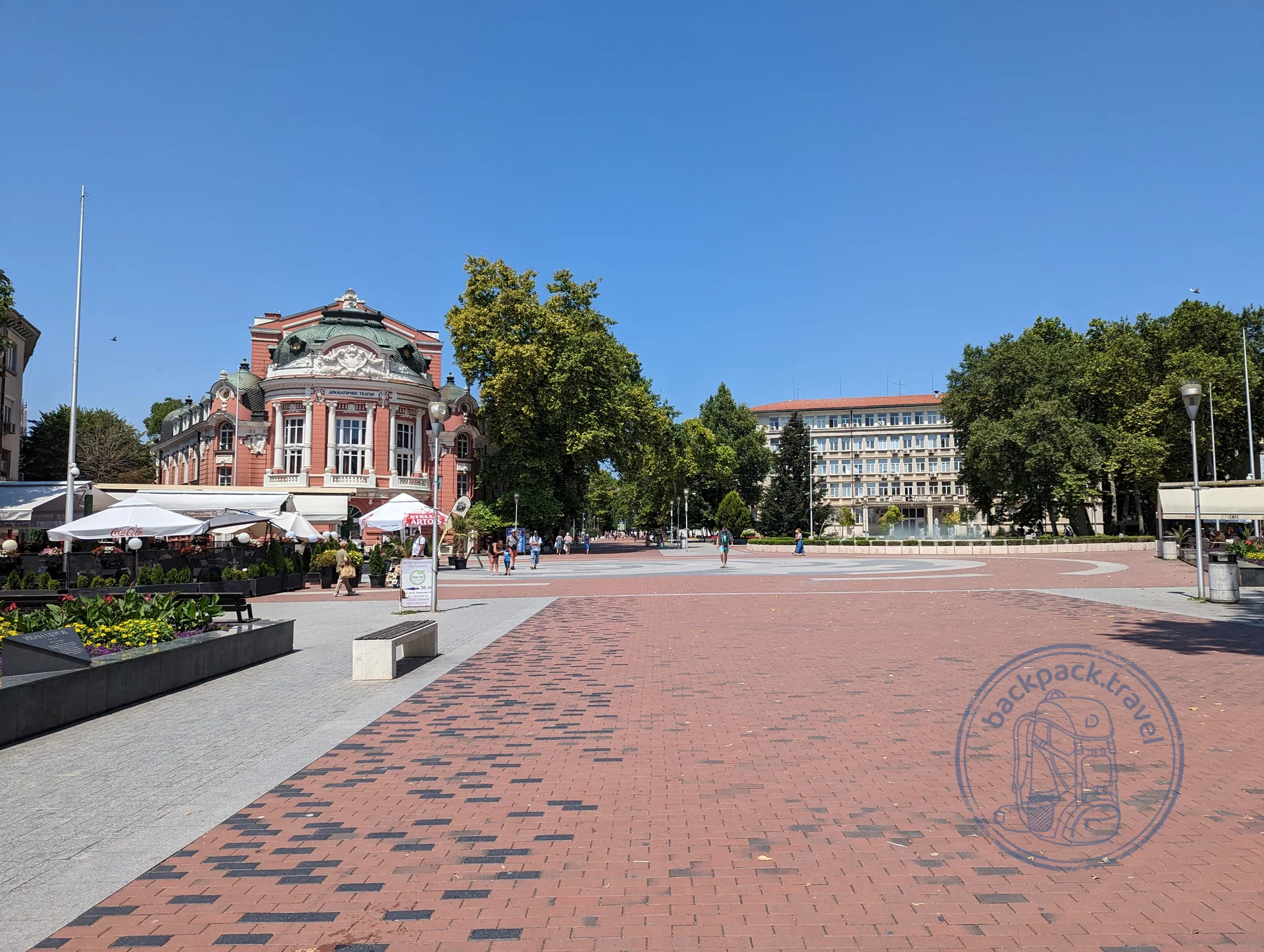
Independence Square with the Drama Theatre of 1932 serves as the main gathering point: a neoclassical building in pink render, plane trees and cafés around it, pedestrian streets radiating outward. From the square you can walk down to the Sea Garden, a park several kilometres long along the shore, laid out by the Czech gardener Anton Novak at the end of the nineteenth century. Inside it are a dolphinarium, an observatory and a naval museum with a submarine.
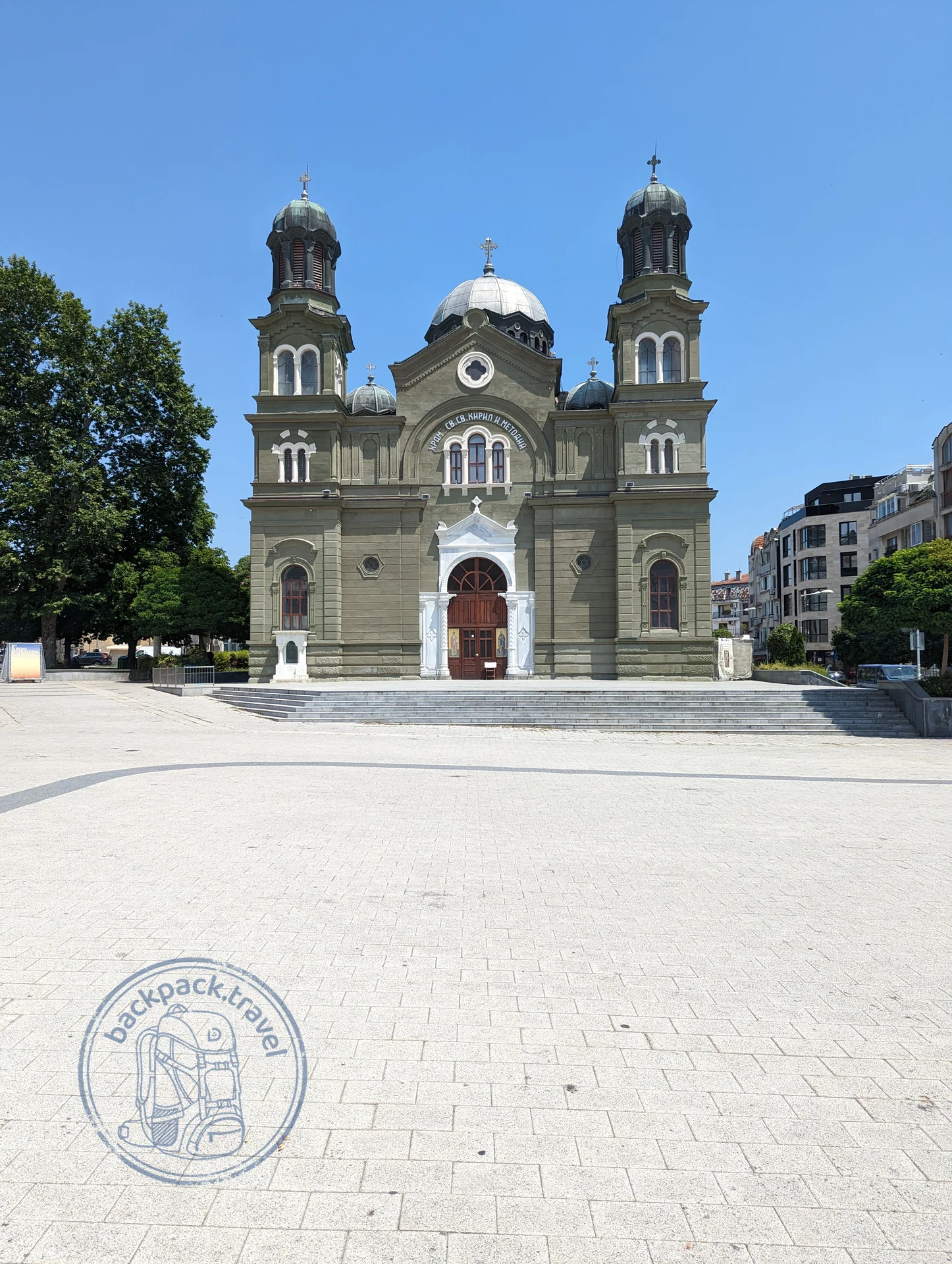
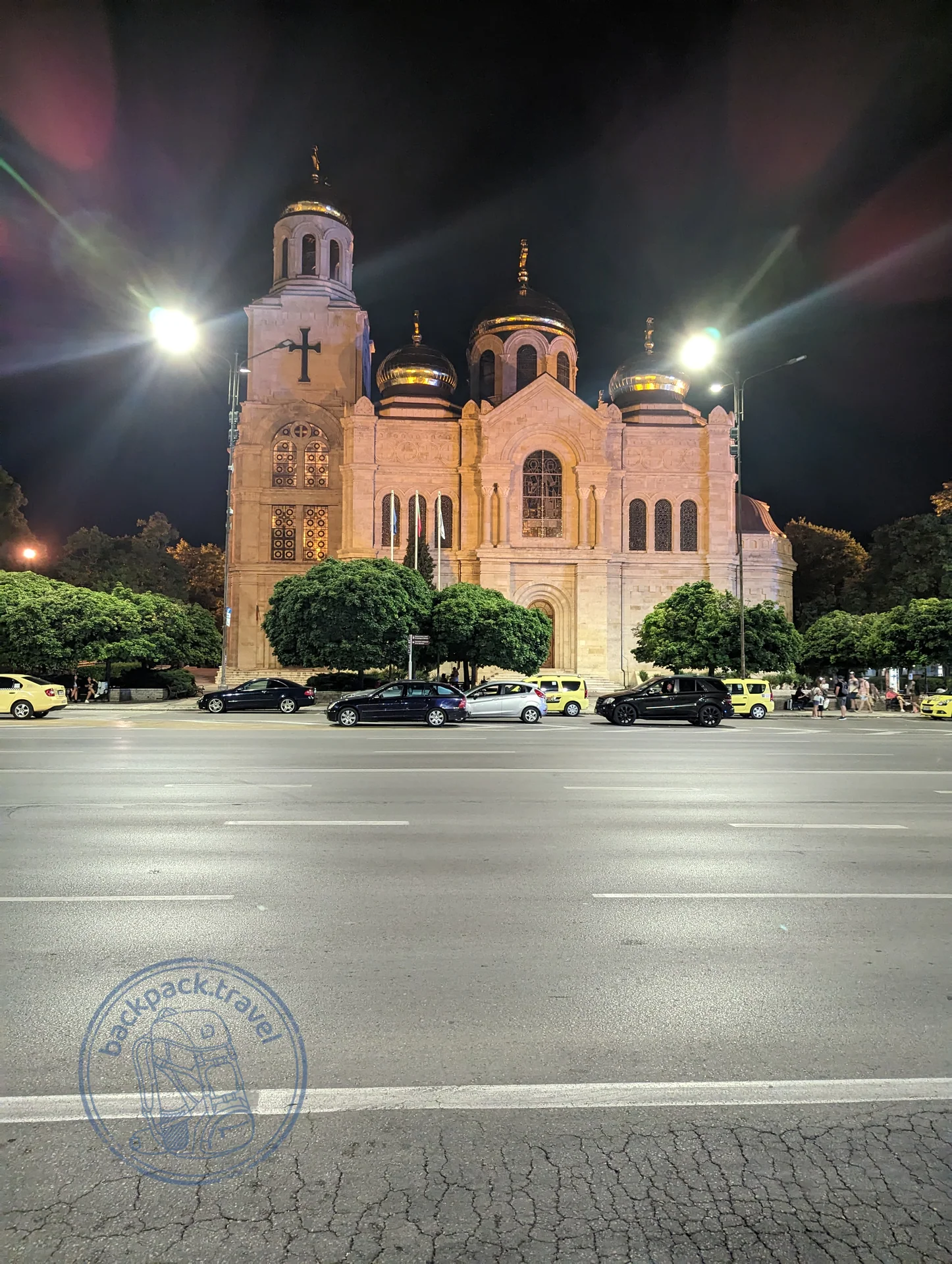
The Cathedral of the Assumption, built in 1886 right after liberation from Ottoman rule, is the second-largest church in Bulgaria; its domes are visible from almost anywhere in the centre.
Getting there and getting around
Varna airport takes flights from across Europe, with charters all summer; it lies eight kilometres from the centre, about half an hour by bus. The train from Sofia takes seven to eight hours, the coach is faster at around six. From Burgas along the coast it is two hours by bus.
The centre is compact and walkable: fifteen minutes from the station to Independence Square. Buses and trolleybuses cover the city, with regular services out to the resorts at Golden Sands and Saints Constantine and Helena. Taxis are cheap, but only take one with the meter running.
Where to stay
The choice is wide and depends entirely on what you want. Around Independence Square and Knyaz Boris I Boulevard there are city hotels and apartments — convenient for walking and for heading in any direction. The resort strip runs north: Saints Constantine is closer and quieter, Golden Sands ten kilometres out and running on full resort logic with night clubs and all-inclusive packages.
Prices climb sharply in July and August and halve in May and September. Central hotels stay open year-round; resort complexes often close for the winter.
Day trips
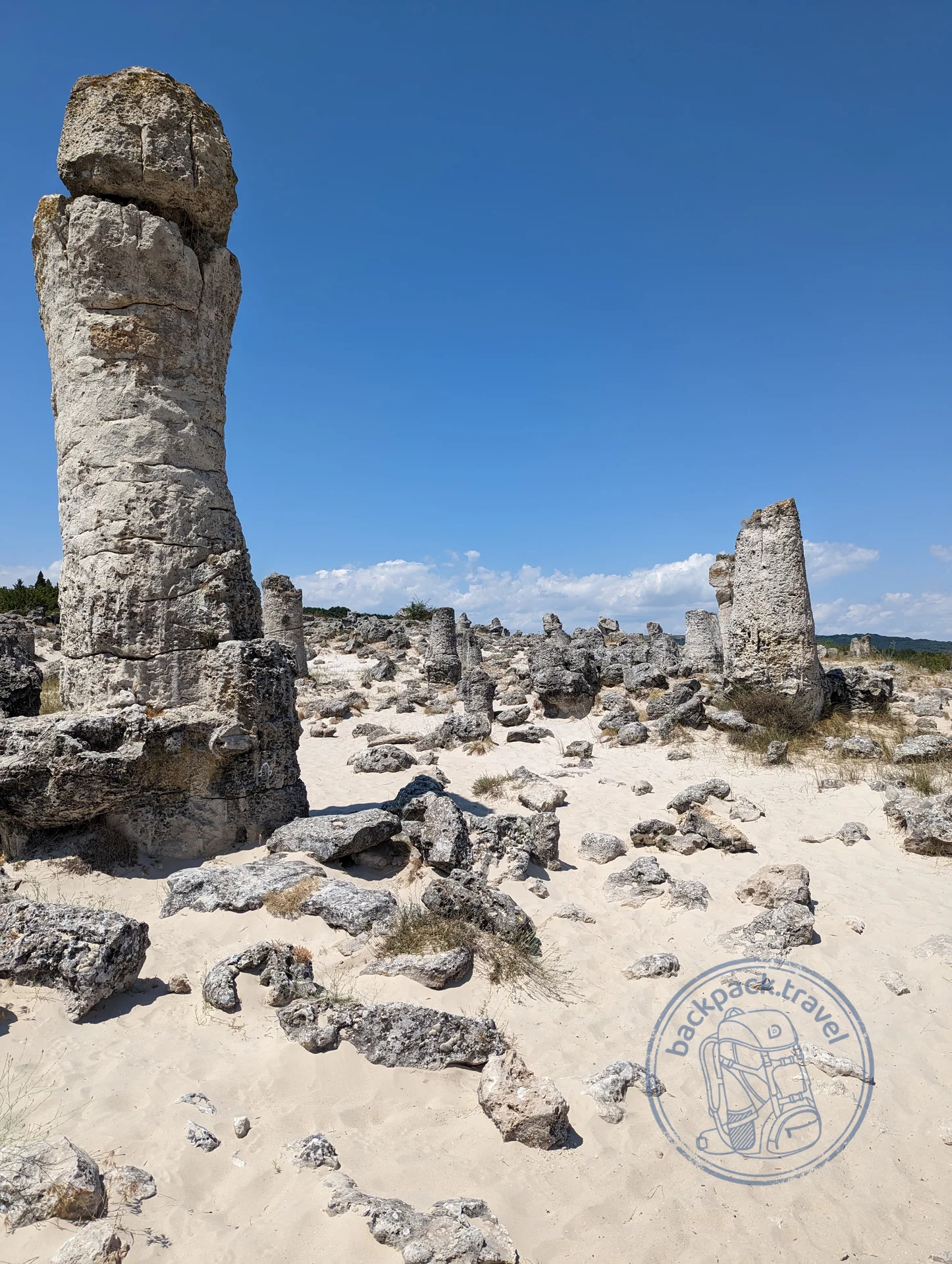
Pobiti Kamani, a stone forest of limestone columns on a sandy waste, sits eighteen kilometres out along the Sofia road, half an hour away. Aladzha, a fourth-century rock monastery carved into a sheer cliff above the forest, is fifteen kilometres north.
Cape Kaliakra, with its fortress ruins and a seventy-metre drop, lies sixty kilometres away along a coastal road that passes Balchik with the Romanian queen Marie's palace and botanical garden. Southwards, a little over an hour brings you to Nessebar, an old town on a peninsula packed with medieval churches.
When to come
The swimming season runs June to September; the water warms up by late June and holds its temperature into mid-September. July and August are peak: crowded beaches, top prices and traffic on the roads.
For the city rather than the beach, the best windows are May, early June and the second half of September. It is warm, around twenty-five degrees, museums are open, the park is in bloom, and there are hardly any queues. In winter Varna empties out into an ordinary port town with wind off the sea, but museums and restaurants stay open and accommodation costs almost nothing.
Food and money
Bulgarian cooking in Varna leans heavily towards fish: grilled sea bream and sea bass, red mullet, mussels in white wine. From the wider national repertoire, try shopska salad, tarator — a cold soup of yoghurt and cucumber — and banitsa for breakfast. Portions are generous and a bill in a decent central restaurant is rarely steep.
Since January 2026 the currency here is the euro: the lev was converted at the fixed rate of 1.95583 to the euro and stopped being legal tender a month later. Cards are accepted nearly everywhere, but markets and small cafés want cash. ATMs are on every corner downtown; change money at a bank rather than a street bureau with a tempting rate and a hidden commission.
Practical notes
A nod means "no" in Bulgaria, and a shake of the head means "yes". The confusion comes up regularly, so it is worth confirming in words.
City beaches are free, but sunbeds and umbrellas are charged separately. Rip currents along this coast are real, and the flags on the lifeguard towers should be taken seriously. In season, pickpockets work crowded places — the beach minibuses and the area around the station. Older people generally understand Russian; younger ones are more likely to speak English.
Updated