 Города и дороги
Description
Bulgaria's main seaport and the second city of its coast: a working town with a clifftop Sea Garden, and four salt lakes around it where flamingos, pelicans and storks stop on migration.
Wiki
Burgas is the second-largest city on the Bulgarian coast, around two hundred thousand people, and the country's main seaport. Unlike the resorts next door it remains a working city: behind the beach line stand the port, an oil refinery and a rail junction. What it has in compensation is four salt lakes around it, which make Burgas one of the best places in Europe for watching birds — the Via Pontica migration route runs through it.
Why come and what to actually see
The Sea Garden is a park on the high bank, laid out in 1910 by the gardener Georgi Duhtev. It runs along the sea for several kilometres and contains a summer theatre, a clock made of flowers and viewing terraces, with staircases going down to the beach. From the park a pier about three hundred metres long reaches out into the sea — the city's most reproduced image and the ordinary place to meet at sunset.
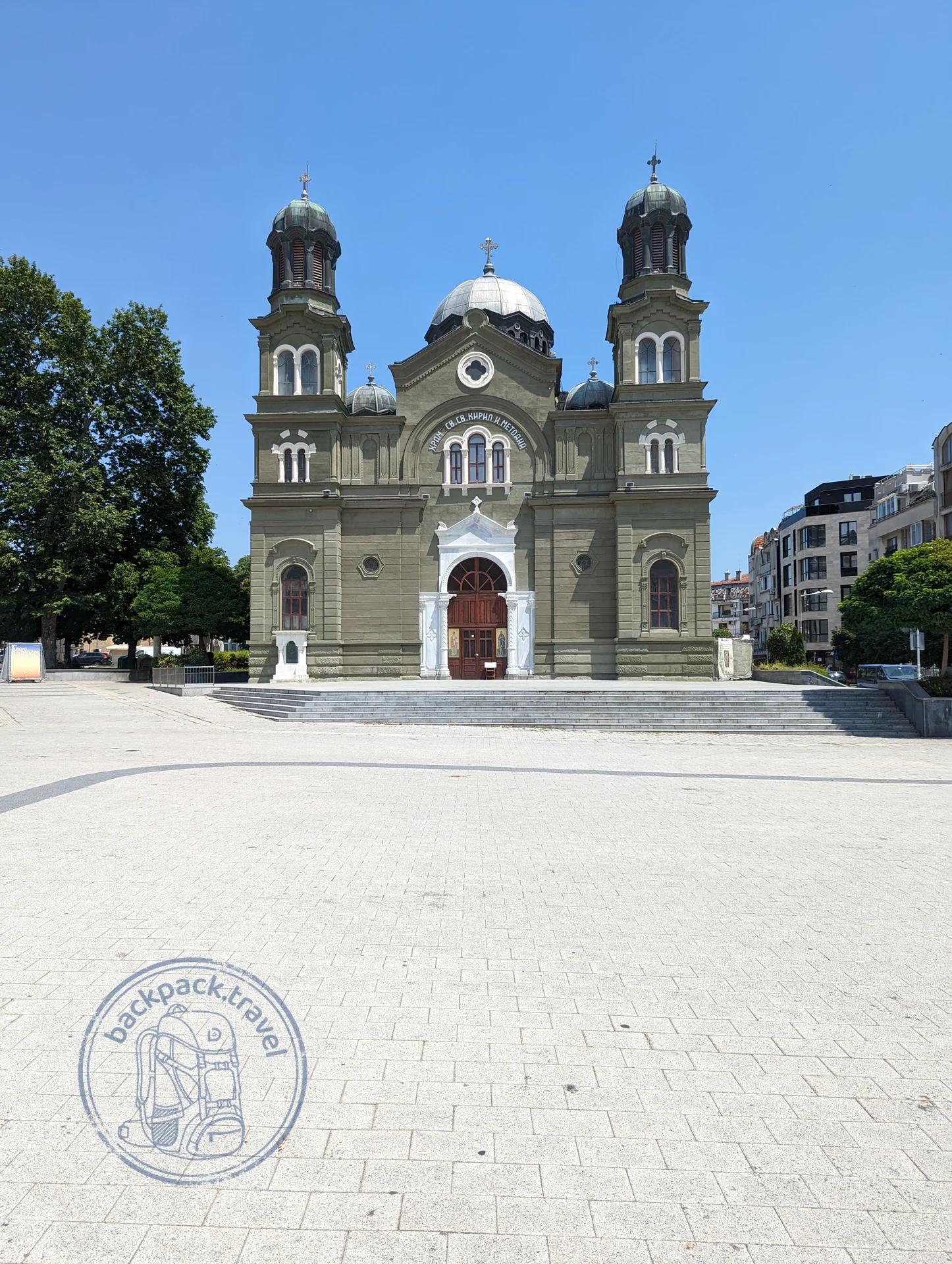
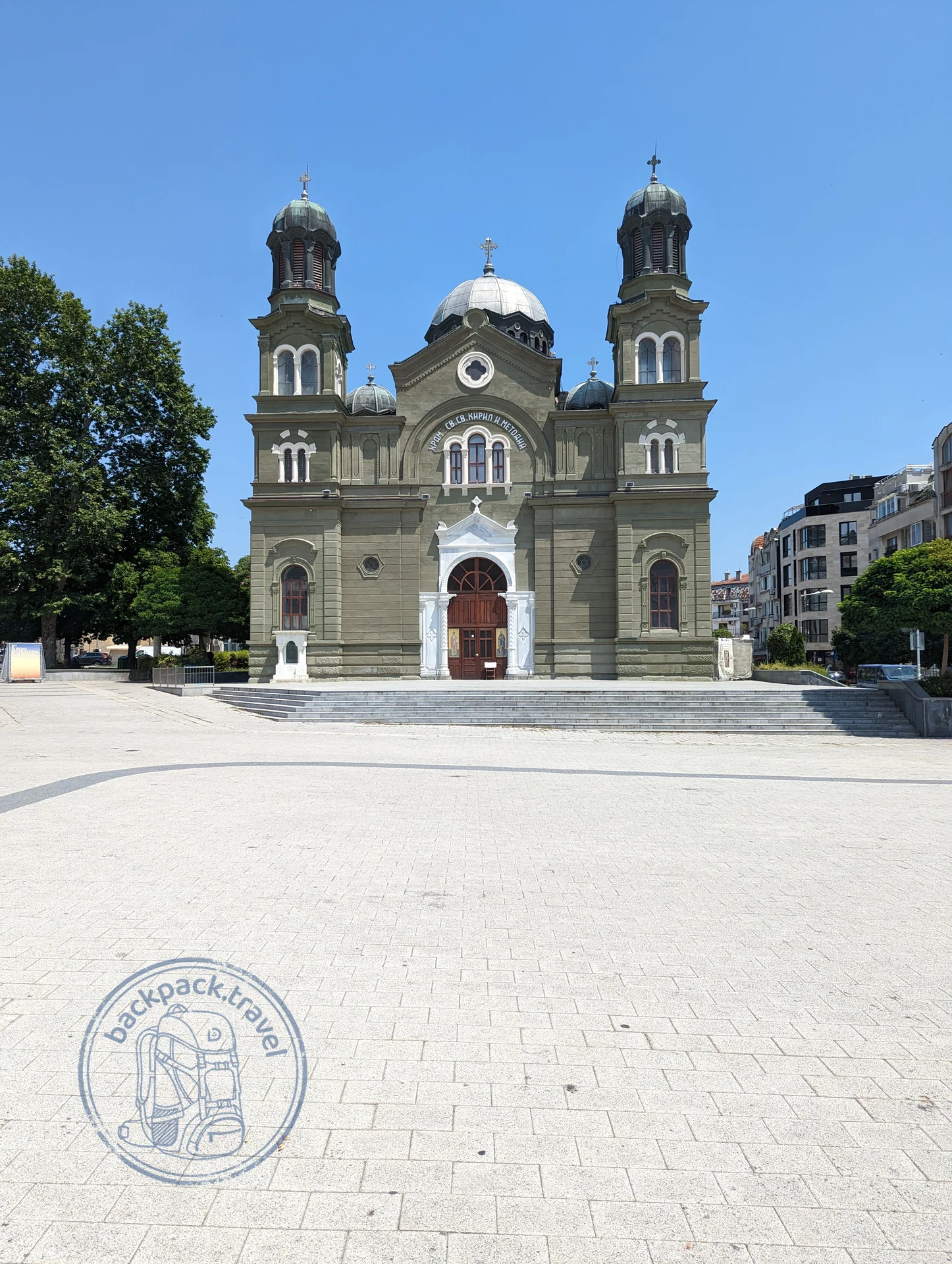
The centre is compact and built up with houses from the end of the nineteenth and the beginning of the twentieth century. The main axis is the pedestrian Aleksandrovska street, with blocks of Viennese-flavoured Secession façades running off it. The Saints Cyril and Methodius Cathedral of 1907, designed by the Italian Ricardo Toscani, stands on a wide square and serves as the main landmark: its two matching bell towers are visible from several streets at once.
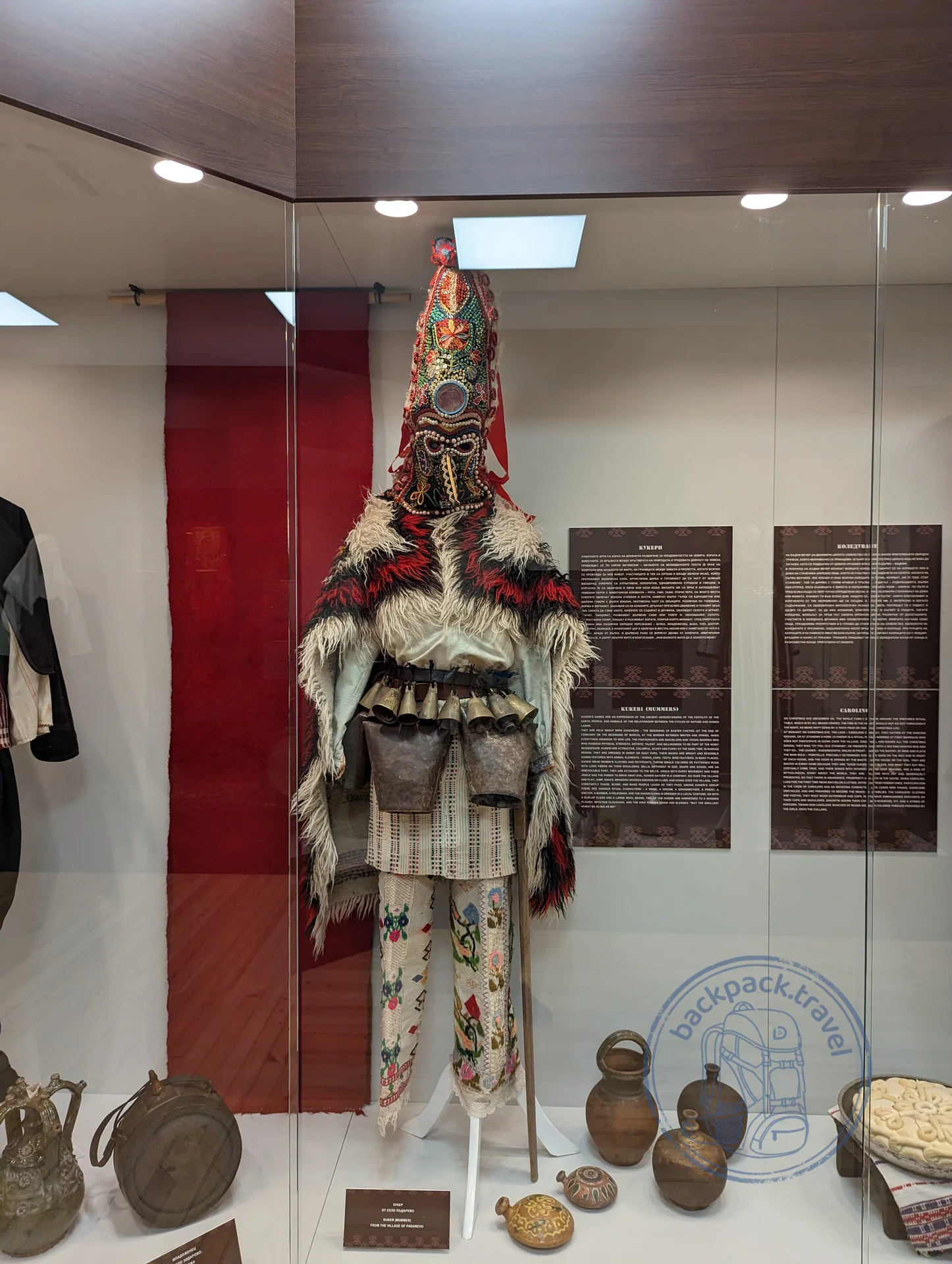
Of the museums, the ethnographic one is the one to go into. It occupies a merchant's house of 1873 and shows the costumes of the region's ethnographic groups along with kukeri dress — fur suits with masks for the winter rites, which are still alive in this part of the country.
The lakes are a subject of their own. Atanasovsko salt lake with its salt pans lies right at the entrance to the city, Pomorie Lake a little further out; flamingos, pelicans and tens of thousands of storks stop on them during the passage. Trails run along the shores and there are towers for watching.
Getting there and getting around
Burgas airport, 10 km from town, takes flights from across Europe and charters in summer. The train from Sofia takes six or seven hours, the bus about five. Buses along the coast are frequent: Nessebar and Sunny Beach are half an hour away, Sozopol the same.
The centre can be covered on foot: about twenty minutes from the station to the Sea Garden. City buses run, but a taxi or a bicycle is easier for the beaches and the lakes — a cycle path follows the shore.
Where to stay
The choice is wide and noticeably cheaper than at the resorts. In the centre, around Aleksandrovska, are city hotels and apartments, convenient for the sea and the station alike. Closer to the Sea Garden prices are higher, but the beach is next door.
Many people use Burgas as a base for trips along the coast: Nessebar, Sozopol, Pomorie and Sinemorets all lie within an hour, and a room here costs half what it does in the resorts themselves.
Day trips
Nessebar, 35 km away, is a UNESCO-protected old town on a peninsula with some forty medieval churches. Sozopol, 35 km in the other direction, is the Greek Apollonia, with a fortress wall above the drop.
Pomorie is known for its salt lakes, a mud-treatment clinic and an ancient domed tomb. Further south lie Primorsko, Tsarevo and Sinemorets at the mouth of the Veleka — the wildest part of the coast, beyond which the Strandzha nature park begins. Ropotamo, with boat trips along the river mouth, is 40 km away.
When to come
The swimming season runs from June to September. July and August are the busiest and the most expensive, though the density of holidaymakers in Burgas itself is lower than in the resorts nearby.
For the city and for the birds, May, early June and September are better: warm, around 25°C, with the migration under way on the lakes. In late August flocks of storks pass over Burgas, a sight ornithologists come here specifically to see. In winter the city empties but stays alive: the museums, the theatre and the restaurants keep working, and prices fall to their lowest.
Food and money
Fish and seafood: fried tsatsa, mussels, sea bream, red mullet. From the wider Bulgarian repertoire, shopska salad, tarator, banitsa. Burgas has plenty of places aimed at locals rather than tourists, and it shows in the prices and the portions. Pomorie wine and rakia from the surrounding villages are the standard accompaniment.
Since January 2026 the currency here is the euro: the lev was converted at the fixed rate of 1.95583 to the euro and stopped being legal tender a month later. Cards are taken almost everywhere; cash is needed at the market and in small shops. There are plenty of ATMs in the centre.
What to know
The city beach is free and the loungers are not; the water by the port is cleaner than it looks, but most people still travel to the beaches towards Sarafovo or to Nessebar.
A nod of the head in Bulgaria means no, and a shake of it means yes. In summer pickpockets work the station area and the beach minibuses. The wind off the sea is constant, and even in July the pier is cool in the evening, so bring something with long sleeves.
Updated