 Города и дороги
Description
A town in north-eastern Bulgaria below a plateau crowned by the concrete monument to the Founders of the Bulgarian State. Nearby stand Shumen Fortress, the Tombul Mosque and the country's first capitals, Pliska and Preslav.
Wiki
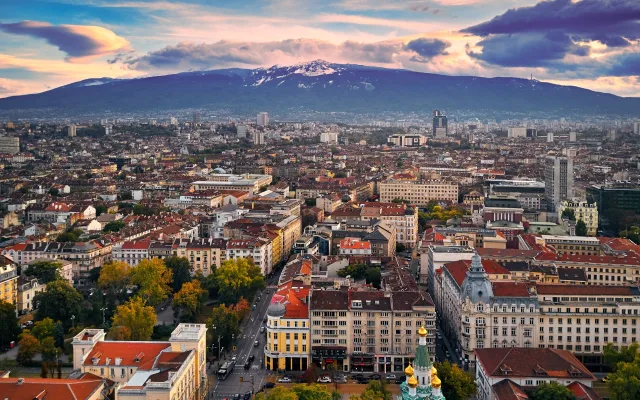
Shumen is a town in north-eastern Bulgaria of around seventy thousand people, set in a valley below a limestone plateau. From that plateau the concrete monument to the Founders of the Bulgarian State looks down on the town; it is visible from the motorway tens of kilometres away and has become Shumen's defining feature. The area has been settled for a long time: both of Bulgaria's first capitals, Pliska and Veliki Preslav, lie nearby, so the district is sometimes called the cradle of Bulgarian statehood.
Why come and what to actually see
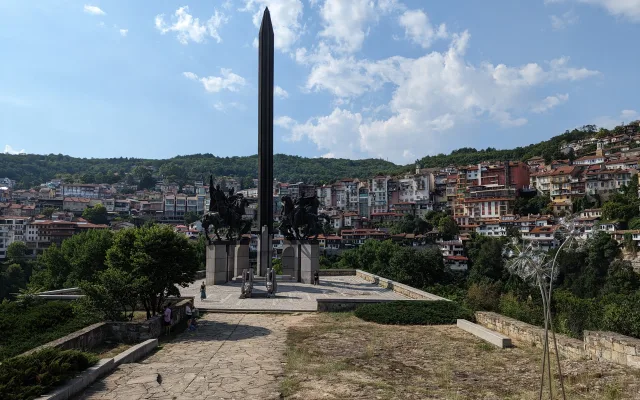
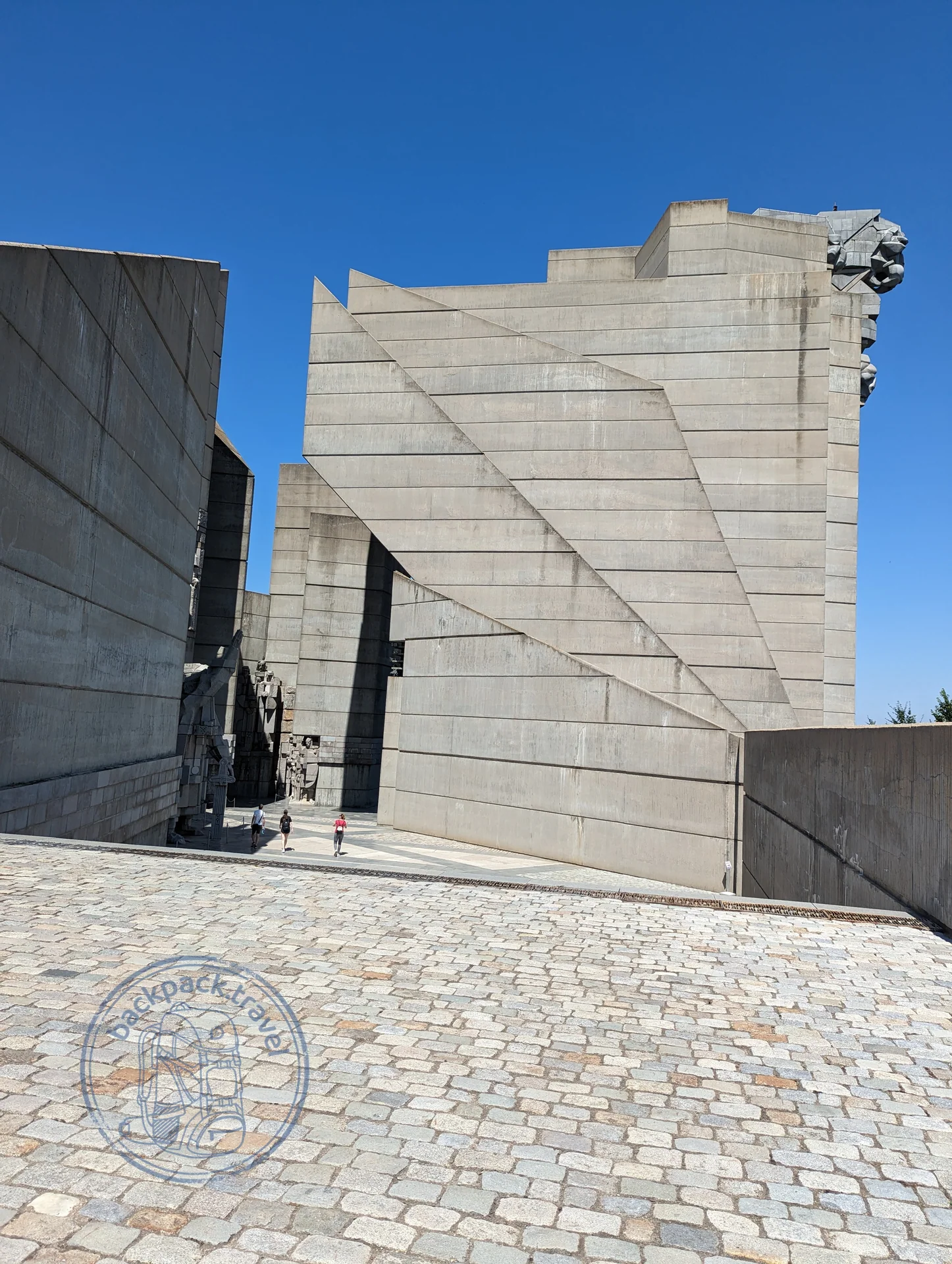
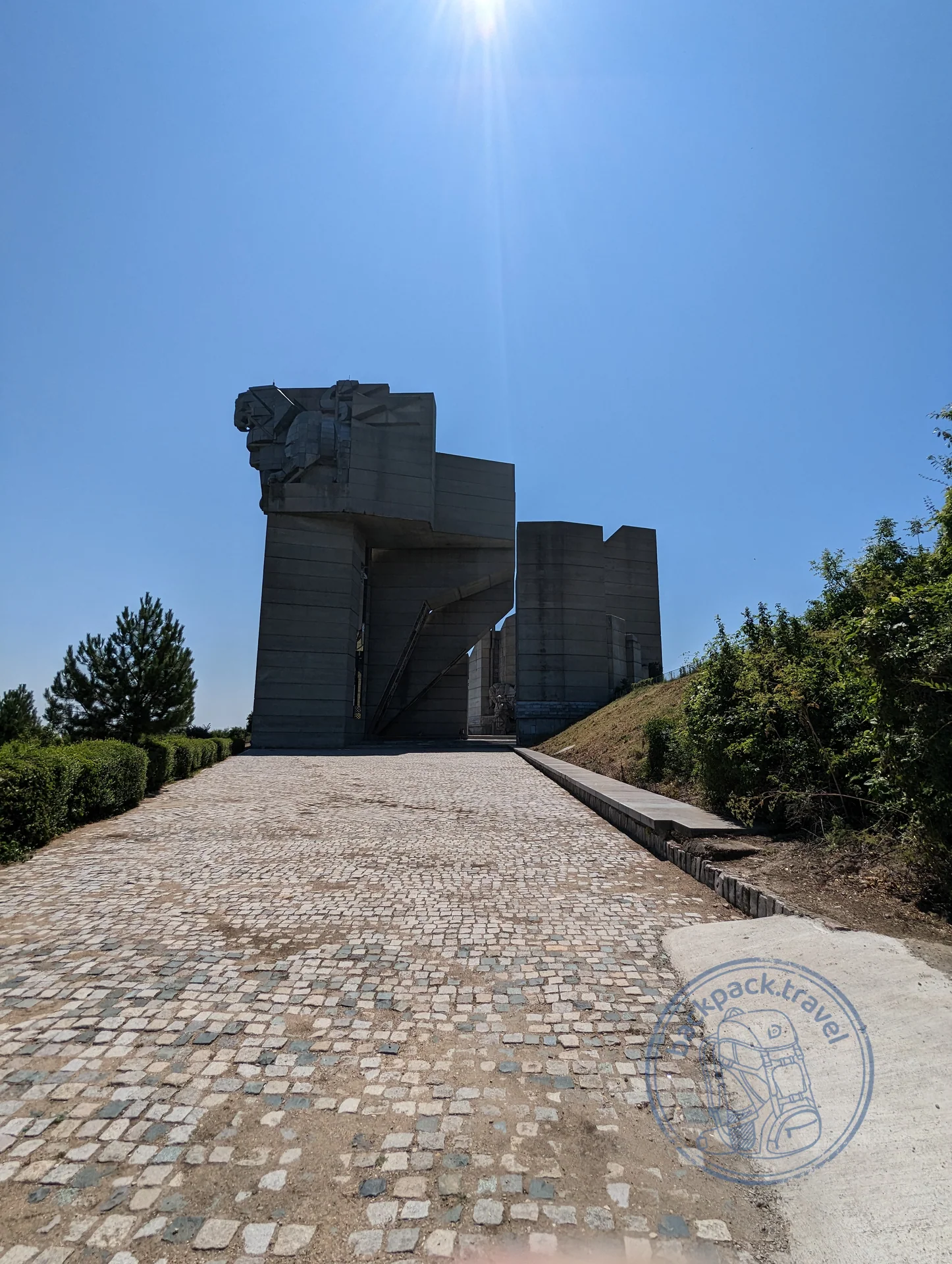
The monument on the plateau was unveiled in 1981 for the 1300th anniversary of the state's founding. It is not a statue but a concrete composition of massive tilted slabs with passages cut between them: you walk along a corridor and figures of khans and tsars open up on either side — Asparuh, Tervel, Krum, Simeon. Individual blocks rise thirty metres, the lion at the top weighs around a thousand tonnes, and the inner walls are faced with mosaic in smalt and ceramic. A stairway of 1300 steps climbs from the town, though you can also drive up. This is one of the most coherent examples of late socialist monumentalism in the Balkans, and up close it makes an impression photographs do not convey.
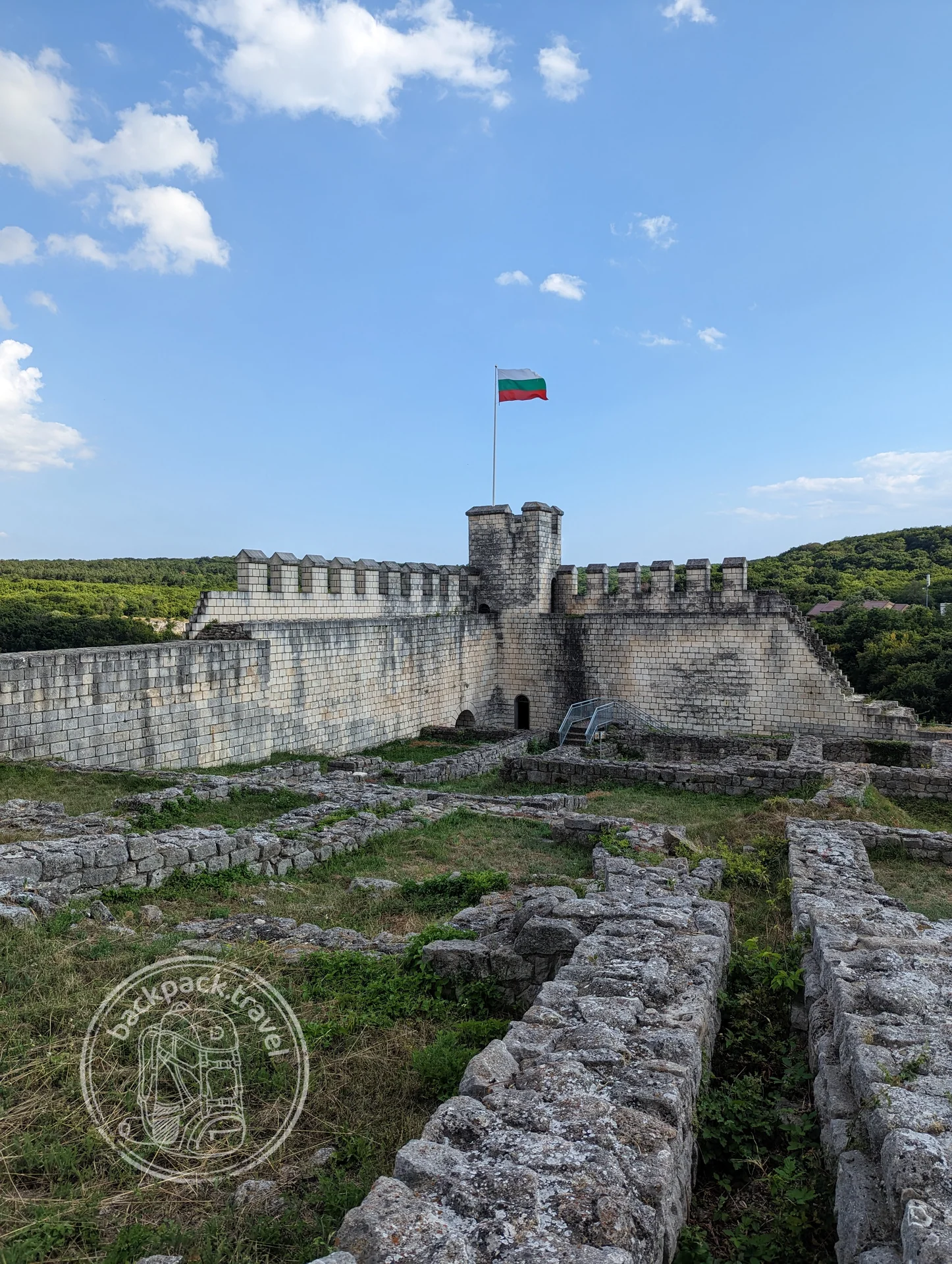
On the same plateau, a little to the side, stands Shumen Fortress, a site occupied since the Iron Age and rebuilt by Byzantines and Bulgarians. Walls and towers have been partly restored, and churches, residential quarters and cisterns have been excavated inside.
In the town itself, look into the Tombul Mosque of 1744, the largest working mosque in Bulgaria, with a courtyard ringed by a colonnaded gallery and a forty-metre minaret. Next door, the History Museum displays finds from Pliska and Preslav, including the famous Preslav gold treasure.
Getting there and getting around
There is no airport; the nearest is Varna, ninety kilometres away, about an hour and a half by bus. From Sofia the coach takes six hours and the train about the same. Shumen sits on the main Varna–Sofia route, so there is plenty of transport in both directions.
The centre is compact and walkable. Without a car, the easiest way to the monument is by taxi: climbing the stairway takes about forty minutes and real effort, particularly in the heat. Buses run to Pliska and Preslav but infrequently; renting a car for the day pays off.
Where to stay
The choice is limited: a few mid-range town hotels in the centre and some guesthouses. Prices are noticeably lower than on the coast, even at the height of summer. Many people use Shumen as a stop between Sofia and Varna and stay a single night.
The alternative is to sleep in Varna and come here for the day; the drive takes an hour and a half, which makes sense if you want to combine the town with the sea.
Day trips
Pliska, Bulgaria's first capital, founded in 681, lies twenty-five kilometres away. What survives are the foundations of the Great Palace, fortress walls of massive blocks, and the Great Basilica, one of the largest churches of its time in Europe.
Veliki Preslav, the second capital, is twenty kilometres in the other direction: the palace complex has been excavated there along with the Round Golden Church, unusual in the Balkans for its rotunda plan. The Madara Rider, an eighth-century relief cut into a sheer cliff twenty-three metres up and inscribed on the UNESCO list, is twenty kilometres east.
When to come
April to June and September to October. Days are then twenty to twenty-five degrees, the plateau is green, and climbing to the monument and walking the excavations do not turn into an ordeal.
July and August are dry and hot, up to thirty-five degrees, and there is no shade at all on the open plateau — not at the monument, not at Pliska, not at Madara. If you come in summer, go early in the morning or towards evening. Winter is cold and windy, snow lies on the plateau for months, and some sites run reduced hours.
Food and money
The cooking is standard Bulgarian: shopska salad, gyuvech, kebapche and kyufte off the grill, chorba. Shumen is known for its beer — the local brewery has operated since 1882 and its brand is sold nationwide. Among regional specialities, try the white brined cheese from the surrounding villages.
Since January 2026 the currency here is the euro: the lev was converted at the fixed rate of 1.95583 to the euro and stopped being legal tender a month later. Cards work in town, but the ticket desks at the monument, at Pliska and at Madara often take cash only. ATMs exist only in central Shumen.
Practical notes
There is a single road up to the monument, with no shop or café along it — carry water, especially in summer. The stairway of 1300 steps looks impressive, but climbing it in the heat is hard work and the steep flights are awkward on the way down; many people take a taxi up and walk down.
A nod means "no" in Bulgaria and a shake of the head means "yes". Russian is understood, mostly by the older generation. The complex on the plateau is open year-round, though the upper platform is sometimes closed in high wind.
Updated