 Города и дороги
Description
A town in the Stara Planina foothills, known for the Etar open-air museum with its working water-powered workshops, the House of Humour, and the Shipka Pass nearby.
Wiki
Gabrovo is a town in central Bulgaria at the northern foot of the Stara Planina range, with around fifty thousand inhabitants. It stretches along the river Yantra for several kilometres while being only a couple of blocks wide in places, which is why it is called the longest town in the country. In the nineteenth century Gabrovo was the industrial heart of the Bulgarian National Revival — hundreds of water-powered workshops operated here, and the town was known as the Bulgarian Manchester.
Why come and what to actually see
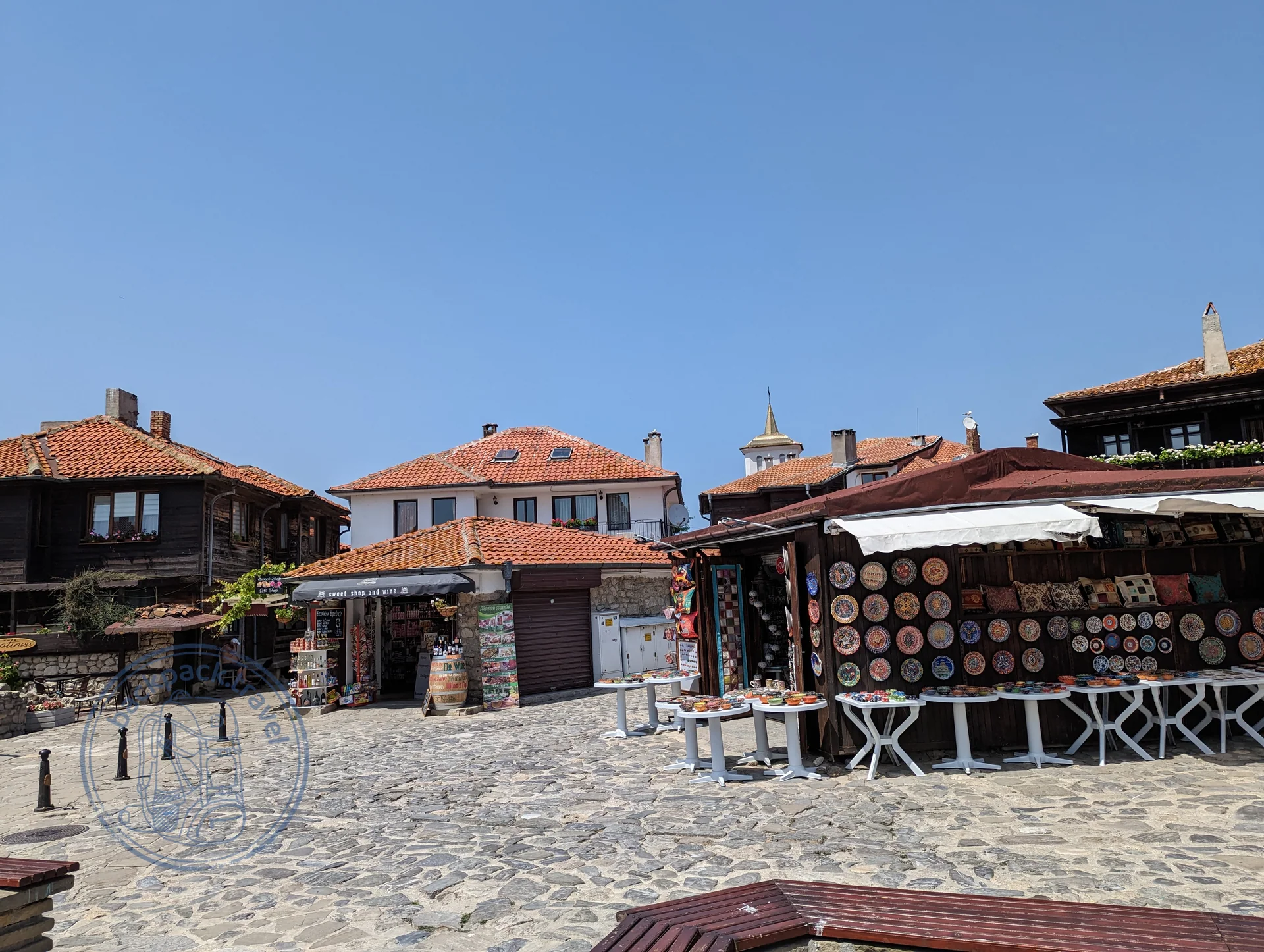
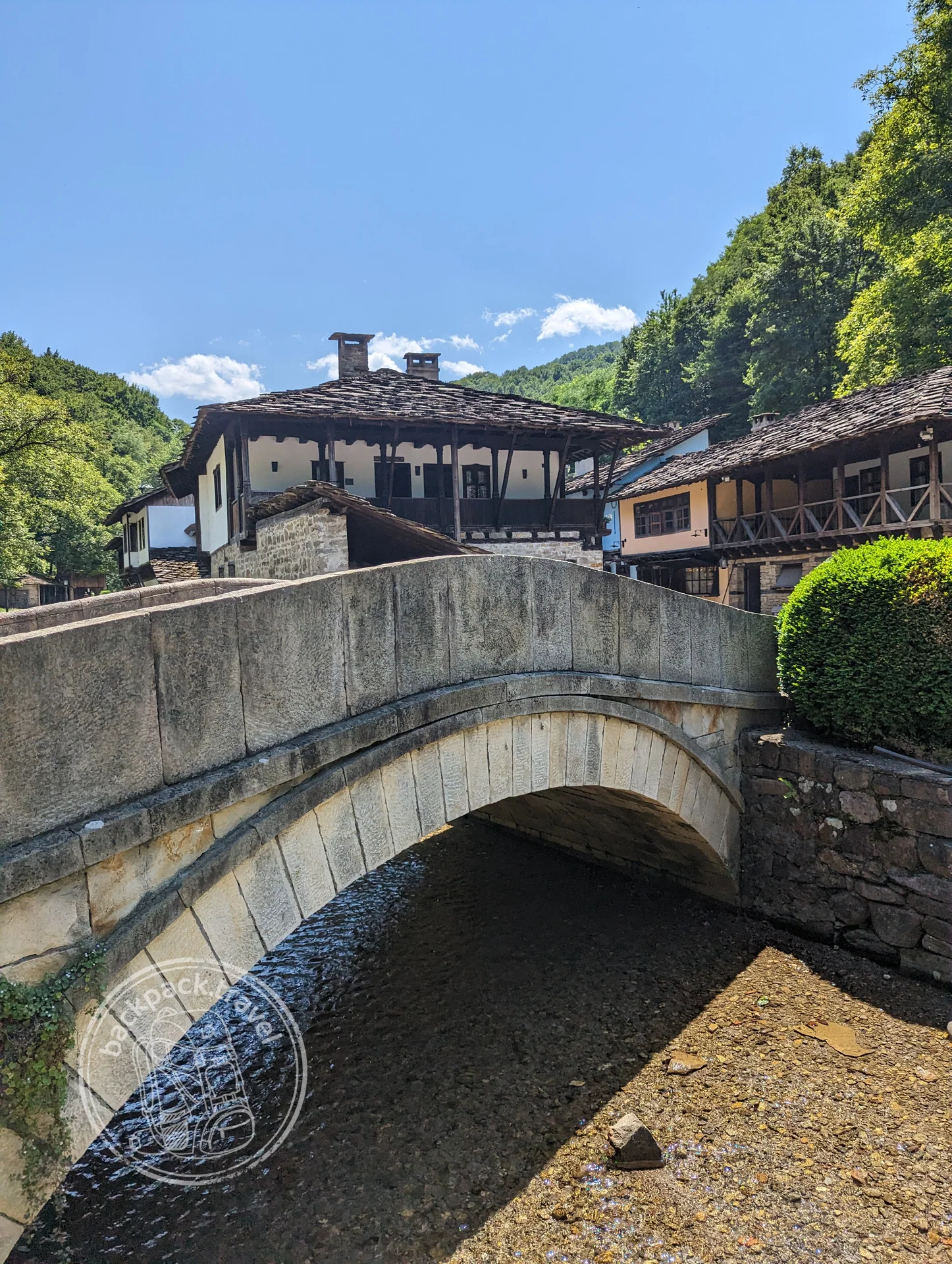
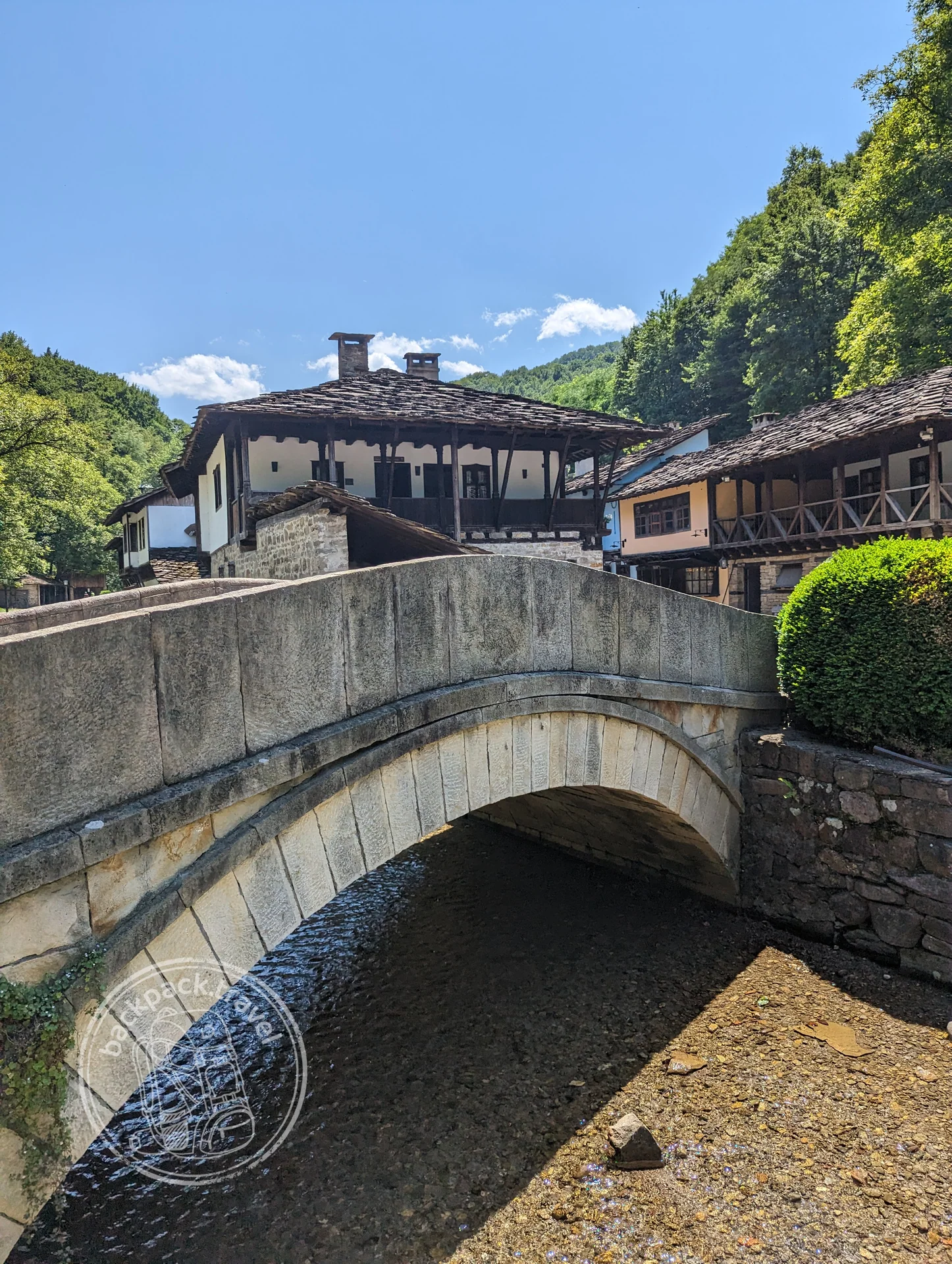
The main draw is the Etar ethnographic complex, eight kilometres from the centre, Bulgaria's first open-air museum, opened in 1964. A Revival-era street has been recreated on the bank of the Yantra: houses with overhanging upper storeys, stone ground floors, wooden galleries, a cobbled roadway and a humpbacked stone bridge. A channel diverted from the river turns mill wheels, and drives run from them to a fulling mill, a grinding shop, a groat mill and a wool-beating vat. All of it genuinely works, so what you see is production rather than a mock-up. In the shops along the street sit a potter, a coppersmith, a knife-maker and a baker, selling what they make in front of you.
The town's second claim to fame is humour. Bulgarians consider people from Gabrovo stingy, and the town has turned this into a brand: everyone in the country knows the joke about the Gabrovo man docking his cat's tail so the door shuts faster and less heat escapes. The House of Humour and Satire, opened in 1972, has assembled a collection of cartoon art from around the world — more than thirty thousand works from a hundred and seventy countries — and hosts an international biennial.
In the town itself, walk along Opalchenska Street in the old quarter, look into Dechkova Kashta, a house-museum showing a well-off family's domestic life, and climb to Sokolski Monastery four kilometres away: founded in 1833, it has a fountain in the courtyard by the master builder Kolyu Ficheto and a terrace overlooking the gorge.
Getting there and getting around
There is no airport of its own; the nearest are Sofia, two hundred and twenty kilometres away, and Varna. The coach from Sofia takes about three hours, from Veliko Tarnovo one hour. A railway exists, but the branch is a slow dead end and the bus is more practical.
The town is walkable along its main street. A city bus runs to Etar, but intervals are long and a taxi is easier and still cheap. There is almost no public transport to Shipka or Sokolski, so you need a car or a taxi for the day.
Where to stay
The choice is modest: a few small town hotels in the centre and family-run guesthouses. A separate category is Revival-style houses in the nearby villages of Bozhentsi and Cherni Osam, restored as accommodation; quieter and prettier, but awkward without a car.
Bozhentsi deserves a mention of its own: an architectural reserve fifteen kilometres out, an entire nineteenth-century village with stone roofs where nothing has been rebuilt. A night there gives you more than a night in Gabrovo itself.
Day trips
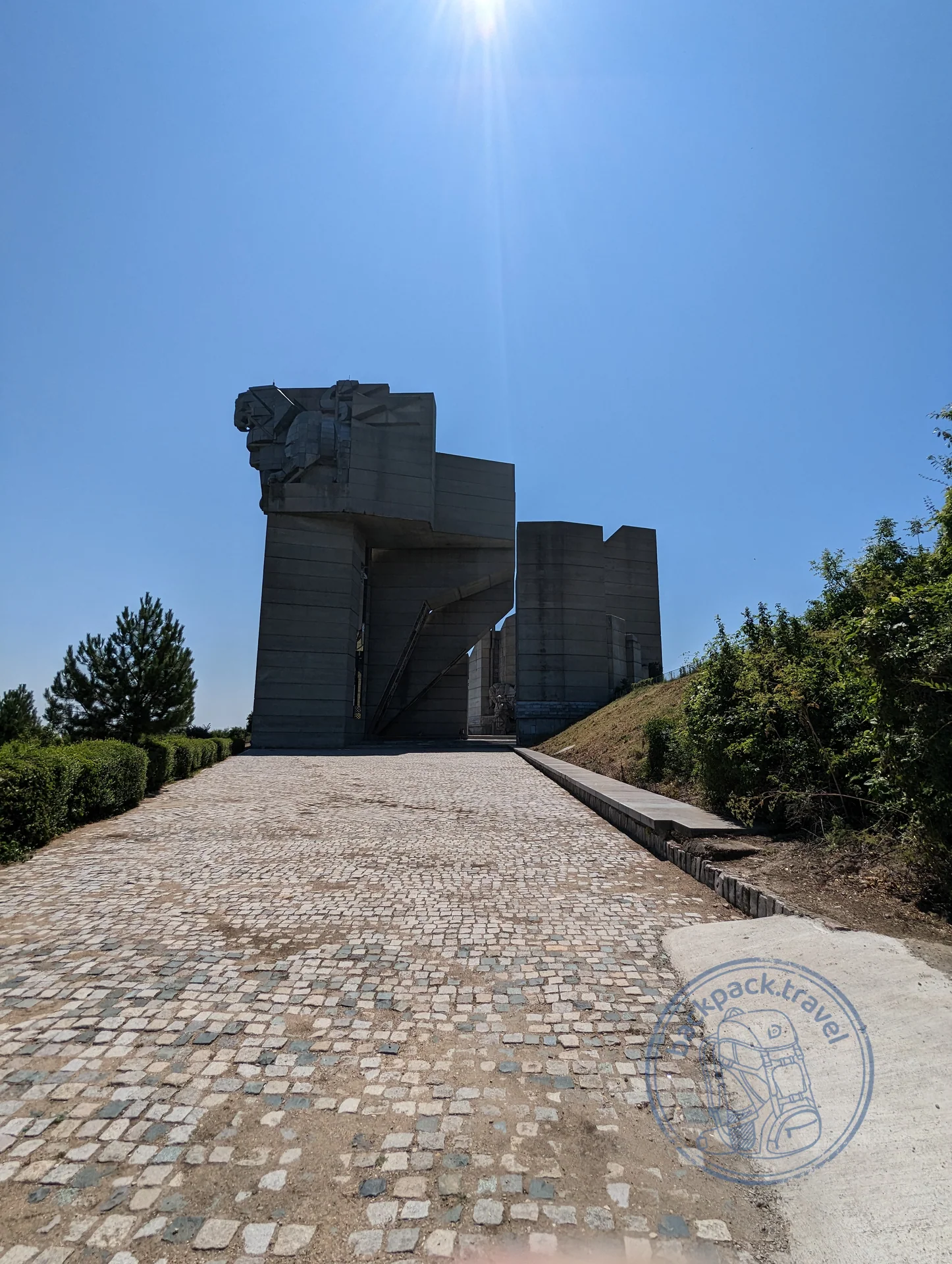
The Shipka Pass with its Monument to Freedom is thirty kilometres south. The monument stands on the summit, reached by almost nine hundred steps, and from the platform you can see both sides of the ridge. Here in 1877 Bulgarian volunteers and Russian troops held the pass for five months against Suleiman Pasha's army.
Further along the same road, on the southern slope, lies the village of Shipka with the Russian Nativity Church, its golden domes visible from the pass. Veliko Tarnovo with the Tsarevets fortress is an hour east. Forty kilometres north, the Bacho Kiro cave operates beside Dryanovo Monastery.
When to come
May to October. During these months all the Etar machinery is running, the craft shops are open, and mountain roads are passable without restrictions. The best months are May-June and September: around twenty-two degrees, green gorges and few people.
In July and August Gabrovo is cooler than the plains thanks to its altitude and the mountains nearby, which makes it a decent refuge from the heat. In winter the Shipka Pass is sometimes closed by snow, some of the water-driven machinery at Etar is stopped, and daylight is short. That said, snow lies in the mountains above the town until March, and a small ski centre operates at Uzana.
Food and money
The cooking here is mountain food, heavy on meat: kachamak with brine cheese, lamb chorba, pork ribs off the grill, homemade sausage. At Etar it is worth trying the sweets baked on site and honey from the surrounding apiaries. People drink rakia — plum or grape, the homemade version stronger than the shop kind.
Since January 2026 the currency here is the euro: the lev was converted at the fixed rate of 1.95583 to the euro and stopped being legal tender a month later. Cards work in town, but villages and small shops want cash. There are ATMs in central Gabrovo; there are none in Bozhentsi or at Shipka.
Practical notes
Gabrovo is strung out, and the distances between sights are greater than the map suggests: Etar and Sokolski lie in different directions from the centre, and you will not cover both on foot in a day.
Mountain roads are narrow with tight bends and require chains in winter. A nod means "no" in Bulgaria, which causes constant confusion in conversation. Etar charges admission; arrive at opening time, because coaches with groups pull in by midday and the narrow street gets crowded.
Updated