 Города и дороги
Description
A UNESCO-listed old town on a rocky Black Sea peninsula: the remains of more than forty medieval churches in stone and brick, timber houses of the nineteenth century and a wooden windmill on the isthmus.
Wiki
Nesebar is a small town on the Bulgarian Black Sea coast whose old quarter occupies a rocky peninsula joined to the shore by a neck of land four hundred metres long. The permanent population is around twelve thousand, and in summer tens of thousands of holidaymakers arrive from Sunny Beach next door. The site has been lived in for nearly three thousand years: Thracian Mesembria, then a Greek colony, then a Byzantine and Bulgarian port. The old town is on the UNESCO World Heritage list.
Why come and what to actually see
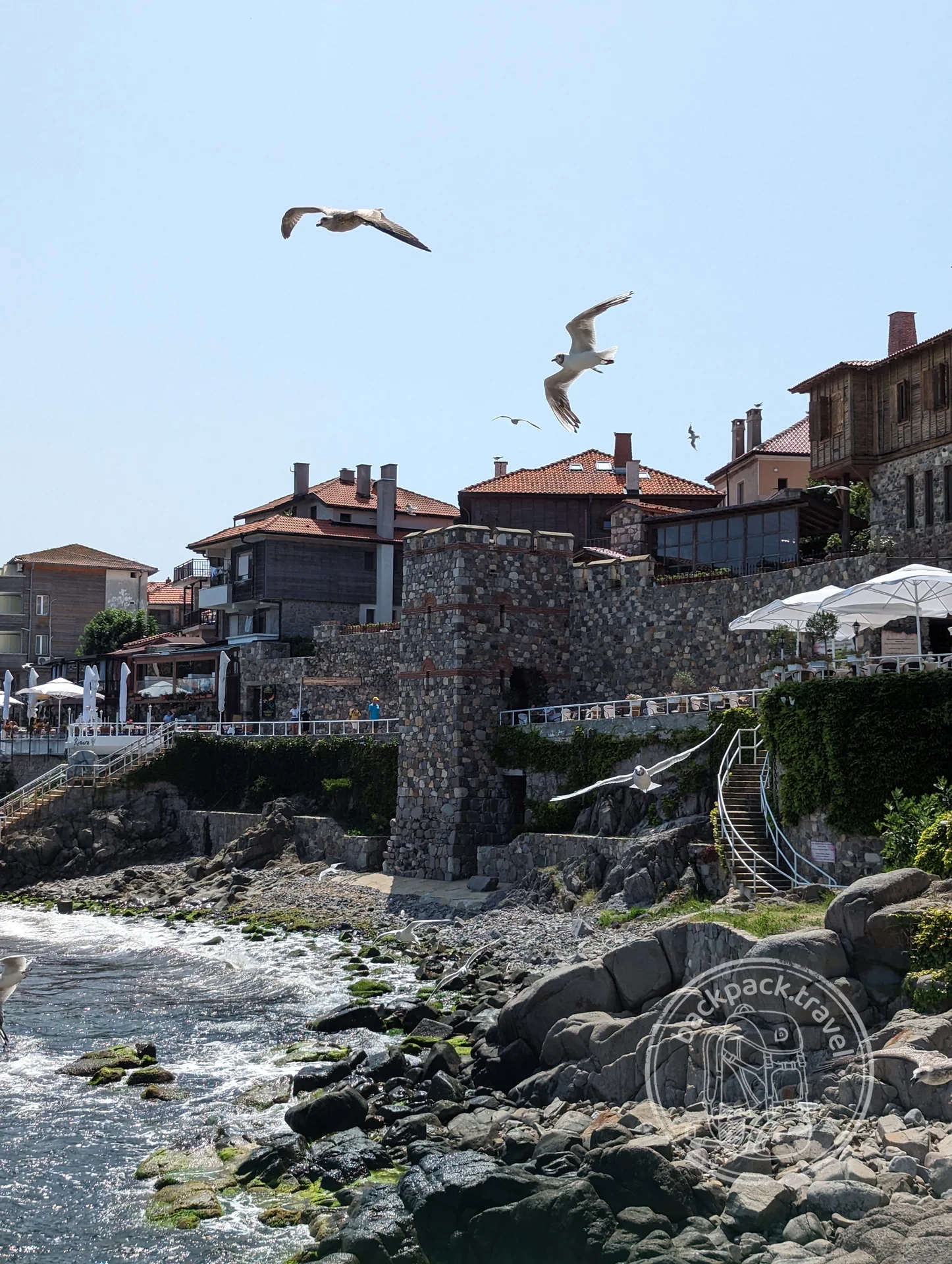
Inside the fortress walls, on less than a quarter of a square kilometre, lie the remains of more than forty churches of various dates. Those built between the tenth and fourteenth centuries survive whole or nearly so, and all of them are put together in the same recognisable manner: alternating courses of pale stone and red brick, ceramic rosettes, blind arcading across the façades. The best known are Christ Pantocrator, with its brick band of meanders and swastikas, the ancient solar ornament, St John Aliturgetos on the cliff above the sea, and the church of St Stephen with sixteenth-century frescoes inside.
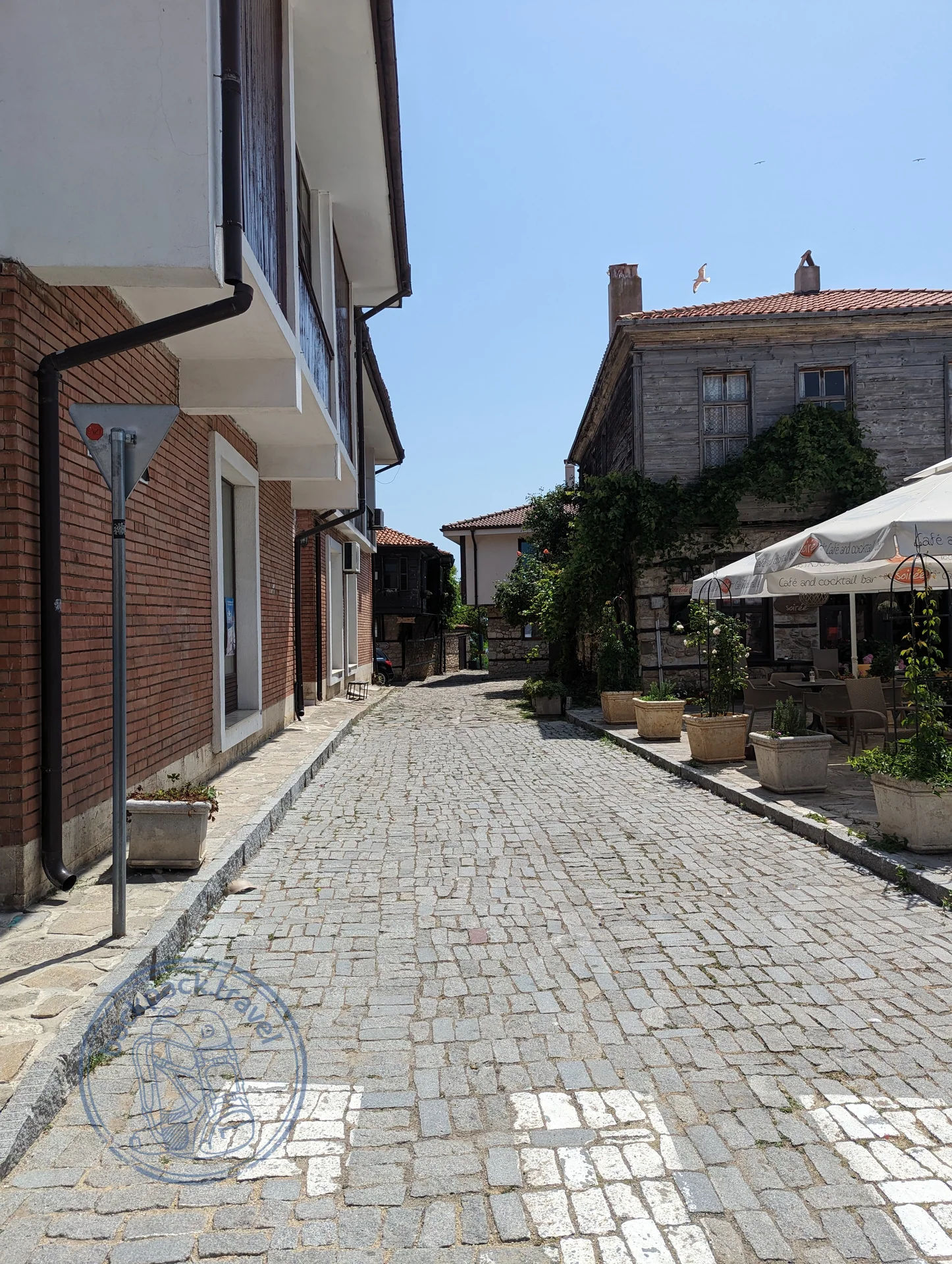
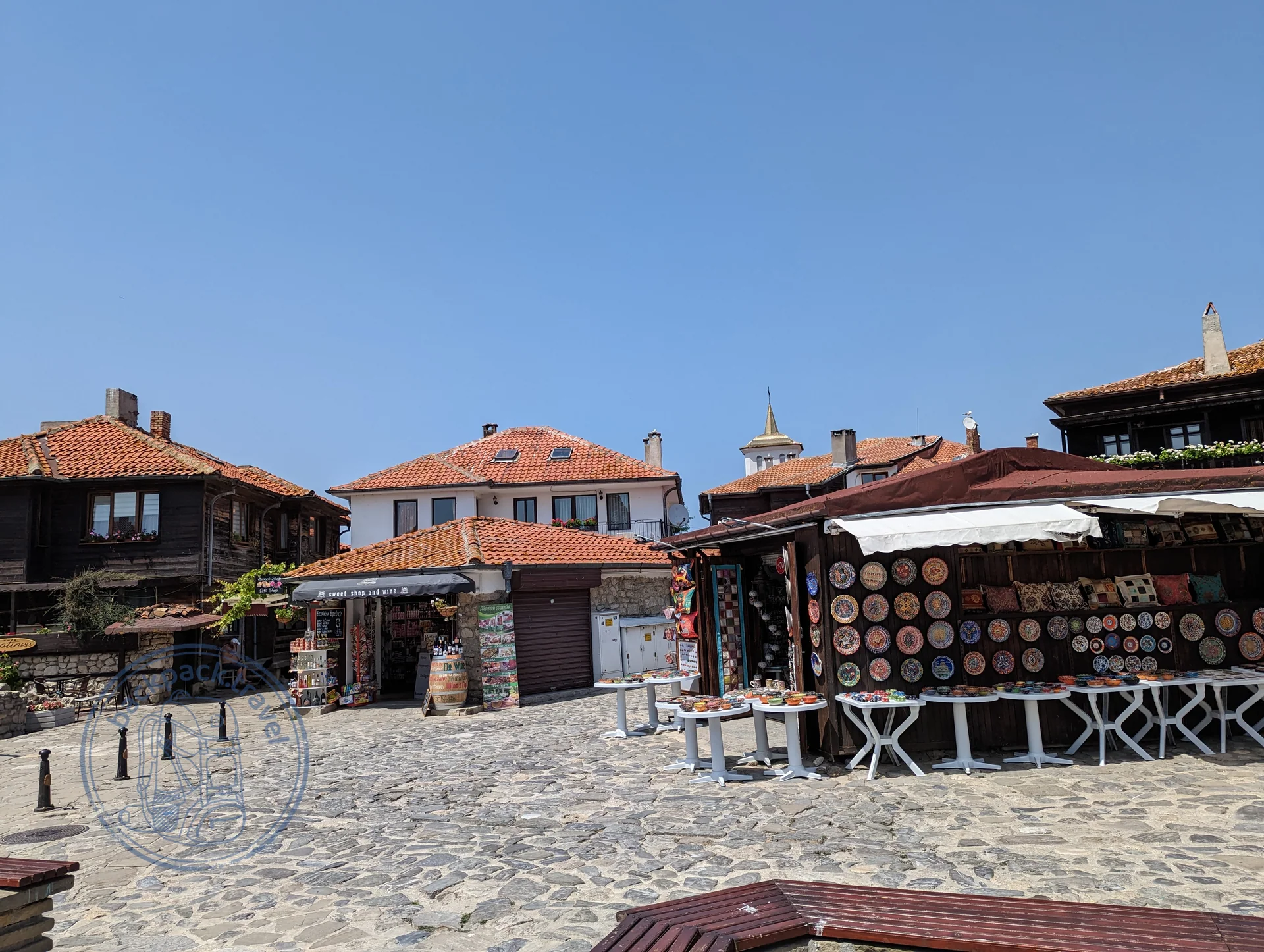
Over the medieval layer lies a nineteenth-century one: Black Sea timber houses with a stone ground floor and an overhanging upper storey, roofed in dark tile. Many are open as museums or guest houses. The archaeological museum by the entrance to the old town holds finds from Thracian to Byzantine times, including anchors and amphorae raised from the floor of the bay.
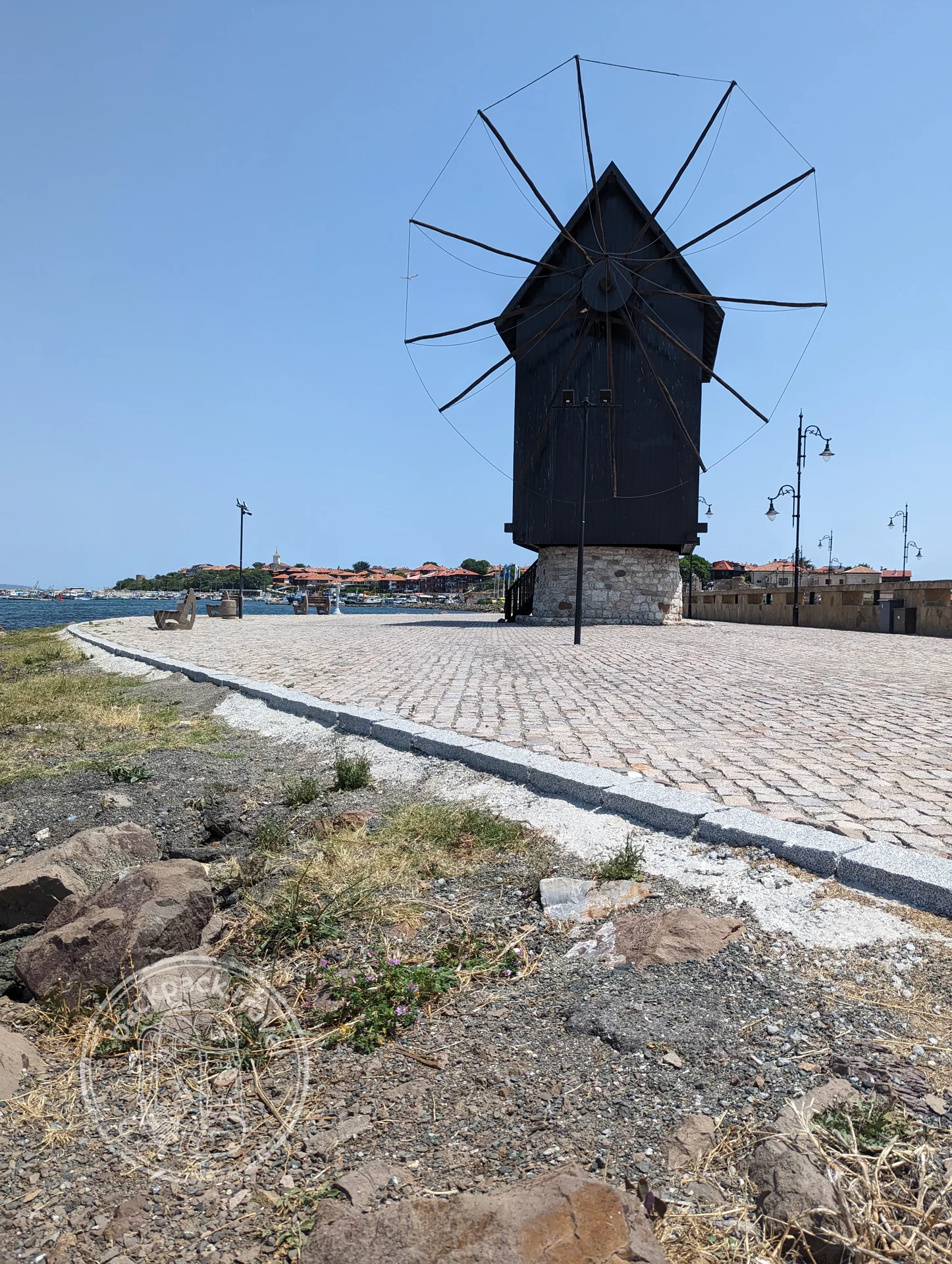
On the isthmus stands an eighteenth-century wooden windmill on a stone base, the single most reproduced image of the town. The remains of the fortress gate and walls survive beside it.
Getting there and getting around
The nearest airport is Burgas, thirty-five kilometres away, about forty minutes by bus or taxi. Varna is a hundred kilometres off, an hour and a half. Buses from Burgas run every half hour, and more often in summer.
Getting around the town itself means walking: vehicle access to the old quarter is restricted and the streets are narrow and paved in rough stone. From the new town to the old is fifteen minutes on foot across the isthmus. A minibus runs to Sunny Beach, and in summer a pleasure boat as well.
Where to stay
The old town has small guest houses in historic buildings — quiet, full of character and expensive, and the car has to be left outside the gate. New Nesebar along the shore is built up with ordinary resort hotels, cheaper and with the beach at hand.
The third option is Sunny Beach three kilometres away: the largest resort complex in Bulgaria, with hundreds of hotels, night clubs and all-inclusive packages. From there the old town is an easy walk along the sea, and prices are markedly lower.
Day trips
Sozopol, sixty kilometres south, is another old town on a peninsula, but quieter and on a smaller scale; a useful comparison with Nesebar in a single day.
Burgas, with its lakes and bird reserves, is half an hour away. Varna, with Roman baths and the gold of the Varna necropolis, is an hour and a half to the north. Cape Emine, the easternmost point of the Balkan range, lies twenty kilometres off, with walking routes to it along the coast.
When to come
For swimming, June to September; the water warms up towards the end of June. July and August are the peak: the old town gets so crowded that you move down the main street in a stream, and nothing adds up to a coherent impression.
The best time for Nesebar itself is May, early June and the second half of September. It is warm, around twenty-five degrees, the churches are open, and there are several times fewer visitors. If the trip does fall in high season, see the old town early in the morning or after nine in the evening, once the coach tours have left. In winter most hotels and restaurants are shut, but the peninsula itself, with empty streets and a storming sea, makes a strong impression.
Food and money
Coastal cooking: fried fish, mussels, shopska salad, tarator. Restaurants in the old town are noticeably dearer and aimed at visitors; eating in the new part or in the villages nearby works out better. Of the local dishes, try tsatsa, small fried fish eaten whole.
Since January 2026 the currency here is the euro: the lev was converted at the fixed rate of 1.95583 to the euro and stopped being legal tender a month later. Cards are taken almost everywhere, but small shops and the market need cash. There are ATMs in both the old and the new town.
What to know
Entry to the old town is free, but each church-museum charges separately; there is a combined ticket, and it pays for itself by the third site.
The streets are paved with large uneven stones and slope in places, so heels are out. In summer the isthmus is windy even in the heat. In Bulgaria a nod of the head means no and a shake means yes. The car park by the entrance to the old town is paid and full in season, so arriving by car works best early in the morning.
Updated