 Города и дороги
Description
The capital of Kalmykia, the only Buddhist region in Europe: the Golden Abode of Buddha Shakyamuni, pagodas and prayer wheels in a steppe town, and wild tulips flowering all around it in April.
Wiki
Elista, the capital of Kalmykia, has around a hundred thousand residents and sits in the middle of the steppe at roughly equal distance from Volgograd, Astrakhan and Stavropol. The settlement was founded in 1865 in a gully overgrown with elms, and the name comes from that ground: elst means sandy in Kalmyk. It became a city in 1930, so almost everything built here is Soviet or later. What sets it apart from other towns in southern Russia is religion: the Kalmyks, descendants of the Oirats who migrated here from Dzungaria in the seventeenth century, are Buddhists, and Kalmykia remains the only Buddhist region in Europe. The whole look of the place follows from that — khuruls, stupas, prayer wheels and a golden gate in the middle of a steppe district centre.
Why come and what to actually see
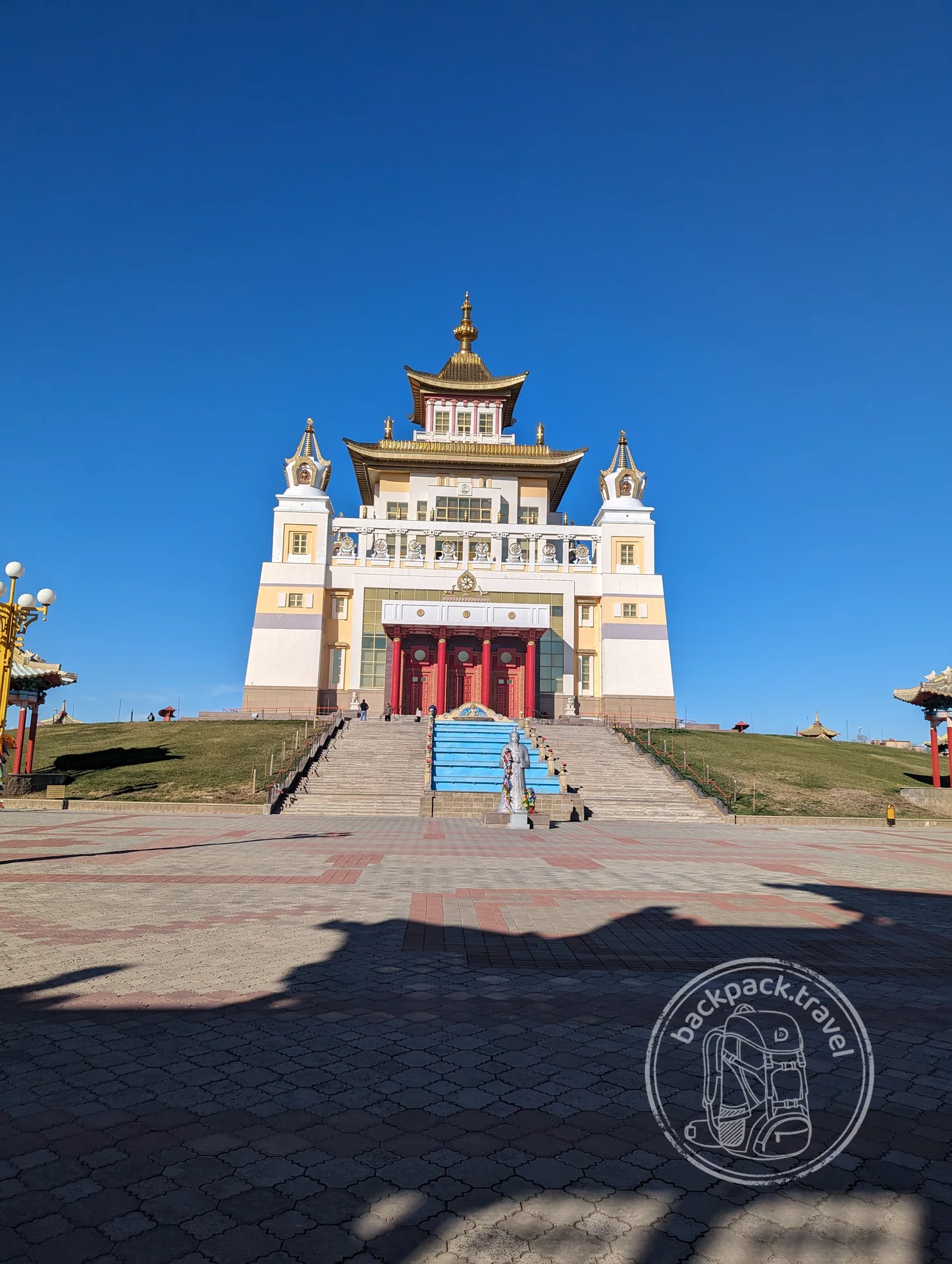
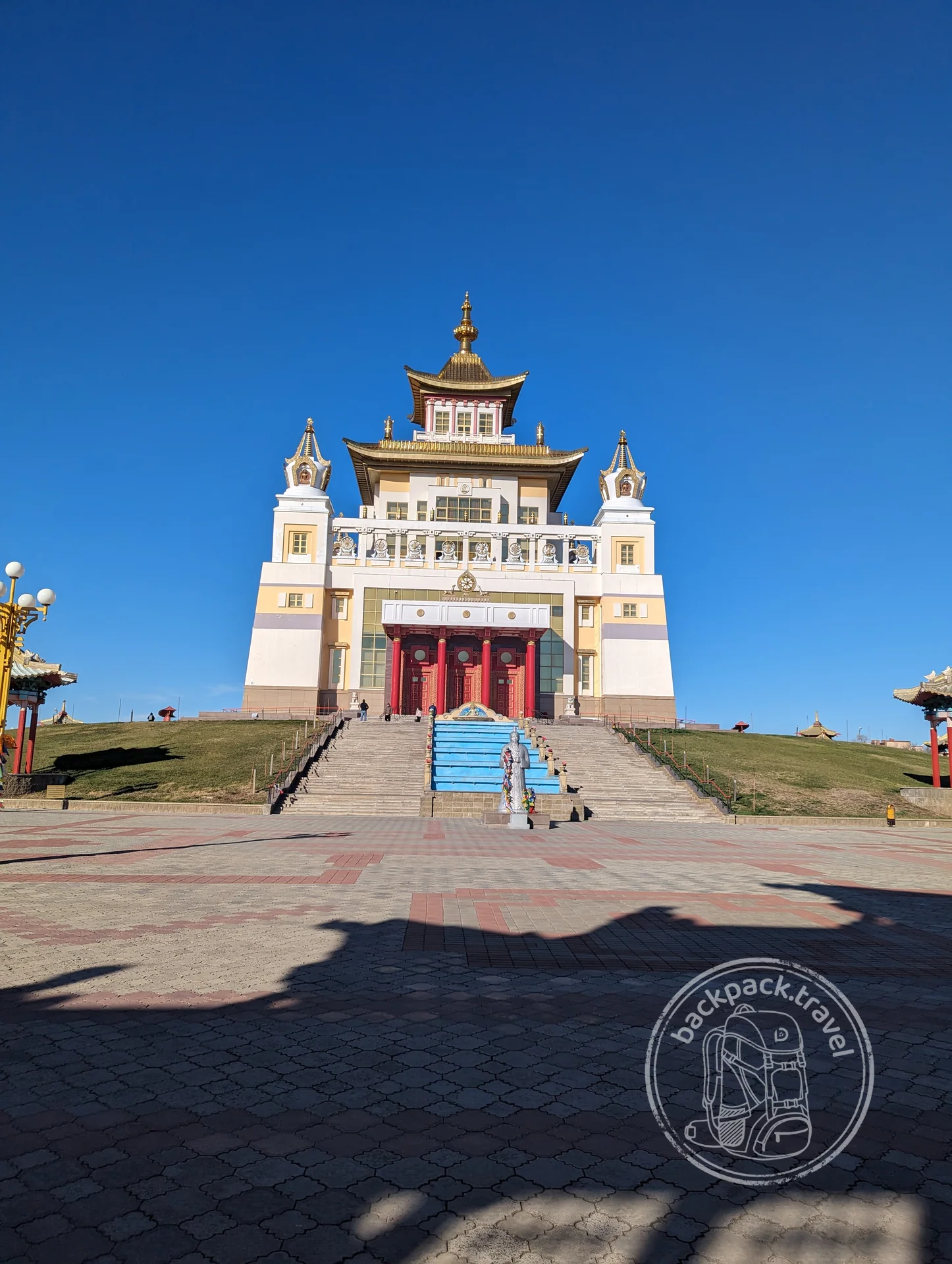
The Golden Abode of Buddha Shakyamuni opened in December 2005 and is still the largest Buddhist temple in Europe. Inside stands a nine-metre gilded statue of the Buddha; seventeen pagodas with sculptures of teachers of the Buddhist tradition are set around the building, and prayer wheels run in a ring around it. It is an active temple, services are open, and visitors can watch them.
Syakusn-Syume, also known as Geden Sheddup Choikorling, was built earlier, in 1996, and stands on the edge of town. It is smaller and quieter, a monastic community lives there, and the feeling is far more monastery than the central khurul.
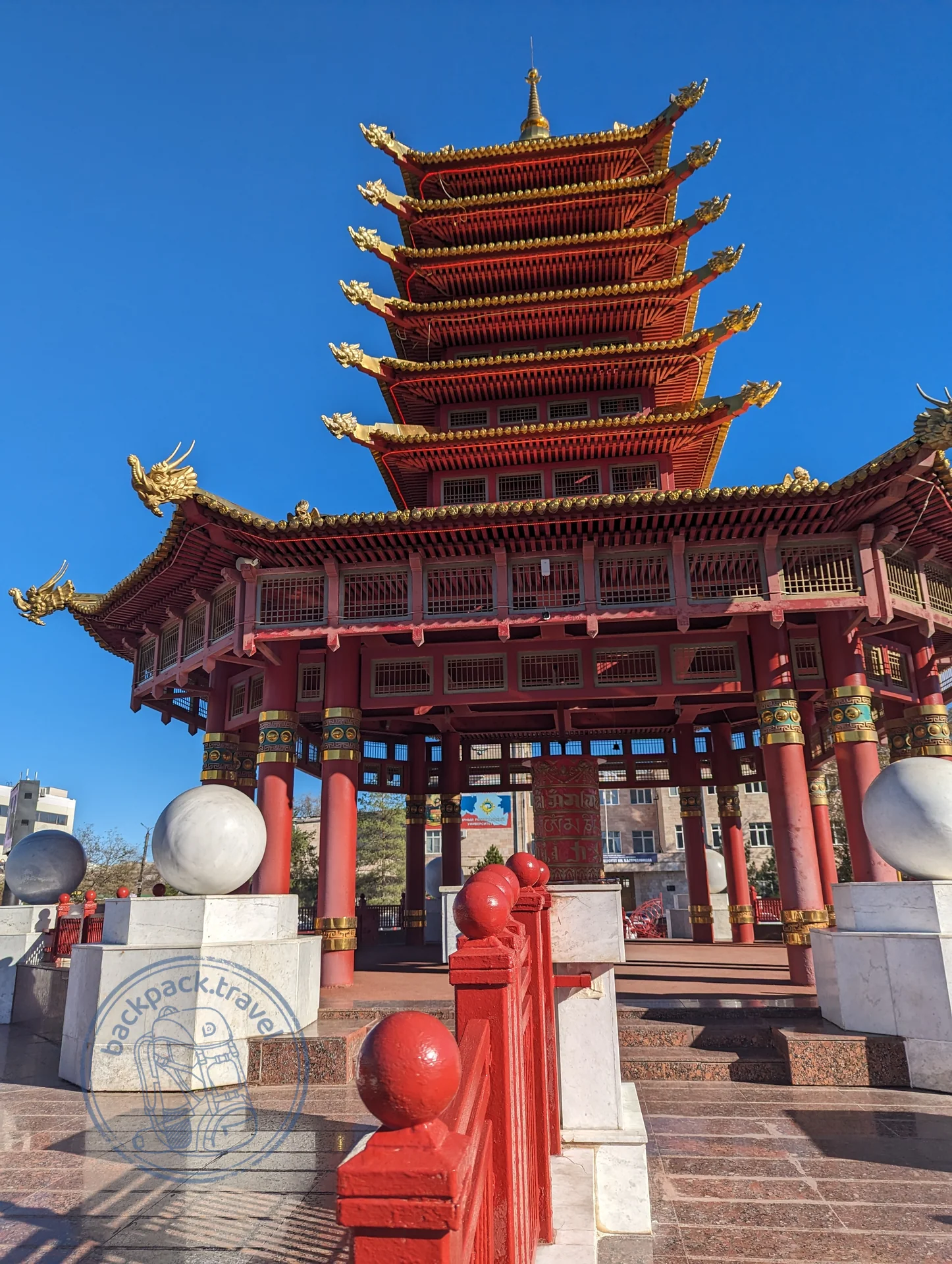
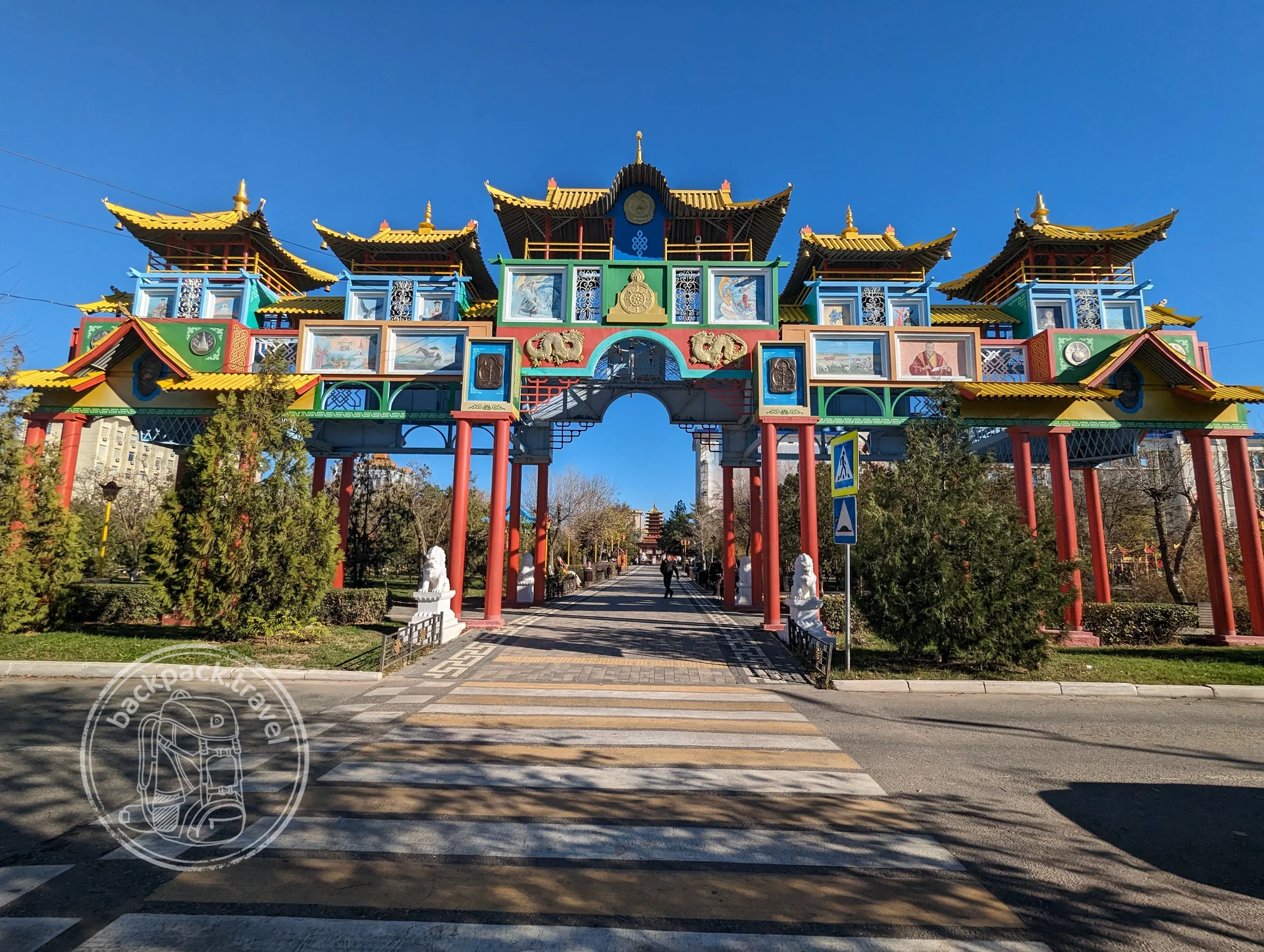
On Lenin Square stands the Pagoda of Seven Days, with a prayer wheel brought from India, and the approach to the city from the Stavropol side is marked by the Altn Bosh golden gate, painted with scenes from the history of the people.
City Chess is a district of its own, built for the 33rd Chess Olympiad in 1998: the Chess Palace and cottages around it. The place is strange and half abandoned, but telling in its own way about the nineties.
The Exodus and Return memorial by Ernst Neizvestny is dedicated to the deportation of the Kalmyks to Siberia in 1943 and their return after 1957. It stands on an embankment outside town, next to a cattle wagon, and is best seen in silence.
Getting there and getting around
The airport reopened in May 2024 after a closure of more than two years and connects Elista with Moscow; the schedule has changed more than once, so check it before travelling.
The main way in is by bus or car: it is about 300 kilometres to Volgograd, 250 to Stavropol and 300 to Astrakhan. The roads cross flat, empty steppe, and journey times are easy to predict.
A rail line to the city exists, but there is no regular passenger service on it, so a train is not something to count on.
Marshrutkas run inside the city, and the compact centre is walkable. Trips into the steppe need a car: no public transport goes to the reserves.
Where to stay
Elista has few hotels, they are clustered in the centre and geared to people on business trips; standards are basic and prices low. That is enough, because the city takes a day to see.
During the tulip season in April there may be no rooms at all: for a few weeks people come from across the south. Then the options are private rooms or guesthouses in the district villages closer to the steppe lakes.
Day trips
The main outing is the steppe itself. In mid-April the wild Schrenck's tulips come into bloom and the fields turn red and yellow; the flowering is short, two to three weeks, and the exact dates shift from year to year.
Lake Manych-Gudilo, 130 kilometres away, is a salt lake on the border with Stavropol Krai, where great white and Dalmatian pelicans nest on the islands and cormorants hold colonies nearby. A herd of feral horses lives on Vodny Island in the same lake.
The Black Lands reserve exists for the saiga: the population here was rebuilt over decades, and in spring the herds can be seen from observation points. The trip has to be arranged with the reserve in advance.
The Lonely Poplar, 30 kilometres from the city, is a tree planted in the nineteenth century by a Buddhist monk, hung with ritual ribbons and with a spring beside it.
When to come
April is the best month, and that is not a matter of taste: the flowering steppe is what people come for. The air is around twenty degrees, it is windy, and the steppe looks the way it never does again all year.
May and September also work well: warm, dry, easy walking around town. Summer in Kalmykia is punishing, above thirty-five, with dry winds and no shade whatsoever; in July sightseeing only makes sense early in the morning and in the evening.
Winter brings little snow but strong winds and temperatures around minus six; the steppe is empty and grey then, so there is no point coming for the landscape, though the temples stay open.
Food and money
Kalmyk cooking is built on meat and milk. Dzhomba is tea with milk, butter and salt, sometimes with nutmeg; it tastes closer to broth than to tea and is served first. For meat there is makhan shölün, a rich mutton soup, and berigi, large dumplings. For something sweet, boortsog, dough fried in oil.
There are enough places serving the national cuisine in town, and they are inexpensive. Payment is in roubles and Russian bank cards are accepted; in the steppe and on the highway you need cash.
What to know
Khuruls are working temples with their own etiquette: take your shoes off at the entrance, walk around the shrines clockwise, do not stretch your legs towards the altar, keep shoulders and knees covered. Photography is usually allowed, but it is better to ask.
Elista takes one day, and it is best planned as part of a route through the south rather than as a destination in itself — unless you are coming in April for the tulips.
The steppe has no shade, no shelter and, on many stretches, no mobile signal; water, a hat and spare fuel are things to sort out beforehand. Saiga and pelicans live in protected areas, which are closed without a permit and a guide.
Updated